This week, Cornerstone OnDemand, a dominant force in the corporate learning technology sector with approximately $1 billion in annual revenue, announced a significant strategic pivot into the rapidly evolving field of artificial intelligence. The move signals a bold attempt by the established player, roughly four times the size of emerging competitor Docebo, to redefine its offerings and maintain its market leadership in an industry undergoing a profound transformation driven by AI. This development occurs as the broader HR and learning landscape braces for what is being termed the "HR 2030" era, characterized by agentic AI and personalized employee enablement.
Cornerstone’s Current Standing and Market Position
Cornerstone OnDemand boasts an impressive client roster, serving over 7,000 enterprise customers, including many of the world’s largest and most recognizable brands. The company’s platform currently supports an estimated 140 million users globally. Its revenue streams are primarily derived from its robust Learning Management System (LMS) and Learning Experience Platform (LXP) software, complemented by a substantial contribution from its comprehensive talent management suite.
Founded 27 years ago as an e-learning platform provider, Cornerstone has been instrumental in pioneering the "talent-driven learning platform" market. Over its history, the company has either outpaced or acquired nearly every standalone LMS company established within the last quarter-century. While the overall corporate learning and talent management market is estimated to be worth around $30 billion, a significant portion of this market is captured by major Human Capital Management (HCM) players such as Workday, Oracle, and SAP. Within this competitive environment, Cornerstone has carved out a dominant position, often lauded for its superior functionality compared to many of its peers.

The company’s trajectory shifted in 2021 when it was acquired privately for $5.5 billion, a valuation representing approximately five times its then-current revenue. Since then, Cornerstone has strategically expanded its portfolio through key acquisitions, including EdCast (LXP), Skyhive (skills and labor market data), and Tailspin (VR technology), alongside several smaller content providers. While Cornerstone remains a highly profitable entity, its market valuation has seen more modest growth, partly attributed to a perceived stagnation within the traditional e-learning market segment.
Recognizing the evolving demands of its customer base and the shifting market dynamics, Cornerstone has actively pursued strategies to enhance its market appeal. These include broadening its channel partnerships, offering more integrated solutions, and continuously expanding its feature set. However, industry observers have noted that the company’s brand, while respected, has been perceived as somewhat dated, leading some clients to explore alternative solutions during contract renewal periods. This is a common challenge for established technology providers as new, innovative solutions emerge, but the current market disruption is particularly acute. Despite these challenges, Cornerstone is widely regarded as a well-managed organization, led by experienced and execution-focused executives such as Himanshu Palsule, Michael Pawlyszyn, and Vincent Belliveau.
The AI Disruption: A Paradigm Shift in Corporate Learning
The landscape of corporate learning and development (L&D) has been fundamentally altered by the advent of advanced artificial intelligence, particularly following the public release of ChatGPT in the fall of 2022. This technological leap has initiated a rapid reinvention of the estimated $400 billion e-learning and "published training content" market.
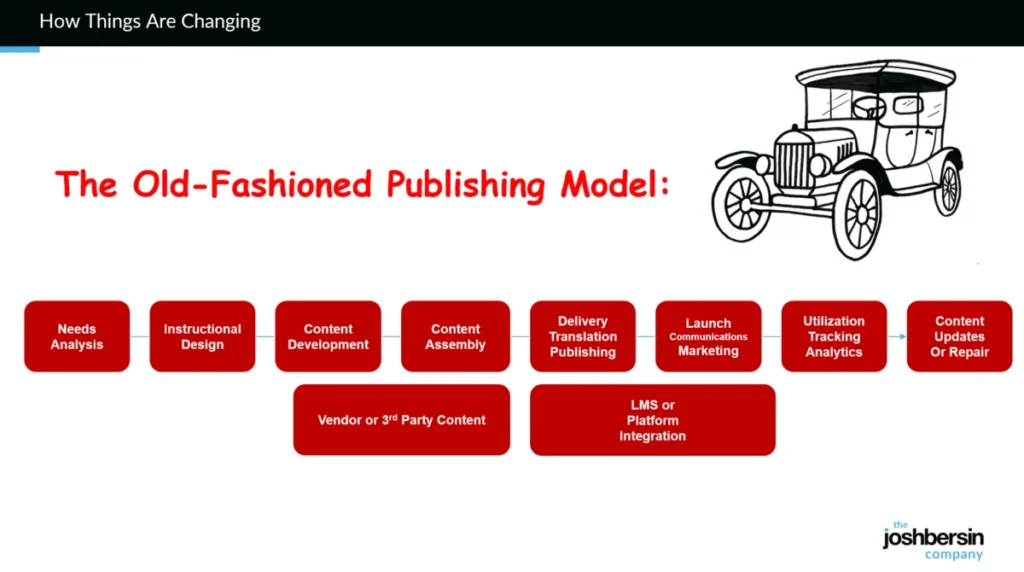
For decades, the process of creating and disseminating corporate training content has been a labor-intensive and costly endeavor. Companies have relied on instructional designers, graphic artists, and subject matter experts to meticulously author, publish, and license content in various formats, including courses, videos, assessments, and simulations. This model, often akin to writing and publishing a book, involves extensive design, content sourcing, audience targeting, and months of development. Furthermore, content often requires translation into multiple languages, rigorous testing, and integration into LMS platforms, traditionally adhering to the 35-year-old SCORM tracking standard. SCORM primarily focuses on tracking learner progress and completion rates.
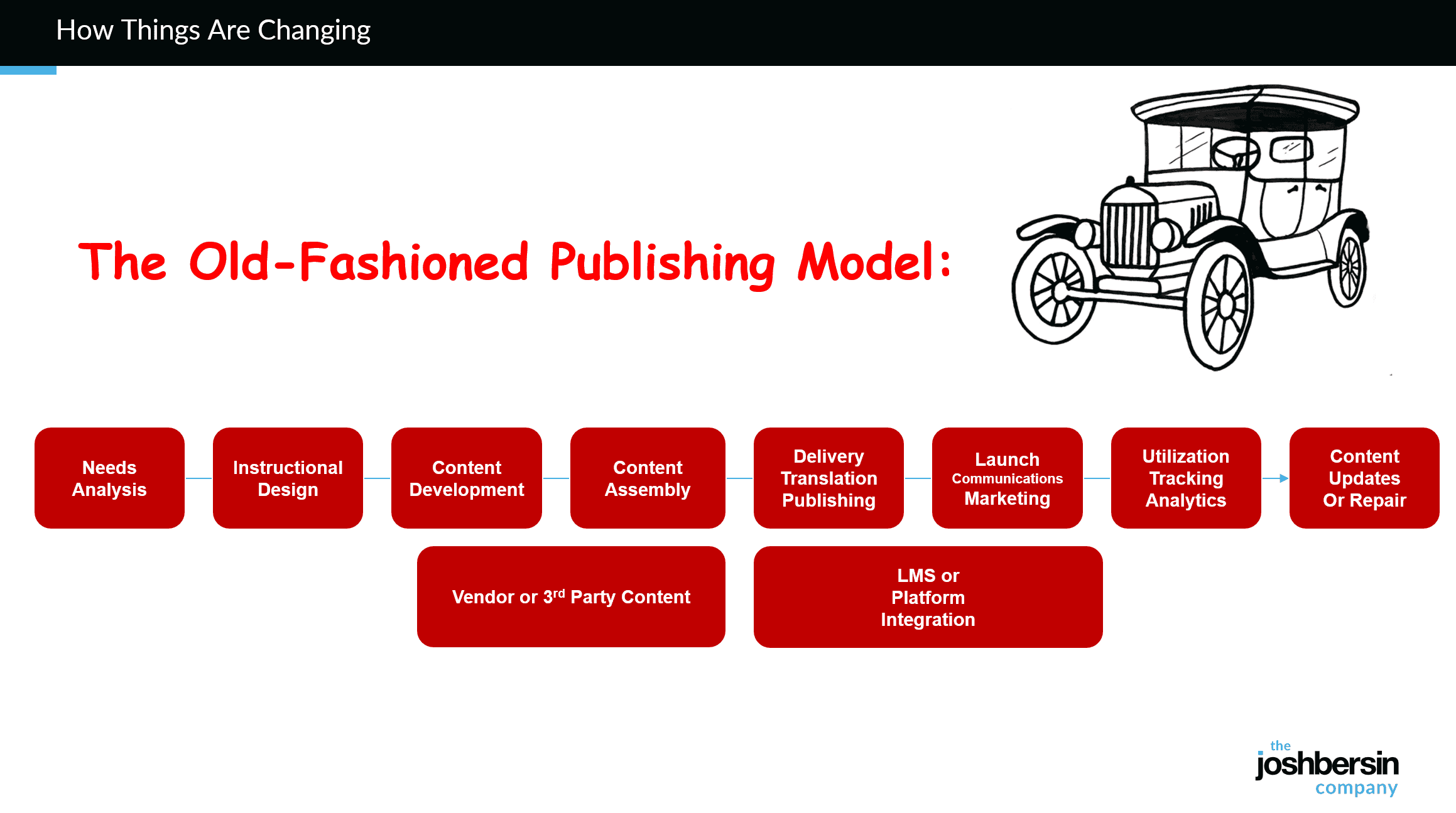
This established process, which has engaged a vast pool of highly skilled learning professionals, is now facing obsolescence. The inherent slowness, inflexibility for edits, and substantial cost of traditional content development—with individual courses sometimes costing upwards of $50,000 to produce—have made it a significant bottleneck for L&D departments. This often leads to questions about the return on investment for projects that can take nine months or more to complete.
While the industry has long debated instructional design methodologies, the core issue remains the inherent complexity and time constraints of the traditional model. Even the wealth of free, readily available content on platforms like YouTube, while informative, lacks the structured tracking and corporate security typically expected from internal learning solutions. This creates a substantial market opportunity, estimated at over $50 billion, for AI to fundamentally reshape content creation and delivery.
AI’s Transformative Impact on Learning Content and Delivery
The argument that AI-generated courses might initially be of inferior quality, similar to early AI-generated text, overlooks the rapid advancements in AI capabilities. Current AI models are not only capable of producing high-quality content but are continuously improving. Crucially, the time required to generate and refine a course has been drastically reduced from months to mere days or hours. This efficiency allows for rapid iteration and personalization, even if initial outputs require minor adjustments.
Beyond content generation, AI introduces a paradigm shift in how learners interact with information. Instead of passively navigating through chapters, learners can now engage with AI-powered "courses" as interactive experts, asking questions and receiving immediate, tailored responses. This transforms a static "course" into a dynamic, responsive learning resource. Consequently, every employee can potentially receive a personalized version of the learning content they need, addressing a long-standing challenge that SCORM-based materials struggled to overcome.
A more profound implication of AI in learning is its ability to connect disparate pieces of information. An AI-powered learning system can link all courses within the platform, enabling employees to seamlessly access relevant information. For instance, an employee learning about fire safety in a refinery and needing specific information on sulfur dioxide risks would not need to search for a dedicated "sulfur dioxide safety" course. Instead, they could simply ask the AI system, which would provide a direct answer, drawing from interconnected knowledge bases.
This capability fundamentally redefines the purpose of corporate learning. While traditional learning often focuses on acquiring knowledge over extended periods, the reality for most employees is that their daily work requires immediate access to information, tips, advice, and knowledge for task completion. This "enablement" aspect is where AI-native learning experiences offer a significant advantage over simply using AI to create SCORM-compliant courses.
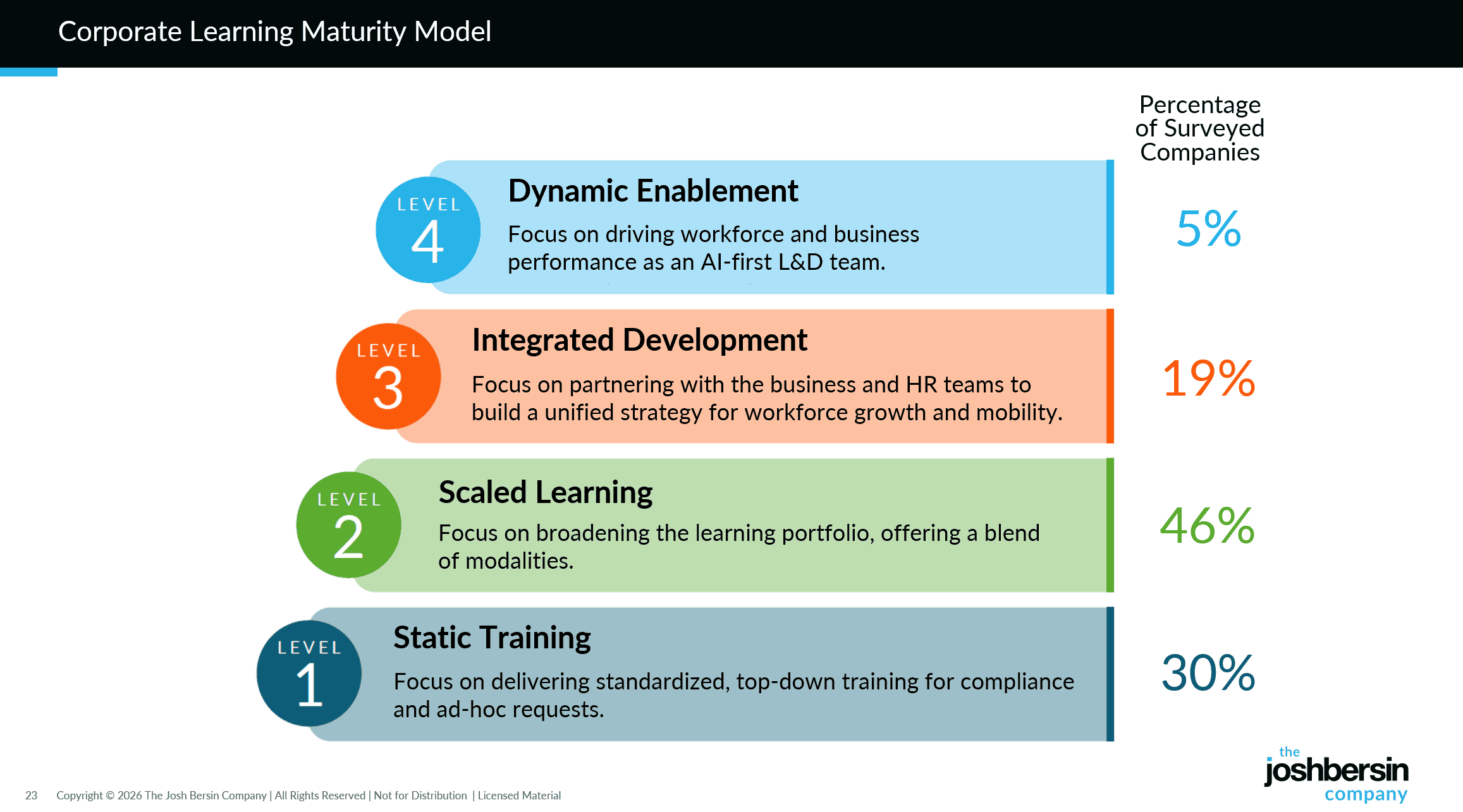
The implications for L&D departments are far-reaching. This revolution in learning is not confined to L&D; it represents a broader business transformation. L&D functions are poised to become more streamlined, with a significant portion of their staff potentially redeployed to become direct business enablers rather than solely focusing on content creation and delivery (with the exception of compliance training). The reinvented L&D department may even transcend its traditional placement within HR, becoming a critical driver of business performance. Research, such as the "Learning Maturity Model," indicates that organizations operating at advanced levels of learning agility are significantly more innovative and responsive to skill development needs, earning them widespread appreciation from business units for their ability to generate solutions as challenges arise.
The Impact on Cornerstone and the Competitive Landscape
The rapid evolution of AI in learning presents both significant challenges and opportunities for established players like Cornerstone. Emerging vendors such as Sana, Docebo, Absorb, Uplimit, Arist, and others are already offering AI-native learning solutions. Furthermore, major AI developers like OpenAI are actively integrating content from platforms like Coursera, and companies like Anthropic are collaborating with enterprises to implement AI-driven learning solutions.
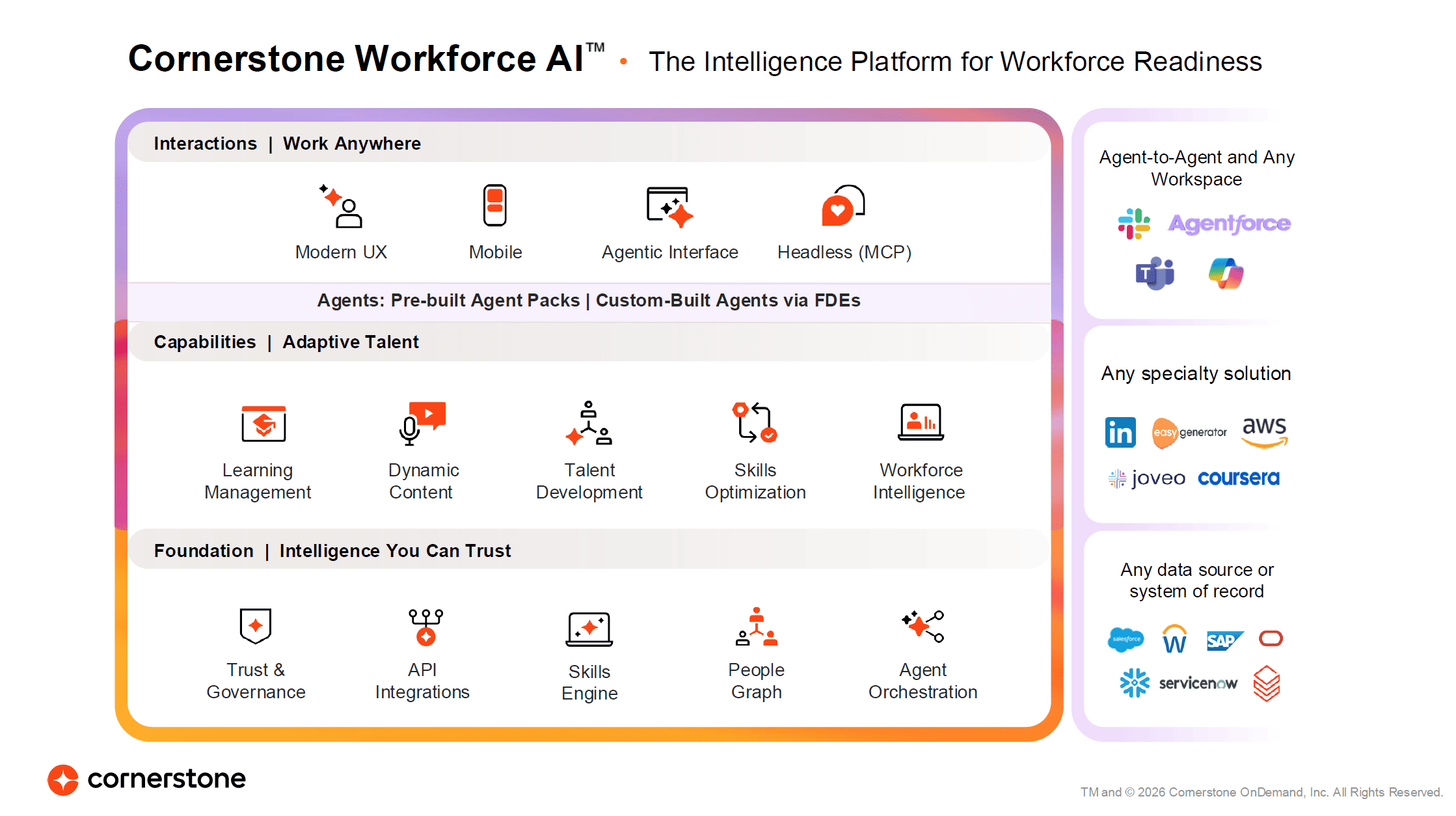
The future of corporate learning points towards a scenario where every employee possesses an AI agent—akin to Microsoft Copilot—that understands their role, processes their communications, and indexes all digital information they generate. This agent would possess a deep understanding of an individual’s skills, experiences, strengths, and weaknesses, further enhanced by peer feedback and performance data. Cornerstone refers to this interconnected network of employee data as a "People Graph," which is central to its recent AI announcements.
When this "People Graph" is combined with an AI-native learning platform, an employee’s agent can provide timely nudges, personalized onboarding plans, or even act as a virtual management coach, eliminating the need for slower, traditional interventions like external assessments or coaches. This represents a fundamental shift from current practices.
This transformation is prompting a significant reallocation of L&D budgets away from traditional tools towards new AI-driven solutions, which could impact Cornerstone’s existing revenue streams. More critically, L&D leaders who fail to adapt to AI-native learning solutions risk seeing their budgets, seniority, and overall role diminished, as the value proposition of traditional content development becomes increasingly questionable.
Cornerstone Workforce AI: A Strategic Reinvention
Cornerstone’s recent announcement, spearheaded by its AI team led by Guna Jayaraman, represents a deliberate reinvention strategy. The new platform, "Cornerstone Workforce AI," integrates several key capabilities:
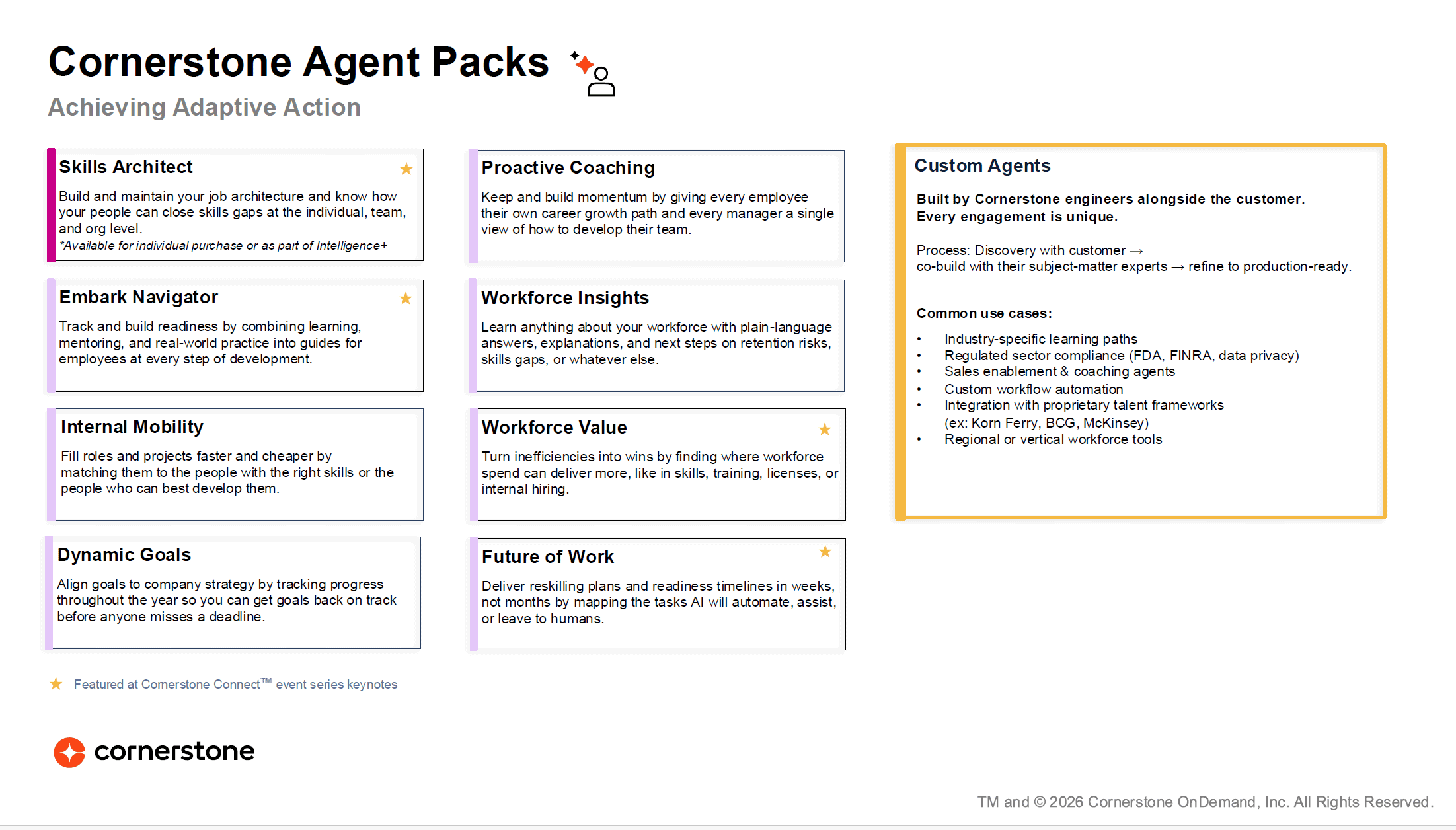
- Skills and Capability Inference: The platform can analyze data to identify and understand employee skills and capabilities.
- Open "People Graph": This is a central data hub designed to import and integrate information from a wide array of systems, including HRMS, LMS, project management tools, and employee engagement surveys. This aims to create a holistic view of the workforce.
- Data Services and Readiness Agents: The platform leverages labor market data (acquired through Skyhive) and provides pre-built "Readiness Agents" designed to address specific organizational challenges and skill gaps.
While some functionalities are still being integrated from Cornerstone’s existing platform, Galaxy, the new capabilities can be accessed either as a standalone offering or by upgrading to a new license tier that unlocks the AI-driven features. Early customer feedback from companies in wealth management and media, as well as extensive discussions with organizations like Cisco, suggests that Workforce AI is being adopted to drive significant improvements in skills development, employee mobility, organizational redesign, and risk mitigation. These early adopters are integrating their proprietary company information to enhance these critical business functions.
Although Cornerstone Workforce AI may not yet be a fully "AI-Native" platform in the same vein as some newer competitors like Sana, it is rapidly moving in that direction. The company has already introduced AI content development tools and administrative assistance agents, with AI-native content features appearing in both its legacy and new environments. The currently available packaged Agents, while not yet fully customizable by users, are designed to harness the comprehensive data and intelligence within the Workforce AI platform.
The Future Trajectory and Market Implications
Cornerstone’s strategic shift towards AI represents a significant undertaking. While the management team is understandably cautious about alienating existing customers, this pivot offers a critical opportunity to shape the future of the corporate learning market. The substantial investment in traditional training solutions is projected to decline, while budgets for AI-driven initiatives are becoming increasingly available. Despite the presence of agile competitors, Cornerstone possesses a substantial opportunity to capture a significant share of this evolving market.
For organizations ready to embrace this AI-driven revolution in learning and enablement, Cornerstone Workforce AI presents a powerful platform for innovation. While the offering is nascent and will undoubtedly require further development, its core AI capabilities provide a foundation for ambitious strategies aimed at empowering every employee to achieve success in their individual roles. The key challenge ahead for Cornerstone will be its ability to clearly articulate the value proposition of its new AI solutions in the dynamic and rapidly changing AI market. The success of this reinvention will depend on its agility in adapting to daily market shifts and its effectiveness in demonstrating how its platform can enable employees to thrive in the age of intelligent automation.