
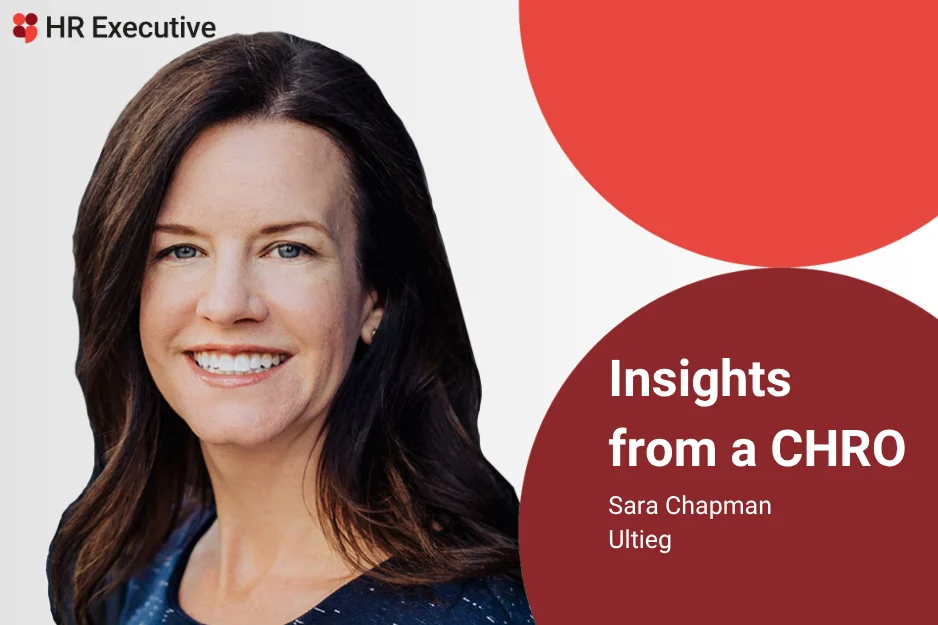
This spring, Ultieg, a prominent infrastructure engineering services firm, announced the promotion of Sara Chapman to Chief Human Resources Officer (CHRO). Chapman, who previously served as the director of HR for two years, now sets her strategic sights on leveraging human resources to achieve the "biggest impact" within the organization. This ambitious goal, she states, is intrinsically linked to operating in "lockstep" with the company’s overarching strategic direction while simultaneously deepening and advancing Ultieg’s well-established people-centric culture. The firm, which commands a workforce of 1,700 professionals distributed across North America and Costa Rica, has long prided itself on fostering an environment where its employees are at the very core of its operations.
The guiding principle driving decision-making at Ultieg, as articulated by Chapman, is the continuous query: "How do we keep our people at the core of what we do?" This fundamental question underpins various aspects of the business, shaping its policies, initiatives, and strategic priorities. The commitment to this ethos is evident in several key areas, particularly in its distinctive approach to employee ownership and engagement.
A Foundation of Ownership: The Employee Stock Ownership Plan
One of the most tangible manifestations of Ultieg’s people-centric philosophy is its robust Employee Stock Ownership Plan (ESOP). Chapman highlights the ESOP as a critical mechanism that cultivates a profound sense of investment among employees, creating a symbiotic relationship where the company invests in its people, and vice versa. This shared ownership model empowers employees, fostering an environment where they feel confident and valued in sharing their insights and feedback. "They feel empowered to share their thoughts and feedback; it’s like, ‘We’re in this together,’" Chapman explains, underscoring the collective responsibility and mutual commitment that the ESOP engenders.
Employee Stock Ownership Plans are a unique form of employee benefit plan that enables employees to own shares in the company for which they work. These plans are regulated under the Employee Retirement Income Security Act of 1974 (ERISA) and offer distinct advantages for both companies and their employees. For employees, an ESOP can provide a significant retirement asset, often at no direct cost to them, as well as a direct financial stake in the company’s success. This direct link between individual performance and corporate profitability often leads to increased motivation, productivity, and a greater sense of accountability. For companies, ESOPs can serve as a flexible corporate finance tool, offering tax advantages, facilitating succession planning, and improving corporate culture and employee retention.
The adoption of ESOPs has seen a steady rise across the United States. According to data from the U.S. Department of Labor, as of 2023, the last year for which comprehensive data is available, there were over 6,500 registered ESOPs in the U.S. These plans collectively covered millions of participants, with the number of ESOP participants experiencing an approximate 8% growth over the preceding decade. This trend indicates a growing recognition among employers of the strategic benefits associated with employee ownership models.
Further bolstering the proliferation of ESOPs, the SECURE Act 2.0 of 2022 introduced the Employee Ownership Initiative. This legislative effort aims to actively promote the myriad benefits of employee ownership, including through ESOPs, by providing resources and incentives for businesses to transition to or establish such models. The initiative reflects a broader governmental acknowledgment of the positive impact employee ownership can have on economic stability, wealth distribution, and overall workforce engagement. Experts in human capital management suggest that this legislative support could significantly accelerate the adoption of ESOPs across various industries, making employee ownership an increasingly mainstream component of compensation and retention strategies.
Recruitment Advantage in a Competitive Landscape
In the highly competitive infrastructure engineering sector, which is currently grappling with a significant talent shortage, Ultieg’s ESOP model has proven to be an unexpected yet powerful recruitment differentiator. Chapman notes that candidate interest in the ESOP has been remarkably high, providing Ultieg with a distinct advantage in attracting top talent. "I didn’t realize how much the ESOP model would play a factor, even in recruiting, where more candidates than I realized ask a lot about the ESOP," she reveals. This heightened interest, Chapman observes, stems from candidates’ desire to join organizations where their contributions are valued, their voices are heard, and they possess a tangible stake in the company’s success and outcomes.
The appeal of ESOPs in recruitment is multi-faceted. Beyond the direct financial benefit, it signals a company culture built on trust, transparency, and shared prosperity. In an era where employees increasingly seek purpose and alignment with organizational values, the ESOP model resonates deeply. It conveys a message that the company views its employees not merely as labor but as partners in its journey. This psychological contract is particularly potent in specialized fields like engineering, where highly skilled professionals often have multiple employment options. An ESOP can tip the scales, offering a compelling reason for a candidate to choose one employer over another, especially when other compensation and benefits packages are comparable. Industry analysts suggest that as the war for talent intensifies, innovative approaches to employee ownership and engagement, like ESOPs, will become indispensable tools for talent acquisition and retention.
Beyond Financial Stakes: Sustaining Culture Through Intentionality
While the ESOP model undeniably provides a "wonderful foundation" for cultivating a people-centric culture, Chapman prudently cautions against over-reliance on it as a singular strategy. "You can’t just rely on an ESOP model alone," she emphasizes, highlighting that financial ownership, while powerful, does not automatically guarantee a sustainable and thriving company culture. A truly enduring culture requires continuous, deliberate effort and a multifaceted approach.
At Ultieg, leadership demonstrates an unwavering commitment to actively soliciting and acting upon employee feedback. This commitment extends beyond mere surveys to encompass a dynamic and iterative process of engagement. Through structured initiatives such as regular town halls and dedicated leadership forums, senior leaders actively gather frequent and diverse feedback from employees. This input is not merely collected but is considered meaningfully, directly influencing and shaping business decisions, operational improvements, and strategic adjustments. These forums provide platforms for open dialogue, allowing employees to voice concerns, suggest innovations, and contribute to the company’s direction, thereby reinforcing their sense of belonging and influence.
Workplace Flexibility and Dispersed Workforce Connection
Employee listening has also been instrumental in shaping Ultieg’s progressive policymaking around workplace flexibility. Recognizing the evolving nature of work and the diverse needs of its workforce, the company endeavors to offer hybrid or remote work arrangements wherever operationally feasible. This flexibility is not merely a perk but a strategic decision aimed at enhancing employee well-being, productivity, and retention.
However, maintaining a cohesive, people-centric culture within a dispersed workforce presents unique challenges. Chapman acknowledges that this requires a significant degree of intentionality to prevent the erosion of core cultural values and connections. To counteract the potential for isolation or fragmentation, Ultieg has launched several innovative programs. A prime example is the "Mugs and Meetups" initiative, introduced in 2024. This program randomly pairs Ultieg employees for virtual coffee chats, fostering informal connections across departments and geographies. Averaging approximately 50 new connections each month, the initiative has facilitated over 1,500 inter-employee interactions since its inception. Employees are encouraged to capture and share photos of their virtual coffee chats on the dedicated Culture page of the company’s employee experience platform, further amplifying the sense of community and shared experience.
This proactive approach to connection extends to other intentional efforts around culture and community building. Ultieg boasts five active Employee Resource Groups (ERGs), which are voluntary, employee-led groups that foster a diverse, inclusive workplace by bringing together individuals who share common interests, backgrounds, or demographic characteristics. These ERGs play a crucial role in promoting diversity, equity, and inclusion, providing support networks, and contributing to professional development. Additionally, a dedicated Culture Committee tirelessly hosts a robust calendar of events throughout the year, ranging from team-building activities and celebratory gatherings to community service initiatives. These events are designed to strengthen interpersonal bonds, reinforce shared values, and create memorable experiences that define the Ultieg culture. The company also maintains a comprehensive series of recognition programs, ensuring that employee contributions and achievements are regularly acknowledged and celebrated, further reinforcing a culture of appreciation and high performance.
Chapman emphasizes that while workplace flexibility has been "a really big cultural benefit to us and a business benefit," it necessitates additional, deliberate efforts to maintain strong connections. "But it does mean we have to do extra to stay connected and really be intentional so that we don’t lose those things that are core to our culture," she states, highlighting the ongoing commitment required to nurture a thriving, connected workforce in a flexible work environment.
Broader Impact and Implications for the Industry
Ultieg’s comprehensive approach to talent management and cultural development, spearheaded by Sara Chapman, offers valuable insights for the broader infrastructure engineering sector and beyond. In an industry facing intense competition for skilled professionals, the integration of a robust ESOP with intentional cultural initiatives presents a compelling model for attracting, engaging, and retaining top talent. The emphasis on genuine employee ownership, coupled with active listening and deliberate efforts to foster connection in a hybrid work world, positions Ultieg as a leader in progressive HR practices.
The implications of such a strategy are far-reaching. Beyond improved recruitment and retention metrics, a deeply embedded people-centric culture contributes significantly to enhanced employee engagement, which in turn drives higher productivity, innovation, and overall business performance. Employees who feel truly invested and valued are more likely to go above and beyond, contribute creative solutions, and champion the company’s mission. Furthermore, a strong, positive culture becomes a powerful component of the employer brand, attracting not only new talent but also clients and partners who value ethical and employee-first business practices.
Chapman’s elevation to CHRO signals Ultieg’s strategic commitment to embedding HR at the heart of its business strategy. Her vision for HR to make the "biggest impact" by aligning with organizational goals and advancing company culture reflects a modern understanding of human resources as a strategic enabler rather than merely an administrative function. As Ultieg continues to grow and adapt to the dynamic landscape of infrastructure engineering, its sustained focus on its people, underpinned by a unique blend of financial ownership and intentional cultural programs, will undoubtedly be a cornerstone of its ongoing success. The journey to keep "people at the core" is a continuous one, and under Chapman’s leadership, Ultieg appears well-equipped to navigate its complexities and reap its considerable rewards.








