
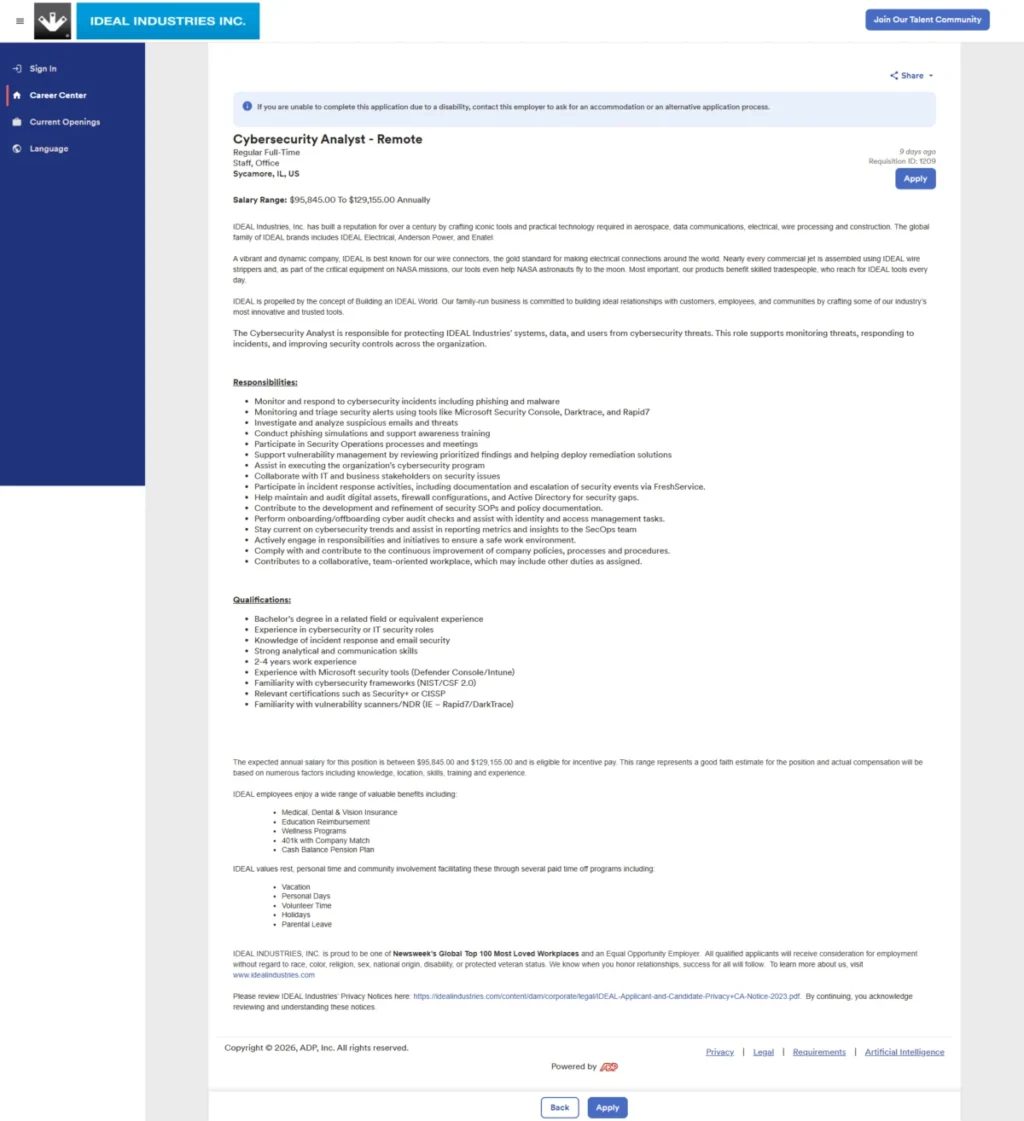
The career site job search page stands as a pivotal digital gateway, profoundly influencing both candidate experience and an organization’s search visibility in the fiercely competitive talent landscape. In an era where a company’s digital footprint is often the first interaction potential hires have, overlooking the foundational elements of this critical platform can lead to significant setbacks in talent acquisition and employer branding. A recent analysis highlighted several pervasive issues, exemplified by a review of Ideal Industries’ job search page, revealing five common yet detrimental mistakes that many solid employers, often reliant on Applicant Tracking Systems (ATS), inadvertently make. These errors, while seemingly minor, collectively erode candidate trust, diminish search engine optimization (SEO) efficacy, and ultimately impede the flow of qualified talent.
The Evolving Landscape of Digital Recruitment and ATS Integration
The journey of talent acquisition has undergone a profound transformation, moving from traditional print advertisements and job fairs to a predominantly digital ecosystem. Today, a company’s career site is not merely a listing of vacancies but a dynamic representation of its culture, values, and opportunities. At the heart of this digital infrastructure lies the Applicant Tracking System (ATS), a software solution designed to streamline the recruitment process. While indispensable for managing large volumes of applications and automating workflows, the integration of ATS platforms often introduces technical complexities that can inadvertently compromise the candidate experience and SEO performance of the career site. Companies frequently grapple with balancing the robust functionality of an ATS with the imperative of maintaining a seamless, branded digital presence. The challenge is exacerbated by the fact that many ATS platforms, by default, prioritize their own branding or technical architecture over the client’s specific digital marketing and branding needs, leading to the common pitfalls observed across numerous corporate career pages. The case of Ideal Industries, a well-established company with a respectable 3.8 Glassdoor rating, serves as a poignant illustration that even reputable employers can fall victim to these systemic issues, underscoring the widespread nature of these digital recruitment hurdles.
The Five Critical Errors Undermining Candidate Experience and SEO
The identified mistakes are not isolated technical glitches but rather interconnected issues that cumulatively detract from an effective talent acquisition strategy. Addressing them requires a concerted effort between human resources, marketing, and IT departments, often in close collaboration with ATS providers.
1. ATS Domain Overtakes Company Branding in URLs
One of the most fundamental yet frequently overlooked errors is the appearance of the ATS provider’s URL instead of the company’s own domain on the job search page. For instance, a candidate might encounter a URL like jobs.atscompany.com/idealindustries rather than careers.idealindustries.com or jobsearch.idealindustries.com. This seemingly technical detail carries significant implications for both candidate perception and search engine optimization. From a candidate’s perspective, a sudden shift to an unfamiliar domain can trigger distrust or confusion, raising questions about the legitimacy or directness of the application process.
More critically, for SEO, the domain in the URL is a primary signal for search engines like Google to attribute authority and relevance. When the ATS’s domain is displayed, Google effectively credits the ATS provider, not the hiring company, for the content and traffic. Industry analyses suggest that companies failing to mask ATS URLs can lose a substantial portion of their potential organic search traffic, as their career pages struggle to rank for direct company-specific job searches. This loss translates directly into reduced visibility for job seekers actively looking for opportunities within that specific organization, compelling companies to rely more heavily on costly paid advertising or external job boards. The fix involves implementing URL masking or a custom domain setup, a technical configuration that ensures the company’s branded domain remains visible in the browser’s address bar. This is a one-time technical adjustment, typically handled by the ATS provider or an internal IT team, that is crucial for reclaiming SEO credit and maintaining brand continuity.
2. ATS Branding Overshadows the Employer’s Identity
Beyond the URL, another common branding misstep is allowing the ATS provider’s logo to be as prominent, or even more prominent, than the employer’s own logo on the job search page. In the Ideal Industries example, the ADP logo appeared with a prominence that could easily confuse a candidate about whose page they were truly on. The candidate’s primary interest lies with the potential employer, not the underlying technology vendor.
This issue directly impacts employer branding and the overall candidate experience. A strong employer brand is built on consistent visual identity and clear messaging. When an ATS logo competes with or overshadows the company’s own, it dilutes the brand message, creates a disjointed experience, and can inadvertently suggest that the company lacks control over its own digital presence. Studies on brand recognition indicate that consistent visual elements across all digital touchpoints significantly enhance trust and recall, potentially increasing brand recognition by up to 20-30%. Conversely, inconsistencies can lead to a perception of disorganization or lack of professionalism. The solution is straightforward: request the ATS provider to reduce the size and prominence of their logo, ensuring the employer’s logo is the dominant visual element. Most ATS platforms offer customization options to accommodate such branding requirements, emphasizing the need for clear communication and negotiation during vendor selection and implementation.
3. Inaccessible Data: The Pitfalls of Dropdown Filters for SEO
Many job search pages rely on dynamic dropdown filters for categories like location, department, or job type. While these interactive elements offer a convenient way for candidates to refine their search once they are already on the page, they present a significant invisible barrier to search engines. When a candidate uses a dropdown filter, the content on the page updates dynamically, but crucially, the URL in the browser’s address bar often remains unchanged. This means there is no unique, static URL for Google or other search engines to crawl, index, or link to.
Consequently, if a job seeker searches for "IDEAL Industries jobs in Illinois" or "Cybersecurity Analyst roles at Ideal Industries," a search engine cannot directly point them to a pre-filtered page on the company’s career site. The valuable organic traffic from such specific, long-tail search queries is lost because, from an SEO perspective, those filtered pages technically do not exist as distinct, indexable entities. Industry reports suggest that career sites leveraging crawlable, static links for filtered results can see a significant increase in targeted organic traffic, often upwards of 25-40%, compared to those relying solely on dynamic dropdowns.
The superior approach, exemplified by companies like Culture Amp, involves creating actual hyperlinks for each location, department, or job category. Each link leads to a dedicated, indexable page with a unique URL. Google can then crawl these individual pages, understand their specific content, and serve them directly to candidates conducting highly specific searches. This not only improves SEO but also enhances the user experience by allowing candidates to share direct links to filtered job lists. Implementing this requires collaboration with the ATS provider or internal tech team to ensure that the job board architecture supports the generation of static, linked pages for all relevant search parameters.
4. The Missing Favicon: A Subtle Erosion of Brand Identity
The favicon, a small icon displayed in a browser tab, bookmark list, or mobile home screen, is a powerful yet often overlooked branding element. For Ideal Industries, its distinctive white arrow in a gray box serves as its favicon on its main website. However, when navigating to its job search page, the favicon would often revert to the default ATS provider’s icon, such as ADP’s.
This seemingly minor detail has a disproportionate impact on brand consistency and candidate experience. A favicon acts as a quick visual cue, helping users identify and navigate between multiple open tabs or saved bookmarks. When a candidate moves from the main company website to the job search portal and the favicon changes, it creates a subtle but perceptible break in the brand experience. It can cause momentary confusion, undermine the sense of a cohesive digital journey, and convey a lack of attention to detail. Over time, these small inconsistencies can erode brand trust. Experts widely agree that even minor visual cues like favicons contribute to a cohesive brand experience, reinforcing professionalism and trust. The absence of a branded favicon on a crucial touchpoint like a job search page is a missed opportunity to reinforce identity. The solution is straightforward: request the ATS provider or internal tech team to ensure the company’s branded favicon is displayed consistently across all career-related pages, from the main job search hub to individual job descriptions.
5. Generic Job Descriptions: The Barrier to Conversion
A job description is far more than a list of duties; it is often the first substantive conversation a company has with a potential candidate. Generic, vague, or poorly structured job descriptions are a significant red flag, deterring qualified applicants and attracting misaligned ones. While Ideal Industries’ Cybersecurity Analyst posting showed commendable improvements, such as including a salary range and mentioning specific tools, it still presented areas for enhancement.
The primary shortcomings often include:
- Lack of Engaging Introduction: A generic opening fails to capture attention or convey the unique value proposition of the role or the company culture. A compelling, role-specific introduction that speaks directly to the desired candidate profile can significantly increase engagement.
- Disorganized Responsibilities: A long, undifferentiated list of responsibilities can overwhelm candidates. Prioritizing key responsibilities (e.g., using bullet points, bolding critical tasks) allows candidates to quickly grasp the core requirements and impact of the role.
- Vague Remote Work Policies: In an era where remote work is prevalent, generic statements about "remote flexibility" without clear articulation of expectations, tools, or cultural integration can lead to misunderstandings or deter candidates seeking specific arrangements. A clear statement on what remote work truly entails at the company is crucial.
Research indicates that well-crafted, specific, and engaging job descriptions can improve application rates by 15-20% and attract higher-quality candidates who are a better fit for the role and company culture. Conversely, generic descriptions lead to higher bounce rates and a larger volume of unqualified applications, increasing screening time and cost-per-hire. The fix involves treating job descriptions as marketing documents: crafting compelling introductions, prioritizing responsibilities for clarity, and providing transparent details on aspects like remote work. This iterative process often requires collaboration between hiring managers, HR, and marketing to ensure accuracy, appeal, and brand consistency.
Strategies for Remediation and Future-Proofing
Addressing these five critical mistakes requires a multi-pronged approach involving strategic planning, technical implementation, and ongoing collaboration. Organizations must view their career site not merely as a functional necessity but as a strategic asset in the war for talent.
Official Responses and Collaborative Solutions:
ATS providers generally offer varying degrees of customization. Companies should proactively engage their ATS partners with clear requests for URL masking, logo prominence adjustments, favicon integration, and support for static, crawlable job category pages. During ATS selection, evaluating a vendor’s flexibility in these areas should be a high priority. Statements from industry experts frequently underscore the critical need for HR and IT departments to forge strong partnerships. While HR identifies the candidate experience and branding requirements, IT possesses the technical expertise to implement URL masking, custom domains, and integrate favicons. Marketing teams also play a vital role in crafting engaging job descriptions that reflect the employer brand and appeal to target demographics. Regular audits of the career site, including technical SEO checks and candidate journey mapping, are essential to identify and rectify issues promptly.
Broader Impact and Implications:
The cumulative effect of these seemingly minor digital flaws extends far beyond mere aesthetics. A poorly optimized career site directly impacts talent acquisition by:
- Reducing Candidate Pipeline: Lower SEO visibility means fewer qualified candidates discover open roles organically.
- Damaging Employer Brand: Inconsistent branding and a confusing user experience erode trust and make a company appear less professional or technologically adept.
- Increasing Time-to-Hire and Cost-per-Hire: Attracting fewer or less-qualified candidates necessitates longer recruitment cycles and potentially higher spending on external job boards and recruitment agencies.
- Hinder Competitive Advantage: In a competitive job market, companies with seamless, branded, and SEO-friendly career sites gain a distinct advantage in attracting top talent, signaling a commitment to employee experience from the very first touchpoint.
The digital recruitment landscape is continuously evolving, with search engine algorithms becoming more sophisticated and candidate expectations for a seamless online experience growing. Therefore, ongoing optimization and a proactive approach to career site management are not just best practices but strategic imperatives for any organization aiming to attract and retain the best talent in the years to come. The goal is to transform the job search page from a mere listing of vacancies into a powerful, branded, and highly visible talent magnet.






