The accelerating integration of artificial intelligence into the workforce is prompting a fundamental re-evaluation of traditional educational pathways, particularly for recent graduates and those entering the job market. As AI systems become increasingly adept at handling routine and analytical tasks that were once the domain of skilled professionals, including those with advanced degrees, a growing sentiment questions the enduring value of a conventional college education. However, prominent business leaders are advocating for a strategic approach to higher learning that emphasizes breadth and interdisciplinary expertise as a crucial differentiator in this evolving landscape.
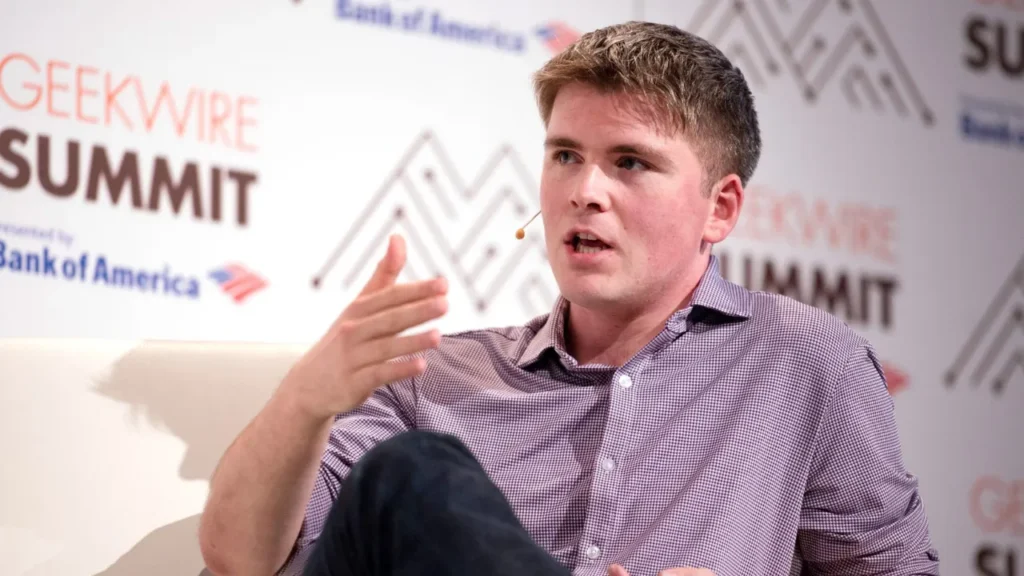
John Collison, cofounder and president of the fintech giant Stripe, has articulated a compelling vision for future career success in the age of AI. Collison argues that pursuing a dual-major academic path, combining distinct fields of study, is the most effective strategy for young professionals to stand out and thrive. This perspective is not novel; it echoes a long-held philosophy championed by influential figures in the business and investment world, most notably the late Charlie Munger, Warren Buffett’s esteemed business partner.
Collison elaborated on his rationale during an appearance on the TBPN podcast, highlighting the transformative power of interdisciplinary knowledge. "If you understand software and understand finance – or if you understand software and understand marketing – you now can go massively improve the entire marketing funnel for your company," Collison stated. He emphasized the potential for individuals armed with such combined skills to achieve unprecedented levels of productivity. "One person can do what would have taken 20 people dredging through all these systems," he added, illustrating the amplified impact of a multidisciplinary skillset.
The president of the $159 billion fintech company believes that individuals with double majors will possess a distinct advantage in navigating their careers and leading successful ventures. In an era where AI is rapidly reshaping job functions, Collison posits that young professionals can best position themselves by cultivating a diverse array of skills. This adaptability, he contends, is paramount in a dynamic workplace increasingly influenced by AI’s capabilities.
The endorsement of broad educational foundations by figures like John Collison is a testament to a principle that has been espoused by business magnates for generations. This philosophy emphasizes the strategic advantage of cultivating a wide-ranging intellectual toolkit rather than narrowly specializing.
Charlie Munger: A Champion of Multidisciplinary Thinking
Charlie Munger, who served as vice chairman of Berkshire Hathaway for decades and was a close confidant of Warren Buffett, was a vocal advocate for the power of "multidisciplinary thinking." Munger consistently championed the idea that drawing upon knowledge from a variety of academic disciplines is essential for effective problem-solving and strategic decision-making.
Throughout his illustrious career, Munger witnessed numerous technological transformations. Yet, he maintained that the core value of cross-disciplinary expertise remained constant and, in many ways, became even more critical. He believed that a superficial understanding of multiple fields was not only attainable but highly advantageous. "Charlie Munger talked about the importance of being multidisciplinary," Collison recalled. "He thinks getting a functional understanding of many disciplines is not that hard. You can just go read the books now or you can talk to your AI about it," Collison added, underscoring Munger’s forward-thinking perspective on leveraging new tools for learning. "I think multidisciplinary thinkers are going to do incredibly well."
Munger’s perspective suggests that the ability to connect seemingly disparate fields of knowledge allows individuals to approach complex challenges with a more comprehensive and innovative mindset. This approach fosters a unique ability to identify patterns, anticipate consequences, and devise solutions that might elude those with a narrower educational focus.
The Emerging Consensus: Broad Thinkers Lead in the AI Era
Across various sectors, from the tech hubs of Silicon Valley to the financial centers of Wall Street, a growing consensus is emerging among executives: a broad foundation of knowledge and fluency across multiple disciplines will be the defining characteristic of those who excel in the AI era.

Daniela Amodei, president and cofounder of Anthropic, a leading AI safety and research company, foresees a future where humans and AI collaborate extensively. However, she stresses that in this collaborative environment, uniquely human skills will become even more valuable. Amodei specifically highlights the advantages possessed by individuals with a liberal arts education, which typically encompasses disciplines such as humanities, natural sciences, sociology, and the arts. She believes these fields cultivate a well-rounded skill set that is particularly conducive to thriving in the AI-driven workplace.
"I actually think studying the humanities is going to be more important than ever," Amodei stated in a recent interview with ABC News. She articulated that AI models are already proficient in STEM (Science, Technology, Engineering, and Mathematics) fields, placing a premium on "soft skills" such as emotional quotient (EQ), communication, and curiosity. "I think this idea that there are things that make us uniquely human – understanding ourselves, understanding history, understanding what makes us tick – I think that will always be really, really important," she added. "I think the ability to have critical thinking skills and learn how to interact with other people will be more important in the future, rather than less."
This perspective suggests that while AI can automate technical tasks, the ability to understand human behavior, context, and nuanced communication remains a vital human asset. Liberal arts education, with its emphasis on critical analysis, interpretation, and ethical reasoning, directly cultivates these essential "human" skills.
Jaime Teevan, chief scientist at Microsoft, shares this view, asserting that liberal arts degrees may indeed represent a significant advantage for success in the contemporary job market. Teevan advocates for a departure from hyper-specialization, encouraging professionals to leverage a broad spectrum of knowledge to tackle complex business challenges. She points out that fields traditionally associated with lower earning potential, such as anthropology, psychology, and education, could find renewed and significant value in the AI era.
"Metacognitive skills will be very important – flexibility, adaptability, experimentation, thinking critically, being able to challenge things. Developing critical-thinking skills requires friction, doing things that are hard, doing deep thinking," Teevan explained in an interview with The Wall Street Journal. "For that, a traditional liberal-arts education is really important." Her emphasis on metacognitive skills – the ability to think about one’s own thinking – aligns with the core tenets of critical inquiry fostered in liberal arts programs. These skills enable individuals to learn more effectively, adapt to new information, and solve problems more creatively.

Even within the highly quantitative and precision-driven environment of Wall Street, leaders are recognizing the growing importance of human-centric skills. Jamie Dimon, CEO of JPMorgan Chase, has underscored the necessity for workers to develop "soft skills" in parallel with their technical expertise. He advocates for leveraging emotional intelligence, critical thinking, and effective communication – including strong writing and meeting facilitation abilities – as essential career tools. Dimon believes these skills will become increasingly crucial as AI continues to automate entry-level positions.
"My advice to people would be critical thinking, learn skills, learn your EQ, learn how to be good in a meeting, how to communicate, how to write," Dimon told Fox News Sunday Morning Futures last year. "You’ll have plenty of jobs." This sentiment from a leading figure in global finance reinforces the idea that while AI can execute tasks, the ability to lead, persuade, and connect with others remains a distinctly human advantage, vital for career longevity and advancement.
Data Supporting the Shift: The Evolving Job Market
The claims made by these industry leaders are supported by evolving labor market data and economic trends. Studies have consistently shown a growing demand for skills that are inherently human and difficult for AI to replicate. For instance, a 2025 report by the World Economic Forum projected that by 2030, critical thinking, problem-solving, and creativity would be among the most in-demand skills across industries, often referred to as "21st-century skills" or "soft skills."
Furthermore, research from institutions like the Bureau of Labor Statistics (BLS) in the United States has indicated that occupations requiring high levels of social intelligence, complex problem-solving, and creativity are projected to experience faster employment growth than those that are highly automatable. While specific data points on the demand for "double majors" are not readily available, the underlying principle of interdisciplinary expertise directly contributes to the development of these highly sought-after human skills.
The narrative of college degrees becoming less financially viable, as suggested by some research and anecdotal evidence, highlights a crucial juncture. A 2026 study published in The Journal of Economic Perspectives found that while the median return on investment for a bachelor’s degree remains positive, the landscape is shifting. The study noted that graduates in fields with high demand and specialized skills often see a more significant and immediate financial return. Conversely, degrees that do not equip individuals with readily transferable or in-demand skills may offer a less compelling financial outcome, especially when weighed against the rising cost of higher education and the burden of student loan debt. This creates a stronger incentive for students and educators to consider educational pathways that maximize future employability and adaptability.

Broader Implications for Education and Workforce Development
The insights from Collison, Munger, Amodei, Teevan, and Dimon suggest a paradigm shift in how we should approach education and workforce development. The traditional model of deep specialization within a single field may become less advantageous as AI assumes more routine cognitive tasks. Instead, fostering individuals who can bridge different domains of knowledge, think critically across disciplines, and apply uniquely human skills like empathy, creativity, and complex communication appears to be the key to navigating the future of work.
For educational institutions, this implies a need to:
- Encourage interdisciplinary studies: Universities may need to facilitate and promote dual-degree programs or minors that allow students to combine seemingly disparate fields, such as computer science with philosophy, or engineering with art history.
- Integrate "soft skills" training: Curricula should actively incorporate the development of critical thinking, communication, collaboration, and emotional intelligence, rather than treating them as secondary or elective components.
- Emphasize lifelong learning: The rapid pace of technological change necessitates a commitment to continuous learning and upskilling throughout one’s career. Educational institutions can play a role in providing accessible and relevant professional development opportunities.
For individuals entering or navigating the workforce, the message is clear: embrace curiosity, cultivate a broad range of interests, and seek opportunities to learn across different fields. The ability to connect diverse ideas, understand complex systems from multiple perspectives, and communicate effectively will not only be valuable but essential for sustained success in an AI-augmented world. The wisdom of investing legends and tech innovators alike points towards a future where intellectual breadth and uniquely human capabilities are the most potent assets.
The original article was published by Fortune.