The Society for Human Resource Management (SHRM) has underscored the critical role of "skills strategists" within organizations, particularly as the landscape of work undergoes profound transformation driven by artificial intelligence (AI) and evolving economic demands. These strategists, SHRM asserts, are instrumental in aligning learning and development (L&D) initiatives directly with core business priorities, thereby creating learning experiences that are both relevant to current needs and accessible to the entire workforce. This emphasis comes amid a flurry of governmental and private sector investments aimed at retooling the American labor force for the future.
SHRM’s Vision for Strategic Learning and Development
According to a statement released on Thursday, July 21, 2026, by SHRM, effective L&D strategies extend far beyond individual employee growth, serving as vital pillars for organizational resilience and success. James Atkinson, Vice President of Thought Leadership at SHRM, articulated this perspective, stating, "Strong learning and development strategies do more than help employees grow — they strengthen the entire organization." Atkinson highlighted recent SHRM research indicating a direct correlation between higher L&D investment and superior business outcomes. "That’s a powerful reminder that investing in people remains one of the smartest investments an organization can make," he added, reinforcing the strategic imperative for businesses to prioritize continuous learning. This sentiment resonates across industries grappling with rapid technological advancements and shifting market dynamics, where a skilled and adaptable workforce is increasingly seen as a competitive differentiator rather than merely an operational cost.
The concept of a "skills strategist" implies a move beyond traditional training coordination. It signifies a proactive, analytical approach where L&D professionals collaborate closely with business leaders to forecast future skill needs, design agile learning pathways, and measure the tangible impact of these programs on organizational performance. Such a role demands a deep understanding of business strategy, workforce analytics, and adult learning principles, enabling organizations to build future-ready capabilities from within.
The Evolving Labor Landscape: AI as a Catalyst for Change
The urgency behind SHRM’s message is magnified by the rapid evolution of the labor market, particularly due to the pervasive influence of artificial intelligence. AI is not merely optimizing existing processes; it is fundamentally reshaping job roles, creating entirely new ones, and rendering some obsolete. This technological shift necessitates a comprehensive overhaul of workforce development paradigms. The demand for new skills, alongside the refinement of existing human capabilities, has become a top priority for policymakers, educational institutions, and employers alike.

For instance, the integration of AI in customer service, data analysis, manufacturing, and even creative fields means that employees must either learn to leverage AI tools or develop skills that complement AI’s capabilities, such as complex problem-solving, critical thinking, and emotional intelligence—areas where human discernment remains irreplaceable. This dual challenge underscores the need for robust L&D frameworks that can address both technical proficiency and uniquely human attributes.
Governmental Response: Department of Labor’s Investment in Apprenticeships
In a significant move to address the burgeoning skills gap, the U.S. Department of Labor (DOL) announced on July 7, 2026, a substantial investment of $162 million in funding for Registered Apprenticeships. This initiative is explicitly designed to bolster workforce development across various sectors, with a particular focus on those impacted by emerging technologies. Registered Apprenticeships are a proven model for workforce training, combining on-the-job learning with related technical instruction, providing a direct pathway to skilled employment.
The DOL’s funding is strategically aimed at cultivating a skilled workforce capable of navigating and contributing to sectors revolutionized by AI, advanced manufacturing, cybersecurity, clean energy, and other cutting-edge fields. By expanding access to these apprenticeships, the DOL seeks to ensure that American workers are equipped with the competencies required for the jobs of today and tomorrow, simultaneously addressing industry demands for a pipeline of qualified talent. This investment represents a tangible commitment from the federal government to bridge the divide between current workforce capabilities and the evolving needs of a technologically advanced economy, fostering economic mobility for individuals and enhancing national competitiveness.
Private Sector Engagement: U.S. Chamber of Commerce Foundation’s Grants
Mirroring the federal government’s efforts, the U.S. Chamber of Commerce Foundation announced on July 8, 2026, a day after the DOL’s funding announcement, its commitment to workforce development by awarding $1.5 million to five organizations. These grants are specifically earmarked to support initiatives focused on professionally developing students for the future workforce. The Chamber of Commerce Foundation explicitly acknowledged the profound impact of AI in its statement, noting that these grants were distributed precisely because "AI reshapes industries and redefines the skills employers need."
Michael Carney, President of the U.S. Chamber of Commerce Foundation, articulated the prevailing challenge in the labor market, describing it as a "mismatch." He stated, "Employers can’t find the workers they need, and young people can’t find a clear path to the workforce." Carney expressed confidence that the five grant recipients are effectively working to close this critical gap. These grants will likely support programs that offer career readiness training, internships, mentorship opportunities, and skill-building workshops tailored to the demands of AI-driven industries. The synergy between government and private sector initiatives highlights a national consensus on the urgency of proactive workforce adaptation.

Bridging the Skills Mismatch: Economic and Social Implications
The "mismatch" described by Carney has far-reaching implications. For businesses, it translates into unfilled positions, increased recruitment costs, reduced productivity, and hindered innovation. For individuals, it means unemployment or underemployment, despite job openings, leading to economic insecurity and a feeling of being left behind by technological progress. On a macro level, an unaddressed skills gap can impede economic growth, reduce global competitiveness, and exacerbate social inequalities.
Addressing this mismatch requires a multi-faceted approach involving not just L&D within companies but also reforms in educational curricula, stronger partnerships between academia and industry, and public-private collaborations that foster lifelong learning. The collective efforts from SHRM, DOL, and the U.S. Chamber of Commerce Foundation demonstrate a concerted push to create a more responsive and adaptable workforce ecosystem.
Defining the Future Workforce: Essential Skills for 2026 and Beyond
The question then arises: what specific skills should HR professionals prioritize in their workforce development strategies? Recent analyses offer clear guidance. A late June report from the Graduate Management Admission Council (GMAC), which surveyed 600 recruiters, identified AI-related skills and strategic thinking as top-coveted attributes among business school graduates. This finding underscores the necessity for future leaders to not only understand AI technologies but also to apply them strategically to business challenges, envisioning new opportunities and operational efficiencies.
However, the GMAC report also highlighted significant deficiencies among new graduates, noting a "dearth of emotional intelligence, worker management capabilities and overall tenacity." These findings are particularly concerning as these "human skills" are often considered non-automatable and increasingly crucial in an AI-augmented workplace. While AI can process data and execute tasks, human employees are needed for nuanced communication, collaborative problem-solving, empathetic leadership, and adaptive decision-making in complex, ambiguous situations.
Further emphasizing the importance of human-centric skills, a SHRM leader, speaking at the organization’s annual conference last month, stressed that "human skills will be crucial" moving forward, complementing AI proficiencies. This leader predicted a renewed emphasis on the human element, highlighting skills that "can’t be developed from a ‘prompted environment.’" Such skills include critical thinking, creativity, complex problem-solving, collaboration, communication, and adaptability – attributes that allow individuals to innovate, lead, and navigate change effectively, rather than merely executing predefined instructions. The integration of AI skills with these foundational human capabilities is seen as the cornerstone of future workforce readiness.

Strategic Implications for Businesses and HR Leaders
The confluence of these trends—SHRM’s advocacy for skills strategists, governmental funding, private sector grants, and evolving skill demands—presents significant implications for businesses and HR departments. HR leaders are no longer just administrators; they are pivotal strategists responsible for workforce planning, talent development, and organizational agility.
To meet these demands, HR professionals must:
- Develop Proactive Skill Assessments: Regularly audit existing workforce skills against future business needs and technological advancements.
- Invest in Adaptive Learning Platforms: Implement flexible, personalized learning systems that cater to diverse learning styles and career paths.
- Foster a Culture of Continuous Learning: Encourage employees at all levels to embrace lifelong learning and reskilling opportunities.
- Strengthen Internal Mobility: Create pathways for employees to move into new roles that leverage emerging skills, fostering retention and growth.
- Prioritize "Human Skills" Development: Integrate training for emotional intelligence, leadership, critical thinking, and collaboration into L&D programs.
- Form Strategic Partnerships: Collaborate with educational institutions, industry associations, and government programs (like Registered Apprenticeships) to source and develop talent.
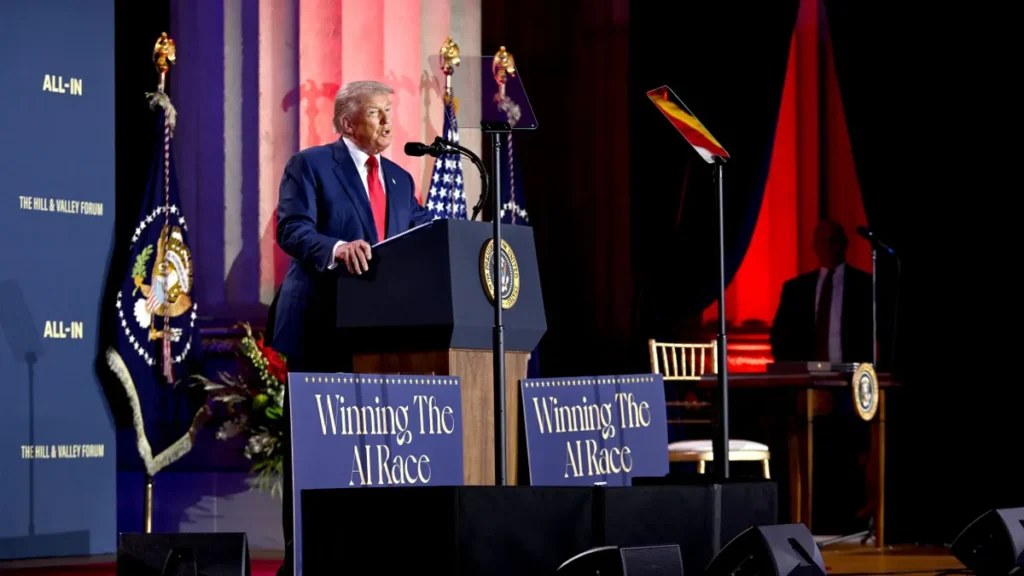
The image of President Donald Trump speaking at a "Winning The AI Race" forum in Washington, D.C., on July 23, 2025, serves as a broader backdrop to these discussions, illustrating the long-standing national dialogue surrounding AI’s economic and societal impact. This political focus on AI, predating the specific 2026 announcements, highlights that the challenges and opportunities presented by emerging technologies have been on the national agenda for some time, setting the stage for the concerted efforts now being observed.
In conclusion, the current period represents a critical juncture for workforce development. The call from SHRM for "skills strategists" is not merely a recommendation but a strategic imperative for organizations aiming to thrive in an AI-driven economy. Coupled with substantial investments from the U.S. Department of Labor and the U.S. Chamber of Commerce Foundation, there is a clear, unified push to equip the American workforce with the blend of technical and human skills necessary to navigate the complexities and seize the opportunities of the future of work. The success of these initiatives will ultimately determine the resilience and competitiveness of businesses and the economic well-being of individuals across the nation.