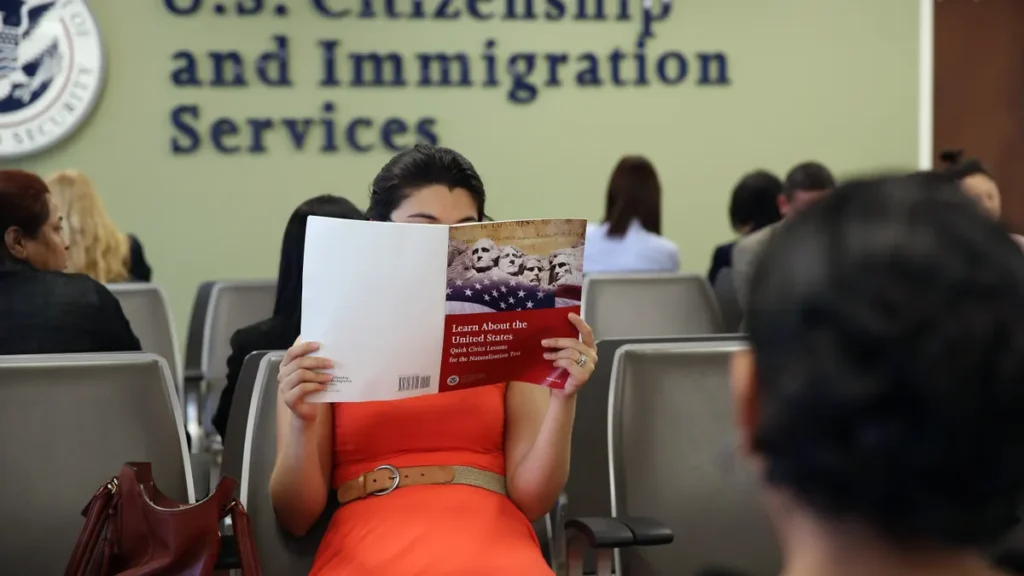
The U.S. Citizenship and Immigration Services (USCIS) announced on Friday, July 21, 2026, that the H-1B nonimmigrant visa program has officially reached its statutory cap for the 2027 fiscal year. This swift exhaustion of available visas underscores the enduring demand for highly skilled foreign workers by American employers, even as the second Trump administration has continued to implement stringent measures aimed at reforming the program and prioritizing U.S. domestic labor. The announcement marks another chapter in the ongoing national conversation about immigration, economic competitiveness, and the critical role of specialized talent in the American workforce.
Understanding the H-1B Visa Program
Established under the Immigration Act of 1990, the H-1B visa program is a nonimmigrant visa category that permits U.S. employers to temporarily employ foreign workers in specialty occupations. These occupations typically require a bachelor’s degree or its equivalent, or higher, in a specific field such as information technology, engineering, medicine, science, and mathematics. The program’s fundamental purpose is to enable American companies to address skill gaps within the domestic workforce and to attract and retain global talent, thereby fostering innovation, driving economic growth, and maintaining the nation’s competitive edge in critical industries.
An H-1B visa is initially granted for a period of up to three years and can be extended to a maximum of six years. Employers wishing to sponsor an H-1B worker must file a petition with USCIS, demonstrating that the position qualifies as a "specialty occupation" and that the prospective employee possesses the requisite qualifications. A critical component of the application process is the Labor Condition Application (LCA), which must be certified by the U.S. Department of Labor (DOL). The LCA ensures that H-1B workers are paid at least the prevailing wage for their occupation in the geographic area of employment, or the actual wage paid by the employer to other employees with similar experience and qualifications, whichever is higher. This safeguard is designed to protect both U.S. and foreign workers from potential wage depression and exploitation.
The Annual Cap and Selection Process
Each fiscal year, Congress legislates an annual cap on the number of H-1B visas that can be issued. For Fiscal Year 2027, this cap remained consistent with previous years, set at 65,000 for the regular category. In addition, an extra 20,000 visas are allocated under the "U.S. advanced degree exemption," commonly referred to as the master’s cap, specifically for beneficiaries who have earned a U.S. master’s degree or higher from an accredited American institution. It is important to note that certain H-1B petitions are exempt from these annual caps; these typically include petitions filed on behalf of workers at institutions of higher education, non-profit organizations affiliated with universities, or non-profit and governmental research organizations. USCIS has also clarified that workers in the Commonwealth of the Northern Mariana Islands and Guam may also fall under cap-exempt categories.
The demand for H-1B visas has consistently outstripped the limited supply for many years, leading to an intensely competitive selection process. To manage the overwhelming number of applications, USCIS has implemented an electronic registration and lottery system. This process, which typically commences in early spring for the fiscal year beginning on October 1st, requires prospective employers to register their intent to file H-1B petitions for eligible beneficiaries. When the number of registrations significantly exceeds the available visas, a random lottery is conducted. For example, for Fiscal Year 2026, USCIS received over 470,000 eligible registrations for just 85,000 available visas (including the master’s cap), resulting in a selection rate below 20%. The rapid attainment of the FY2027 cap underscores a similar, if not heightened, level of employer demand, signaling the persistent gap between the need for specialized talent and the limited visa allocations.
A History of Scrutiny: The Second Trump Administration’s Stance
The H-1B visa program has been a subject of ongoing national debate for decades, but it has faced particularly intense scrutiny and numerous reform attempts during the second Trump administration. Central to this administration’s immigration policy has been a firm commitment to its "Buy American, Hire American" executive order, which aims to prioritize American workers and address perceived abuses within various temporary visa programs. These efforts have manifested through a series of proposed regulatory changes, heightened enforcement measures, and, at times, controversial fee proposals designed to reshape the program.
One significant policy initiative was unveiled last September when the U.S. Department of Homeland Security (DHS) proposed a substantial overhaul of the H-1B visa petition selection process. This update aimed to replace the current random lottery system with a wage-based selection model, wherein H-1B offers with higher proposed wages would receive more entries into the lottery, thereby increasing their chances of selection. The stated rationale behind this proposal, as articulated by DHS, was to incentivize employers to offer higher wages to H-1B beneficiaries and, consequently, to pursue workers with demonstrably higher skill levels. This, the administration argued, would ensure that the program primarily attracts "the best and brightest" global talent and mitigates any potential for the program to depress wages for American workers. While proponents highlighted its potential to align the program more closely with its original intent of bringing in truly specialized expertise, critics raised concerns that such a system could disproportionately disadvantage smaller companies, startups, and non-profit organizations that may not be able to offer top-tier salaries immediately but are nevertheless critical drivers of innovation and job creation. They also noted that entry-level positions, even in highly specialized fields, typically command lower starting salaries, potentially excluding promising recent graduates or early-career professionals regardless of their exceptional qualifications.
In conjunction with the wage-based lottery proposal, President Donald Trump announced a highly contentious $100,000 fee to be attached to H-1B visa petitions. This substantial charge, significantly higher than any previous administrative fees, provoked immediate and widespread opposition from the business community, technology sector leaders, and immigration advocacy groups. Organizations such as the U.S. Chamber of Commerce swiftly initiated legal challenges, contending that the executive branch lacked the statutory authority to impose what amounted to a new tax on a congressionally established visa program without explicit legislative approval. Just last month, in June 2026, a federal judge ruled in favor of the business community, striking down the $100,000 fee. The court’s decision asserted that the President lacked the inherent power to levy such a significant charge, effectively curtailing the administration’s attempt to use financial disincentives as a primary tool for H-1B reform. This legal setback underscored the limitations of executive authority in unilaterally altering fundamental aspects of immigration programs.

Parallel to these legislative and fee-based initiatives, the U.S. Department of Labor (DOL) launched "Project Firewall" last September. This enforcement initiative was explicitly designed to "protect the rights and wages of U.S. workers and maximize compliance with the H-1B visa program." Project Firewall signaled a renewed and intensified commitment to investigations, with a particular focus on cases where American workers might be displaced or overlooked in favor of H-1B workers. The initiative encompasses more rigorous audits of employers’ Labor Condition Application (LCA) compliance, increased site visits to verify employment conditions, and closer scrutiny of prevailing wage determinations. The DOL emphasized its dedication to preventing fraud and abuse, ensuring strict adherence to the program’s requirements, and safeguarding opportunities for the domestic workforce while also protecting H-1B workers from potential exploitation. This enhanced enforcement posture has prompted many employers to conduct thorough internal reviews and strengthen their compliance protocols for H-1B hiring.
Employer Reliance Amidst Headwinds
Despite the accumulation of new hurdles, increased governmental scrutiny, and the administration’s stated objective to reduce reliance on foreign workers, the H-1B visa program remains an indispensable resource for many of America’s largest and most innovative corporations. USCIS data consistently reveals that leading technology giants and prominent financial institutions are among the top approved petitioners year after year. For example, for Fiscal Year 2026, Amazon stood out as the top approved petitioner, sponsoring nearly 5,000 H-1B beneficiaries. This substantial number highlights the e-commerce and cloud computing behemoth’s critical reliance on highly skilled talent, particularly in cutting-edge fields such as software development, artificial intelligence, data science, and specialized engineering roles.
Other industry titans, including Apple, Google, and Meta (formerly Facebook), also consistently rank among the top ten companies in terms of approved H-1B petitions. These companies, operating at the vanguard of technological innovation, frequently cite a persistent shortage of domestic talent possessing the niche skills required to drive their ambitious research, development, and operational expansion initiatives. They argue that H-1B visas are not merely beneficial but essential for recruiting the global experts necessary to maintain their competitive edge in a rapidly evolving global market. Beyond the tech sector, the financial services giant JPMorgan Chase also emerges as a significant user of the program, reflecting the increasing demand for data analysts, cybersecurity specialists, quantitative modelers, and IT professionals within the banking and finance industry.
This sustained reliance by corporate America underscores a fundamental tension: while the administration seeks to restrict foreign worker programs, American businesses, particularly those in high-growth, innovation-driven sectors, contend that access to global talent is indispensable for their innovation cycles, productivity, and overall economic viability. Industry reports from reputable organizations like the National Foundation for American Policy (NFAP) frequently cite compelling statistics demonstrating that H-1B visa holders disproportionately contribute to U.S. patent filings, startup creation, and scientific publications, thereby significantly bolstering America’s economic output and global leadership in critical technologies. Without the ability to attract these highly skilled individuals, companies warn of potential "brain drain," where top talent opts for opportunities in other nations with more welcoming and predictable immigration policies, ultimately diminishing U.S. innovation and competitiveness.
Chronology of Key Events Shaping the H-1B Program (FY2026-FY2027)

- September 2025: The U.S. Department of Homeland Security (DHS) proposes a significant rule change to introduce a wage-based lottery system for H-1B visa selection, aiming to prioritize higher-paid positions. Concurrently, President Donald Trump announces a highly controversial proposed $100,000 fee for H-1B visa petitions, drawing immediate and widespread criticism from the business community. In parallel, the U.S. Department of Labor (DOL) launches "Project Firewall," an enhanced enforcement initiative specifically targeting H-1B compliance and the protection of U.S. workers.
- October 1, 2025: Fiscal Year 2026 officially commences. USCIS continues to process and adjudicate H-1B petitions that were selected in the previous FY2026 lottery.
- March 2026: USCIS conducts the electronic registration period for the upcoming Fiscal Year 2027 H-1B cap. Reports from stakeholders indicate an overwhelming number of registrations, significantly exceeding the total available visa slots.
- Late March/Early April 2026: USCIS completes the random lottery selection process for FY2027 H-1B cap-subject petitions, subsequently notifying selected registrants.
- April 1, 2026: The official filing period for selected FY2027 H-1B cap-subject petitions begins, allowing employers to submit their detailed applications to USCIS.
- June 2026: A federal judge issues a landmark ruling against the Trump administration’s proposed $100,000 H-1B visa fee, asserting that the President lacked the statutory authority to impose such a tax. The proposed fee is thereby struck down and cannot be implemented.
- July 21, 2026: USCIS formally announces that it has received a sufficient number of petitions to meet both the H-1B regular cap and the master’s cap for Fiscal Year 2027. This announcement effectively closes the cap-subject petition filing period for the year, signaling that no more new petitions can be accepted for the current fiscal cycle.
- October 1, 2026: Fiscal Year 2027 officially begins. Approved H-1B petitions from the current selection cycle become effective, allowing foreign workers to commence their employment in the United States.
Reactions and Perspectives
The recurring swift exhaustion of the H-1B cap, coupled with the administration’s persistent reform efforts, continues to elicit a wide range of reactions from various key stakeholders across the nation.
Industry Leaders and Business Associations: Organizations such as the U.S. Chamber of Commerce, the National Association of Manufacturers, and major technology trade groups consistently advocate for either expanding the H-1B program or at least maintaining its current accessibility and predictability. Following the cap announcement, spokespersons from these groups typically reiterate urgent calls for comprehensive immigration reform that would adequately address persistent skill shortages, increase visa availability to match economic demand, and establish more predictable and efficient pathways for highly skilled foreign professionals. They frequently express significant concern that excessive restrictions, unpredictable policy changes, or prolonged administrative delays could compel American companies to offshore critical operations or lose out on essential talent to competitor nations. The recent striking down of the $100,000 fee was largely celebrated as a crucial victory for the business community, alleviating a substantial financial burden that would have disproportionately impacted smaller enterprises and innovative startups.
Immigration Advocates: Groups dedicated to immigrants’ rights and welfare express ongoing concerns over the increasingly restrictive and often uncertain environment for H-1B visa holders. While acknowledging the legitimate need to prevent fraud and abuse within the system, they argue that the administration’s more stringent policies, such as Project Firewall and the proposed wage-based lottery, inadvertently create unnecessary barriers for highly qualified individuals. They emphasize the profound human element, highlighting how H-1B workers make significant contributions to American society, pay substantial taxes, and often pursue pathways to permanent residency, integrating deeply into communities across the country. These advocates frequently call for a more streamlined, transparent, and humane immigration system that fully recognizes the multifaceted economic, cultural, and social contributions of immigrants.
Government Officials and Labor Unions: The administration’s rhetoric, consistently articulated by various government officials from DHS, DOL, and USCIS, steadfastly emphasizes the paramount importance of protecting American jobs and wages. They assert that the ongoing reforms are absolutely necessary to ensure the integrity of the H-1B program and to prevent its potential misuse as a source of lower-cost labor. Project Firewall, in particular, is framed as a vital enforcement tool for upholding labor standards and preventing the displacement of qualified U.S. workers.