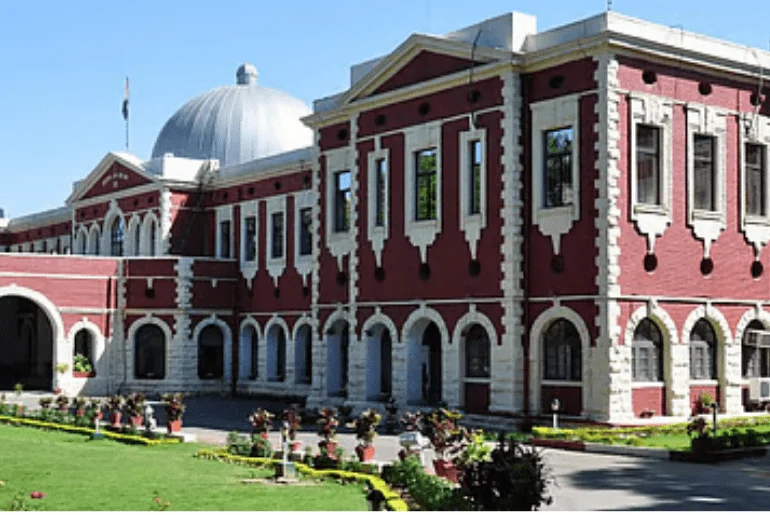
In a significant judicial pronouncement, the Jharkhand High Court has directed the Jharkhand Tourism Development Corporation (JTDC) to regularise the service of one of its long-serving employees, Rakesh Kumar, retrospectively from February 20, 2001. The directive mandates that Kumar be accorded all consequential service and financial benefits from this date, bringing an end to a protracted legal battle spanning decades. The order, delivered by a single bench of Justice Deepak Roshan, emerged from a long-pending petition filed by Kumar, who has been rendering service to JTDC since 1993, highlighting persistent issues surrounding the precarious nature of contractual and daily-wage employment within public sector undertakings. This ruling carries substantial implications not only for Rakesh Kumar, who is now approaching retirement, but also potentially for numerous other employees within JTDC and similar state-run corporations who have toiled for years without the security and benefits of regular employment.
A Landmark Ruling for Service Regularisation
The core of the High Court’s directive is the recognition of Rakesh Kumar’s continuous and dedicated service since 1993. Kumar’s petition argued that despite performing duties against sanctioned work for several years, he was consistently denied the status and statutory benefits associated with regular employment. This lack of regularisation meant he operated without the full spectrum of rights and protections afforded to permanent government employees, including proper salary scales, pension contributions, leave entitlements, and job security. The court’s decision to fix February 20, 2001, as the effective date for his regularisation is a crucial aspect, as it signifies a specific legal or administrative threshold beyond which his service was deemed eligible for regular status. Consequently, JTDC is now obligated to recalculate and extend all applicable service and financial benefits, including arrears, pensionable service, and promotions, from that stipulated date. The judgment represents a monumental victory for individual rights and underscores the judiciary’s role in addressing long-standing grievances of workers in the public sector.
The Decades-Long Battle for Recognition
Rakesh Kumar’s journey with the Jharkhand Tourism Development Corporation began in 1993, a period when the region was still part of undivided Bihar. He was initially engaged in a capacity that did not confer permanent employment status, likely on a daily-wage or contractual basis, a common practice in many government departments and public sector enterprises across India. Despite the informal nature of his initial appointment, Kumar consistently performed duties that were essential to the functioning of JTDC, often against sanctioned posts. This meant that while there was an official requirement for the work he performed, his employment status remained provisional, denying him the stability and benefits associated with a permanent role.
As the years progressed, and particularly after the formation of Jharkhand in November 2000, the issue of regularising long-serving contractual or daily-wage employees became a recurring point of contention. Many employees like Kumar found themselves in a bureaucratic limbo, contributing significantly to their respective organisations but without the corresponding recognition or benefits. Kumar’s frustration mounted as he observed his peers and colleagues, who may have joined around the same time or even later through regular channels, enjoying the full spectrum of employee benefits while he remained in an irregular status.
It was this prolonged denial of regularisation that compelled Rakesh Kumar to seek judicial intervention. He filed a writ petition before the Jharkhand High Court, challenging the corporation’s inaction and seeking an order to regularise his employment. His legal representation, led by Senior Advocate Manoj Tandon, meticulously presented his case, highlighting his uninterrupted service, the nature of his duties being against sanctioned posts, and the inherent injustice of his continued irregular status. The petition underscored the principle of ‘equal pay for equal work’ and the fundamental right to dignity in employment. The court’s decision, coming as Kumar nears the age of superannuation, provides a crucial sense of closure and justice after more than two decades of struggle.
Understanding the Legal Framework: Regularisation in Public Service
The issue of regularisation of contractual, casual, or daily-wage employees in government and public sector undertakings is a complex and often litigated area in Indian labour law. The legal landscape has been shaped by numerous pronouncements from the Supreme Court and various High Courts over the decades.
The Conundrum of Contractual Employment
Public sector bodies often resort to contractual or daily-wage appointments due to budgetary constraints, temporary project needs, or to bypass lengthy recruitment processes. While these arrangements offer flexibility, they often lead to exploitation and denial of basic labour rights when employees are kept in such statuses for extended periods, performing duties of a permanent nature. The fundamental principle is that if work of a permanent nature exists, permanent employees should be appointed through a proper selection process. However, the reality on the ground often diverges, leading to situations like Rakesh Kumar’s.
Navigating Judicial Precedents
A landmark judgment in this regard is the Supreme Court’s ruling in Secretary, State of Karnataka vs. Umadevi (3) and Others (2006). This judgment largely discouraged regularisation of illegally or irregularly appointed employees, emphasising the importance of public employment adhering to constitutional provisions for equality of opportunity (Articles 14 and 16). The Court held that regularisation could not be claimed as a matter of right for those appointed without following due process.
However, the Umadevi judgment also acknowledged certain exceptions and carve-outs. It stated that regularisation could be considered for those who had been working for ten years or more on a duly sanctioned post, without the aid of any interim court order, and were eligible for the post as per recruitment rules. Subsequent judgments have further elaborated on these nuances, often focusing on the nature of appointment (whether it was against a sanctioned post), the length of service, and the eligibility of the individual at the time of initial engagement.
Rakesh Kumar’s case likely aligns with these exceptions. His prolonged service since 1993, coupled with the assertion that he performed duties against sanctioned work, suggests that his employment, though initially irregular, had acquired a de facto permanent character over time, justifying the court’s intervention to regularise his services. The selection of February 20, 2001, as the cut-off date might be tied to specific regularisation policies or government circulars that came into effect around that time, or it could be a date signifying a particular milestone in Kumar’s service history that the court deemed appropriate for the conferment of regular status. This date likely predates the Umadevi judgment, making the case for regularisation stronger under the then-prevailing legal understanding.
The Court’s Directive: A Deeper Dive into the Order
Justice Deepak Roshan’s order delves into the specifics of Kumar’s petition, acknowledging the injustice of his prolonged irregular employment. The bench meticulously examined the evidence presented, including Kumar’s service records, the nature of his duties, and the fact that he was indeed working against sanctioned posts within JTDC. The court found sufficient grounds to conclude that Kumar’s continued employment in an irregular capacity constituted an arbitrary act on the part of the corporation, infringing upon his rights.
The retrospective application of regularisation from February 20, 2001, is a critical element of the judgment. This ensures that Kumar does not merely gain future benefits but is compensated for the lost years of regular employment. The "consequential service and financial benefits" encompass a broad range of entitlements:
- Arrears of Salary: Calculation of the difference between the wages he received and the salary he would have earned as a regular employee from February 20, 2001, to the present.
- Pensionary Benefits: His service from the regularisation date will be counted towards his pensionable service, significantly impacting his retirement benefits.
- Promotional Avenues: His seniority will be notionally fixed from February 20, 2001, potentially making him eligible for promotions that he missed out on.
- Leave Encashment and Other Allowances: Entitlement to various allowances, leave encashment, and other perks associated with regular government service.
- Updated Service Records: His service book will be updated to reflect his regular status from the specified date.
This comprehensive redressal aims to place Rakesh Kumar, as far as practically possible, in the position he would have been in had he been regularised two decades ago.
Financial and Administrative Ramifications for JTDC
The High Court’s directive carries significant financial and administrative ramifications for the Jharkhand Tourism Development Corporation. Financially, JTDC will be required to:
- Calculate and Disburse Arrears: This could amount to a substantial sum, given the more than two decades of retrospective application. The calculation will involve salary revisions, annual increments, and various allowances.
- Adjust Pension Contributions: JTDC will need to make retrospective contributions to Kumar’s pension fund, reflecting his regular status from 2001.
- Budgetary Impact: These unforeseen expenditures could strain the corporation’s budget, potentially necessitating a re-allocation of funds or seeking additional grants from the state government.
Administratively, JTDC faces the task of:
- Updating Service Records: Meticulously revising Rakesh Kumar’s entire service history, including seniority lists, promotion registers, and personal files.
- Policy Review: The judgment may prompt JTDC’s management to critically review its existing employment policies, particularly concerning contractual and daily-wage workers. There might be a need to formalise procedures for regularisation or to ensure that all future appointments against sanctioned posts adhere strictly to recruitment rules to avoid similar legal challenges.
- Managing Employee Expectations: The ruling will undoubtedly raise expectations among other similarly placed employees, necessitating a clear communication strategy and a structured approach to addressing potential future petitions.
Broader Implications: A Beacon for Similarly Placed Employees?
The judgment in Rakesh Kumar’s favour has undeniably sent ripples through the Jharkhand Tourism Development Corporation and potentially across other state-run bodies in Jharkhand. The article explicitly notes that the judgment "may also draw attention among other JTDC employees who have spent long periods working under daily-wage or contractual arrangements." This is a crucial aspect, as Kumar’s victory could serve as a beacon of hope for many who have endured similar circumstances.
The Nuances of Individual Claims
However, the court’s order also wisely includes a crucial caveat: "the order does not automatically entitle all similarly-placed employees to regularisation. Any such claim would have to be examined separately based on the employee’s service history, the nature of the appointment and the applicable legal provisions." This qualification is vital in preventing a floodgate of indiscriminate regularisation claims, upholding the principles laid down by the Supreme Court in cases like Umadevi. Each potential claimant would need to demonstrate:
- Length of Service: Evidence of continuous and long-term service.
- Nature of Duties: Proof that they were performing duties against a sanctioned post.
- Eligibility: That they met the eligibility criteria for the post at the time of their initial engagement.
- Absence of Interim Orders: That their service was not merely prolonged due to interim court orders.
This nuanced approach ensures that while justice is served in deserving individual cases, the broader framework of public employment rules is not undermined. Nevertheless, the judgment provides a powerful precedent, indicating that the Jharkhand High Court is willing to intervene and provide relief in cases where prolonged irregular employment against sanctioned posts has led to clear injustice.
A Call for Policy Review
Beyond individual cases, this ruling presents an opportunity for the Jharkhand state government and its various corporations to undertake a comprehensive review of their human resource policies. The prevalence of long-term contractual or daily-wage employment against permanent positions often stems from systemic issues, including:
- Lack of Manpower Planning: Inadequate assessment of long-term staffing needs.
- Budgetary Constraints: Reluctance to incur the higher costs associated with regular employment.
- Bureaucratic Delays: Protracted and cumbersome recruitment processes.
The judgment could catalyse a more proactive approach to regularisation where warranted, and a stricter adherence to fair and transparent recruitment practices for all future appointments. It reinforces the constitutional mandate for equal opportunity and the principles of natural justice in public employment.
Reactions to the Verdict
Advocate for Rakesh Kumar
Senior advocate Manoj Tandon, who represented Rakesh Kumar, expressed profound satisfaction with the verdict. Speaking to reporters (inferred), Tandon stated, "This judgment is a testament to the perseverance of an ordinary man fighting for his fundamental rights. For over two decades, Mr. Kumar served the corporation diligently, yet was denied the dignity and security of regular employment. The High Court’s decision not only rectifies a long-standing injustice but also sends a clear message that public sector undertakings cannot indefinitely exploit workers by keeping them in an irregular status while they perform duties against sanctioned posts. This is a victory for the dignity of labour and reinforces faith in the judiciary’s role as a protector of citizens’ rights."
Jharkhand Tourism Development Corporation
Officials from the Jharkhand Tourism Development Corporation (inferred) are expected to acknowledge the court’s order and state their commitment to complying with the directive. While the financial implications will be substantial, the corporation is likely to work with the state government to ensure the necessary funds are allocated for the retrospective benefits. A JTDC spokesperson (inferred) might issue a statement confirming that "the corporation respects the Honourable High Court’s judgment and will take all necessary steps to implement the order concerning Mr. Rakesh Kumar. We are currently reviewing the financial and administrative aspects to ensure timely compliance." The corporation may also indicate that it will review its internal policies to address similar situations in a structured manner moving forward.
Employee Associations
Various employee associations and labour unions in Jharkhand (inferred) are likely to welcome the judgment as a significant victory for workers’ rights. They may use this ruling to advocate for a broader regularisation drive for all similarly placed employees across different state departments and corporations. Representatives of such associations might call upon the state government to formulate a comprehensive policy for the regularisation of long-serving contractual and daily-wage workers, rather than forcing individual employees to pursue costly and time-consuming legal battles. This judgment, they might argue, highlights a systemic issue that requires a systemic solution.
Looking Ahead: The Future of Contractual Employment in Jharkhand
The Jharkhand High Court’s ruling in Rakesh Kumar’s case is more than just an individual victory; it is a critical reminder of the judiciary’s role in upholding labour rights and ensuring social justice. As Jharkhand, like many other states, continues to grapple with the challenges of unemployment and the prevalence of contractual labour in government sectors, this judgment sets an important precedent. It underscores that while efficiency and budgetary considerations are important, they cannot come at the cost of denying fundamental rights and dignity to employees who have dedicated years of service.
The long-term impact of this decision will depend on how the state government and its corporations respond. Will it lead to a proactive review and regularisation policy for other deserving employees, or will it necessitate individual legal battles for each case? The ideal scenario would be for the state to take cognisance of the underlying issues illuminated by this judgment and develop a transparent, time-bound mechanism to address the grievances of long-serving contractual and daily-wage employees who meet specific criteria for regularisation. This would not only prevent further litigation but also foster a more motivated and secure workforce, ultimately contributing to better governance and public service delivery in Jharkhand.