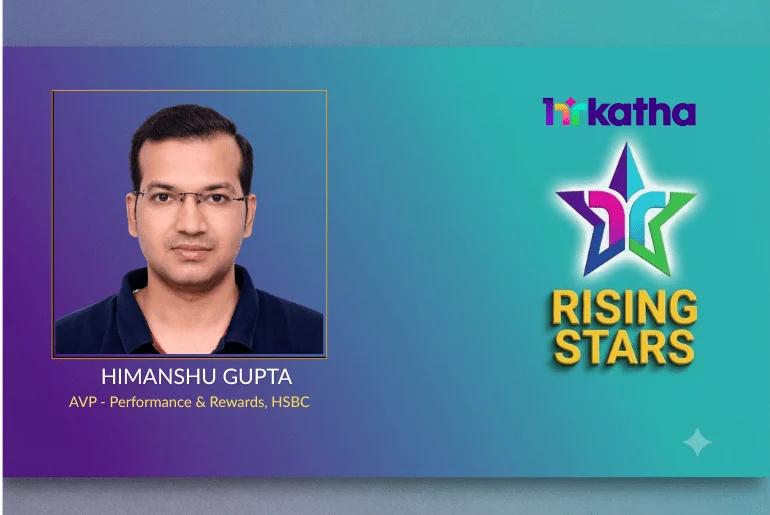
Himanshu Gupta, a distinguished figure in the realm of Human Resources, has been recognized as the First Runner-Up at the prestigious HRKatha Rising Star Leadership Awards 2025, an accolade that underscores his profound impact on the HR profession and his pioneering role in redefining global HR strategy from India. His career trajectory, largely focused on the intricate design and implementation of HR architectures, has consistently emphasized the critical link between talent systems and overarching business objectives, positioning him as a forward-thinking leader who advocates for HR as a strategic value creator rather than merely an administrative function. This recognition by HRKatha, a leading platform for HR insights and thought leadership, highlights Gupta’s innovative approach and his significant contributions to shaping the future of human capital management, particularly within the dynamic landscape of India’s Global Capability Centres (GCCs).
Gupta’s professional journey has predominantly centered on the architectural facets of HR, including the meticulous construction of performance and rewards frameworks, the seamless integration of diverse organizational policies, and the creation of bespoke HR systems where existing structures proved inadequate or obsolete. This fundamental orientation has profoundly influenced his perception of the HR function. In his view, HR generates tangible value not through the mere efficient administration of processes, but by ensuring its systems are intrinsically interwoven with a business’s core strategies for competition, growth, and resource allocation. This philosophy positions HR as an indispensable strategic partner, directly contributing to an organization’s competitive advantage and long-term sustainability.
His career path has provided him with diverse perspectives on this pivotal challenge. Beginning with impactful consulting assignments at global powerhouses PwC and Mercer, Gupta subsequently transitioned to his current influential role at HSBC. Here, he spearheads global performance and rewards initiatives, operating with a worldwide remit from his base in India. This unique professional arc reinforces one of Gupta’s strongest convictions: that geographical proximity to corporate headquarters is no longer a prerequisite for exerting significant influence on global HR strategy. This evolving dynamic signals a fundamental shift in how multinational corporations leverage talent and expertise, particularly from burgeoning talent hubs like India.
The HRKatha Rising Star Leadership Awards: A Beacon for Future HR Leaders
The HRKatha Rising Star Leadership Awards, now in its inaugural year, were established to identify, celebrate, and amplify the voices of the next generation of HR leaders who are demonstrably shaping the future of the profession. These awards aim to spotlight individuals whose innovative work, transformative ideas, and exceptional leadership potential are poised to leave an indelible mark on human capital management globally. The selection process involves a rigorous evaluation of candidates’ contributions, their strategic thinking, their ability to drive change, and their demonstrated impact on organizational outcomes. Himanshu Gupta’s recognition as First Runner-Up places him at the forefront of this new cohort of HR visionaries, lauded for his pragmatic yet pioneering approach to talent architecture and strategic HR. The awards underscore HRKatha’s commitment to fostering excellence and innovation within the HR community, providing a vital platform for emerging professionals whose work deserves broader industry recognition.
Structure Follows Strategy: The Blueprint for Success
Gupta’s core operating principle is elegantly simple yet profoundly impactful: organizational structure must always follow strategy, and talent systems must intrinsically reflect the culture an organization endeavors to cultivate. This conviction makes him inherently cautious of blindly importing HR frameworks merely because they have demonstrated success elsewhere. He firmly believes that true efficacy stems from contextual relevance.
Whether tackling the complexities of integrating HR policy following a large-scale merger or introducing a structured performance management system into an organization previously operating without one, Gupta insists that the foundational starting point must always be the organization itself. This involves a deep dive into its unique economic drivers, operational scale, workforce demographics, regulatory environment, and overarching strategic priorities. While established "best practices" certainly offer valuable reference points and insights, they can never serve as a substitute for a thorough understanding of an organization’s specific context.
This nuanced distinction holds particular importance in the realm of rewards and compensation. A technically sophisticated compensation or performance framework, no matter how ingeniously designed, is destined to fail if it does not actively reinforce the precise behaviors, capabilities, or desired outcomes that the business genuinely requires. For Gupta, the true value of HR design is realized only when it establishes a clear, undeniable connection back to the organization’s strategic imperatives. This approach moves beyond mere compliance or administrative efficiency, elevating rewards to a powerful lever for strategic alignment and organizational performance.
Leadership Without a Cultivating Influence and Impact
Himanshu Gupta defines HR leadership through a powerful triad of qualities: humility, adaptability, and purposeful execution. For professionals embarking on their careers, he posits that genuine leadership emerges long before the conferral of formal authority. It is cultivated by learning to influence effectively without relying on hierarchical power, by listening with acute attention to discern the underlying problem beneath the stated issue, and by consistently following through on commitments. In this paradigm, credibility is not bestowed but meticulously accumulated through consistent, impactful execution.
This perspective also informs Gupta’s crucial distinction between mere activity and tangible impact. An HR function can diligently launch numerous programs, meticulously produce comprehensive frameworks, and efficiently complete a multitude of processes without necessarily altering a fundamental outcome. True leadership, however, demands a more rigorous test: "What became demonstrably different because the work was undertaken?" This incisive question permeates much of his approach to performance and rewards, driving a focus on measurable results and strategic shifts rather than just operational output. This emphasis on impact aligns with modern HR trends that advocate for HR to demonstrate its ROI and strategic value through data-driven outcomes.
Engineering Fairness into the System: A Proactive Approach to D&I
Gupta applies a remarkably similar design philosophy to the critical domains of diversity and inclusion (D&I). Rather than perceiving inclusion as a peripheral or parallel initiative, he strongly advocates for its deep embedding within the very systems that govern how individuals are compensated, assessed, promoted, and developed within an organization. This architectural approach ensures that D&I is not merely a program but an intrinsic part of the organizational DNA.
In practical terms, this philosophy has translated into concrete initiatives such as localized pay-equity reviews. These reviews are meticulously designed to identify and address gender and ethnicity gaps across diverse markets, ensuring fair compensation practices. Additionally, he champions internal mobility pathways aimed at broadening access to opportunities for historically underrepresented groups, including women in technology roles and professionals re-entering the workforce after a career break. The fundamental principle driving these efforts transcends the simple addition of another DEI program; instead, it involves a critical examination of whether existing mechanisms inherently produce equitable outcomes. This shifts the core question from mere intent to the structural architecture of fairness. An organization may genuinely harbor the ambition of cultivating a more diverse leadership pipeline. However, Gupta’s compelling argument is that such ambition carries little weight if the fundamental systems governing pay, progression, and mobility inadvertently continue to reproduce existing patterns of inequality. This perspective resonates with global calls for systemic change in D&I, moving beyond performative measures to deeply integrated solutions.
Proving It in Numbers: The Language of Business
Gupta is equally rigorous in assessing whether HR interventions can withstand scrutiny beyond the confines of the HR function itself. During a complex post-merger integration, he spearheaded the development of a unified HR policy framework encompassing over 25 distinct areas. A crucial component of the case presented to senior leadership was a detailed cost-modeling exercise, demonstrating the financial prudence and potential savings of the proposed framework. Following its implementation, both employee and manager satisfaction scores demonstrably improved within a six-month period, providing empirical evidence of its positive impact.
In another significant assignment for a logistics client, Gupta was instrumental in redesigning variable pay structures, establishing a more direct correlation between incentives and specific functional Key Performance Indicators (KPIs). This strategic redesign garnered strong executive support and led to an extended engagement, underscoring the tangible business value generated. For Gupta, these examples collectively reinforce a broader, critical point: HR design gains significantly in credibility when it can be articulated using metrics and measures that the broader business already comprehends and values. This does not imply that every people decision must be reduced to a purely financial equation, but rather that the organizational consequence and business impact of any HR recommendation must be clearly and persuasively explained in terms understandable to the entire leadership team. This approach is vital for HR to secure a seat at the strategic table and influence critical business decisions.
What AI Changes, and What It Doesn’t: Navigating the Future of HR
Looking ahead, Gupta anticipates that automation will increasingly assume a larger share of the administrative tasks associated with HR data and analytics. However, he views the resultant opportunity as far more profound than mere efficiency gains. The true potential, as he sees it, lies in how HR professionals strategically leverage the enhanced capacity and bandwidth that automation inevitably creates.
The advent of predictive workforce analytics, sophisticated scenario modeling, and AI-assisted talent matching holds the promise of making the HR function far more analytically capable and data-driven. Yet, these technological advancements simultaneously raise the bar for interpretation and strategic insight. If technology efficiently produces an abundance of data and insights, the critical role of HR remains to discern which signals are truly significant, to understand the inherent trade-offs implied by these insights, and to determine how they should strategically influence overarching business decisions. This fundamental shift unequivocally propels the HR profession further into the realm of advisory work, demanding greater strategic acumen and consultative capabilities from its practitioners.
Gupta applies this same forward-thinking approach to executive rewards, favoring compensation frameworks that establish a closer connection between long-term incentives and future organizational capability, sustained business performance, and long-term sustainability. This contrasts sharply with traditional models that might lean too heavily on tenure or conventional retention logic. While the underlying technology may be novel and rapidly evolving, the fundamental design question, as Gupta observes, remains timeless: "What behavior should the organization reward, and crucially, why?" This enduring question highlights the human element that technology cannot replace in HR strategy.
The Case for GCCs: India’s Ascent in Global HR Strategy
Perhaps the argument Himanshu Gupta articulates most strongly and passionately concerns the evolving geography of strategic HR work. India’s Global Capability Centres (GCCs) were historically perceived primarily as hubs for shared services and operational execution. However, over recent years, many have undergone a profound transformation, evolving into sophisticated centers of excellence engaged in advanced analytics, strategic advisory work, product ownership, and even global functional leadership. Gupta views the intricate field of rewards as a prime example of this significant transition.
"We are front-end strategic advisors leading multi-million dollar total rewards architectures across multiple regions and countries," Gupta asserts, encapsulating the elevated strategic role now played by HR professionals in India’s GCCs. This statement directly challenges outdated perceptions and highlights the sophisticated level of expertise now resident in these centers.
His own illustrious career trajectory serves as a compelling testament to this paradigm shift. Operating from India, he has not been constrained from making substantial, impactful contributions to global performance and rewards decisions, navigating complex landscapes involving multiple markets and diverse business contexts. The broader implication of this evolution is not that geography has become entirely irrelevant; indeed, headquarters, reporting structures, and organizational power dynamics undeniably continue to matter. Rather, it is that the once-automatic relationship between physical location and strategic influence is becoming increasingly decoupled. Expertise that can effectively solve a global problem, robustly support its recommendations with compelling evidence, and operate credibly across diverse international markets no longer requires a physical presence at the immediate center of corporate power. For India’s rapidly expanding and increasingly sophisticated GCC ecosystem, this represents a monumental and transformative change, solidifying its position as a global strategic talent hub.
Leadership Snapshot: Insights from a Rising Star
- Leadership style, in one word: Purposeful. This reflects his emphasis on impact and strategic alignment.
- An HR superpower for a day: Real-time market foresight. This highlights his focus on proactive, data-driven decision-making and anticipating future talent trends.
- Coffee chat or boardroom debate: Boardroom debate. This underscores his preference for engaging in high-level strategic discussions and influencing critical business outcomes.
- First move if an employee is upset about their salary slip: Listen first, review the records together, check the numbers for discrepancies, then explain clearly how the compensation framework translated into the individual’s payout. This approach emphasizes transparency, empathy, and a commitment to fair process.
Why Himanshu Gupta is a Rising Star: A New Era of HR Leadership
Himanshu Gupta’s consistent and defining instinct is to fundamentally treat HR architecture not as a parallel function running alongside business strategy, but as a potent lever for driving tangible business outcomes. He rigorously judges the efficacy of a rewards framework or the success of a policy integration by what demonstrably changed within the organization, rather than merely by its technical soundness or administrative efficiency. This outcome-oriented mindset is a hallmark of truly strategic HR leadership.
What makes his profile particularly distinctive and noteworthy is the vantage point from which this profound instinct is being applied. His career path vividly reflects a broader, transformative shift occurring within India’s Global Capability Centres. These centers are rapidly evolving from their historical role as execution hubs to becoming indispensable sources of global functional expertise and strategic leadership. Gupta’s achievements suggest that effectively shaping international HR strategy increasingly hinges upon specialist depth, empirical evidence, and a deep understanding of global contexts, rather than simply physical proximity to corporate headquarters.
Gupta’s recognition by the HRKatha Rising Star Leadership Awards 2025 is not merely an acknowledgment of individual achievement; it is a powerful testament to the evolving landscape of global HR. His work exemplifies a new generation of HR leaders who are not just adapting to change but actively driving it, ensuring that human capital remains at the very heart of business strategy and innovation. As organizations worldwide navigate unprecedented complexities, leaders like Gupta, with their strategic foresight and unwavering commitment to impact, will be instrumental in forging resilient, equitable, and high-performing workforces for the future. His trajectory signals a promising future for HR, where strategic vision and demonstrable impact from any global location can profoundly influence organizational success.