
The rapid evolution of artificial intelligence, marked by increasingly sophisticated chatbots, dynamic video generation, and AI-driven analytical capabilities, has set the stage for another transformative innovation: the "digital twin." While the concept of digital twins has roots stretching back to the mid-20th century, a groundbreaking application has emerged, extending this technology to replicate individual human professionals within the corporate environment. This development, spearheaded by the recent launch of Viven.ai, promises to redefine organizational intelligence, collaboration, and knowledge management.
Genesis of the Digital Twin Concept
The foundational idea of a digital twin dates back to the 1960s, a testament to early visionary thinking in engineering and simulation. NASA engineers, faced with the catastrophic oxygen explosion aboard Apollo 13, developed a sophisticated digital replica of the spacecraft. This digital model, encompassing the intricate details of the ship’s electronics and power systems, enabled them to meticulously simulate the events leading to the accident. This critical exercise allowed them to diagnose the problem and devise solutions in a virtual environment, ultimately contributing to the safe return of the astronauts.
Following this pioneering application, the concept of digital twins found traction in various complex engineering domains. Major industrial players like Boeing, Dassault, and General Electric (GE), alongside Siemens, adopted digital twins to simulate and optimize intricate systems such as aircraft, train networks, and other advanced engineering projects. By the year 2010, NASA formalized the definition of a digital twin: "an integrated multi-physics, multi-scale, probabilistic simulation of an as-built vehicle or system that uses the best available physical models, sensor updates, and fleet history." This definition underscored the dynamic and data-rich nature of these virtual counterparts.
Human Digital Twins: A Leap Forward in AI Application
Fast-forward to the present, and the confluence of advanced AI capabilities—including readily available, high-fidelity avatars, nuanced voice generation, and rapid text comprehension—has made the replication of human professionals a tangible reality. Viven.ai, a new company spun off from the AI talent pool of Eightfold, has launched a platform that embodies this paradigm shift. Having undergone six months of rigorous testing within their own organization, the company asserts this technology represents a "groundbreaking way to leverage AI for many important applications."
The Viven.ai platform operates by ingesting an extensive array of a user’s digital professional footprint. This includes emails, meeting transcripts, internal communications, documents, and virtually all digital activity logged within major productivity suites like Microsoft Graph or Google Workspace. The system then aggregates this data to construct a comprehensive digital replica, or "twin," of each individual.
The Mechanics of Viven.ai’s Digital Twin
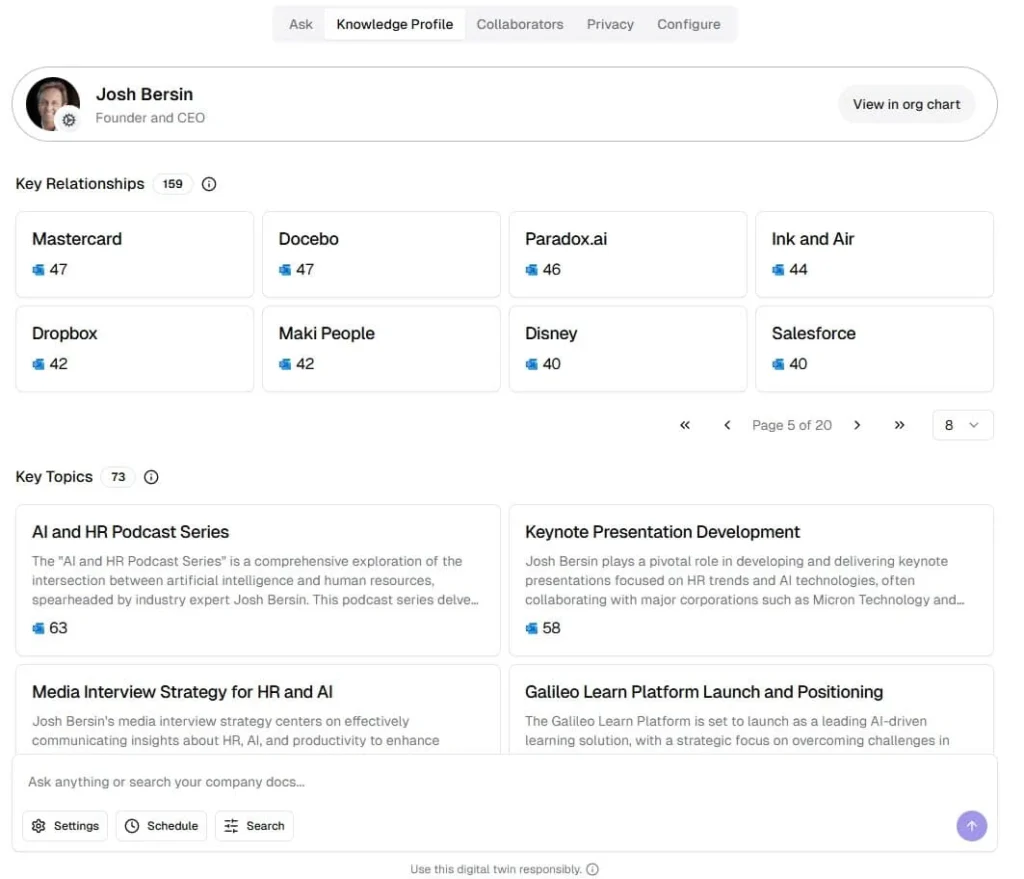
Upon integration, a user’s digital twin is presented online, offering a dynamic dashboard that highlights key professional relationships, organizational structures, ongoing project topics, and intricate details about their schedule. Crucially, the platform provides "enormous context on your projects, relationships, activities, and persona." Viven.ai has implemented a highly configurable security framework, empowering users to meticulously control the data ingested. This ensures that sensitive personal information, such as family communications or non-work-related content, can be excluded, thereby safeguarding privacy.
The implications of this technology are profound. In a corporate setting where all employees have deployed their digital twins, interactions can be revolutionized. For instance, an employee could query the digital twin of a colleague: "What are your major action items for tomorrow?" or "What is the current status of our relationship with XYZ company?" Similarly, a finance team member could ask a CFO’s twin, "Can you provide an overview of our accounts receivable?" or "What is the latest update on our engagement with ABC company?" This capability allows for immediate access to critical information without the need for direct interruption of the human counterpart.
Transformative Use Cases Across Industries
The "talent-dense" nature of many modern organizations, where individuals often wear multiple hats and engage directly with clients, makes the application of digital twins particularly potent. Viven.ai’s platform enables a scan of the collective workforce to answer specific queries. For example, a manager could ask, "Which team members have recently engaged with Liberty Mutual, and what were the key discussion points?" or "Who conducted the most recent Galileo demo, and what script was utilized?" This granular visibility into team activities and knowledge sharing can significantly enhance operational efficiency and strategic alignment.
On a personal level, each digital twin is designed to emulate the knowledge and communication style of the individual it represents. The platform’s ability to access historical data, such as years of archived emails, allows a digital twin to recall past interactions and insights. A user might inquire, "Josh, can you provide a historical overview of your meetings with Workday and detail the key learnings over time?" or even pose research-related questions: "Josh, I would appreciate your feedback on the latest version of our L&D research; could you review this document and offer your insights?"
In essence, each digital twin functions as a dynamic repository of an individual’s knowledge and professional persona. This has significant implications for fields like customer service, technical support, and training. Organizations can now leverage the deep expertise of their most seasoned professionals without constantly burdening them with direct inquiries. The Viven.ai platform also offers transparency, allowing users to see who is querying their twin, thereby identifying areas of high demand for their expertise and potentially streamlining internal support workflows.

The ability to access expert knowledge without direct interruption presents a compelling solution for urgent situations. Imagine needing critical input from legal, engineering, marketing, or contracts departments when those experts are unavailable or engaged in other high-priority tasks. With a digital twin, an immediate query can be posed, often yielding a relevant and timely response.
Cultivating Collective Intelligence
One of the most compelling applications of this technology, as articulated by Viven.ai’s internal testing, lies in fostering "Collective Intelligence." In research and advisory firms, constant engagement with clients, partners, vendors, and the press generates a high volume of information. Instead of convening time-consuming coordination calls, digital twins can provide real-time insights into the status of these relationships and recent learnings. This enables the entire team’s collective intelligence to function as a unified entity, enhancing strategic decision-making and responsiveness.
The vision extends to a future where these digital twins operate in concert, creating a truly integrated and interconnected organizational unit. The potential to link these twins with advanced AI systems, such as the Galileo platform for HR, could enable clients to interact with any staff member’s digital twin as if they were physically present. The time saved by eliminating the need for meetings or direct interruptions is immense, representing a significant boost to productivity.
Navigating the Complexities of Security, Privacy, and IP
The introduction of digital human twins inevitably raises critical questions regarding security, privacy, and intellectual property (IP). Viven.ai has explicitly addressed these concerns, recognizing their paramount importance. The platform’s robust security architecture is designed to prevent unauthorized access and ensure data integrity.
Key considerations include:
- Data Access Control: Implementing granular permissions to define who can access which digital twin and what level of information they can retrieve.
- Data Encryption: Employing advanced encryption protocols to protect sensitive professional data both in transit and at rest.
- Audit Trails: Maintaining comprehensive logs of all interactions with digital twins to ensure accountability and facilitate security investigations.
- Compliance: Adhering to global data privacy regulations such as GDPR and CCPA, ensuring that the use of digital twins aligns with legal frameworks.
Beyond privacy, a significant legal consideration arises when employees depart from an organization. The question of ownership of a digital twin, which encapsulates years of work and knowledge, becomes pertinent. While the legal landscape is still evolving, the principle that inventions, work, and intellectual property created during employment are typically owned by the company suggests that digital twins of departing employees could serve as invaluable repositories for retaining institutional knowledge. This mitigates the risk of knowledge loss associated with employee turnover.
The Trajectory of Digital Human Technology
While the concept of digital human twins is in its nascent stages, its rapid advancement is undeniable. Given the exponential pace of AI development, it is plausible that within a year, digital replicas of key personnel will become commonplace. These digital interview agents are already a reality, and the ability to converse with them, and even facilitate interactions between them, is on the horizon.
Imagine a scenario where a VP of Research’s digital twin could be tasked with querying the research team to identify individuals most interested in a new project. The opportunities for leveraging this technology to enhance collaboration, knowledge dissemination, and strategic execution appear virtually limitless.
The innovation demonstrated by Viven.ai signifies a pivotal moment in the integration of AI into the fabric of the modern workforce. As organizations explore these new frontiers, the potential for enhanced efficiency, deeper collective intelligence, and more effective knowledge management is immense. The journey into the era of digital human twins has just begun, promising a future where human expertise is amplified and organizational capabilities are fundamentally transformed.
The author wishes to congratulate the Viven team on their remarkable innovation. For those interested in exploring this transformative technology further, direct contact with Viven.ai is recommended for demonstrations and detailed insights into its operational capabilities.
Additional Resources
- Digital Twins, Digital Employees, And Agents Everywhere: https://joshbersin.com/2024/10/digital-twins-digital-employees-and-agents-everywhere/
- Machines of Loving Grace, by Dario Amodei founder of Anthropic: https://darioamodei.com/machines-of-loving-grace
- Galileo™, Your Personal AI Assistant for HR: https://joshbersin.com/2024/10/introducing-galileo-professional-your-personal-ai-assistant-for-hr/







