The rapid ascent of artificial intelligence (AI) into the global economy is poised to trigger a seismic shift in pricing, with implications that could fundamentally alter how businesses and consumers interact with technology. A controversial yet logical premise suggests that the cost of accessing and utilizing advanced AI tools is on the cusp of a dramatic increase, driven by the immense capital expenditure required to power this burgeoning technological frontier. This surge in pricing is not merely an economic forecast; it is a direct consequence of the substantial, and growing, investments in AI infrastructure, data centers, and the sophisticated hardware that underpins these systems.
The Unsustainable Economics of AI Infrastructure
The fundamental driver behind the projected price hikes is the sheer, astronomical cost of delivering AI capabilities. The infrastructure required to train and run sophisticated AI models, particularly large language models (LLMs) and generative AI, demands immense computational power, vast data storage, and specialized hardware. This has led to an unprecedented surge in investment in data centers and related technologies.
To put the scale of this investment into perspective, global spending on data centers, even after adjusting for inflation, has already surpassed the historical cost of building the entire 47,000-mile U.S. highway network over four decades, a figure estimated at approximately $670 billion. The past twelve months alone have witnessed a staggering commitment of capital towards AI infrastructure, with projections suggesting these figures will continue to climb exponentially.
A Trillion-Dollar Investment Landscape

The "Big Four" hyperscalers – Amazon, Alphabet (Google), Microsoft, and Meta – are at the forefront of this investment surge. In 2025, their combined capital expenditure on data centers and AI infrastructure is estimated to range between $370 billion and $410 billion, depending on accounting methodologies. Reuters, citing an estimate from Bridgewater Associates, projects that these four giants invested approximately $410 billion in 2025 and are expected to allocate an even more colossal $650 billion in 2026.
This core group is being augmented by a growing universe of dedicated AI infrastructure builders. Companies like Oracle, CoreWeave, and Elon Musk’s xAI (linked to SpaceX) are significantly expanding their AI data center footprints. Collectively, these entities are currently making recent annualized investments in the AI data center sector that approach $500 billion, with projections indicating this figure could escalate to between $700 billion and $750 billion-plus by 2026. While broader market commitments, often structured as multi-year contracts, represent a larger overall value, the aforementioned figures reflect actual or near-term capital spent.
When the investments of key hardware manufacturers and component suppliers are factored in, the picture becomes even more striking. Companies such as Nvidia, TSMC (Taiwan Semiconductor Manufacturing Company), Micron, Intel, SK Hynix, and Seagate, which are critical to the production of AI chips and storage, are collectively investing an additional $200 billion to $300 billion annually. This brings the total projected annual spending on AI infrastructure and its supporting ecosystem to an astonishing figure approaching $1 trillion by 2026.
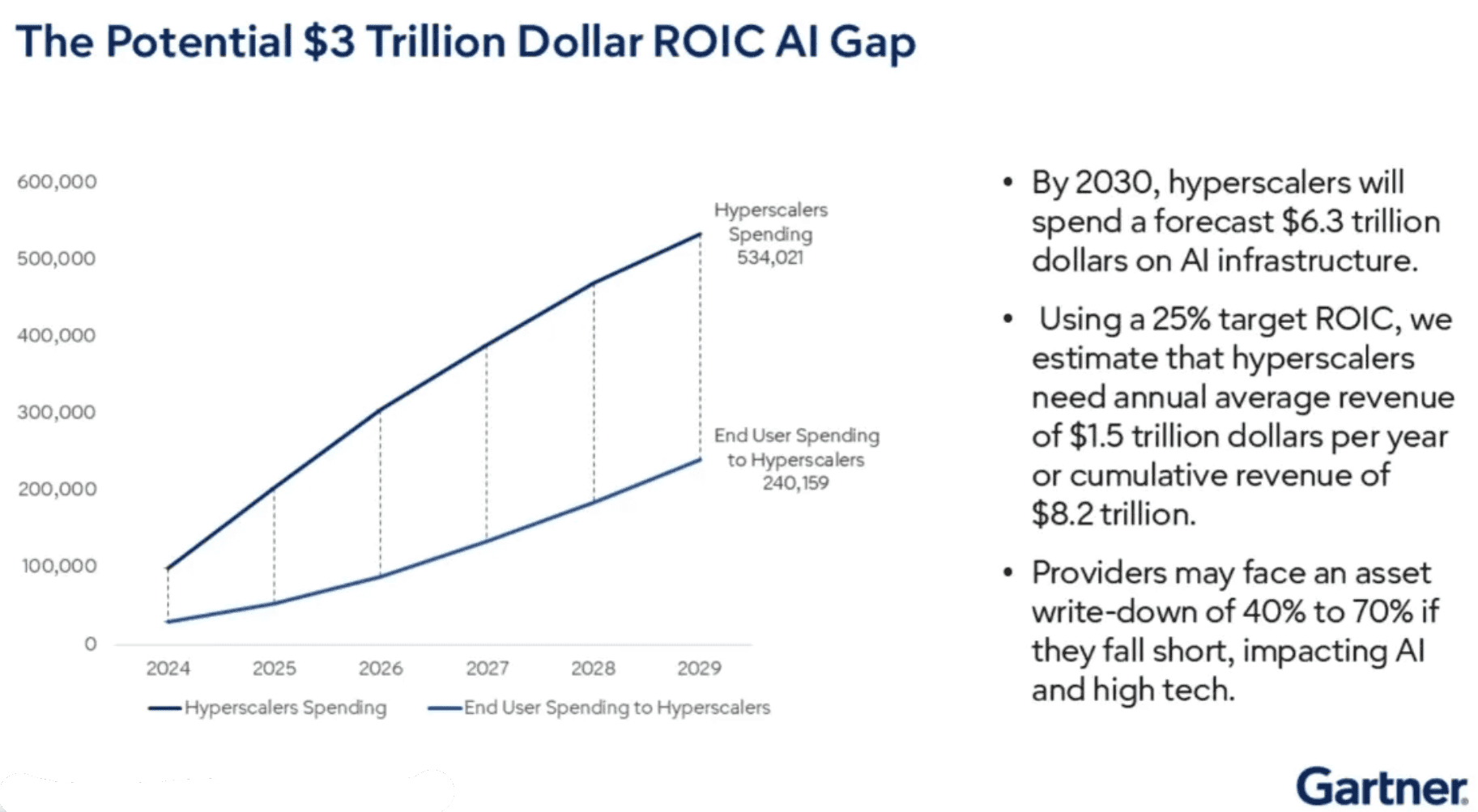
Looking further ahead, the trajectory of AI investment shows no signs of slowing. Gartner, a leading research and advisory firm, forecasts that global spending on AI will reach an astounding $6.3 trillion by 2030. This monumental financial commitment underscores the perceived value and transformative potential of AI across industries, but it also highlights the inherent cost pressures that will inevitably be passed on.
The Pressure to Monetize: Pricing Power and Margin Demands
The escalating costs are directly impacting the pricing strategies of AI service providers. Many prominent AI companies, including Anthropic and OpenAI, are either already public or are preparing for initial public offerings (IPOs). These companies face intense pressure from investors to demonstrate profitability and achieve positive gross margins.
Anthropic, a leading AI safety and research company, is reportedly close to achieving positive gross margins, a critical milestone for any technology firm seeking to justify its valuation. Similarly, established enterprise software giants like SAP, Workday, Oracle, Salesforce, and Adobe are under scrutiny from Wall Street to showcase how their AI initiatives are contributing to revenue growth and profitability.
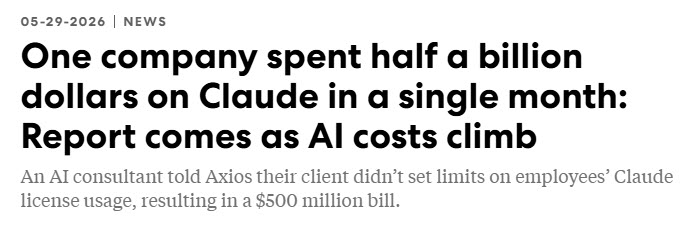
This financial imperative is leading to a re-evaluation of pricing models. For instance, Anthropic has shifted its pricing strategy for its Claude products. Previously, some customers might have paid flat fees for access. However, the company has now moved to a usage-based pricing model for enterprise clients. This means businesses will be billed based on the actual amount of AI processing and usage, a model that directly reflects the compute-intensive nature of AI operations. Anthropic has also indicated that the implementation of new technologies, such as an advanced version of a "tokenizer" for its latest AI models, could contribute to increased costs for customers.
The implications of this shift are already being felt. Reports from industry executives suggest that companies with employees who are heavy users of AI tools like Claude are bracing for significantly higher bills. This has led to discussions about cost optimization and alternative solutions. In one instance, CIOs and CHROs in New York City mentioned that the escalating costs of AI tools, specifically citing Claude’s code generation capabilities, were prompting them to consider outsourcing certain AI-driven tasks to engineering talent in regions with lower labor costs, such as India.
Eric Johnson, Chief Information Officer at PagerDuty, a company that helps software engineers manage critical incidents, articulated this concern. He stated, "I am preparing myself to be surprised by the bills." He acknowledged the significant value derived from AI tools but also highlighted the uncertainties surrounding costs and return on investment for this relatively new technology. Many technology firms and large Anthropic customers, despite these cost concerns, are reportedly willing to absorb the rising expenses, prioritizing the productivity gains and task automation that AI offers to their software engineers and sales teams.
The Emerging Price-Performance Battle
The competitive landscape is also evolving, with a growing emphasis on price-performance. In a significant development, Google recently announced its Gemini 1.5 Flash model, which is reportedly priced at a fraction of the cost of its more advanced counterparts. Specifically, Gemini 1.5 Flash is touted as being up to 10 times less expensive than models like Opus 4.7, signaling the beginning of an intense price-performance battle among AI providers. This competitive pressure may offer some relief to businesses, but it also underscores the dynamic and potentially volatile nature of AI pricing.
How Much Will Prices Really Go Up? A Trillion-Dollar Question
Estimating the precise extent of future price increases is complex, but the financial requirements are substantial. To achieve a 15% compound annual return on investment, assuming a generous five-year depreciation period for AI infrastructure, companies would need to generate an additional revenue of at least $1 trillion per year. This figure is likely to be even higher, considering the profit margins sought by AI companies.
This enormous revenue gap will need to be bridged through various channels. On the consumer side, the current global internet advertising market is estimated to be around $750 billion. Doubling or even significantly increasing the volume of digital advertisements, a prospect that many consumers might find undesirable due to the potential for ad saturation, could contribute a portion of this revenue.
For businesses, the enterprise software market currently stands at approximately $1.2 trillion, according to Gartner. It is conceivable that AI could lead to a doubling of this market as well, with new AI-powered software solutions and integrations becoming essential for operations.
However, the expectation that consumers will pay twice as much for enterprise software or for online advertising is a stark illustration of the economic pressures at play. This means that businesses, and ultimately consumers, will likely bear a significant portion of the cost associated with AI’s development and deployment.
Beyond consumer and enterprise software markets, other significant revenue streams for AI are emerging. These include government spending, particularly in defense and military applications, as well as new frontiers in scientific research, such as bio-research and energy research. These diverse applications suggest that AI’s revenue generation will be broad-based.

The notion that computing costs will perpetually decrease, often associated with "Moore’s Law," may not hold true in the near term for advanced AI capabilities. While the cost of general-purpose computing has seen relative declines over decades, the specialized and high-performance computing required for AI represents a different economic equation. For instance, the original IBM PC, which cost $1,565 in 1981 (equivalent to approximately $5,700 today without a hard drive), contrasts with modern personal computers often priced around $3,000, yet these now come with integrated smartphones and a vast ecosystem of services. This suggests that while personal computing has become more accessible, the cost of cutting-edge computational power for AI is a different matter entirely.
The Future of AI and Business Models
The economic reality of AI is that it is an expensive technology. Unless it can demonstrably replace a significant number of existing costs or create entirely new economic benefits and productivity gains that outweigh its own expense, the overall cost of doing business and living is likely to increase.
Companies like Nvidia, Oracle, Microsoft, and Workday are not aiming to simply replace existing revenue streams with AI; they are pursuing growth. Similarly, Google, Meta, SpaceX, Amazon, and Apple are all seeking to expand their market share and revenue through AI. Jensen Huang, CEO of Nvidia, has articulated this perspective succinctly: "AI compute is revenue." This statement implies a fundamental shift away from traditional seat-based licensing models towards a more consumption-driven and revenue-generating approach, where the utilization of AI compute directly translates into financial returns for providers.
This strategic orientation means that the perceived value of AI will be increasingly tied to its ability to drive revenue and efficiency. For businesses, this necessitates a careful evaluation of AI adoption, focusing on applications that offer a clear return on investment and can justify the escalating costs. The era of readily available, low-cost AI tools may be giving way to a more selective and value-driven market, where the significant investments in infrastructure and development are reflected in the price of access. The coming years will likely see a redefinition of the economic relationship between AI providers and their users, with a greater emphasis on demonstrated value and a potentially higher price tag for advanced capabilities.