
The corporate world is experiencing a dynamic transformation in the realm of Diversity, Equity, and Inclusion (DEI) roles, marked by a period of unprecedented growth following 2020, a subsequent re-evaluation, and an ongoing evolution of titles and responsibilities. As organizations strive to build more equitable and inclusive workplaces, the strategic importance of dedicated DEI functions remains paramount, even as economic shifts and evolving priorities reshape their structure and nomenclature. This comprehensive analysis, drawing insights from leading companies, market research by Ongig, Ahrefs, Google’s Keyword Tool, and industry reports, delves into the current state, hierarchical structures, common roles, and future trajectory of DEI job titles, providing a definitive guide for understanding this critical professional domain.
Defining the DEI Lexicon: Diversity, Inclusion, and Equity
Before exploring the intricacies of job titles, it is crucial to establish a clear understanding of the core concepts that underpin the DEI framework. The terminology used in diversity job titles is, by its very nature, diverse, often leading to nuanced distinctions that are vital for strategic clarity.
- Diversity (The ‘What’): This refers to the quantifiable characteristics of people within an organization. It encompasses a broad spectrum of attributes such as gender, ethnicity, age, disability, sexual orientation, socioeconomic background, education, and even thought styles. Diversity is about representation—having a wide array of backgrounds and perspectives present.
- Inclusion (The ‘How’): Beyond simply having diverse individuals, inclusion focuses on the behaviors, social norms, and cultural practices that ensure all people feel welcome, respected, supported, and valued. It’s about creating an environment where every voice can be heard, and everyone has a sense of belonging and psychological safety.
- Equity: Often used alongside or as an alternative to "inclusion" (e.g., Slack’s use of "equity," Salesforce’s "equality"), equity acknowledges that not everyone starts from the same place. It involves providing tailored support and resources to address historical and systemic barriers, ensuring fair access to opportunities, and striving for impartial outcomes. While equality aims to treat everyone the same, equity aims to achieve fair outcomes by treating people justly, which may sometimes require different approaches.
- Equality: In contrast to equity, equality generally refers to treating everyone identically, giving everyone the same resources or opportunities. While noble in intent, it can sometimes overlook existing disparities, making equity a more targeted approach for addressing systemic imbalances.
Understanding these distinctions is fundamental to crafting effective DEI strategies and, consequently, appropriate job titles that reflect an organization’s specific focus and maturity in this domain. Resources from AIHR, Workable, BuiltIn, and Unionlearn offer further insights into these foundational concepts.
The Rise and Evolution of DEI Roles: A Post-2020 Chronology
The journey of dedicated DEI roles in corporate America has been marked by significant milestones, particularly in the wake of pivotal social movements and evolving societal expectations.
- Pre-2020: While some progressive companies had diversity initiatives and roles, they were often nascent, primarily compliance-driven, or embedded within broader Human Resources (HR) functions without distinct departmental leadership.
- 2020-2022: The Surge: Following the global reckoning on racial injustice, notably catalyzed by the Black Lives Matter movement, there was an unprecedented surge in corporate commitments to DEI. Companies across industries, facing increased public scrutiny and internal employee pressure, rapidly expanded their DEI teams. This period saw the proliferation of new DEI leadership roles, significant budget allocations, and ambitious public pledges. Demand for DEI roles peaked around August 2022, reflecting a strong market signal for dedicated expertise. Revelio Labs reported a substantial increase in DEI hires during this period, indicating a widespread corporate effort to operationalize diversity commitments.
- 2023-2024: Re-evaluation and Contraction: As economic headwinds intensified and the initial urgency of post-2020 commitments waned, many organizations began to re-evaluate their DEI structures. ESG Dive reported a 43% decline in DEI job postings from their August 2022 peak through July 2024, signaling a significant shift. Companies like Google, Meta, and Zoom, which had previously expanded their DEI teams, notably reduced or restructured these roles. This contraction was influenced by a confluence of factors including cost-cutting measures, a perceived shift in political climate, and a move towards integrating DEI responsibilities more deeply into existing HR or business functions rather than maintaining standalone departments.
- 2025-2026: Integration and Evolution: Despite the observed decline in dedicated DEI job postings, the narrative is not one of outright abandonment but rather evolution and integration. A Resume Templates survey indicated that only 5% of companies had eliminated DEI programs entirely by 2025, with 65% maintaining their budgets and 22% planning increases. This suggests that DEI work is not disappearing but rather changing form. Revelio Labs further noted that 55% of DEI workers who left their roles moved into non-DEI positions at new organizations, while 37% transitioned into different functions within the same company. This indicates a strategic pivot where DEI principles are increasingly being woven into the fabric of broader "People and Culture" or "Employee Experience" functions, leading to the emergence of new, integrated job titles.
Organizational Structures and the DEI Hierarchy
The structure of a diversity team often mirrors the broader organizational chart, with roles ranging from executive leadership to entry-level support. A typical hierarchy for a dedicated DEI function includes:
- Executive Leadership: Often the Chief Diversity Officer (CDO) or a similar C-suite equivalent, reporting directly to the CEO, COO, CHRO (Chief Human Resources Officer), or General Counsel. This placement signifies the strategic importance and cross-functional nature of DEI, extending beyond just employees to suppliers, customers, and market engagement.
- Vice Presidents (VPs): Overseeing specific large-scale initiatives or regional DEI strategies.
- Directors: Managing particular DEI programs, departments, or strategic pillars (e.g., talent acquisition, learning & development, culture).
- Managers: Leading specific projects, teams, or operational aspects of DEI initiatives.
- Individual Contributors: Specialists or experts focusing on specific areas like data analysis, program coordination, training delivery, or community engagement.
- Entry-Level/Support Staff: Providing administrative, logistical, and foundational support for DEI programs and events.
This structured approach allows for both strategic oversight and granular execution of DEI objectives across an enterprise.
A Spectrum of Expertise: Key DEI Job Titles and Their Functions
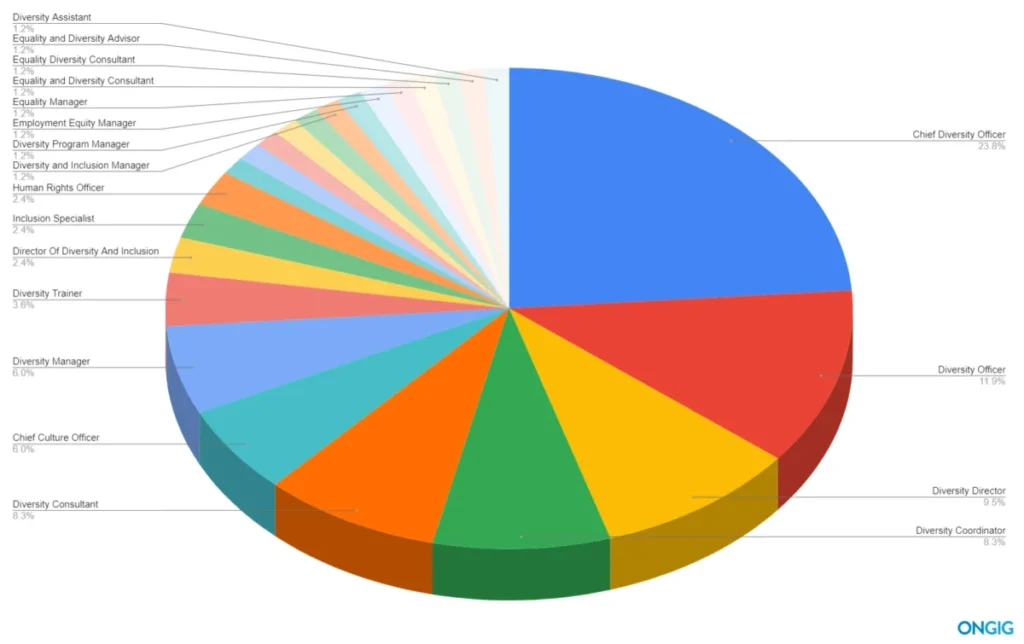
The array of diversity titles reflects the multifaceted nature of DEI work. Ongig’s research, combining best practices from leading companies and popular Google search terms, provides a comprehensive overview across various organizational levels.
1. Diversity Titles for Leaders
At the apex of the DEI structure, leadership roles are critical for setting strategic direction and embedding DEI into the organizational ethos.
- Chief Diversity Officer (CDO): The most common top diversity title, responsible for overall DEI strategy, policy development, and organizational integration. They are the primary advocate for diversity, inclusion, and equity at the executive level, often reporting directly to the CEO to ensure DEI is a core business imperative.
- Chief Inclusion Officer: Similar to a CDO, with a particular emphasis on fostering inclusive behaviors and environments.
- Chief Equality Officer: As seen at Salesforce, this role emphasizes fair treatment and equal opportunities across all employee groups.
- Global Head of Diversity & Inclusion: Manages DEI strategies across international operations.
- VP, Diversity, Equity & Inclusion: Leads a significant portion of the DEI strategy, often with a broader scope than a Director but reporting to a C-suite executive.
- VP, Global Diversity & Belonging: Focuses on creating a sense of belonging for employees worldwide.
- VP, People & Culture, Diversity & Inclusion: Integrates DEI within broader HR and cultural initiatives.
2. Director of Diversity Titles
Directors are instrumental in translating executive vision into actionable strategies and managing specific DEI portfolios.
- Director, Diversity & Inclusion: Oversees specific DEI programs, teams, or geographical regions.
- Director, Global Head of Diversity: Leads diversity efforts on a global scale.
- Director, Inclusive Culture & Engagement: Focuses on fostering an inclusive workplace culture and driving employee engagement.
- Director, Talent, Diversity & Inclusion: Integrates DEI principles into talent acquisition, development, and retention strategies.
3. Managers of Diversity Titles
Managers are responsible for the day-to-day execution of DEI initiatives, project management, and team leadership.
- Diversity & Inclusion Manager: Manages specific DEI programs, events, or initiatives.
- Manager, Diversity, Equity & Inclusion: Oversees the implementation of equity-focused programs and policies.
- Culture & Inclusion Manager: Focuses on fostering a positive and inclusive workplace culture.
- Diversity Program Manager: Manages specific diversity programs from conception to execution.
- Supplier Diversity Manager: Develops strategies to ensure a diverse supply chain.
4. Individual Contributor Diversity Titles
These roles provide specialized expertise and operational support, forming the backbone of DEI efforts.
- Diversity & Inclusion Specialist: Provides expert advice and support on various DEI initiatives.
- Diversity Consultant: Often external, providing specialized guidance and training.
- Diversity Recruiter: Focuses on attracting and hiring diverse talent.
- Human Rights Officer: (Often government/NGO) monitors and investigates civil rights violations.
5. Entry-Level Diversity Titles
Entry-level positions offer foundational support and opportunities for career development within the DEI field.
- Diversity & Inclusion Coordinator: Supports the administrative and logistical aspects of DEI programs.
- Diversity Assistant: Provides general administrative support to the DEI team.
- DEI Program Assistant: Assists with the coordination and execution of DEI programs.
Candidate Perspectives: What Job Seekers Are Searching For
Understanding candidate search behavior offers valuable insights into the perceived importance and commonality of DEI roles. Ongig’s internal research on Google search trends reveals that candidates are actively seeking roles that clearly articulate diversity, inclusion, and equity. The top 20 diversity titles searched by job seekers often include variations of "Diversity and Inclusion Manager," "DEI Specialist," and "Chief Diversity Officer," indicating a strong interest in both operational and leadership roles. This data helps organizations align their job postings with candidate expectations, ensuring their roles are discoverable and attractive to diverse talent pools. The prominence of "Manager" and "Specialist" titles suggests a healthy demand for roles focused on implementation and operational expertise.
Deep Dive into Core DEI Roles: Detailed Responsibilities
While the number of individuals on a diversity team can vary significantly (e.g., Salesforce’s Chief Equality Officer Tony Prophet had a staff of 13 working on D&I), each role contributes distinct value. Below are expanded descriptions of 12 common diversity titles:
- Chief Diversity Officer (CDO): The CDO is a strategic leader who champions and integrates DEI across all facets of the organization. They develop and execute comprehensive DEI strategies, advise the CEO and board on critical diversity issues, oversee the recruitment and retention of diverse talent, and foster a culture of inclusion. Key responsibilities include developing DEI metrics, ensuring compliance, leading cultural transformation initiatives, and engaging with external stakeholders to enhance the company’s reputation as an equitable employer.
- Director of Culture: This role is pivotal in shaping the organizational environment to be inclusive and engaging. The Director of Culture designs and implements programs that enhance employee experience, foster a sense of belonging, and align with company values. They collaborate with HR and leadership to ensure that policies, practices, and communications reflect an inclusive culture, attracting and retaining top talent by making the workplace a desirable environment for all.
- Supplier Diversity Manager: Focusing on economic equity, this manager develops and implements strategies to create a diverse and inclusive supply chain. They identify, vet, and engage businesses owned by underrepresented groups (e.g., women, minorities, veterans, LGBTQ+) for procurement opportunities, ensuring that the company’s purchasing power supports broader community equity goals. This role involves extensive research, relationship building, and tracking supplier diversity metrics.
- Human Rights Officer (HRO): Often found in governmental or large international organizations, an HRO monitors, investigates, and reports on compliance with human rights standards within the workplace or broader community. They handle complaints related to discrimination, harassment, and other civil rights violations, working to resolve issues through mediation, policy development, and legal channels, ensuring adherence to national and international human rights frameworks.
- Diversity Consultant: Whether internal or external, a Diversity Consultant provides expert guidance to organizations seeking to improve their DEI efforts. They conduct comprehensive audits of existing policies, data, and culture, identify gaps, and recommend data-driven strategies for improvement. Consultants often design and deliver customized DEI training, facilitate strategic planning sessions, and help organizations develop measurable goals and accountability frameworks for DEI initiatives.
- Diversity Trainer: This role is focused on education and skill-building. A Diversity Trainer designs and delivers engaging workshops and training programs for employees at all levels, from entry-level staff to senior leadership. Their goal is to raise awareness, challenge unconscious biases, develop inclusive leadership skills, and equip employees with the tools to foster a more equitable and inclusive workplace. They adapt training content based on organizational needs and feedback, measuring the effectiveness of their programs.
- Diversity Recruiter: Specialized in talent acquisition, a Diversity Recruiter builds and nurtures diverse talent pipelines. They collaborate with hiring managers to ensure job descriptions use inclusive language, implement bias-free interview processes, and forge partnerships with professional organizations and academic institutions serving underrepresented groups. Their ultimate aim is to broaden the candidate pool and increase the representation of diverse individuals within the workforce.
- Diversity Business Partner: This strategic role acts as a liaison, embedding DEI principles directly within specific business units or departments. The Diversity Business Partner works closely with business leaders to understand their unique challenges and opportunities, co-creating tailored DEI solutions that align with business objectives. They provide expert advice, distribute DEI resources, and facilitate cross-functional collaboration to ensure DEI is integrated into daily operations and decision-making.
- Diversity Event Producer: Responsible for the conceptualization, planning, and execution of DEI-focused events, conferences, and workshops. This role manages all logistical aspects, from venue selection and speaker engagement to promotion and attendee experience. Their goal is to create impactful events that celebrate diversity, foster community, and provide learning opportunities for employees and external stakeholders.
- Diversity and Inclusion Program Manager, University: Within an academic setting, this manager develops and oversees DEI programs for students, faculty, and staff. They create training modules, support affinity groups, ensure equitable access to resources, and collaborate with various university departments to integrate DEI into curriculum, admissions, and campus life, supporting the institution’s overall diversity plan.
- Chief People Officer (CPO): A CPO is a senior HR executive who oversees all human resources functions, including talent acquisition, compensation, benefits, employee relations, and organizational development. In contemporary organizations, the CPO often plays a critical role in championing and integrating DEI into the broader HR strategy, ensuring that all people processes are equitable and inclusive. They drive cultural change and foster an environment where all employees can thrive.
- Diversity Coordinator: An administrative and support role, the Diversity Coordinator assists in the day-to-day implementation of DEI programs. They handle logistics for events, manage communications, maintain DEI databases, track metrics, and serve as a point of contact for employee inquiries. This role is crucial for ensuring the smooth operation of DEI initiatives and providing foundational support to the DEI team.
Anticipating the Future: Trending DEI Titles for 2026 and Beyond
The evolving landscape of DEI work suggests a future where roles are increasingly specialized, data-driven, and integrated with technology and employee experience. Based on current trends, industry reports from McKinsey & Company and Gartner, and insights from job platforms, here are 10 trending DEI job titles for 2026, reflecting how companies are deepening their commitment to measurable, impactful DEI strategies:
- Head of Diversity Analytics: This role leads the strategic use of data to inform and measure DEI initiatives. Responsibilities include designing data collection frameworks, conducting advanced statistical analysis on workforce demographics, pay equity, promotion rates, and retention, and providing actionable insights to leadership. They ensure data integrity and confidentiality while leveraging analytics to identify trends, pinpoint areas for improvement, and demonstrate the ROI of DEI efforts.
- Inclusive Culture Manager: Beyond traditional D&I, this manager specifically focuses on designing and implementing programs that foster a deeply inclusive environment. They work with HR and business leaders to embed inclusive practices into daily operations, support Employee Resource Groups (ERGs), facilitate intergroup dialogue, and champion psychological safety. They act as a subject matter expert on cultural inclusivity, ensuring all employees feel a sense of belonging.
- DEI Technology Specialist: This specialist identifies, implements, and manages software and digital tools that enhance DEI initiatives. This includes diversity hiring platforms, bias-detection AI tools, DEI dashboards, and employee engagement technologies. They collaborate with IT, HR, and DEI teams to optimize technology use, provide training, and ensure that digital solutions align with DEI goals and ethical standards.
- Diversity Recruitment Manager: This role is hyper-focused on building robust and diverse talent pipelines. They develop innovative sourcing strategies, forge partnerships with diverse professional networks and educational institutions, and train hiring managers on inclusive recruitment practices. They track diversity metrics throughout the recruitment lifecycle, continuously refining strategies to attract and hire candidates from underrepresented groups.
- DEI Learning and Development Manager: This manager designs, develops, and delivers comprehensive DEI learning programs. They integrate DEI principles into existing leadership development, onboarding, and skills training curricula. They assess learning needs, utilize various pedagogical approaches, and measure the impact of training on employee behavior and organizational culture, fostering continuous learning and growth in DEI competencies.
- Equity Program Manager: This manager is dedicated to identifying and dismantling systemic barriers to equity within the organization. They conduct pay equity audits, analyze promotion and career development opportunities, and work with HR and department heads to implement fair and transparent processes. They monitor equity-related metrics, report on progress, and stay abreast of legal and industry best practices to ensure equitable outcomes for all employees.
- DEI Program Specialist: This role supports the execution of various DEI programs and initiatives. They manage project logistics for workshops and events, coordinate ERG activities, develop communication materials, and serve as a central point of contact for employees regarding DEI resources. They play a crucial role in ensuring that DEI initiatives are well-organized, effectively communicated, and impactful.
- Diversity Data Analyst: This analyst collects, cleans, and analyzes diversity-related data, providing granular insights into workforce demographics, pay gaps, retention rates, and engagement levels across different groups. They use statistical methods to identify trends, correlations, and areas of concern, building dashboards and reports that inform strategic DEI decision-making and measure program effectiveness.
- DEI Communications Manager: This manager crafts and executes internal and external communication strategies for DEI initiatives. They collaborate with marketing, HR, and leadership to ensure consistent, authentic, and impactful DEI messaging across all channels—from internal announcements and newsletters to social media campaigns and corporate social responsibility (CSR) reports. They also highlight the work of ERGs and share success stories to foster engagement and transparency.
- DEI Employee Experience Manager: This manager focuses on optimizing the entire employee journey through an inclusive lens. They work with HR and leadership to ensure that onboarding, performance management, career development, and offboarding processes are equitable and create a positive experience for all employees, especially those from diverse backgrounds. They leverage employee feedback and engagement data to identify gaps and implement solutions that enhance belonging and psychological safety.
Diversity, Equity, and Inclusion Updates as of 2026
The period from 2023 to 2026 has been critical in reshaping the corporate approach to DEI. While there was a significant scale-back in dedicated DEI roles from their 2022 peak, the underlying commitment to diversity and inclusion has not entirely dissipated. Revelio Labs’ finding that 55% of DEI workers who left their roles transitioned into non-DEI positions, and 37% into different functions within the same company, suggests a strategic integration rather than outright elimination. Organizations are increasingly using broader titles like "People and Culture" or "Employee Experience" to encompass DEI responsibilities, embedding these principles within existing HR and operational frameworks.
The business consequences of rolling back DEI initiatives have also become clearer. Target, for example, experienced an average 6% drop in foot traffic over eight weeks after announcing DEI rollbacks, contrasting sharply with Costco, which maintained its DEI programs and saw foot traffic grow during the same period. This illustrates that consumers and employees are increasingly responsive to a company’s stance on social values, indicating that DEI is not merely a "nice-to-have" but a strategic imperative that impacts brand reputation and financial performance.
Despite the cyclical nature of demand for dedicated DEI roles, often driven by social movements, the enduring value of diversity and inclusion is recognized. The shift towards embedding DEI into core business operations, leveraging data analytics, and focusing on inclusive leadership and employee well-being signals a more mature and sustainable approach to DEI, moving beyond reactive responses to proactive integration.
Frequently Asked Questions About Diversity Titles
1. What is the highest diversity job title?
The highest diversity job title is typically the Chief Diversity Officer (CDO) or Chief Inclusion Officer. This executive-level role often reports directly to the CEO, Chief Human Resources Officer (CHRO), or Chief Operating Officer (COO), signifying its strategic importance and cross-functional reach within the organization. The reporting structure can indicate the level of organizational commitment and influence the role carries.
2. What is the difference between a Diversity Manager and a Diversity Business Partner?
A Diversity Manager generally oversees the development, implementation, and reporting of DEI programs and initiatives across the entire organization or a specific large function. They focus on managing strategies, projects, and teams. In contrast, a Diversity Business Partner is typically embedded within a specific business unit or department. They work directly with business leaders and teams to tailor and integrate DEI practices into their specific operational context, focusing on practical implementation within that unit’s hiring, retention, and team culture.
3. What skills do you need for a DEI job title?
Core skills for DEI professionals include strong communication and facilitation abilities, program management, change management, and a deep understanding of diversity, equity, and inclusion principles. Data analysis skills (for measuring representation, pay equity, and program effectiveness) are increasingly critical. As of 2026, AI fluency is also becoming essential, particularly for auditing AI hiring tools for potential biases and ensuring fair outcomes in recruitment and talent management processes. Empathy, cultural competence, and conflict resolution skills are also vital.
This detailed exploration underscores that while the naming and structure of DEI roles may evolve, the fundamental work of fostering diverse, equitable, and inclusive workplaces remains a critical and enduring priority for forward-thinking organizations. The future of DEI roles lies in strategic integration, data-driven approaches, and a continuous commitment to creating environments where every individual can thrive.






