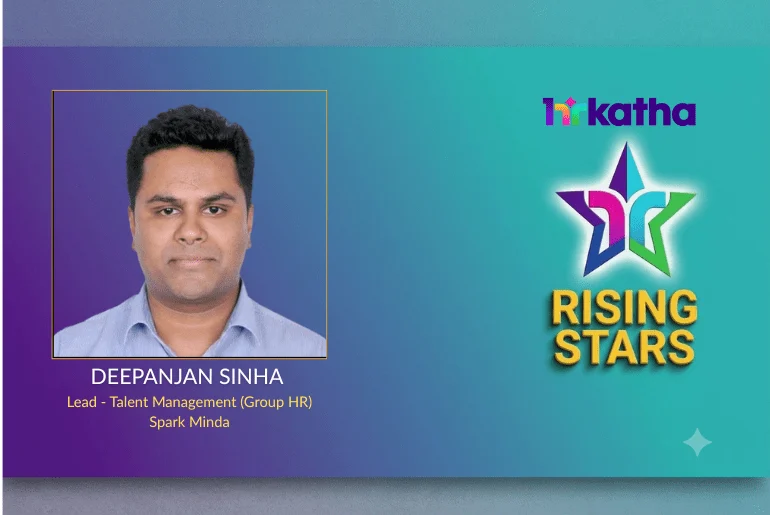
Mumbai, India – Deepanjan Sinha has been named the recipient of the prestigious HRKatha Rising Star Leadership Award 2025, an accolade that recognizes emerging leaders who are redefining the human resources profession for a new era. The award highlights Sinha’s innovative approach to HR, characterized by a profound understanding of business strategy, a commitment to data-driven decision-making, and an unwavering belief in the power of human capital to drive organizational success. His work exemplifies the critical shift currently underway in HR, moving beyond traditional administrative functions to become a central strategic partner in an organization’s growth and adaptability.
The HR profession finds itself at a pivotal juncture, grappling with a confluence of transformative forces. Artificial intelligence (AI) is rapidly automating routine tasks, necessitating a re-evaluation of human-machine collaboration. Shifting workforce expectations, particularly from younger generations, demand more agile, purpose-driven, and inclusive work environments. Simultaneously, persistent skill shortages across industries underscore the urgent need for robust talent development and strategic workforce planning. In this dynamic landscape, HR is no longer merely a support function; it is increasingly tasked with building organizational capability, influencing critical business decisions, and cultivating cultures resilient enough to navigate constant change. This strategic evolution forms the backdrop against which Sinha’s contributions have been recognized.
The HRKatha Rising Star Leadership Awards: Recognizing Future Architects
The HRKatha Rising Star Leadership Awards are an integral part of HRKatha’s mission to chronicle and influence the evolution of human resources in India and globally. Launched with the vision of identifying and celebrating the next generation of HR leaders, the awards serve as a significant platform for recognizing individuals whose innovative thinking, impactful projects, and leadership potential are shaping the future of the profession. The "Rising Star" category, in particular, focuses on leaders who, while still in the earlier stages of their executive careers, have already demonstrated exceptional foresight and a capacity to drive significant organizational and cultural transformation. The selection process typically involves a rigorous evaluation of nominees’ professional achievements, strategic contributions, thought leadership, and peer endorsements, ensuring that recipients truly embody the forward-looking spirit the award represents. Past winners have often gone on to assume senior leadership roles, validating the award’s predictive power in identifying future industry stalwarts.
Deepanjan Sinha stands out among his peers as a leading voice in this transition. His professional portfolio encompasses critical areas such as leadership development, the design and implementation of competency frameworks, strategic succession planning, and broad-scale organization development initiatives. This multifaceted expertise mirrors the broader demands placed upon contemporary HR leaders, who are now expected to be equally adept at discussing complex business performance metrics and analytical insights as they are at fostering positive employee experiences and shaping organizational culture. Sinha’s motivation for entering the HR field was rooted in a fundamental insight: while products, technologies, and business models can often be replicated by competitors, true competitive advantage lies in the unique qualities of leadership capability, organizational culture, and the caliber of its people. This core belief continues to inform every aspect of his professional philosophy and approach.
A New Paradigm of Leadership: Influence Before Authority
Sinha’s philosophy on leadership challenges conventional notions, positing that "Leadership isn’t defined by designation. It’s defined by influence." For him, the genesis of true leadership precedes the acquisition of any formal title or authority. It germinates in the trust colleagues place in an individual’s intentions, the value they ascribe to their judgment, and their willingness to follow that person’s lead. Formal authority may eventually follow, but the bedrock of influence must first be earned through consistent behavior, competence, and genuine engagement.
This perspective also underpins the counsel he extends to aspiring HR professionals. He strongly advocates that before attempting to address "people problems," HR practitioners must first achieve a comprehensive understanding of how the business fundamentally creates value. HR ascends to a strategic level only when it can meticulously connect its people-centric decisions directly with overarching business priorities. Credibility, he argues, is not cultivated by possessing every answer, but rather by demonstrating the acumen to ask the most pertinent questions, engaging in active and empathetic listening, and consistently enabling the success of others within the organization. This approach fosters a collaborative environment where HR is seen not as an enforcer of rules, but as a trusted advisor and strategic partner.
The Indispensable Fusion: Business Fluency and Human-Centricity
When questioned about the most critical competencies for future HR leaders, Sinha’s response is immediate and unequivocal: business acumen. He emphasizes that understanding commercial priorities, market dynamics, and operational realities is no longer optional but essential for HR professionals aiming to influence strategic decisions at the executive level. Closely following business fluency is data literacy. In an era where artificial intelligence, sophisticated people analytics platforms, and digital tools are fundamentally reshaping recruitment, talent management, and workforce planning, relying solely on intuition or anecdotal evidence is no longer sufficient or acceptable. Data-driven insights provide the objective foundation for strategic HR interventions. According to a 2023 Deloitte report, organizations leveraging advanced people analytics are 2.3 times more likely to exceed financial targets and 3.5 times more likely to effectively manage talent.
Yet, Sinha is equally convinced that the pervasive integration of technology, rather than diminishing, actually elevates the value of distinctly human capabilities. As automation increasingly absorbs routine and transactional tasks, the human elements of empathy, coaching, active listening, and relationship-building become paramount. These are the skills that technology cannot replicate and that differentiate a truly high-performing workforce. A 2024 LinkedIn Workplace Learning Report indicated that soft skills, including leadership, communication, and collaboration, remain the most in-demand skills globally, reinforcing Sinha’s view.
This dualistic thinking also informs his perspective on organizational culture. He champions workplaces that are not merely characterized by generous benefits packages or highly visible employee engagement programs, but rather by environments where leaders consistently embody and demonstrate the values they publicly espouse. Trust, he believes, flourishes when employees observe a palpable alignment between stated organizational values and the everyday actions and decisions of its leadership. This alignment creates psychological safety, empowering employees to question, experiment, and even occasionally fail without fear of retribution – a critical ingredient for innovation and continuous improvement. Analytics and AI, in Sinha’s view, serve as powerful enablers, shifting conversations from subjective assumptions to evidence-based discussions and crucially freeing up HR professionals’ time for this invaluable human-centric work. Their ultimate purpose, he maintains, is to fortify HR’s human core, not to supplant it.
Learning from Practice: The Imperative of Co-Creation
One of the most profound and valuable lessons in Sinha’s career emerged from an initiative that, on paper, appeared to be flawlessly executed. The framework itself was meticulously designed, conceptually robust, and technically sound. However, its adoption across various business units and manufacturing plants proved significantly slower and more challenging than initially anticipated. Reflecting on this experience, Sinha concluded that the team had invested considerable effort and expertise in designing an optimal solution but had not adequately prepared or involved the very people who were expected to implement and utilize it.
This experience catalyzed a fundamental shift in his approach. Rather than designing solutions for the business and presenting them as fully formed, finished products, he now champions a philosophy of "designing with the business." This collaborative methodology involves engaging key stakeholders early in the process, fostering a sense of ownership and shared responsibility. Ideas are frequently piloted on a smaller scale before broader implementation, allowing for real-world testing and refinement. Crucially, feedback is integrated as an intrinsic part of the design process itself, rather than being collected as a post-implementation evaluation. This lesson underscored a vital truth: good frameworks alone do not guarantee good outcomes; engaged and empowered people do. This iterative, human-centered design approach aligns with modern organizational change management principles that emphasize participation and emergent solutions over top-down directives.
Measuring What Matters: Impact Over Activity
Sinha maintains a healthy skepticism towards equating activity with tangible impact. He argues that the act of launching an HR initiative is often the easiest part of the process. The far more significant and meaningful questions revolve around whether leaders subsequently make demonstrably better decisions and whether employees experience concrete, measurable improvements in their daily work lives. This outcome-oriented mindset is a hallmark of his strategic approach.
He diligently tracks a comprehensive suite of metrics, including leadership adoption rates, employee engagement levels, succession readiness, and capability development indices. However, he rigorously evaluates these through the lens of overarching business outcomes rather than treating HR metrics in isolation. His work on employee engagement provides a compelling illustration of this principle: instead of perceiving annual engagement surveys as a mere compliance exercise, his team strategically focused on converting feedback into actionable initiatives and strengthening leadership accountability at all levels. The ultimate objective was not simply to improve a score on a survey, but to cultivate deeper trust between employees and managers, fostering a more productive and engaged workforce that directly contributes to business objectives. This approach demonstrates a clear understanding that HR is a means to an end, with that end being sustainable business success.
Looking Ahead: The Future Trajectories of HR Leadership
As he looks towards the next decade, Deepanjan Sinha envisions two equally compelling professional pathways. One involves leading the HR function for a significant business unit or a global region at scale, leveraging his expertise to drive widespread organizational impact. The alternative is to evolve into a recognized specialist in talent management and organization development, partnering across multiple organizations as an external expert rather than being confined to a single internal role. Regardless of the path chosen, his underlying ambition remains steadfast: to create substantial business impact through the strategic development and empowerment of people.
Sinha also articulates a clear vision for how the HR profession can more effectively nurture and support its emerging leaders. He advocates for greater exposure to strategic business discussions, cross-functional assignments that broaden perspectives, participation in international projects, and the establishment of robust, structured mentoring programs. He firmly believes that these immersive, experiential opportunities are far more effective in developing nuanced judgment and strategic acumen than traditional classroom learning alone. This emphasis on practical, real-world development underscores his commitment to cultivating a new generation of HR leaders who are truly prepared for the complexities of the modern business environment. This perspective is supported by studies from organizations like the World Economic Forum, which consistently highlight experiential learning and mentorship as critical for leadership development in rapidly changing industries.
Quick Takes: Insights from the Winner
- Leadership in one line: Leadership is the positive impact you create through consistency, collaboration, and purpose.
- HR thinkers he follows: Leena Nair, Dave Ulrich, Josh Bersin, and Simon Sinek. These figures represent a spectrum of leadership, HR strategy, analytics, and motivational thought.
- An unpopular HR opinion: Employee engagement is not HR’s responsibility alone. HR can create the ecosystem, but culture is shaped by leaders through their everyday decisions and behaviors. This opinion underscores the shared accountability model he advocates.
- Currently thinking about: The profound shift from managing jobs to building skills, and its transformative implications for hiring, learning, and comprehensive workforce planning. This reflects a forward-thinking approach to talent strategy.
Why He is a Rising Star: The Consistency of Vision
The individual insights and responses offered by Deepanjan Sinha, when examined in isolation, might resonate with many seasoned HR professionals. Concepts such as business alignment, data literacy, and empathetic leadership are widely acknowledged as crucial. What truly distinguishes Sinha and earned him the HRKatha Rising Star Leadership Award 2025 is the remarkable consistency with which these principles are woven into every facet of his work. From his fundamental definition of leadership to his rigorous methodology for measuring success, and even to his pragmatic response to a challenging project rollout, his approach demonstrates a seamless integration. For Sinha, business rigor and human judgment are not competing priorities but rather two interdependent dimensions of the same strategic endeavor. It is this unwavering consistency, more than any singular initiative or achievement, that HRKatha recognized as a hallmark of his leadership potential.
His career, still unfolding, already serves as a compelling blueprint for the direction the HR profession itself is moving. It signifies a decisive shift away from transactional HR practices towards a more integrated model where business success and people success are not merely complementary but mutually reinforcing. As the global economy continues to evolve at an unprecedented pace, leaders like Deepanjan Sinha are essential in guiding organizations to thrive by prioritizing their most valuable asset: their people. His award is not just a recognition of past achievements but an affirmation of the transformative impact he is poised to have on the future of human resources.