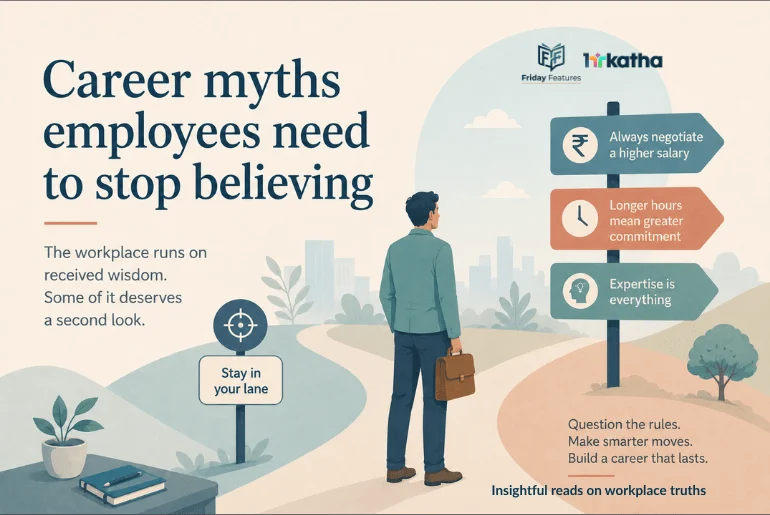
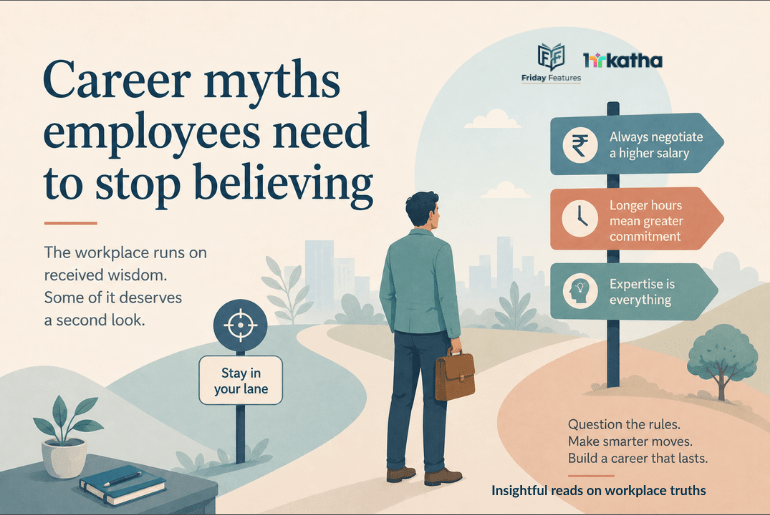
In the intricate tapestry of professional life, certain maxims have long been held as immutable truths, guiding individuals through their careers. From the seemingly self-evident wisdom of "never accept a pay cut" to the implied commitment of "the longer the hours, the stronger the dedication," these unofficial rules often permeate corporate culture, passed down from seasoned colleagues to new entrants. While often rooted in a grain of truth, their universal application in today’s dynamic employment landscape is increasingly being questioned. Leading human resources professionals are now urging a critical re-evaluation of these ingrained beliefs, asserting that unquestioning adherence can stifle growth, limit potential, and ultimately hinder the development of truly impactful careers.
The traditional workplace, particularly in the industrial and early information ages, fostered an environment where stability and predictability were paramount. Specialization was rewarded, visible effort was often equated with productivity, and career paths were typically linear. In this context, advice centered on deep expertise, consistent presence, and incremental salary gains made pragmatic sense. However, the advent of globalization, rapid technological advancements, and an increasingly volatile, uncertain, complex, and ambiguous (VUCA) world has rendered many of these conventional formulas obsolete. The modern professional landscape demands agility, continuous learning, and an ability to navigate change, rather than merely following predefined tracks.
Two prominent HR leaders, Sunil Ranjhan, CHRO of Dixon Technologies, and Atul Mathur, Head of Learning & Development at Aditya Birla Capital, have stepped forward to articulate which pieces of conventional wisdom they believe employees should decisively move beyond. Their insights underscore a growing consensus within the HR community: successful careers in the 21st century are built not on rigid adherence to outdated rules, but on discerning judgment, strategic adaptability, and a relentless focus on learning and impact.
Beyond the Comfort of Specialisation: The Call for Versatility
The rationale behind specialization is intuitively appealing. Develop profound expertise in a specific domain, become indispensable, and a career will naturally flourish. This counsel holds particular weight in the nascent stages of a career, where technical competence serves as a primary currency for entry and initial progression. However, Sunil Ranjhan, CHRO of Dixon Technologies, argues that this specialization can become a significant impediment far sooner than many professionals recognize. While foundational expertise is crucial, an exclusive focus can create a "comfort trap," limiting exposure to broader business functions and emerging challenges.
Ranjhan, drawing from a career spanning decades, observes that his most transformative roles were seldom those that merely deepened an existing specialization. Instead, they were assignments that thrust him into unfamiliar functions, different business units, or novel situations demanding a complete re-learning process. These experiences, he contends, did not necessarily make him the foremost specialist in a single discipline. Crucially, they endowed him with something far more valuable: the capacity to synthesize ideas across diverse functions, understand the holistic business ecosystem, and develop a more comprehensive strategic perspective. This perspective is increasingly vital in leadership roles, where cross-functional collaboration and an integrated view of operations are non-negotiable.
This viewpoint aligns with the evolving concept of the "T-shaped professional," a model widely discussed in talent development circles. A T-shaped individual possesses deep expertise in one area (the vertical bar of the T) coupled with a broad understanding and ability to collaborate across multiple disciplines (the horizontal bar). More recently, the "Pi-shaped professional" has emerged, denoting deep expertise in two distinct areas, further enhancing versatility and problem-solving capabilities. Reports from institutions like the World Economic Forum consistently highlight that future-proof skills include critical thinking, complex problem-solving, creativity, and cross-functional collaboration – attributes often cultivated through diverse experiences rather than hyper-specialization. A 2023 LinkedIn Learning report, for instance, indicated that employers are increasingly prioritizing skills like adaptability and intellectual curiosity, suggesting a shift away from purely siloed expertise.
Ranjhan further extends his critique to the pervasive influence of salary expectations, which he identifies as a similar professional pitfall. Many professionals evaluate new opportunities almost exclusively through the lens of the immediate compensation increase. The prevailing wisdom often dictates that unless a substantial salary hike is on the table, a career move is not justified. Ranjhan challenges this conventional arithmetic, asserting that a role’s true value often resides in less tangible, yet ultimately more impactful, dimensions. These include the caliber of leadership, exposure to new markets or cutting-edge technologies, the strategic trajectory of the organization, and the long-term opportunities for personal and professional growth it affords.
For Ranjhan, the more pertinent question is not "how much more will this role pay?" but rather, "what will this role enable me to learn and become?" He suggests that the answer to the latter often yields far greater long-term value than the immediate financial gain of the first year’s salary. This perspective resonates with studies on career satisfaction, which frequently indicate that factors such as work-life balance, opportunities for skill development, meaningful work, and a supportive culture often outweigh raw compensation in fostering long-term employee engagement and retention. A 2022 survey by PwC, for example, found that while pay remains important, employees are increasingly prioritizing factors like purpose, flexibility, and opportunities for development when evaluating job prospects. Organizations that understand this are moving towards a "total rewards" philosophy, acknowledging that compensation extends far beyond the base salary.
The Long-Hours Illusion: Prioritizing Impact Over Presence
The notion that extended hours signify unwavering commitment and superior productivity is another deeply entrenched myth in many workplaces. Nearly every professional has experienced the pressure to remain at the office long after the essential work has concluded. While genuine deadlines occasionally necessitate such efforts, the more common driver is often a subtle, unspoken cultural expectation that equates presence with dedication, making early departure feel like an admission of lesser commitment.
Atul Mathur, Head of Learning & Development at Aditya Birla Capital, candidly admits to having subscribed to this equation early in his career. He recalls a period where longer hours were seen as synonymous with dedication, and relentless busyness was mistakenly equated with tangible productivity. However, with expanding responsibilities and accumulating experience, Mathur discerned a critical distinction between the two. He found that meaningful outcomes were far less dependent on the sheer volume of hours logged and significantly more reliant on how those hours were strategically utilized. Effective prioritization, judicious delegation to capable colleagues, and a culture of trust consistently yielded superior results compared to simply outlasting everyone else in the office.
This observation is strongly supported by a growing body of research on productivity and employee well-being. Studies, notably from Stanford University, have indicated that productivity per hour often declines significantly after an individual works more than 50-55 hours per week. Beyond this threshold, the marginal returns diminish rapidly, and errors tend to increase. Prolonged excessive hours, far from demonstrating commitment, are strongly linked to burnout, decreased cognitive function, impaired decision-making, and a higher incidence of mental health issues such as stress, anxiety, and depression, as highlighted by organizations like the World Health Organization (WHO) and the Centers for Disease Control and Prevention (CDC).
Mathur also challenges another deeply held assumption: that "switching off" from work is antithetical to commitment. On the contrary, he argues that time dedicated to family, engaging in personal interests outside of work, or simply allowing for adequate rest and recovery, actively contributes to professional efficacy. This restorative time often translates directly back into the workplace as sharper analytical thinking, heightened focus, enhanced creativity, and improved judgment. The colleague who prioritizes a timely departure and returns to work energized and refreshed, Mathur suggests, typically contributes far more valuable output than the one who consistently stays late only to return exhausted and depleted. This perspective underpins the increasing emphasis on work-life integration and well-being initiatives in progressive organizations. The rise of the four-day work week, experimented with by companies globally, has frequently demonstrated positive outcomes in terms of both employee well-being and sustained or even increased productivity, by fostering a culture of efficiency and outcome-driven work.
Furthermore, the accelerating pace of technological advancement has profoundly strengthened Mathur’s argument. As automation and artificial intelligence increasingly handle repetitive, process-driven tasks, the metric of commitment measured by hours spent at a desk becomes progressively less relevant. The conversation within forward-thinking organizations is, and rightly should be, shifting from mere presence to tangible outcomes. Performance management systems are evolving to emphasize results, impact, and strategic contributions over antiquated measures of time spent. The ability to leverage technology to work smarter, rather than just longer, is becoming a hallmark of modern productivity.
Why Career Myths Endure: A Confluence of Factors
The persistence of these career myths, despite mounting evidence to the contrary, is a complex phenomenon driven by a confluence of psychological, cultural, and systemic factors. At their core, these myths usually originate as sound advice. Hard work is indeed crucial. Deep expertise is undeniably valuable. Fair compensation is a legitimate expectation. None of these foundational ideas are inherently flawed. The problem arises when useful guidance, designed for specific contexts or career stages, is elevated to the status of a universal, immutable law, impervious to changing circumstances.
One significant factor is cognitive bias. Confirmation bias, for instance, leads individuals to seek out and interpret information that confirms their existing beliefs, making it harder to challenge long-held career maxims. The availability heuristic means that easily recalled examples of successful people who followed traditional paths reinforce the idea that those paths are universally valid.

Organizational inertia and cultural norms also play a substantial role. Many corporate cultures, particularly in older or more traditional industries, have deeply ingrained expectations around visible effort and a linear career progression. Managers who themselves climbed the ladder by adhering to these rules may inadvertently perpetuate them, even if they are no longer optimal. There’s a comfort in tradition, and deviating from established norms can feel risky, both for individuals and for organizations.
Moreover, a lack of updated mentorship can contribute to the problem. Experienced professionals, operating from their own successful pasts, may pass on advice that was highly effective in their era but is less relevant for the current generation facing a dramatically different employment landscape. The rapid pace of change means that what constituted "good advice" five or ten years ago might already be outdated.
Historically, in highly structured industrial economies, a clear path of specialization and steady progression made sense. Workers were often cogs in a larger, predictable machine, and efficiency was gained through narrow focus. As economies transitioned to knowledge-based and service-oriented models, and as global competition intensified, the demands on professionals shifted. Innovation, adaptability, and complex problem-solving became paramount, necessitating a broader skill set and a more flexible approach to career development. The myths, however, often lingered, failing to adapt at the same pace as the economic realities.
Broader Impact and Implications for the Future of Work
The collective insights from HR leaders like Ranjhan and Mathur carry profound implications for both individual professionals and organizations navigating the future of work. For individuals, this re-evaluation is an empowering call to action. It encourages professionals to assume greater agency over their career trajectories, challenging them to embrace continuous learning, cultivate resilience, and prioritize their holistic well-being alongside professional ambition. It’s an invitation to view career development not as a fixed ladder, but as a dynamic, evolving ecosystem where judgment, self-awareness, and strategic decision-making are paramount.
For organizations, this paradigm shift necessitates a fundamental re-thinking of talent management strategies. It demands a move away from antiquated performance metrics towards systems that genuinely measure impact, innovation, and strategic contribution. It calls for fostering cultures of trust and psychological safety, where employees are empowered to experiment, learn from failure, and pursue diverse developmental opportunities without fear of penalization. Investing in upskilling and reskilling programs that promote versatility, offering flexible work arrangements that prioritize outcomes over presenteeism, and cultivating empathetic leadership that champions work-life integration are becoming critical for attracting, retaining, and developing top talent. Organizations that successfully adapt to these evolving expectations will be better positioned to foster innovation, enhance employee engagement, and ultimately gain a competitive edge in an increasingly talent-driven economy.
Economically, the shift from a presence-based to an outcome-based work culture holds significant promise. A workforce that is well-rested, engaged, and continuously developing diverse skills is inherently more productive, creative, and resilient. Reduced burnout rates can lead to lower healthcare costs and higher retention, translating into substantial savings for businesses. Moreover, by encouraging broader skill sets and cross-functional collaboration, organizations can become more agile and responsive to market changes, fostering innovation that drives economic growth.
The professionals who consistently build the most compelling and impactful careers are rarely those who adhere most faithfully to conventional wisdom. Instead, they are the ones who possess the discernment to question established norms when circumstances demand it. They are the individuals who strategically accept roles that promise significant learning and growth over immediate, albeit substantial, financial reward. They possess the courage to venture beyond their specialized comfort zones before feeling entirely "ready," understanding that true growth often occurs at the edge of one’s capabilities. Fundamentally, they grasp that genuine contribution is measured by the tangible impact they create, rather than the mere accumulation of hours spent physically present in an office.
Experience, ultimately, has a consistent way of rewarding astute judgment and adaptability far more than rigid adherence to outdated rules. Career paths rarely unfold precisely as initially planned, and the assumptions that offer a comforting sense of safety in the early stages of professional life often prove to be precisely the ones most worth challenging and re-evaluating later on. In an era defined by continuous transformation, the most valuable career advice is perhaps to question all advice, and forge a path guided by critical thinking, an appetite for learning, and an unwavering focus on making a meaningful difference.