The specter of artificial intelligence (AI) is casting a long shadow over the global workforce, igniting widespread public apprehension about job displacement and the potential for mass unemployment. This pervasive concern resonates deeply within the Human Resources (HR) sector, placing Chief Human Resource Officers (CHROs) at the epicenter of navigating these profound technological shifts. They are tasked with guiding their organizations through an AI-driven transformation while simultaneously grappling with how this burgeoning technology will reshape their own teams and core functions.
However, emerging data is painting a more complex and surprisingly optimistic picture than initial fears suggest. A seminal report jointly produced by Ramp and Revelio, analyzing companies that have aggressively embraced AI, reveals a compelling correlation: these forward-thinking organizations are not only integrating AI at an accelerated pace but are also experiencing the most rapid headcount growth. In stark contrast, their less AI-adopting counterparts are witnessing stagnant or negligible employment figures. Specifically, the report highlights that companies with high AI adoption rates saw their workforces expand by approximately 10% in the two years following their integration of AI technologies. Even more encouragingly, entry-level hiring within these AI-forward firms surged by around 12%, indicating a demand for new talent rather than a reduction.
This data suggests a fundamental principle at play: when AI is implemented strategically and effectively, it acts as a potent catalyst for enhanced operational efficiency. This heightened efficiency, in turn, triggers a ripple effect throughout the organization. As companies become more adept at executing tasks and producing outputs, their overall ambition and scope of operations naturally expand. This expansion necessitates a greater volume of tasks and a more robust execution framework, ultimately driving the need for more, not fewer, human contributors.
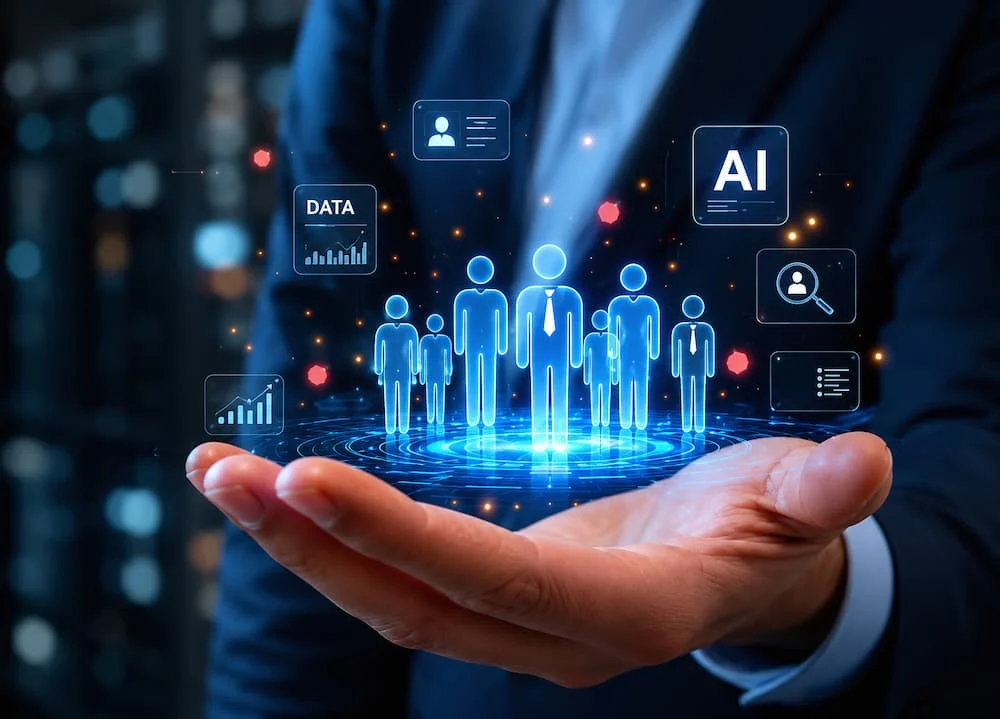
The intricate coordination required to manage this hybrid workforce—a blend of human employees and AI agents operating across diverse teams and systems—becomes paramount. This complex orchestration, which involves defining how software agents function autonomously and how they interface with human colleagues, falls squarely within the purview of HR. Consequently, the strategic importance and influence of the CHRO in the AI era are poised for significant elevation.
Four Critical Arenas for CHROs to Assert Leadership
Further bolstering this assertion, recent research from IBM underscores the escalating influence of the CHRO. The company’s comprehensive 2026 CEO Study indicates that a substantial 59% of CEOs anticipate an expansion of the CHRO’s strategic authority over the next three years, a shift largely attributable to the pervasive integration of AI. This burgeoning influence is intrinsically linked to the CHRO’s proactive assumption of ownership over key functional areas. As organizations increasingly rely on AI-driven decision-making, the responsibility for orchestrating this new landscape of human-AI collaboration naturally gravitates towards four pivotal domains that today’s CHRO must strategically claim:
1. Crafting the Workforce Architecture for a Hybrid Future
The organizational landscape is rapidly evolving into a dynamic ecosystem where human employees and AI agents coexist and collaborate. A common initial reaction has been to view AI agents as mere features embedded within existing HR software. However, this perspective is fundamentally flawed and short-sighted.
A digital worker, much like its human counterpart, requires a structured framework for integration and governance. This entails defining a clear role, assigning an accountable owner or manager, and meticulously scoping access permissions based on the agent’s designated functions. The critical task of designing this foundational structure—the very architecture of the future workforce—must be spearheaded by HR. It is HR’s responsibility to delineate the responsibilities of both human and AI components, ensuring they are seamlessly integrated into a unified and cohesive operating model. This strategic foresight prevents the ad-hoc and potentially chaotic integration of AI, laying the groundwork for a predictable and manageable human-AI synergy.
2. Delineating Decision Rights Between Agents and Humans
As AI agents gain the capability to execute actions across an organization, a deliberate and strategic framework must be established to define the boundaries of their autonomy. This involves making conscious decisions about which tasks or decisions AI agents are empowered to make independently and which necessitate human oversight and intervention. A practical guiding principle for managing this emerging digital workforce is to leverage AI agents for routine routing and coordination tasks, thereby freeing human expertise for critical judgment calls and complex problem-solving.
Consider a large corporation that processes thousands of job applications annually. An AI agent can efficiently pre-qualify candidates based on predefined skill sets and experience criteria. However, the ultimate decision-making process in hiring—the nuanced evaluation of cultural fit, potential, and strategic alignment—remains an inherently human endeavor. CHROs must proactively define these critical decision-making lines, rather than allowing them to be implicitly drawn by default or by other departments. This proactive approach ensures that human expertise is strategically applied where it is most valuable, safeguarding against potential biases or errors that could arise from unbridled AI autonomy.
3. Establishing Robust Governance and Escalation Protocols
Perhaps the most critical, yet often neglected, areas within AI integration are governance and escalation. Many organizations mistakenly approach these as afterthoughts, attempting to bolt them onto existing systems once they are already operational, often through a series of monitoring dashboards or policy documents. True effectiveness, however, demands that governance be intrinsically woven into the fabric of AI operations from the outset. This means embedding governance directly into the workflows and processes that dictate how AI agents function, make decisions, and escalate issues.
For instance, policy checks should be an integral part of an AI agent’s decision-making process before any consequential action is taken. When organizational policy dictates, a secondary human review—a "second set of eyes"—should be automatically triggered. Furthermore, clear and accessible pathways must be established for escalating exceptions or anomalies to human personnel. This is particularly critical given the projected exponential growth of AI agents. Gartner forecasts that by 2028, the average global Fortune 500 enterprise could be managing over 150,000 AI agents. Alarmingly, a recent Gartner report revealed that a mere 13% of organizations believe they currently possess adequate governance structures for their AI agents. This stark statistic highlights a significant governance deficit that HR must urgently address by taking ownership of the policies that underpin the orchestration of human and AI collaboration.
4. Forging a Strategic Partnership with the Chief Information Officer (CIO)
To achieve seamless and effective human-AI orchestration, CHROs must cultivate robust and collaborative partnerships with their Chief Information Officers (CIOs). While the CHRO is responsible for designing the intricate workflows and identifying the optimal points for human judgment, the CIO plays a crucial role in building and securing the technological infrastructure—the orchestration layer—that enables work to flow efficiently across existing enterprise systems. Neither function can successfully deliver a governed, hybrid workforce in isolation.
CHROs and CIOs must jointly own these workflows, establishing clear agreements on how they will be enforced and measured. The responsibility for navigating this complex technological and organizational integration cannot be solely delegated to the IT department. Much like the predictable rise of the tide, a strong, synergistic partnership between CHROs and CIOs will elevate both functions and, by extension, the entire organization, unlocking the full potential of AI. This collaborative approach ensures that technological solutions are aligned with human capital strategies, creating a more agile, efficient, and resilient workforce.
Embarking on the Journey: Starting with a Single Process
The prospect of transforming organizational processes in the age of AI might initially appear daunting, but it does not necessitate a multi-year, enterprise-wide overhaul. A highly effective and practical first step involves identifying a single, cross-departmental process and establishing a governed, AI-integrated version of it. The employee onboarding process serves as an excellent example, as it inherently touches upon multiple departments, including HR, IT, payroll, facilities, and the hiring team.
Initiating this focused approach yields three significant immediate benefits: it clearly illuminates current coordination gaps within the organization; it provides a tangible and measurable framework for assessing improvements (a clear "before and after"); and it generates a documented record of how a real-world process operated in conjunction with AI, detailing the systems involved and the precise points of human intervention.
This auditable record is invaluable for demonstrating the effectiveness of orchestrated workflows and the successful completion of tasks. Once a CHRO has established a demonstrable success with a single process, this proven model can serve as a powerful proof point to replicate the approach across other critical areas of the business. By adopting this incremental, process-driven strategy, CHROs can transcend the role of mere workforce change managers and actively participate in fundamentally transforming how the entire business operates, seamlessly integrating both human talent and intelligent digital workers. This proactive engagement positions HR as a strategic driver of organizational evolution in the AI era.