The landscape of employee recognition software for mid-sized companies in North America has undergone a significant evolution, moving beyond basic acknowledgment to become a strategic imperative for fostering a connected, engaged, and productive workforce. Fast-scaling organizations are navigating a complex environment characterized by hybrid work models, increasingly competitive labor markets, and employees who expect more than perfunctory praise. In this dynamic setting, informal and inconsistent recognition programs are proving insufficient, and the reliance on manual methods like spreadsheets is no longer viable.
Research from the Achievers Workforce Institute (AWI) underscores the profound impact of meaningful recognition. Data indicates that employees who receive such acknowledgment monthly are a remarkable 12 times more likely to find their work meaningful and 17 times more likely to feel connected to their colleagues. This highlights employee recognition not merely as a perk, but as a potent competitive advantage for mid-sized companies striving for growth, managing change, and vying for top talent. Consequently, recognition software must be flexible, easy to implement, and designed to accommodate the realities of human interaction within diverse work environments spanning teams, time zones, and integrated digital tools. This guide explores the essential features and considerations for selecting the best employee recognition software, with a particular focus on platforms that empower organizations to cultivate connection, reinforce core values, and achieve measurable business outcomes as they scale.
What Truly Matters in Recognition Software for Mid-Sized Companies
For mid-sized North American businesses, effective employee recognition software serves a singular, critical purpose: to streamline and enhance the consistency and meaningfulness of recognition as the organization expands. This is not a future aspiration but a present necessity. During this growth phase, company culture is still malleable but can also rapidly erode. As teams grow and managers become increasingly stretched, the responsibility for recognition can fall by the wayside, often forgotten amidst competing priorities. The right software solution acts as a quiet but powerful facilitator, reinforcing positive habits and scaling connection without transforming recognition into an overlooked administrative burden.
Essential Recognition Features for Scalability
A practical assessment of recognition software requires a close examination of its core functionalities and their real-world impact.
Peer-to-Peer Recognition: In flatter, faster-paced, and more collaborative mid-sized organizations, peers are often the first to witness and acknowledge exceptional work. A robust peer-to-peer recognition system allows for immediate, public acknowledgment without the need for lengthy approval processes, proving invaluable for cross-functional team successes, such as a major client launch where marketing, sales, and product all play integral roles.

Manager-Led Recognition: While peer recognition is vital, managers remain key influencers of team morale and performance. However, the demanding schedules of managers often relegate recognition to a lower priority. Recognition software equips them with tools to consistently reinforce progress and priorities, even within hybrid or distributed teams, minimizing administrative overhead.
Rewards Catalog Flexibility: Modern employees value choice and personalization in their rewards. A comprehensive rewards catalog should cater to diverse preferences, from immediate digital gift cards for frontline staff to experiential rewards for remote employees or public acknowledgment tied to specific impact.
Real-Time, In-the-Flow Recognition: The effectiveness of any recognition system hinges on its adoption and integration into daily workflows. Platforms that integrate seamlessly with collaboration tools like Slack or Microsoft Teams, where teams spend much of their workday, foster natural and consistent participation, eliminating the friction of logging into separate systems.
Values-Based Recognition: Recognition should extend beyond simply acknowledging task completion; it should actively reinforce how work is accomplished. For growing companies concerned about cultural dilution, values-based recognition ensures that core principles remain visible and are consistently upheld, even as new teams and leadership emerge.
The Best Employee Engagement Tools for Mid-Sized Companies
The most impactful employee engagement platforms integrate multiple core capabilities into a single, cohesive solution. For mid-sized businesses, these tools help employees feel valued, heard, and connected, while providing leaders with actionable insights to refine culture and performance at scale. Rather than relying on disparate systems for recognition, feedback, and communication, organizations are increasingly prioritizing integrated platforms that enhance the entire employee experience.
Key capabilities to seek include:
- Recognition and Rewards: Facilitating both peer-to-peer and manager-led appreciation, often tied to company values and linked to a diverse rewards catalog.
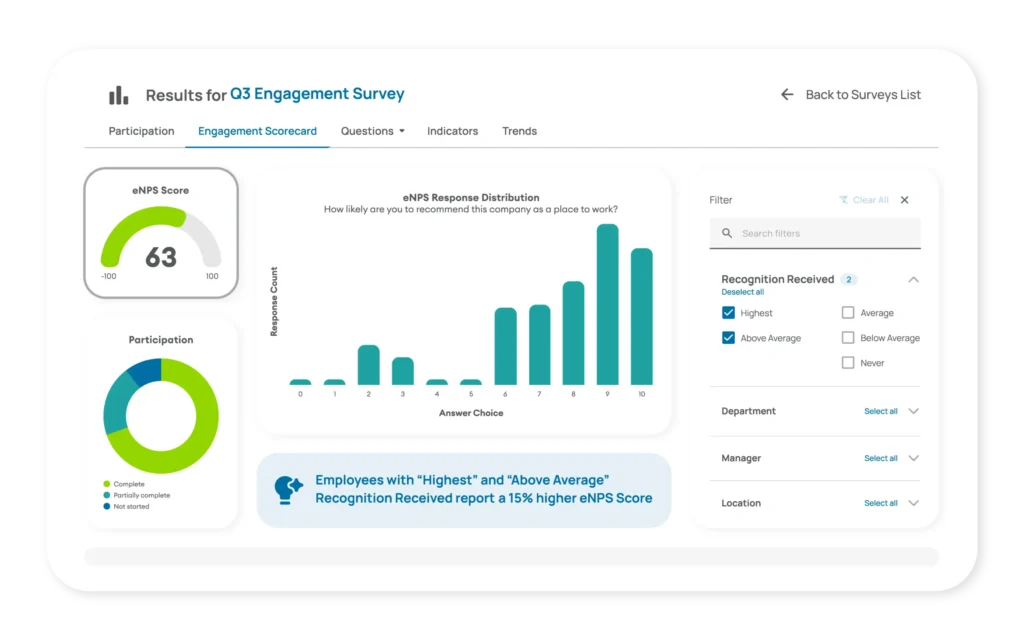
- Employee Feedback and Surveys: Enabling continuous feedback loops, pulse surveys, and more comprehensive engagement assessments to gauge sentiment and identify areas for improvement.
- Performance Management: Integrating recognition with performance review cycles and goal setting to create a holistic approach to employee development.
- Internal Communications: Features that support company-wide announcements, team updates, and social interactions to foster a sense of community.
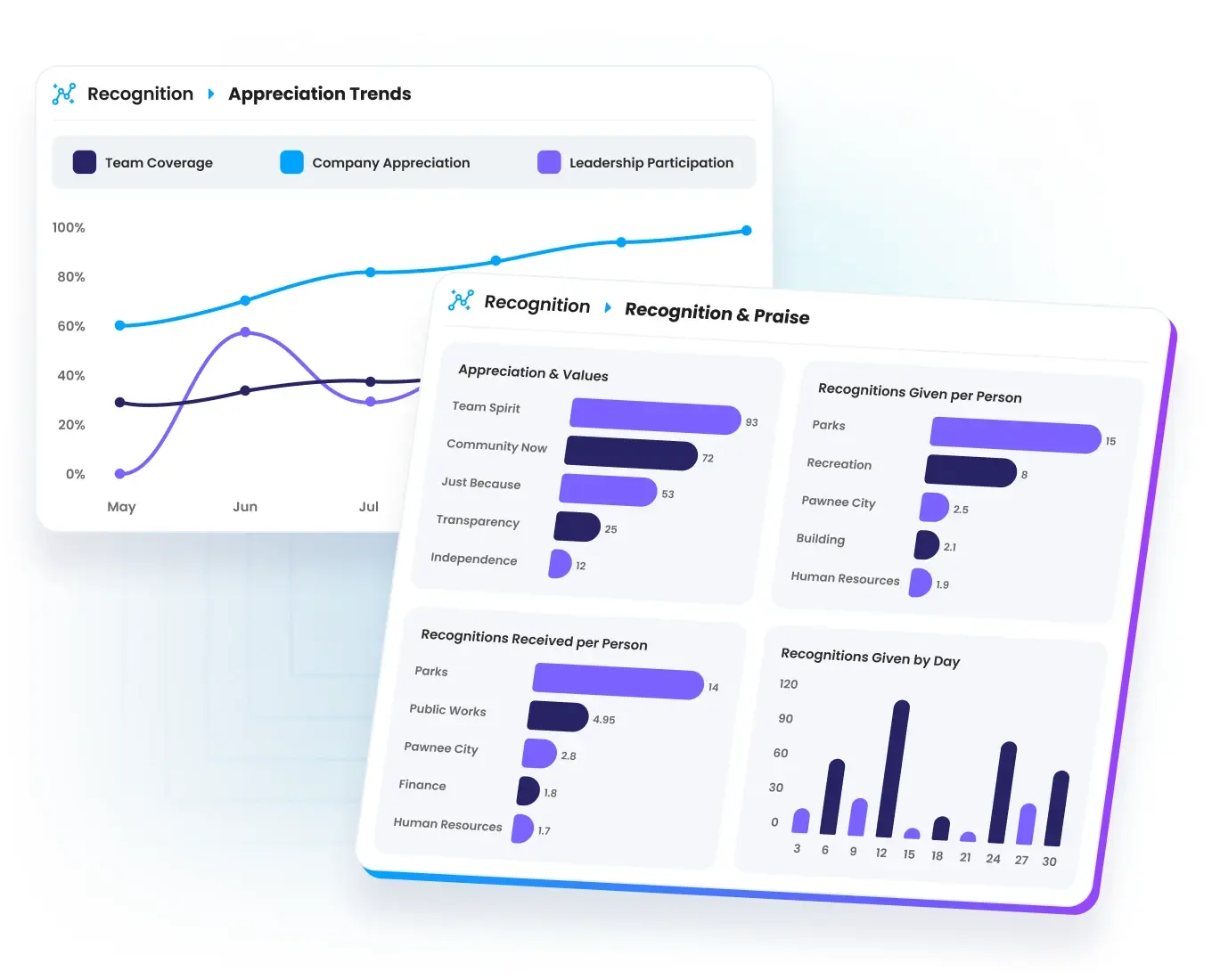
- Analytics and Reporting: Robust dashboards that provide insights into recognition patterns, engagement drivers, and overall organizational health.
Recognition-led engagement platforms often deliver the greatest impact by influencing multiple engagement drivers simultaneously. When employees experience frequent and meaningful recognition, their connection to their work, alignment with company values, and motivation to contribute are significantly enhanced. This convergence of recognition, rewards, employee voice, and analytics within a single, scalable platform is becoming the hallmark of leading employee engagement solutions.
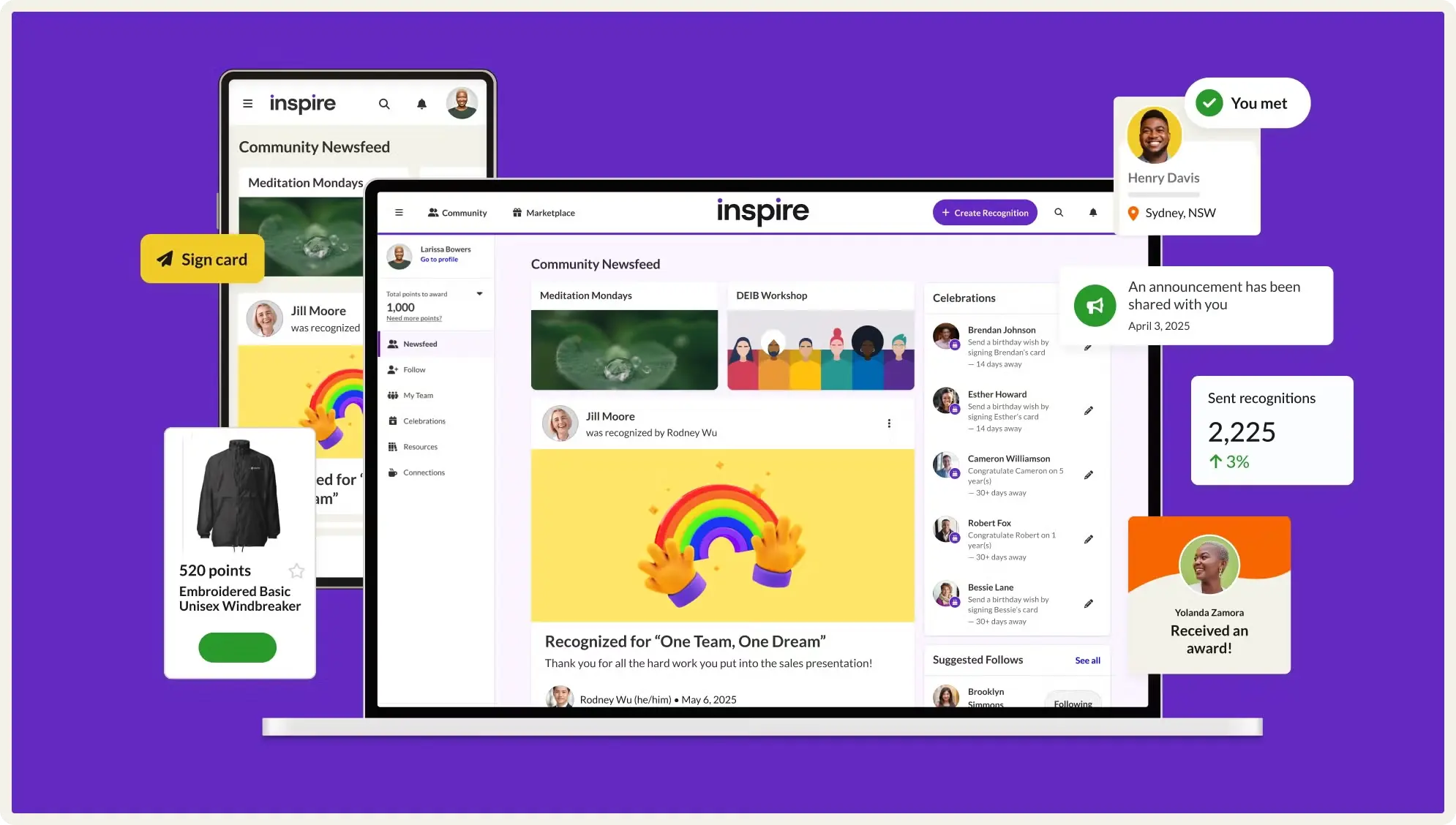
Mapping Recognition Software Features to Common Mid-Sized Company Challenges
The true value of recognition software is realized when its features directly address the unique challenges faced by growing mid-sized organizations.
Scaling from 300 to 800 Employees: As companies transition through these growth stages, informal recognition methods that worked in smaller settings become unsustainable. Recognition software introduces essential structure without sacrificing authenticity, ensuring that culture evolves alongside the business rather than being lost in its expansion.
Supporting Remote, Frontline, and Hybrid Employees Equally: A critical requirement for modern organizations is to ensure that recognition reaches all employees, regardless of their location, role, or work schedule. Platforms designed for inclusivity create visibility and equitable acknowledgment across diverse employee populations.
Maintaining Recognition Consistency Across Departments and Managers: Without standardized tools, recognition efforts can become fragmented and inconsistent. Software establishes clear guidelines and a unified framework, ensuring that appreciation is perceived as fair, frequent, and aligned with organizational objectives, irrespective of an individual’s direct manager.
Assessing Flexibility and Scalability for Future Growth
Mid-sized companies are inherently dynamic, and their recognition software should be equally adaptable.
Configurable Programs Over Rigid Platforms: Organizations should opt for solutions that allow for customizable rules, budgets, and recognition experiences that can evolve alongside the company, rather than being locked into outdated structures.
Modular Design vs. All-or-Nothing Suites: The most effective platforms enable organizations to start with core functionalities and expand their use of features over time, rather than forcing a premature adoption of every module.
Choosing a Scalable Model: A crucial question for mid-sized companies is whether a chosen solution will remain effective as the organization grows in size, complexity, and distribution. The software should support increasing user numbers, diverse global operations, and evolving organizational structures.
Future-Proofing for Evolving Needs: As the workplace continues to transform, recognition software should offer adaptability to emerging trends and technologies, ensuring long-term relevance and continued support for employee engagement.
A Smart Approach to Evaluating Recognition Software
Many recognition platforms present a compelling surface-level offering, but their true value is revealed in how well they align with the practical realities of mid-sized organizations. A strategic evaluation process helps to narrow the field effectively.
Prioritizing Usability and Adoption: If employees do not actively use the platform, its feature set becomes irrelevant. For mid-sized companies, high adoption rates are driven by intuitive interfaces, seamless integration with daily workflows, and clear communication about the value of recognition. Recognition should feel like an integrated part of work, not an additional task.
Leveraging Integrations for Real Work: Recognition should not exist in a vacuum. Robust platforms integrate with essential workplace tools such as HRIS systems (e.g., Workday, BambooHR), collaboration platforms (e.g., Slack, Microsoft Teams), and other productivity suites, streamlining data flow and enhancing user experience. Automatic data aggregation for reporting further simplifies administrative tasks.
Focusing on Insight, Not Just Activity: The true power of recognition data lies in its ability to inform strategic decisions. Mid-sized HR teams should seek reporting capabilities that answer critical questions about engagement drivers, recognition equity, and the correlation between recognition and key performance indicators. Basic activity logs are insufficient for deriving meaningful organizational insights.
A Quick Gut Check Before Proceeding: Before delving into vendor comparisons, organizations should ensure the platform demonstrably supports their core needs, offers a clear path to ROI, and is aligned with their long-term vision for employee engagement. Fuzzy answers to these fundamental questions warrant further investigation.
Streamlining the Selection Process
The process of selecting recognition software need not be protracted. A structured approach ensures efficiency and clarity.
Shortlisting with Purpose: Limit the initial selection to platforms that unequivocally meet defined non-negotiables, such as robust integration capabilities, comprehensive analytics, and a proven track record with similar-sized organizations. This avoids unnecessary vendor demonstrations.
Strategic Demo Planning: Demos are crucial for distinguishing between conceptually strong platforms and those that deliver practical functionality. Vendors should be asked to demonstrate specific use cases, integration workflows, reporting capabilities, and administrative ease of use. Transparency regarding what is not included is also vital.
Early Stakeholder Alignment: Recognition impacts multiple departments. Engaging key stakeholders from HR, IT, Finance, and department leadership early in the process ensures buy-in and prevents potential roadblocks later in implementation.
Confident Comparison: With thorough groundwork, the comparison process shifts from a broad assessment of "Is this good?" to a more targeted evaluation of "Is this right for us?" This focused approach facilitates smarter shortlisting and faster decision-making.
The Best Employee Recognition Software Delivers Measurable Results and Scales with Your Organization
Ultimately, the efficacy of recognition software is measured by its ability to drive tangible behavioral change. Achievers, for instance, is designed to foster frequent, meaningful recognition within the daily flow of work, enabling mid-sized companies to deepen connections, reinforce cultural values, and translate everyday moments into measurable improvements in engagement, productivity, and retention. This approach combines a human-centric recognition experience with a system that performs, shaping culture while simultaneously advancing business objectives.
For organizations still evaluating employee recognition software, understanding why leading companies choose platforms like Achievers to transform appreciation into sustained momentum is paramount. The right solution not only enhances current recognition practices but also lays a foundation for future growth and enduring employee engagement.
Key Insights from Leading Platforms:
| Platform | G2 Rating | Best For | Core Strength | Key Limitation |
|---|---|---|---|---|
| Achievers | 4.6/5 | Mid-size companies scaling culture and performance | Purpose-built recognition system driving frequent, values-based recognition with deep insights | May be more robust than needed for very small or early-stage teams |
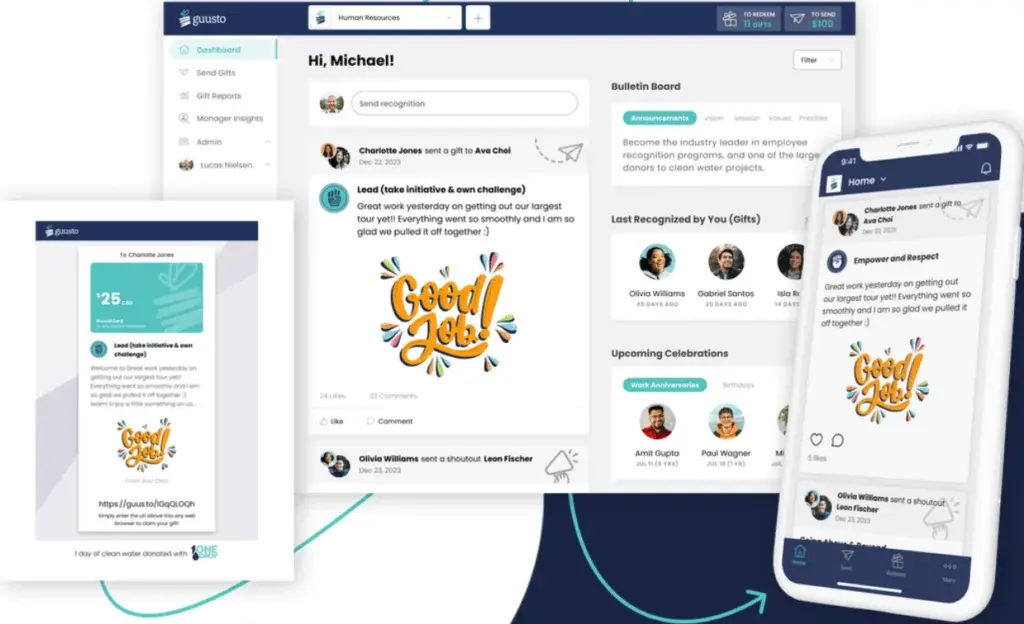
| Guusto | 4.9/5 | Frontline and deskless-heavy workforces | Simple, flexible reward delivery across SMS, QR, email, and print | Limited analytics and insight into behavior, culture, and performance |
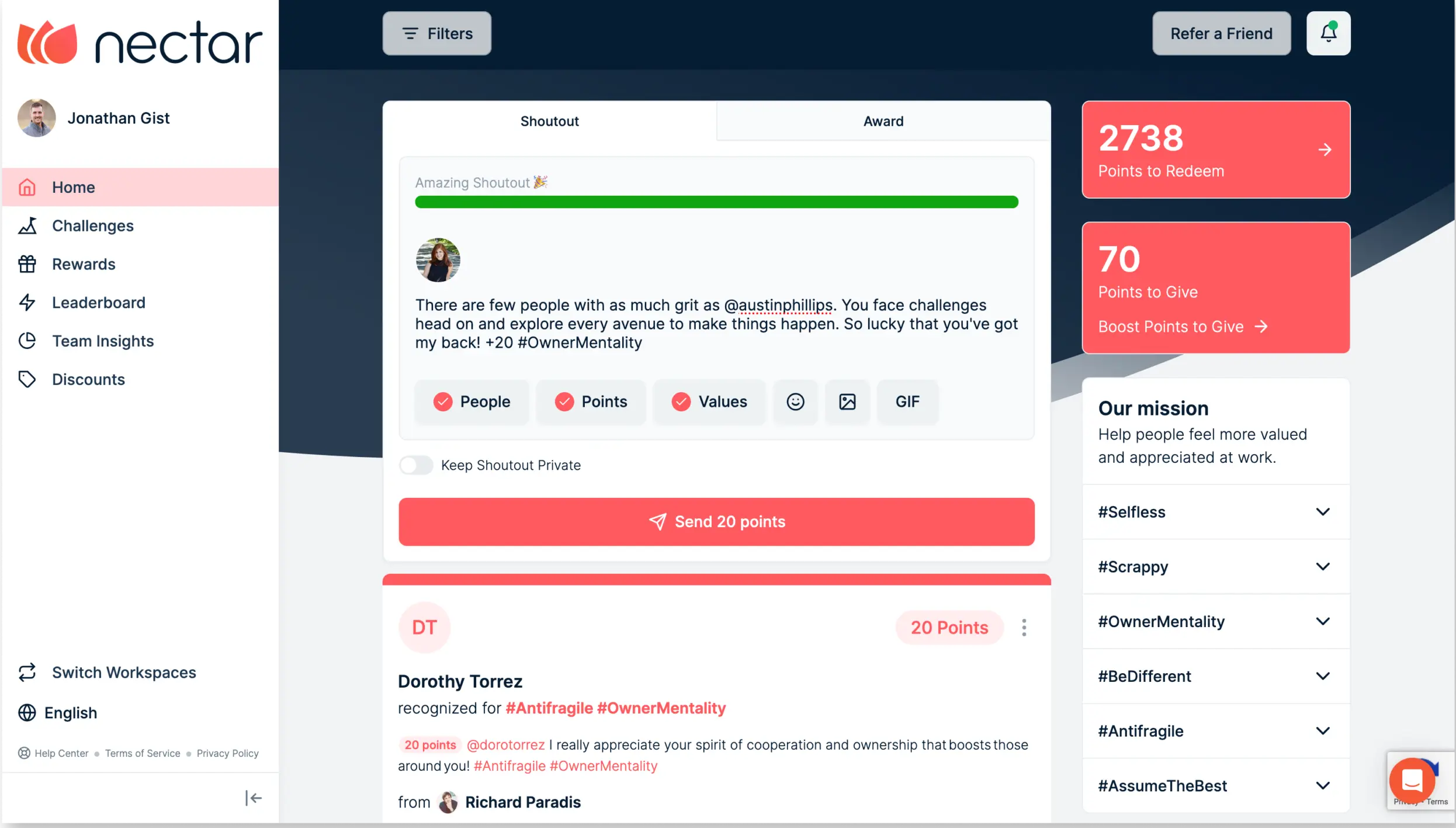
| Nectar | 4.7/5 | Budget-conscious teams prioritizing ease of use | Social, peer-to-peer recognition with points-based rewards and simple setup | Less depth in reporting and long-term program customization |
| Motivosity | 4.7/5 | Organizations focused on social connection and engagement | Strong social feed and community-building features to boost visibility and participation | Limited strategic insight into behavior and performance outcomes |
| Terryberry | 4.6/5 | Mid-sized organizations prioritizing service awards | Service awards and milestone recognition with symbolic and physical rewards | Limited visibility into everyday recognition patterns |
Information and pricing in this article were sourced from each vendor’s website and public review platforms as of the publication date. Specific features and offerings may vary.