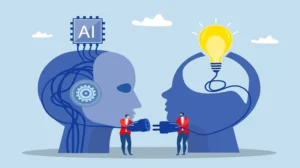
A groundbreaking report released in July 2026, coinciding with the annual commemoration of the Americans with Disabilities Act (ADA), highlights the transformative potential of artificial intelligence (AI) in fostering more inclusive workplaces and learning environments. The study, a collaborative effort between the University of Phoenix and Harris Poll, revealed that a significant majority of respondents—60%—believe AI is actively enhancing their understanding of accessibility, particularly within professional settings. This finding, published on August 3, 2026, signals a burgeoning optimism regarding AI’s capacity to dismantle long-standing barriers for individuals with disabilities, even as regulatory frameworks for the technology continue to evolve.
The comprehensive survey, which gathered insights in late June from 1,019 employed adults aged 18 and older who had participated in a professionally presented training or school course within the preceding year, delved into AI’s multifaceted impact on accessibility. Researchers aimed to assess how AI could influence critical aspects such as access to assistive technology and adherence to established digital accessibility standards, including the Web Content Accessibility Guidelines (WCAG). A striking 89% of respondents expressed confidence that AI could substantially improve various workflows, particularly in the creation of accessible documents, underscoring the widespread belief in its practical utility.
The Enduring Legacy of the Americans with Disabilities Act
To fully appreciate the significance of these findings, it is essential to contextualize them within the framework of the ADA. Signed into law by President George H.W. Bush on July 26, 1990, the ADA is a landmark civil rights legislation that prohibits discrimination against individuals with disabilities in all areas of public life, including jobs, schools, transportation, and all public and private places that are open to the general public. Its primary purpose is to ensure that people with disabilities have the same rights and opportunities as everyone else.
Before the ADA, millions of Americans with disabilities faced systemic discrimination and physical barriers that prevented them from fully participating in society. From inaccessible buildings and public transportation to discriminatory hiring practices, the path to inclusion was fraught with challenges. The ADA sought to rectify these injustices by mandating reasonable accommodations in employment, requiring accessibility in public accommodations and commercial facilities, ensuring accessible public transportation, and establishing telecommunications relay services.
Over the decades, the ADA has fundamentally reshaped the landscape of American society, leading to significant improvements in physical accessibility, employment opportunities, and general societal attitudes. However, the advent of the digital age introduced new frontiers for accessibility. As workplaces and educational institutions increasingly migrated online, the concept of accessibility expanded beyond ramps and curb cuts to include digital interfaces, software, websites, and online content. Ensuring digital equity became a critical, ongoing challenge, often requiring continuous adaptation and innovation to keep pace with technological advancements. The report’s timing, coinciding with the ADA anniversary, serves as a powerful reminder of this evolving commitment to inclusion.

The Dual Nature of Artificial Intelligence: Promise and Peril
While the report paints an optimistic picture of AI’s potential, the technology’s rapid proliferation has also sparked considerable debate regarding its ethical implications, particularly the risk of perpetuating or amplifying human biases. AI systems learn from vast datasets, and if these datasets reflect existing societal biases—whether racial, gender-based, or disability-related—the AI can inadvertently embed and automate those prejudices in its outputs and decisions.
This concern has not gone unnoticed by policymakers. In 2023, New York City implemented a pioneering AI in hiring law (Local Law 144), which mandated audits for bias in automated employment decision tools. This legislation aimed to protect job applicants from discriminatory practices embedded within AI algorithms used for screening and hiring. Following New York City’s lead, other states, including California and Texas, have begun to explore or implement similar regulations, signaling a growing awareness of the need for oversight in AI deployment, especially in sensitive areas like employment.
Despite these necessary regulatory interventions, the broader use of AI in the workplace remains largely unregulated at a federal level. This creates a complex environment where innovation must be balanced with robust ethical considerations and protective measures.
Bridging Gaps: How AI Can Advance Accessibility
Kelly Hermann, Vice President of Accessibility and Student Affairs at the University of Phoenix, articulated a compelling vision for AI’s role in fostering inclusion. "If accessibility is built in from the beginning, organizations are more likely to create AI-enabled environments that are universally usable," Hermann stated. Her insight underscores the principle of universal design, where products and environments are designed to be usable by all people, to the greatest extent possible, without the need for adaptation or specialized design.
Hermann elaborated on the practical benefits, noting that "Clearer content, better summaries, accurate captions, and multiple formats can help workers and learners with disabilities, but they also help busy adults, multilingual learners, mobile users, and anyone trying to absorb information quickly." This highlights a crucial aspect of accessibility: improvements for individuals with disabilities often yield benefits for the entire user base.

Specific applications of AI in promoting accessibility are manifold:
- Real-time Captioning and Transcription: AI-powered speech-to-text technologies can provide instant captions for virtual meetings, online lectures, and videos, benefiting individuals who are deaf or hard of hearing, as well as those in noisy environments or non-native speakers.
- Personalized Learning and Training: AI can adapt educational content and training modules to individual learning styles and needs, offering varied formats (text, audio, visual) and adjusting pace, making learning more accessible for those with cognitive disabilities or diverse learning preferences.
- Accessible Document Creation: As indicated by the survey, AI can significantly streamline the process of creating accessible documents by automatically tagging elements, generating alternative text for images, and ensuring proper heading structures, making them readable by screen readers.
- Language Translation and Simplification: AI can translate complex jargon into simpler language, or translate content into multiple languages, aiding individuals with cognitive disabilities or those for whom English is a second language.
- Adaptive Interfaces: AI can personalize user interfaces based on individual preferences or needs, adjusting font sizes, color contrasts, or input methods to enhance usability for people with various impairments.
- Enhanced Assistive Technologies: AI can power more sophisticated assistive technologies, such as advanced screen readers, predictive text for individuals with motor impairments, or intelligent navigation tools for visually impaired users.
- Job Matching and Onboarding: While caution is needed to mitigate bias, AI can, if properly designed, help match candidates with disabilities to suitable roles by focusing on skills and aptitudes, and can customize onboarding processes to ensure an inclusive start.
Supporting Data and the Economic Imperative of Inclusion
The findings of the University of Phoenix/Harris Poll report align with a growing body of evidence supporting the business case for disability inclusion. According to a 2018 report by Accenture, in partnership with Disability:IN and the American Association of People with Disabilities (AAPD), companies that champion disability inclusion outperform their peers financially. These "Disability Inclusion Champions" achieved 28% higher revenue, double the net income, and 30% higher economic profit margins compared to other companies.
Despite these clear benefits, the unemployment rate for people with disabilities remains significantly higher than for those without. In July 2026, while specific figures for that month are not available, historical data from the U.S. Department of Labor consistently shows a gap, with the unemployment rate for persons with a disability often being double or more that of persons without a disability. This persistent disparity underscores the urgent need for innovative solutions like AI to bridge the employment gap and foster true equity.
Furthermore, the economic impact of inaccessible digital environments is substantial. Businesses that fail to meet digital accessibility standards risk not only legal challenges but also alienate a significant market segment. The global spending power of people with disabilities and their families is estimated to be trillions of dollars, representing a missed opportunity for businesses that do not prioritize accessibility. AI, when deployed thoughtfully, offers a scalable solution to address many of these digital accessibility challenges.
Inferred Reactions and Expert Perspectives
Disability advocacy groups, while generally welcoming technological advancements that promote inclusion, would likely express cautious optimism regarding AI. Organizations such as the National Federation of the Blind or the American Association of People with Disabilities would emphasize the critical need for "human in the loop" oversight, robust testing for bias, and the active involvement of people with disabilities in the design and development of AI-powered tools. They would advocate for policies that ensure AI is a tool for empowerment, not a new source of exclusion, stressing that accessibility must be a core principle from conception, not an afterthought.

HR professionals and corporate leaders would likely see AI as a powerful tool to enhance diversity, equity, and inclusion (DEI) initiatives. They would acknowledge the initial investment in integrating AI solutions and the need for upskilling their workforce to effectively utilize these technologies. However, the potential for increased productivity, improved employee engagement, and enhanced compliance with ADA regulations would make it an attractive proposition. Challenges would include navigating the evolving regulatory landscape, ensuring data privacy, and fostering a culture that embraces technological change while prioritizing human dignity.
Technology developers, for their part, would highlight the immense potential for innovation. They would underscore the rapid advancements in natural language processing, computer vision, and machine learning that are enabling these new accessibility features. They would also likely call for clearer guidelines and industry standards to ensure that AI-driven accessibility solutions are interoperable, scalable, and consistently meet high ethical benchmarks. Collaboration with disability advocates and HR experts would be seen as crucial to developing truly effective and equitable solutions.
Broader Impact and Future Implications
The integration of AI into accessibility initiatives heralds a potential paradigm shift in how workplaces operate and how individuals with disabilities engage with professional and educational spheres.
- Transforming Workplace Culture: By making accessibility more seamless and integrated into daily operations, AI can foster a more inherently inclusive culture, moving beyond mere compliance to genuine belonging.
- Redefining Job Roles: AI might automate certain routine tasks, potentially freeing up individuals with disabilities to focus on more strategic or creative aspects of their roles, enhancing job satisfaction and career progression. However, this also raises questions about potential job displacement, necessitating proactive reskilling and upskilling initiatives.
- Shaping Future Regulations: The increasing deployment of AI for accessibility will inevitably prompt further regulatory discussions. We can anticipate more nuanced laws that not only prohibit discriminatory AI but actively encourage its ethical development for inclusive purposes, potentially through incentives or mandatory accessibility audits for AI tools.
- Innovation in Assistive Technology: AI’s capabilities will likely drive a new wave of innovation in assistive technology, making devices and software more intelligent, personalized, and responsive to individual needs, moving beyond generic solutions to highly tailored support systems.
- Economic Empowerment: A truly accessible, AI-augmented workplace could unlock the full economic potential of millions of individuals with disabilities, contributing significantly to national GDPs and reducing societal welfare burdens.
The findings of the University of Phoenix and Harris Poll report serve as a timely reminder that as technology advances, so too must our commitment to ensuring that no one is left behind. While the ethical considerations surrounding AI are real and demand careful attention, its potential to enhance accessibility, foster inclusion, and create more equitable opportunities for all workers and learners is undeniably profound. As the journey towards full accessibility continues, AI stands poised to be a powerful, albeit carefully managed, ally in realizing the vision of the Americans with Disabilities Act for the 21st century and beyond.