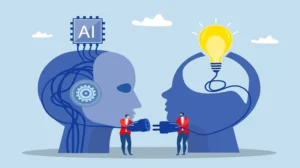
The landscape of talent acquisition is undergoing a profound transformation, driven not by the wholesale replacement of human recruiters, but by the strategic deployment of artificial intelligence to eliminate the relentless tide of administrative "busywork." For years, recruiting teams have grappled with repetitive tasks, often performing them out of habit without questioning their necessity. This entrenched inefficiency represents a significant drain on resources and a missed opportunity for recruiters to focus on high-value activities like candidate engagement and strategic talent mapping. The emerging consensus among HR technology experts is that AI’s true power in recruitment lies in automating these mundane, time-consuming processes, thereby empowering human professionals to excel in areas requiring empathy, judgment, and complex problem-solving.
The Burden of Busywork: A Deep Dive into Recruitment Inefficiencies
Recruitment is inherently a human-centric function, yet a substantial portion of a recruiter’s day is consumed by tasks that are anything but. From copying and pasting job descriptions across multiple platforms to meticulously formatting documents, checking for compliance, and scheduling interviews, the sheer volume of administrative chores can quickly accumulate. A recent industry survey, for instance, indicated that an average recruiter spends approximately 40% of their time on administrative tasks that do not directly involve interacting with candidates or hiring managers. This translates into hundreds of hours annually per recruiter, collectively costing organizations millions in lost productivity and delayed hiring cycles. These seemingly minor, fragmented tasks, when multiplied across hundreds or thousands of job openings annually, often culminate into the equivalent of multiple full-time administrative positions that contribute little to the strategic objectives of talent acquisition. The consequence is not only operational inefficiency but also recruiter burnout and a diminished capacity to deliver a truly exceptional candidate experience.
The Evolution of AI in Human Resources: From Features to Agents
The conversation around AI in human resources has matured significantly. Initially, the focus was primarily on isolated AI "features" – tools designed to assist with specific tasks. This included AI-powered grammar checkers for job descriptions, basic resume summarizers, or rudimentary chatbots for answering frequently asked questions. While useful, these features typically required human initiation and oversight for each individual task.
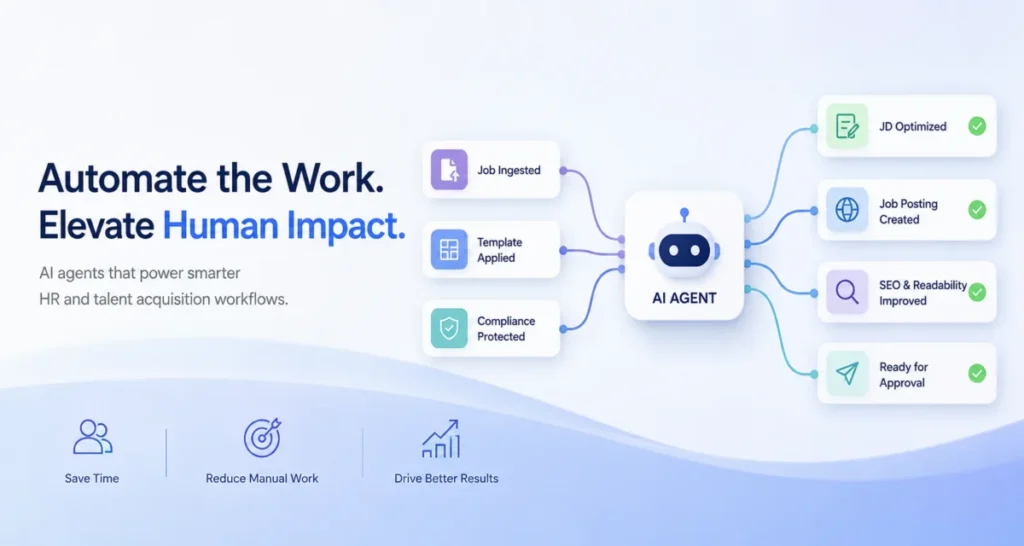
The current trajectory, however, points towards the development of AI "agents." This represents a fundamental shift: instead of merely assisting with a task, an AI agent is designed to autonomously complete an entire workflow or sequence of interconnected tasks. Imagine an AI agent not just writing a job description, but also applying the correct company templates, integrating legal disclaimers, optimizing it for search engines, publishing it to multiple job boards, and even initiating the first round of candidate screening – all without direct human intervention at each step. This evolution signifies a move from reactive assistance to proactive, intelligent automation, where the system anticipates needs and executes multi-step processes seamlessly.
Transforming Workflows: The Job Description Paradigm
Consider the arduous process of creating and publishing a single job description, a task central to talent acquisition. In many organizations, this workflow is a labyrinth of manual steps:
- A hiring manager drafts an initial request, often in an unstructured format.
- A recruiter copies relevant details from the request into the Applicant Tracking System (ATS).
- The recruiter then copies the content out of the ATS to format it for external posting.
- They search for the correct company branding template and apply it manually.
- Legal and compliance teams review the content, often necessitating further manual edits.
- The recruiter might rewrite sections to enhance clarity, inclusivity, or SEO.
- The final version is then manually published to various internal and external job boards, each potentially requiring slightly different formatting or data entry.
- Tracking performance and making iterative adjustments further adds to the manual burden.
Each of these steps, while individually minor, consumes precious minutes that quickly aggregate. Now, envision this entire workflow handled by an AI agent:
- The hiring manager submits a basic job request to the AI agent.
- The AI agent automatically pulls relevant data from existing company profiles or historical job data.
- It generates a compliant, branded, and optimized job description using pre-approved templates and legal language.
- The AI agent automatically publishes the job to all designated internal and external platforms, adjusting formatting as needed for each.
- It can then track initial application metrics and even suggest minor content tweaks based on real-time performance data.
In this automated scenario, the recruiter’s role shifts from a clerical one to an oversight and strategic one. They review the AI-generated output, provide high-level feedback, and focus on engaging with qualified candidates, rather than meticulously managing data entry and formatting. This fundamental change not only boosts efficiency but also ensures consistency, reduces errors, and frees up valuable human capital.
Beyond Job Descriptions: Identifying Automation Opportunities Across the Recruitment Lifecycle
The potential for AI automation extends far beyond job descriptions, touching nearly every facet of the recruitment lifecycle. Identifying these opportunities requires a shift in perspective – moving away from looking at isolated tasks and instead analyzing entire workflows.
- Candidate Sourcing and Screening: AI agents can analyze vast databases of resumes and professional profiles, matching candidates against specific job requirements with greater speed and accuracy than human screeners. They can identify patterns, skills, and experiences that might be overlooked, and even conduct initial outreach or pre-screening questions via intelligent chatbots.
- Interview Scheduling: The back-and-forth of coordinating interview times across multiple calendars is a notorious time sink. AI scheduling tools can autonomously manage this process, finding optimal slots, sending invites, and even handling reschedules, significantly reducing administrative overhead for recruiters and hiring managers.
- Candidate Communication: From sending automated acknowledgment emails to providing updates on application status or even personalized follow-ups, AI can ensure timely and consistent communication, enhancing the candidate experience and reducing recruiter workload.
- Onboarding Preparations: Once an offer is accepted, AI can trigger a series of tasks for onboarding, such as initiating background checks, preparing necessary documentation, setting up IT access, and notifying relevant departments, ensuring a smooth transition for the new hire.
- Data Entry and Reporting: AI can automatically extract data from various sources, update candidate profiles, generate compliance reports, and provide real-time analytics on recruitment metrics, eliminating manual data entry and improving reporting accuracy.
The key is to identify those "five-minute tasks" that are repeated hundreds of times a month – the small, annoying, consistent activities that collectively consume significant time and energy. These are prime candidates for AI automation, forming the building blocks for automating entire processes.
Strategic Implications: Empowering Recruiters, Enhancing Candidate Experience
The implications of this shift are far-reaching. By offloading repetitive tasks to AI agents, organizations can achieve several strategic advantages:
- Empowered Recruiters: Recruiters are liberated from administrative drudgery, allowing them to dedicate more time to high-impact activities such as building relationships with top talent, conducting in-depth interviews, strategically advising hiring managers, and focusing on diversity and inclusion initiatives. This elevates the recruiter’s role from administrative support to strategic talent advisor, leading to increased job satisfaction and reduced burnout.
- Enhanced Candidate Experience: Automation ensures faster, more consistent, and more personalized communication with candidates. Timely updates, streamlined application processes, and efficient scheduling contribute to a positive impression of the organization, which is crucial in a competitive talent market.
- Improved Efficiency and Cost Savings: Streamlined workflows lead to faster time-to-hire, reducing the cost per hire. Fewer manual errors also mean less rework and improved data integrity. Industry analysis suggests that companies leveraging intelligent automation in HR can see up to a 30% reduction in administrative costs and a 20% improvement in hiring speed.
- Reduced Bias (Potentially): While AI can introduce bias if not carefully designed, it also offers the potential to reduce human-driven unconscious bias by focusing on objective criteria and ensuring consistent processes in areas like initial screening and language analysis in job descriptions.
- Data-Driven Decision Making: AI systems can collect and analyze vast amounts of data on recruitment performance, providing insights that allow organizations to continually optimize their strategies and identify areas for improvement.
Industry leaders and HR tech analysts broadly agree on this trajectory. Sarah Jensen, a principal analyst at a prominent HR research firm, commented, "The fear of AI replacing people is largely misplaced. The reality is that AI is replacing tasks, not roles. Recruiters who embrace these tools will find themselves more effective, strategic, and ultimately, more valuable to their organizations."
Navigating Implementation: Best Practices and Ethical Considerations
While the benefits are compelling, successful AI integration requires careful planning and execution. It’s crucial for organizations to approach AI automation incrementally, rather than attempting a wholesale overhaul.
- Start Small, Scale Smart: The advice from the original article holds true: begin by automating the most annoying, repetitive, five-minute tasks. Success with these smaller initiatives builds confidence and provides valuable learning experiences before tackling larger, more complex processes.
- Focus on Workflows, Not Just Tasks: Identify interconnected steps that form a complete workflow, rather than isolated tasks. This allows for true end-to-end automation and maximizes impact.
- Data Quality is Paramount: AI systems are only as good as the data they are trained on. Ensuring clean, accurate, and relevant data is critical for the effective functioning of AI agents.
- Integration with Existing Systems: Seamless integration with existing ATS, HRIS, and other recruitment tools is essential to avoid creating new data silos or manual workarounds.
- Change Management and Training: Introducing AI requires a robust change management strategy. Recruiters need to understand how AI will augment their roles, not diminish them, and be trained on how to interact with and oversee AI agents effectively.
- Ethical Considerations and Bias Mitigation: Organizations must prioritize ethical AI development and deployment. This includes proactively identifying and mitigating potential biases in AI algorithms, ensuring data privacy and security, and maintaining transparency about how AI is used in recruitment processes. Regular audits and human oversight are non-negotiable.
The Future of Talent Acquisition: A Collaborative Ecosystem
The future of talent acquisition will undoubtedly be a collaborative ecosystem where human expertise is augmented by intelligent automation. Companies like Ongig, which have spent years simplifying job description management and job posting workflows, are at the forefront of this evolution. By asking the critical question – "What repetitive recruiting work could disappear altogether?" – they are driving innovations that automatically apply templates, protect compliance language, optimize content, and transform basic job descriptions into polished, high-performing job postings. The ultimate goal remains consistent: to free recruiters from the administrative burden, allowing them to dedicate their invaluable skills to the human elements of hiring – building relationships, assessing cultural fit, and making strategic talent decisions.
This strategic application of AI is not just about efficiency; it’s about redefining the human role in recruitment, shifting the focus from transactional tasks to transformational outcomes. As organizations continue to navigate complex talent markets, the ability to leverage AI to create more agile, efficient, and human-centric recruitment processes will be a decisive competitive advantage.
FAQs on AI in Recruitment
Q: Can AI completely automate HR processes?
A: No, not entirely. While AI excels at automating repetitive, rules-based, and data-intensive workflows, tasks requiring nuanced judgment, empathy, complex problem-solving, negotiation, coaching, and deep human relationship-building will always require human intervention. AI’s role is to augment human capabilities, not replace them wholesale.
Q: What’s the difference between AI automation and AI agents?
A: AI automation generally refers to using AI features to complete specific tasks, often initiated and overseen by a human. For example, an AI feature might summarize a resume. An AI agent, on the other hand, is designed to autonomously complete an entire workflow or a sequence of connected tasks, making decisions within that workflow with minimal human involvement. An AI agent might not only summarize a resume but also then cross-reference it with job requirements, schedule an interview, and update the ATS.
Q: What’s the best HR process to automate first?
A: The most effective starting point for AI automation is often high-volume, repetitive tasks that are prone to human error and consume significant time. Examples include formatting job descriptions, applying standardized templates, checking compliance language, initial resume screening for basic qualifications, or managing the back-and-forth of interview scheduling and data transfer between different systems. Start with processes that offer clear, measurable time savings and reduced administrative burden.
Q: Will AI replace recruiters?
A: The consensus among industry experts is that AI will not replace recruiters. Instead, it will fundamentally change the nature of the recruiter’s role. By automating administrative "busywork," AI empowers recruiters to focus on strategic activities such as building deeper relationships with candidates and hiring managers, conducting more meaningful interviews, improving candidate experience, and acting as strategic talent advisors. Recruiters who adapt to leverage AI tools will find their roles evolving to be more impactful and fulfilling.
Q: How can AI help optimize job descriptions?
A: AI can significantly optimize job descriptions by ensuring consistency in branding and tone, automatically applying legal and compliance language, suggesting inclusive language to attract a diverse pool of candidates, and optimizing content for search engine visibility (SEO) to reach more qualified applicants. It can also analyze performance data to suggest iterative improvements, making job postings more effective and efficient.