Strategic human resource management (SHRM) represents a fundamental evolution in how organizations approach their people functions. Far from being a theoretical concept confined to academia, it embodies a practical, people-first leadership philosophy that empowers HR teams to move beyond problem-solving and instead set the strategic direction for businesses. This proactive approach involves meticulously aligning human capital strategies with overarching business objectives, actively shaping organizational culture, and cultivating a workforce that is not only engaged but also agile and prepared for future challenges. The increasing relevance of SHRM is underscored by recent research from the Society for Human Resource Management (SHRM), which indicates that nearly half of HR professionals identify enhancing the employee experience as a paramount priority for the current year. This focus stems from a growing understanding that a positive employee experience is intrinsically linked to a cascade of critical business outcomes, including elevated engagement, improved retention rates, and enhanced overall performance.
At its core, SHRM is characterized by a deliberate and integrated approach to HR, where every people-related decision is explicitly connected to a broader business goal. This distinguishes it significantly from traditional HR models, which historically prioritized operational efficiency, policy adherence, and administrative tasks. While traditional HR often focused on maintaining day-to-day operations, SHRM is fundamentally about driving business advancement. It marks a significant paradigm shift, moving away from a reactive stance of simply filling roles and managing compliance, towards a forward-thinking objective of building a workforce that demonstrably contributes to achieving key business metrics. Under this strategic framework, employees are viewed not merely as a line item on a balance sheet, but as indispensable assets whose development and well-being are directly tied to organizational success. Consequently, SHRM advocates for the implementation of robust programs in areas such as talent development, strategic workforce planning, and employee recognition, all designed to enable individuals to perform at their highest potential.
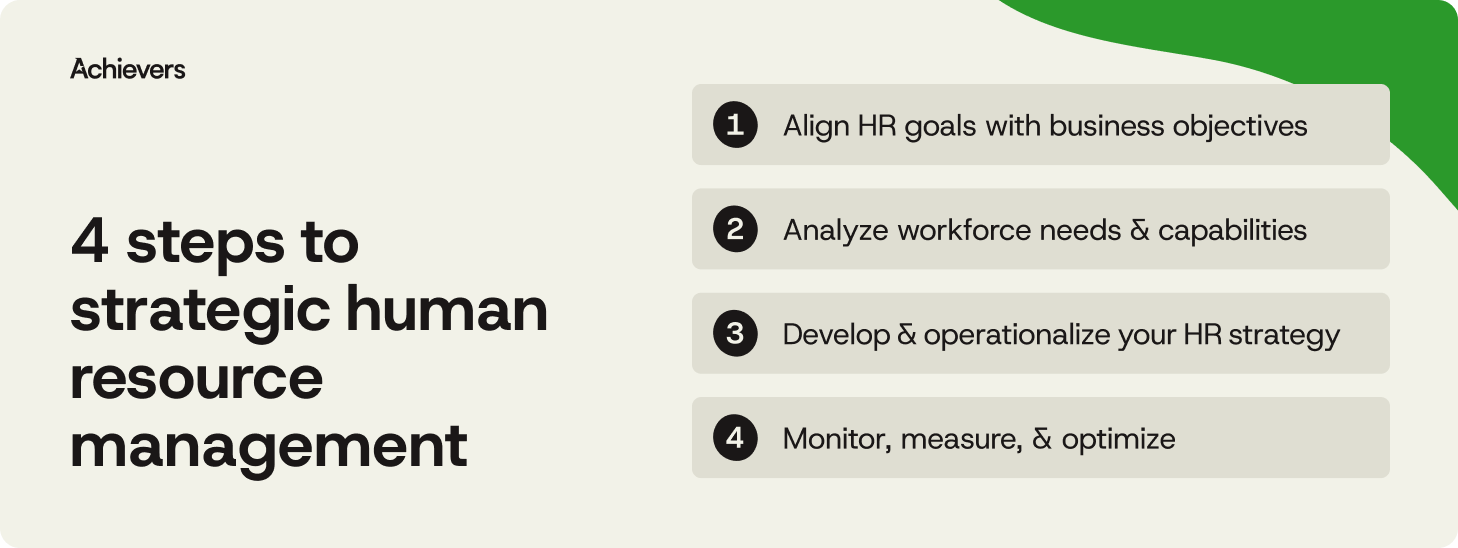
The Four Pillars of Strategic Human Resource Management
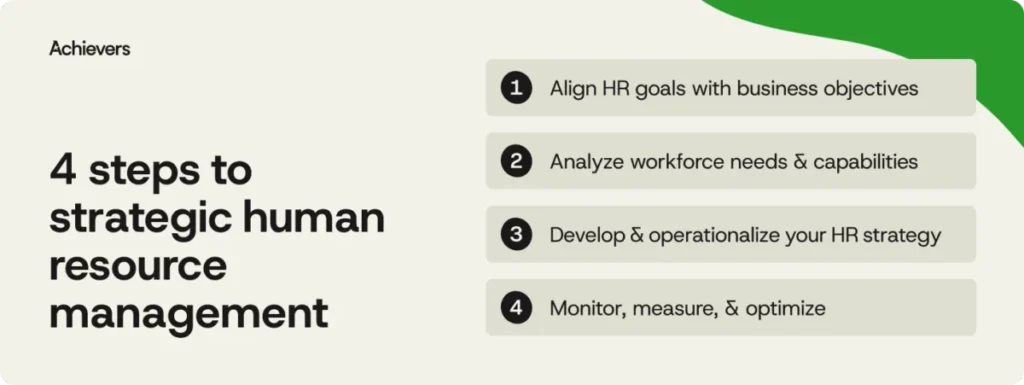
Implementing a strategic HR approach does not necessitate an overwhelming undertaking; rather, it requires intentionality and a structured process. For organizations aiming to ensure their people strategies actively contribute to tangible business outcomes, rather than remaining confined to theoretical documents, adopting these four foundational steps is crucial:
Step 1: Align HR Goals with Business Objectives
The initial and perhaps most critical step in adopting strategic HR is to ensure that all human resources initiatives are directly tethered to the organization’s overarching business objectives. If current people programs are not demonstrably contributing to what the business is striving to achieve, a comprehensive re-evaluation is in order. Strategic HR begins with a thorough alignment process, ensuring that every planned HR activity, from recruitment to development and retention, can be traced back to the company’s strategic priorities. This involves a deep understanding of the business’s mission, vision, values, and its competitive landscape. For instance, if a company’s strategic goal is to expand into new international markets, HR’s strategic objective would be to develop a talent pipeline with the necessary language skills, cultural competencies, and international experience. This alignment ensures that HR is not operating in a vacuum but is a direct contributor to the company’s growth and success.
Step 2: Analyze Workforce Needs and Capabilities
Effective strategy formulation is impossible without a clear understanding of the current state of the workforce. This second step involves a comprehensive analysis of the organization’s existing talent pool, identifying both current capabilities and, crucially, the gaps that exist in relation to future strategic needs. This analysis may involve a range of tools and methodologies, including skills inventories, competency assessments, and performance data reviews. For example, if a company is planning a digital transformation, this step would involve assessing the current digital literacy of the workforce and identifying the specific skills – such as data analytics, cybersecurity, or AI proficiency – that will be required. This diagnostic phase provides the essential data needed to inform targeted interventions and development programs.
Step 3: Develop and Operationalize Your HR Strategy
Once strategic goals are aligned and workforce needs are understood, the next phase involves translating these insights into concrete, actionable programs and initiatives. This is where the HR strategy begins to manifest in the daily operations of the organization. It involves designing, developing, and implementing programs that address the identified needs and support the strategic objectives. This could include creating new training and development programs, revamping performance management systems, implementing a more robust employee recognition framework, or refining recruitment strategies to attract candidates with specific skill sets. The key here is to move beyond policy creation and focus on embedding these strategic elements into the fabric of the employee experience, ensuring they are practical, accessible, and impactful.

Step 4: Monitor, Measure, and Optimize
The most effective strategies are dynamic and adaptable. Once HR programs are in place, it is imperative to establish mechanisms for continuous monitoring and evaluation. This involves diligently tracking the performance of implemented initiatives and assessing their impact against the defined business objectives. Data collection and analysis are paramount, allowing HR to identify what is working effectively and, equally importantly, what is not. This iterative process of monitoring, measuring, and optimizing ensures that the HR strategy remains relevant and responsive to evolving business needs and market conditions. For instance, if a new onboarding program is implemented to improve new hire retention, metrics such as early turnover rates, time-to-productivity, and new hire satisfaction surveys would be tracked to gauge its success and identify areas for improvement.
Core Pillars of Strategic Human Resource Management in Practice
For strategic HR to be more than just a theoretical construct, its principles must be visibly embedded in the everyday employee experience. These core pillars serve as the practical application of high-level goals, shaping employee behavior, fostering a desired organizational culture, and equipping the workforce with the necessary tools for continuous growth alongside the organization.
- Talent Management and Development: This encompasses the entire employee lifecycle, from attracting and recruiting the right talent to developing their skills, managing their performance, and planning for future leadership needs. It involves creating clear career paths, providing ongoing learning opportunities, and fostering a culture of continuous improvement.
- Employee Engagement and Experience: This pillar focuses on creating a work environment where employees feel valued, motivated, and connected to the organization’s mission. It involves understanding employee needs and expectations, fostering open communication, promoting work-life balance, and ensuring a positive and supportive workplace culture.
- Performance Management and Productivity: Strategic HR ensures that performance management systems are not merely evaluative but are designed to drive high performance. This includes setting clear expectations, providing regular feedback and coaching, and aligning individual goals with organizational objectives to maximize productivity.
- Compensation and Rewards: A strategic approach to compensation and rewards goes beyond simply offering competitive salaries. It involves designing comprehensive reward systems that recognize and incentivize desired behaviors and performance, fostering a sense of fairness and motivation. This includes not only monetary rewards but also non-monetary recognition and benefits.
- Organizational Culture and Values: SHRM plays a pivotal role in actively shaping and reinforcing a positive and productive organizational culture. This involves ensuring that company values are not just stated but are lived and breathed throughout the organization, influencing decision-making, employee interactions, and overall work environment.
- Diversity, Equity, and Inclusion (DEI): Strategic HR recognizes DEI as a fundamental driver of innovation and business success. It involves developing and implementing comprehensive strategies to foster a diverse workforce, ensure equitable opportunities for all, and create an inclusive environment where every employee feels they belong and can thrive.
- Workforce Planning and Analytics: This involves proactively analyzing current and future workforce needs based on business strategy, market trends, and technological advancements. It includes forecasting talent gaps, identifying future skill requirements, and developing strategies to build a resilient and adaptable workforce.
- Employee Well-being and Health: Recognizing that employee well-being is directly linked to productivity and engagement, strategic HR prioritizes initiatives that support the physical, mental, and emotional health of employees. This can include wellness programs, mental health resources, and fostering a supportive work environment.
The Indispensable Role of Recognition in Driving SHRM’s Business Impact
A critical, often underestimated, component of a successful SHRM strategy is the integration of employee recognition programs. Organizations that neglect recognition risk leaving significant potential business gains unrealized. Data from Achievers’ 2024 State of Employee Recognition Report highlights this critical insight: while only 30% of HR leaders utilizing internal recognition programs report experiencing tangible business impact, this figure dramatically jumps to 60% when an online recognition solution is employed. This suggests that the effectiveness and reach of recognition efforts are significantly amplified by the right tools and platforms.
The tangible benefits of robust recognition programs, particularly those powered by dedicated platforms, manifest in several key areas:
- Enhanced Employee Engagement: Regular and meaningful recognition fosters a sense of appreciation and validation, directly boosting employee morale and commitment. When employees feel their contributions are noticed and valued, they are more likely to be engaged in their work and the organization’s mission.
- Improved Retention Rates: In today’s competitive talent market, feeling appreciated is a significant factor in employee loyalty. Organizations with strong recognition cultures tend to experience lower turnover rates, as employees are less likely to seek opportunities elsewhere when they feel valued and supported.
- Increased Productivity and Performance: Recognition often serves as a powerful motivator, encouraging employees to go the extra mile and strive for excellence. When specific behaviors and achievements are acknowledged, it reinforces those actions and encourages similar efforts across the workforce.
- Reinforcement of Company Values and Culture: Recognition programs can be strategically designed to highlight and reward behaviors that exemplify the organization’s core values. This serves as a continuous reinforcement mechanism, helping to embed desired cultural norms and build a stronger, more cohesive organizational identity.
- Boosted Innovation and Collaboration: When employees feel safe to take risks and are recognized for their innovative ideas or collaborative efforts, it fosters an environment conducive to creativity and problem-solving. This can lead to the development of new products, services, and more efficient processes.
How Achievers Empowers Strategic HR Initiatives
While formulating a strategic HR plan is a crucial first step, its true success lies in its effective implementation and consistent application within the organization. This is where specialized solutions like Achievers play a transformative role. Whether an organization is in the process of launching a new employee recognition program or scaling its people strategy across diverse teams and geographical locations, Achievers provides the tools and infrastructure to translate strategic intent into everyday action. The platform is designed to bridge the gap between strategic objectives and tangible outcomes, supporting SHRM by:
- Facilitating the Implementation of Recognition Programs: Achievers offers a robust and intuitive platform that allows organizations to design, deploy, and manage comprehensive recognition programs tailored to their specific needs. This includes features for peer-to-peer recognition, manager-led awards, and service anniversaries, ensuring that appreciation can be expressed at all levels.
- Driving Measurable Results: The platform provides analytics and reporting capabilities that allow HR leaders to track the impact of recognition initiatives on key business metrics. By measuring engagement levels, participation rates, and the correlation with performance indicators, organizations can demonstrate the ROI of their SHRM efforts.
- Reinforcing Company Values: Achievers allows organizations to align recognition with their core values. Employees can be recognized for demonstrating specific values, such as teamwork, innovation, or customer focus, thereby embedding these principles into the daily work experience and fostering a strong, values-driven culture.
- Scaling People Strategies: For organizations with a global presence or distributed workforces, Achievers provides a unified platform that ensures consistent application of recognition and engagement strategies across all locations. This helps to build a cohesive organizational culture, regardless of physical proximity.
- Enhancing Employee Experience: By making recognition a seamless and integral part of the employee experience, Achievers contributes to a more positive and engaging work environment. This fosters a sense of belonging and appreciation, which are critical drivers of employee satisfaction and retention.
Ultimately, Achievers helps organizations move beyond mere strategic intent and achieve demonstrable impact by embedding HR strategies into the daily routines and interactions of their workforce, thereby fostering a culture that truly means business.
Strategic Human Resource Management FAQs
-
What is the primary difference between traditional HR and strategic HR?
Traditional HR primarily focuses on administrative tasks, compliance, and operational efficiency, acting as a support function. Strategic HR, on the other hand, is proactive and integrated with business objectives, focusing on developing talent and culture to drive organizational success. -
How does strategic HR contribute to business growth?
By aligning people strategies with business goals, strategic HR ensures that the workforce is equipped with the right skills, motivated, and engaged to achieve key objectives. This leads to improved productivity, innovation, and a competitive advantage. -
What are the key benefits of implementing a strategic HR approach?
Benefits include enhanced employee engagement and retention, improved organizational performance, a stronger company culture, better talent acquisition and development, and increased agility in responding to market changes. -
How can organizations measure the success of their strategic HR initiatives?
Success can be measured through key performance indicators (KPIs) such as employee engagement scores, retention rates, productivity metrics, time-to-fill for critical roles, and the achievement of specific business objectives linked to HR strategies. -
Is strategic HR only relevant for large corporations?
No, strategic HR principles are beneficial for organizations of all sizes. Smaller businesses can leverage SHRM to build a strong foundation, attract and retain talent, and position themselves for growth by making their people a strategic asset.