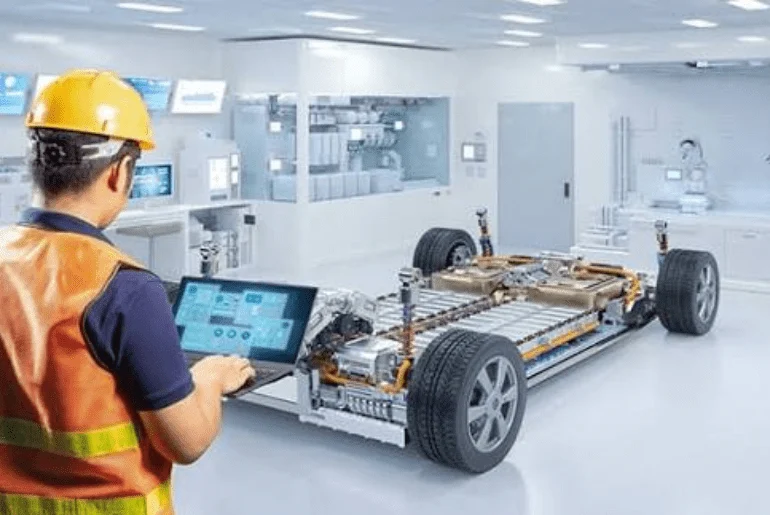
India’s ambitious pivot towards electric mobility is rapidly emerging as a monumental employment catalyst, with a confluence of industry analyses and government projections indicating the creation of up to 40 million new jobs by the close of the decade. This transformative shift is not merely an environmental imperative but a strategic economic undertaking, poised to redefine the nation’s industrial and labour landscape. The comprehensive impact is expected to span the entire electric vehicle (EV) value chain, from raw material sourcing and advanced manufacturing to cutting-edge research and development, sales, maintenance, and the crucial deployment of charging infrastructure.
The Genesis of a Green Revolution: Policy and Vision
India’s foray into electric mobility is deeply intertwined with its broader national objectives: combating climate change, enhancing energy security, and fostering domestic manufacturing capabilities. The country’s commitment to achieving net-zero emissions by 2070, articulated at COP26 in Glasgow, places renewable energy and sustainable transport at the forefront of its development agenda. Reducing reliance on crude oil imports, which currently constitute a significant portion of India’s import bill, is another critical driver. The transition to EVs is projected to save billions in foreign exchange, thereby strengthening the national economy.
The journey began with the National Electric Mobility Mission Plan (NEMMP) 2020, launched in 2013, which aimed to achieve national fuel security by promoting hybrid and electric vehicles. This foundational policy paved the way for more targeted interventions.
-
A Decade of Policy Evolution: From NEMMP to PLI
- 2015: The Faster Adoption and Manufacturing of (Hybrid &) Electric Vehicles (FAME) India scheme was launched. FAME-I focused on demand creation, pilot projects, and charging infrastructure. It provided incentives for electric two-wheelers, three-wheelers, buses, and light commercial vehicles.
- 2019: FAME-II was introduced with a larger outlay of INR 10,000 crore (approximately $1.3 billion) for three years, later extended. Its primary objective was to support 1 million electric two-wheelers, 500,000 electric three-wheelers, 55,000 electric four-wheelers, and 7,000 electric buses through subsidies, with a strong emphasis on domestic manufacturing and advanced battery technologies.
- 2021: The Production Linked Incentive (PLI) scheme for Advanced Chemistry Cell (ACC) battery manufacturing was approved with an outlay of INR 18,100 crore (approximately $2.4 billion). This crucial scheme aims to attract large-scale investments in setting up giga-factories for battery production, a critical component for reducing import dependency and building a robust indigenous EV ecosystem.
- 2021: Another PLI scheme for the Automobile and Auto Component Industry (worth INR 25,938 crore, approximately $3.4 billion) was introduced to boost the manufacturing of advanced automotive technology products, including EVs and their components. This scheme incentivizes domestic and global companies to invest in India, promoting economies of scale and reducing production costs.
These policy initiatives have created a conducive environment for both domestic and international players to invest heavily in India’s EV sector, propelling it into a significant growth phase. Union Minister Nitin Gadkari, a vocal proponent of electric mobility, has frequently underscored the immense potential, projecting India’s EV market to swell to a colossal Rs 20 trillion (approximately $240 billion) by 2030, simultaneously generating an estimated 5 crore (50 million) jobs across manufacturing, services, and allied sectors. While the Ministry of Skill Development and Entrepreneurship more conservatively projects 1 crore (10 million) direct jobs and 5 crore (50 million) indirect jobs from the EV industry by 2030, the aggregate of these forecasts firmly positions electric mobility as a leading job creator.
Unpacking the Job Multiplier: Scale and Scope
The projected employment growth is multifaceted, encompassing a wide array of roles across the entire EV value chain. Unlike traditional automotive manufacturing, the EV sector demands a novel blend of mechanical, electrical, chemical, and software engineering expertise.
-
Diverse Opportunities Across the Value Chain
- Manufacturing: This segment will see significant growth in roles related to battery cell production (e.g., electrochemists, materials scientists, process engineers), battery pack assembly (e.g., production line technicians, quality control specialists), electric motor manufacturing, power electronics production (e.g., inverter and converter specialists), and the assembly of electric two-wheelers, three-wheelers, passenger vehicles, and commercial vehicles. Welders, robotics engineers, and automation specialists will also be in high demand.
- Charging Infrastructure: The expansion of public and private charging networks requires electricians, civil engineers for site preparation, software developers for smart charging platforms, maintenance technicians for charging stations, and project managers for deployment. As of early 2024, India has around 12,000 public charging stations, a number projected to grow exponentially to support the increasing EV fleet.
- Research & Development (R&D): With a strong emphasis on indigenous innovation, R&D roles will include battery chemists, thermal management experts, power electronics engineers, embedded software developers, AI/ML engineers for battery management systems and autonomous driving features, and data scientists for performance analytics. The push for localized R&D is critical for developing EVs suited to Indian conditions and reducing dependency on foreign technology.
- Sales, Marketing, and Financing: A new breed of sales professionals adept at explaining EV technology and benefits, marketing specialists for promoting electric vehicles, and financial experts for crafting tailored loan and lease products will be essential. The financing segment will also require specialists in green bonds and sustainable investment.
- Maintenance and Servicing: EV mechanics will require specialized training in high-voltage systems, battery diagnostics, software updates, and electric powertrain components. This is a departure from traditional internal combustion engine (ICE) vehicle repair, necessitating significant re-skilling.
- Supply Chain and Logistics: Managing the supply chain for critical minerals (lithium, cobalt, nickel), components, and finished EVs will create roles for logistics managers, procurement specialists, and supply chain analysts. The focus on localized supply chains for components will also drive job creation in ancillary industries.
- Battery Recycling and Second Life Applications: As EV adoption grows, so will the need for sustainable end-of-life solutions for batteries. This will foster jobs in battery dismantling, material recovery, and developing second-life applications for used EV batteries (e.g., stationary energy storage).
-
Driving Demand: E-commerce, Logistics, and Urban Mobility
A significant impetus for EV adoption, particularly in the commercial segment, comes from e-commerce and logistics players. Major companies have publicly committed to transitioning to 100% electric fleets by 2030, a move driven by both sustainability goals and operational cost efficiencies. This commitment translates into a sharply rising demand for electric two-wheelers for last-mile delivery, electric three-wheelers (e-rickshaws and cargo loaders) for urban logistics, and electric light commercial vehicles. The shared mobility sector, including ride-hailing and rental services, is also increasingly electrifying its fleets, further fueling demand and associated job creation in maintenance and charging.
The Looming Talent Imperative: Bridging the Skills Gap
While the job creation prospects are immense, the rapid expansion of the EV sector presents a formidable talent challenge. The existing workforce, predominantly skilled in ICE vehicle technologies, requires a significant re-orientation. According to insights from the Society of Indian Automobile Manufacturers (SIAM), India will need between 1 lakh (100,000) and 2 lakh (200,000) skilled professionals by 2030 to support the ambitious target of 30% EV penetration in the overall vehicle market.
- A Paradigm Shift in Automotive Skills
The current skills landscape reveals a stark deficit. The sector presently faces a 40-45% skills gap, indicating a substantial mismatch between available talent and industry requirements. The annual intake of EV-ready workers needs to dramatically increase from the current approximately 15,000 to between 30,000 and 40,000 to meet projected demand. A critical factor is the limited transferability of existing ICE competencies; only about 57% of these skills directly translate to the EV domain. This means that a large segment of the workforce, including engineers, technicians, and mechanics, will require entirely new training in specialized areas.
- The Urgency of Upskilling and Reskilling
The new skill sets deemed critical include:
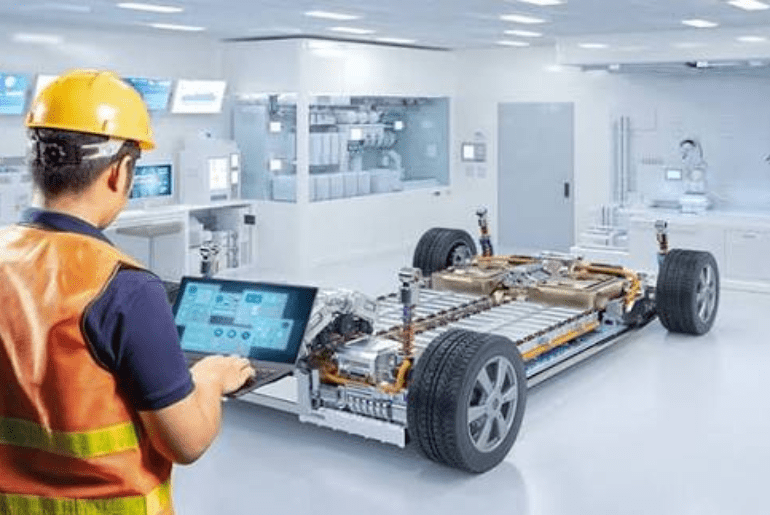
- Battery Chemistry and Technology: Understanding lithium-ion and emerging battery technologies, thermal management, battery management systems (BMS), and safety protocols.
- Power Electronics: Expertise in inverters, converters, electric motors, and high-voltage DC systems.
- Software and Artificial Intelligence (AI): Proficiency in embedded systems, vehicle control units (VCUs), telematics, data analytics for predictive maintenance, and AI for smart charging and autonomous features.
- Charging Infrastructure: Knowledge of various charging standards (AC, DC fast charging), grid integration, and smart grid technologies.
- Material Science: Understanding lightweight materials, advanced composites, and sustainable materials for EV manufacturing.
The transition also requires a broader shift in pedagogical approaches within vocational training institutes and engineering colleges.
Strategic Interventions: Government, Industry, and Academia
Addressing this looming talent gap necessitates a concerted, multi-stakeholder effort involving government bodies, industry players, and academic institutions. The SIAM report, reflecting industry consensus, strongly advocates for several strategic interventions.
-
Collaborative Roadmaps for Talent Development
- Establishment of New R&D Centres: The report calls for the creation of at least 60 new dedicated R&D centres focused specifically on EV technologies. These centres would serve as hubs for innovation, skill development, and collaboration between industry and academia, fostering indigenous capabilities in areas like battery technology, motor design, and power electronics.
- Updated Curricula: Engineering colleges, polytechnics, and Industrial Training Institutes (ITIs) must urgently update their curricula to integrate EV-specific modules and specializations. This includes developing new diploma, degree, and certification courses in areas such as EV powertrain design, battery technology, charging infrastructure management, and EV diagnostics.
- Large-Scale Apprenticeships and On-the-Job Training: Apprenticeship programs, in collaboration with EV manufacturers and component suppliers, are crucial for providing practical, hands-on experience. Such programs can bridge the gap between theoretical knowledge and industry requirements, ensuring that graduates are job-ready from day one. Initiatives like the National Apprenticeship Promotion Scheme (NAPS) can be leveraged and expanded for the EV sector.
- Faculty Training and Development: Equipping educators with the latest knowledge and practical skills in EV technology is paramount. Train-the-trainer programs will ensure that the teaching faculty is competent to deliver updated curricula effectively.
-
Investment in Human Capital: The Financial Outlay
The scale of the required upskilling and reskilling effort demands substantial investment. Estimates suggest that approximately Rs 13,552 crore (approximately $1.6 billion) will be needed over the next five years for hiring and upskilling initiatives alone to effectively close the existing skills gap. This investment will cover curriculum development, infrastructure for training centres, faculty development, and stipends for apprenticeships, representing a strategic commitment to building a future-ready workforce.
Broader Economic and Societal Implications
The electric mobility revolution extends far beyond direct job creation, offering profound implications for India’s economic resilience, environmental health, and social equity.
- Catalyzing Economic Growth and Energy Security
The projected Rs 20 trillion EV market by 2030 represents a significant contribution to India’s GDP. The growth of this sector will stimulate ancillary industries, drive foreign and domestic investment, and foster a robust manufacturing base under the "Make in India" initiative. Reduced crude oil imports will bolster India’s energy security, insulate the economy from global oil price volatility, and save valuable foreign exchange, which can be redirected towards other developmental priorities. The emergence of new industrial clusters focused on EV manufacturing and battery production will create regional economic hubs, generating employment and prosperity in areas beyond traditional industrial centers.
- Environmental Dividends and Urban Transformation
The most immediate and visible benefit of widespread EV adoption is the reduction in air pollution, particularly in congested urban areas. Electric vehicles produce zero tailpipe emissions, leading to cleaner air, improved public health outcomes, and a better quality of life for citizens. The transition also contributes significantly to India’s climate goals by reducing greenhouse gas emissions from the transport sector. Furthermore, quieter EVs contribute to reduced noise pollution, enhancing the urban soundscape.
- Fostering Innovation and Entrepreneurship
The nascent but rapidly evolving nature of the EV sector provides fertile ground for innovation and entrepreneurship. Start-ups are emerging across the value chain, from battery technology and charging solutions to specialized software and last-mile delivery services. This dynamic environment encourages R&D, attracts venture capital, and positions India as a hub for cutting-edge sustainable mobility solutions. The emphasis on local manufacturing and innovation also reduces technological dependence and builds indigenous expertise.
- Inclusive Growth and Skill Development for Youth
The focus on skill development and job creation in the EV sector offers a unique opportunity for inclusive growth. By providing training and employment opportunities to a diverse demographic, including youth from tier 2 and tier 3 cities and rural areas, the EV revolution can contribute to reducing unemployment and fostering economic equity. Specific programs can be designed to encourage women’s participation in manufacturing, R&D, and technical roles, thereby advancing gender parity in a traditionally male-dominated industry.
Challenges and the Path Forward
Despite the overwhelmingly positive outlook, the path to achieving these ambitious targets is not without its challenges.
-
Navigating Infrastructure, Supply Chains, and Consumer Adoption
- Charging Infrastructure: While growing, the pace of charging infrastructure deployment needs to accelerate significantly, especially in semi-urban and rural areas, to alleviate range anxiety among consumers.
- Grid Stability: The increased load from EV charging necessitates upgrades to the electricity grid and greater integration of renewable energy sources to ensure grid stability and truly green mobility.
- Raw Material Sourcing: India’s reliance on imports for critical minerals like lithium and cobalt poses a supply chain risk. Developing strategies for securing these resources, including international partnerships and exploring domestic reserves, is crucial.
- Battery Recycling: Establishing a robust battery recycling ecosystem is essential for environmental sustainability and resource security, mitigating the long-term impact of battery disposal.
- Cost and Affordability: While EV costs are declining, they remain higher than comparable ICE vehicles for many segments. Continued government incentives and technological advancements are needed to improve affordability and accelerate mass adoption.
- Consumer Perception: Overcoming consumer apprehensions regarding range, charging time, and resale value requires consistent public awareness campaigns and reliable performance from early adopters.
The Indian government, through its flagship initiatives like Production Linked Incentive (PLI) schemes and Faster Adoption and Manufacturing of Hybrid and Electric Vehicles (FAME) subsidies, along with significant private capital expenditure, is actively nurturing this ecosystem. The convergence of these enabling factors—robust policy support, escalating private investment, and a burgeoning market demand—positions India’s EV sector not just as a contributor to clean mobility goals but as a pivotal force in redefining the nation’s economic and employment landscape for decades to come. The transformative potential is undeniable, yet its full realization hinges on sustained collaboration, strategic investment in human capital, and proactive navigation of emerging challenges.