For over two decades, the commercial interior design industry has made significant strides in sustainability. The focus has sharpened on specifying environmentally responsible materials, creating healthier indoor environments, and deepening our understanding of how the built world impacts its occupants. However, a crucial question often remains unaddressed: what happens when these thoughtfully designed, sustainable workplaces need to evolve? The very definition of workplace sustainability is being challenged, demanding a paradigm shift from static eco-consciousness to dynamic adaptability.
The evolution of workplace design has been marked by significant milestones. The advent of standards like LEED (Leadership in Energy and Environmental Design) revolutionized how we consider the environmental performance of buildings and the materials used within them. More recently, the WELL Building Standard has broadened this conversation, placing a critical emphasis on the health and well-being of the people inhabiting these spaces. These frameworks have undoubtedly fostered a more responsible approach to construction and interior design, leading to demonstrably better outcomes for both the planet and its people.
Yet, the current trajectory of workplace sustainability often stops at the ribbon-cutting ceremony. Organizations are dynamic entities, and their needs are in perpetual flux. Teams reorganize, work patterns shift, and technological advancements fundamentally alter how tasks are performed. What was an optimal solution on day one can become a significant impediment by day 431. This constant state of organizational evolution frequently leads to costly and environmentally taxing renovations, often involving demolition as the primary method of adaptation.
Illustrative examples abound. Coca-Cola, after years of meticulous planning for their "Workplace 2020" initiative, reportedly issued new RFPs (Requests for Proposals) for workspace solutions just a year later, indicating that their initial design, while forward-thinking for its time, quickly became insufficient. Similarly, Chick-fil-A’s investment in aesthetically pleasing whiteboard walls, while innovative, necessitated demolition when those spaces were no longer utilized as intended and the square footage was required for alternative functions. These instances highlight a fundamental disconnect between the initial sustainable design and the long-term operational realities of a business.
This raises a profound question for anyone involved in workplace design and management: can a space truly be considered sustainable if it must be fundamentally dismantled every time the organization it serves undergoes a transformation? The answer, increasingly, is no. The concept of sustainability in the built environment must extend beyond the initial construction phase to encompass the entire lifecycle of a space, including its capacity to adapt and evolve.
The environmental cost of this recurring cycle of demolition and reconstruction is substantial. According to the U.S. Environmental Protection Agency (EPA), the nation generates over 600 million tons of construction and demolition (C&D) debris annually. A staggering proportion of this waste, more than 90%, originates from demolition rather than new construction. Alarmingly, nearly 144 million tons of this debris end up in landfills each year. While not all of this C&D waste is attributable to interior workplace modifications, the sheer volume underscores the significant environmental burden associated with static, inflexible built environments.
The Evolving Definition of Sustainability in the Workplace
The notion of sustainability has undergone a significant evolution in recent years. Initially, the focus was primarily on resource conservation and minimizing environmental impact through material selection and energy efficiency. LEED certifications and similar frameworks championed the use of recycled content, sustainably sourced materials, and reduced carbon footprints in construction. The WELL Building Standard then expanded this definition by prioritizing human health and well-being, emphasizing factors like air quality, natural light, and ergonomic design.

While these advancements are critical and have yielded tangible benefits, the definition of workplace sustainability is poised for another critical evolution. The accelerating pace of change in the modern business landscape—driven by factors such as fluctuating headcounts, the widespread adoption of hybrid work models, the emergence of new workforce generations with different expectations, and the transformative impact of artificial intelligence (AI) on workflows—demands a more agile approach.
Organizations are no longer static entities. They are fluid ecosystems that must continuously adapt to remain competitive and relevant. Headcount can fluctuate rapidly, with departments expanding or contracting based on market demands and strategic shifts. The rise of hybrid and remote work has fundamentally altered how and why employees utilize office space, leading to a reevaluation of traditional office layouts and functional requirements. Furthermore, new generations entering the workforce bring different expectations regarding collaboration, flexibility, and work-life integration. Technological advancements, particularly in AI, are reshaping job roles and workflows at an unprecedented pace, necessitating adjustments in how work is performed and where it takes place.
In this context, a workplace must be designed not only for its initial environmental performance and occupant well-being but also for its inherent capacity to change and adapt without generating excessive waste. This means a fundamental reorientation of design principles, prioritizing flexibility, modularity, and reuse over rigid, permanent structures.
The Sustainability Cost of Static Design
The traditional approach to workplace renovation often defaults to demolition when significant changes are required. This is frequently the most straightforward or perceived as the only viable solution within existing construction paradigms. The environmental ramifications of this approach are substantial and cannot be overstated.

Consider the lifecycle of a typical office fit-out. From the initial design and material specification to the eventual decommissioning, each phase has an environmental footprint. When a workplace is designed without foresight for future adaptations, elements such as fixed partitions, built-in cabinetry, and custom millwork become liabilities rather than assets when organizational needs shift. These components, often perfectly functional and made from valuable materials, are typically demolished and sent to landfill.
The sheer volume of C&D debris generated annually by the United States, as highlighted by the EPA, is a stark reminder of the waste inherent in this model. While precise figures for interior workplace modifications are difficult to isolate, it’s undeniable that a significant portion of this waste stream is a direct consequence of inflexible workplace designs. The question then becomes: how much of the material installed today could realistically remain useful in a transformed workplace tomorrow?
This question fundamentally alters the sustainability conversation. While responsible material sourcing and healthy environment design remain paramount, an equally critical strategy emerges: preventing perfectly usable materials and components from entering the waste stream simply because the organizational context around them has changed. This necessitates a proactive approach to designing for the inevitable future state of the organization.
Designing for Change: A New Frontier in Workplace Sustainability
The concept of adaptability must be integrated into the very fabric of a workplace’s sustainability strategy from its inception. This does not imply a constant state of flux with constantly moving walls or endlessly reconfigurable furniture, which could create its own set of challenges and inefficiencies. Instead, it calls for intentional design decisions that differentiate between elements that require permanence and those that should be designed for flexibility and reusability.

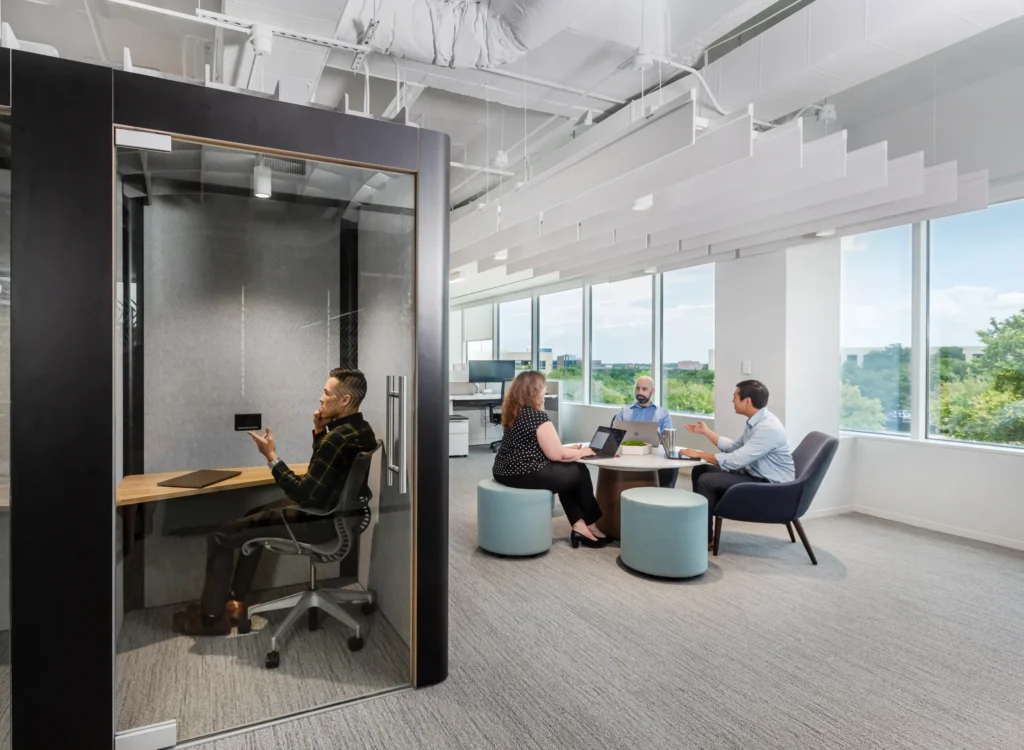
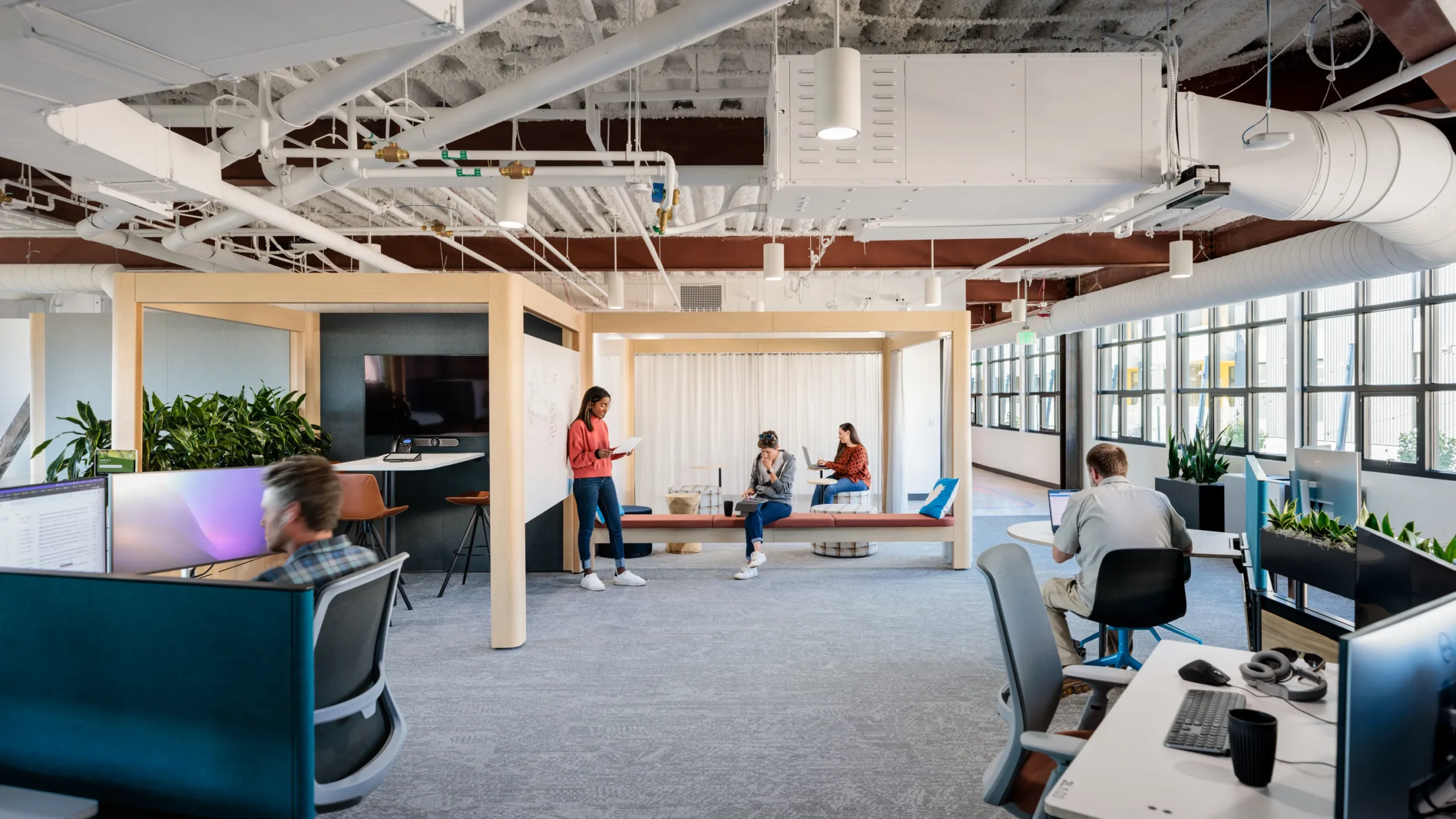
Modular and freestanding furniture systems offer a powerful avenue for reconfiguring spaces without the need for extensive demolition and reconstruction. These solutions allow for efficient adaptation to changing team sizes, work styles, and functional requirements. Similarly, demountable partitions and privacy pods can provide enclosed spaces and acoustic privacy without the permanence and waste associated with traditional drywall construction.
The principle extends to smaller furnishings and components that can be easily relocated and repurposed across different teams and applications. The focus should be on elements that can be repaired, refreshed, or relocated, thereby extending their useful life long after their initial purpose has evolved. This approach prioritizes the longevity and versatility of materials and products, viewing them as long-term assets rather than disposable commodities.
The overarching principle is simple yet profound: before incorporating any element into a workplace, consider its fate when the workplace inevitably changes. This forward-thinking mindset shifts the focus from the immediate satisfaction of current needs to the long-term viability and sustainability of the built environment.
This approach is particularly relevant given the predicted shifts in how organizations consume real estate. Industry analyses, such as those from JLL, forecast a significant increase in flexible office space consumption by 2030, alongside continued growth in pre-built spaces, shared amenities, and flexible workplace models. If the very way organizations engage with real estate is becoming more adaptable, then the interior environments within that real estate must be equally prepared to evolve.
Putting Your Workplace Through an Adaptability Test
For workplace leaders, designers, and facilities management teams, integrating adaptability into sustainability planning does not need to be an overly complex endeavor. It can be approached through a series of targeted questions applied to every design decision:
- Can it move? This question probes the potential for an element to serve a different area or team if organizational needs shift. For example, can a particular workstation cluster be easily relocated to accommodate growth in another department?
- Can it change? This assesses the ease with which an element can be reconfigured for a different type of work or a new function without requiring significant construction. Think of modular furniture that can be rearranged into various configurations.
- Can it be reused? This considers the potential for an element to serve another purpose elsewhere if it is no longer needed in its current location. This could apply to partitions, shelving units, or even larger structural components.
- Can it be repaired or refreshed? This question focuses on the maintainability of components. Can individual parts be replaced or updated, thereby extending the life of the entire product or system, rather than discarding it entirely?
- What happens to it when we’re done with it? This is the ultimate end-of-life question. Is there a realistic plan for the material, product, or architectural element to have a second life, whether through donation, resale, or responsible recycling?
These questions are not intended to eliminate the need for change but rather to foster a design culture that actively plans for its inevitability. By embedding these considerations into the design process, organizations can significantly reduce waste, minimize disruption, and maximize the return on their real estate investments.
The Future of Workplace Sustainability: A Test of Resilience
The reality of workplace design is that we are consistently designing for organizations that will inevitably be different in the future. Market dynamics, technological advancements, and evolving workforce expectations ensure that change is not an exception but a constant. Cushman & Wakefield estimates that a substantial portion of existing U.S. office space may require significant fit-outs as owners and occupiers strive to attract employees back to physical offices. This makes adaptability not merely a design preference but a critical business and sustainability imperative.
A workplace that is designed for evolution offers numerous advantages. It can drastically reduce demolition waste, divert usable materials from landfills, minimize operational disruptions during transitions, and extend the useful life of the significant investments organizations have already made in their physical spaces.
The industry has become adept at assessing whether a workplace is sustainable on day one. The next frontier is to ask whether it can remain sustainable on day 1,000, and beyond. The true test of a sustainable workplace lies in its ability to withstand the inevitable changes it will undergo, demonstrating a commitment to minimizing waste and maximizing resourcefulness throughout its entire lifecycle. This forward-looking perspective is essential for creating built environments that are not only responsible today but resilient for tomorrow.