A tense budget meeting, charged with the high stakes of two competing strategic initiatives vying for the same limited resources, reached a critical juncture. At the head of the table, a Vice President faced a room of senior leaders, each entrenched in their data-driven arguments and firmly held convictions. The air crackled with the pressure of an imminent, potentially divisive decision. In a moment that transcended the transactional nature of resource allocation, the VP paused, took a deliberate breath, and instead of signaling the conclusion of the discussion, extended an invitation. To a protégé. "Come in," the VP whispered, gesturing towards the meeting room. "See how this unfolds." The protégé hesitated, a flicker of surprise crossing their face, and the entire room registered the deviation from the expected protocol. The door remained open, a subtle but significant shift in the meeting’s dynamic.
This pivotal scene, unfolding within the confines of a corporate boardroom, encapsulates a profound truth about leadership development that often goes unacknowledged in formal succession planning: the critical importance of wisdom transfer. While the protégé observed, they witnessed not just the mechanics of decision-making under pressure, but the nuanced art of navigating ambiguity. The VP, in real-time, engaged in rapid calculation, persistently queried the underlying assumptions with a strategic "why," and masterfully regulated their own emotions to balance competing priorities with an unwavering commitment to the organization’s shared direction.
The aftermath of this encounter offered a compelling illustration of the principle. A post-meeting debrief between the VP and the protégé revealed a striking allocation of time: a mere ten minutes dedicated to dissecting the quantitative data, while a full fifty minutes was devoted to analyzing the precise moment the VP leaned back, posed the third "why," and patiently awaited a more profound understanding. This wasn’t a scenario found within the rigid confines of a job description or a meticulously crafted succession plan. It was an organic, experiential lesson, a demonstration of leadership in its most dynamic and consequential form. Without such opportunities, the next generation of leaders is deprived not merely of attending a meeting; they lose the invaluable chance to witness and internalize the very essence of effective leadership development – the ability to develop wisdom that cannot be simply taught, but must be absorbed. This deficit prevents them from imagining the possibilities, from articulating their needs, and ultimately, from cultivating it in others.
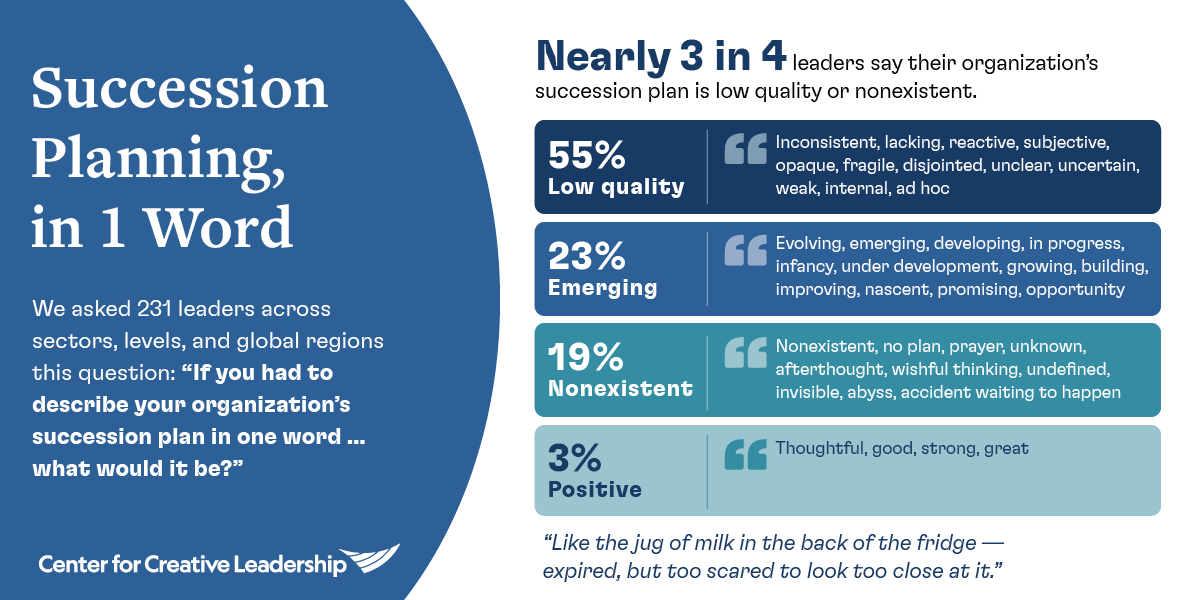
The principle illustrated by this VP and protégé exchange extends far beyond individual interactions; it resonates at the organizational level. Wisdom, when hoarded, depreciates. When intentionally shared, it compounds, generating exponential returns for an organization’s leadership capacity. This notion is substantiated by extensive research in the field of succession planning. Organizations that approach succession as a reactive scramble, a last-minute scramble to fill vacant roles, invariably forfeit their ability to concurrently manage short-term operational demands and long-term strategic imperatives. This reactive stance stems from a fundamental lack of foresight; they fail to identify the critical roles whose absence would trigger the most significant disruption, nor do they possess the pre-established frameworks for executing high-leverage actions to mitigate these risks. The imperative, therefore, is clear: organizations must reframe succession not as a mere administrative process, but as a dynamic, living system of continuous leadership development. This systemic approach cultivates a robust "wisdom infrastructure," designed to proactively identify and nurture the right leaders well in advance of their actual need.
Knowledge Transfer vs. Wisdom Transfer: The Shift From Replacement to Readiness
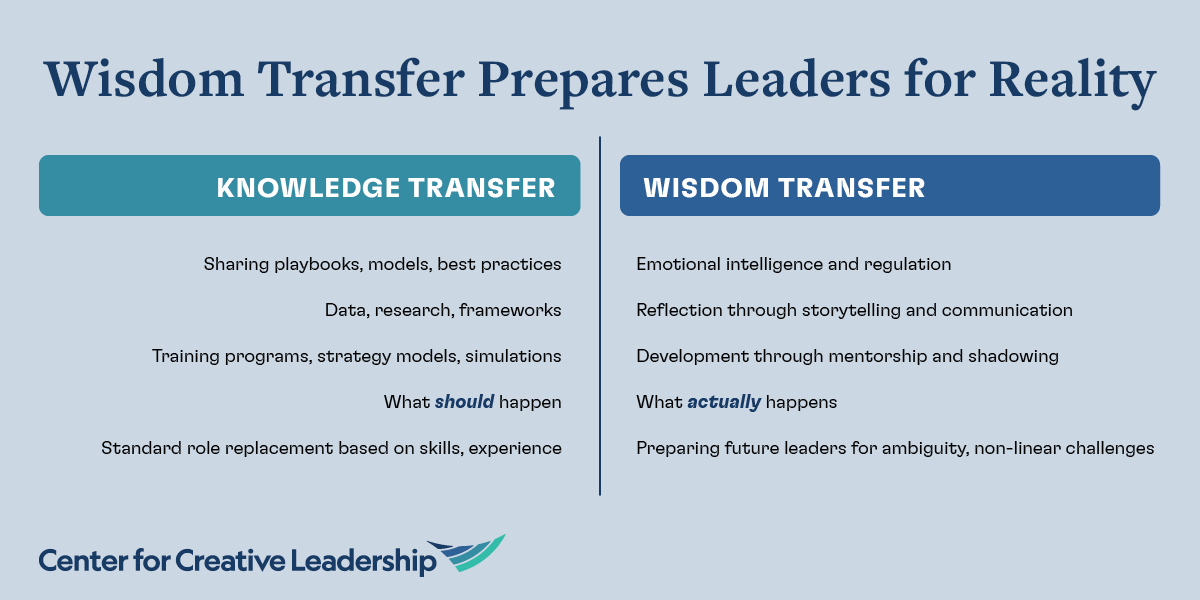
Contemporary leadership succession research, including extensive studies conducted by the Center for Creative Leadership (CCL), consistently highlights a prevalent organizational tendency: treating succession planning primarily as a mechanism for knowledge transfer. This approach, while foundational, focuses on the tangible and the procedural aspects of leadership roles. It involves the meticulous completion of forms, the deployment of established frameworks and data to inform decision-making, the dissemination of best practices, the standard replacement of individuals based on demonstrable job-related skills, and the clear articulation of role expectations.
Knowledge transfer effectively addresses inquiries such as:
- What are the core responsibilities of this role?
- What are the essential technical skills required for success?
- What are the established procedures and protocols for this position?
- What are the key performance indicators for this role?
- What is the historical context of this position within the organization?
While indispensable, knowledge transfer alone proves insufficient for cultivating the high-performing succession systems that are critical for navigating the complexities of today’s business environment. Knowledge transfer, by its nature, prepares leaders for an idealized scenario, a predictable pathway. However, the most profound and impactful leadership moments, as reported by C-suite executives in numerous studies, frequently occur outside of these idealized conditions.
Consider the ramifications of an unexpected departure of a top-level executive, or a sudden, seismic shift in external circumstances that sends shockwaves through the organization. What do leaders do when their established playbooks become obsolete, and they are thrust into situations for which they have received no formal training? It is precisely in these moments of profound uncertainty and emergent challenge that leadership wisdom becomes not just beneficial, but absolutely essential.
Leadership wisdom can be defined as the sophisticated ability to interpret complex contexts, to accurately anticipate the cascading consequences of decisions, and to consistently exercise sound judgment in the face of multifaceted challenges. Wisdom transfer, therefore, is the deliberate and intentional act of imparting this accumulated judgment, invaluable experience, and nuanced discernment from one generation of leaders to the next. This process equips future leaders with the critical capacity to navigate ambiguity and complexity with confidence and efficacy.

Our research unequivocally demonstrates that organizations achieving the most effective leadership transitions prioritize the transfer of wisdom as a central pillar of their succession infrastructure. To operationalize this, organizations must begin by posing and answering a different set of critical questions:
- What are the underlying principles that guide effective decision-making in ambiguous situations?
- How can leaders anticipate and mitigate unintended consequences of strategic choices?
- What are the ethical considerations that must be weighed in complex leadership dilemmas?
- How can leaders maintain organizational coherence and purpose during periods of significant change?
- What are the unwritten rules and cultural nuances that shape organizational behavior?
Wisdom transfer fundamentally reframes succession from a static, procedural exercise into a dynamic, strategic mindset. When leaders recognize and prioritize the transfer of wisdom within their succession strategies, they begin to perceive succession planning not as a mere checklist of tasks, but as one of their most significant and rewarding leadership opportunities. As powerfully illustrated in the opening vignette, the initiation of wisdom transfer often begins with an act of profound simplicity: a personal invitation. The resonant call, "Come with me so I can show you how this really works," opens the door to a world of experiential learning that formal training alone cannot replicate.
Succession Infrastructure: Creating Avenues for Wisdom Transfer
If wisdom transfer is indeed the crucial answer, the subsequent challenge lies in effectively integrating this concept into the practical architecture of an organization’s succession processes. This endeavor necessitates a deliberate step back, an examination of the entire succession system across multiple temporal horizons. To facilitate this, four core elements emerge as foundational pillars for a modern, wisdom-powered succession system:
1. Witnessing Decisions in Real-Time
At its zenith, succession planning transcends the mere identification of potential successors; it is a meticulously crafted journey in leadership development. Within this journey, few experiences are as formative as being present during the actual moments when consequential decisions are made. Emerging leaders require consistent and meaningful opportunities to observe the intricate dynamics of how decisions are actually shaped and executed at leadership levels above their own.
The overarching objectives of such immersive experiences are to cultivate the nascent leader’s capacity to discern the subtle undercurrents beneath the surface of a conversation, to feel the subtle shifts in organizational momentum, and to respond with reasoned discernment rather than rote adherence to procedure. Organizational systems that effectively foster this development create deliberate pathways within leadership journeys that promote the interpretation and integration of these real-time observations into the emerging leaders’ own cognitive and behavioral frameworks. These invaluable experiences provide aspiring leaders with a heightened awareness of the essential capabilities that are indispensable for advancement to the next level, regardless of whether these competencies are explicitly delineated in a job description. These direct observations constitute some of the most potent forms of wisdom transfer, as emerging leaders witness judgment being exercised in its most authentic and impactful context.
Your Strategic Move: Proactively map out the highest-stakes decision-making junctures within your organization. Critically assess who is present in these crucial discussions and, more importantly, who should be present to gain vital developmental exposure.
2. Communicating Continuity Through Leadership Transition
Moments of critical succession impact often arrive unannounced, catching organizations off guard. These pivotal periods can occur within meetings where organizational belief has waned, or during a cultural metamorphosis as an organization transitions from its past identity to its future aspirations. Navigating these dynamic and often turbulent moments demands leaders who possess the inherent ability to continuously orient themselves and their organizations within an ever-shifting landscape.
One profoundly effective practice, consistently identified through rigorous research, is the deliberate formation of a "wisdom council." This council should be meticulously composed, reflecting genuine influence and deep institutional memory, with representation from every major organizational function, either through its leader or their most trusted direct report. This creates a living, interconnected network capable of collectively addressing fundamental questions: Who are we as an organization? Who are we striving to become? And crucially, what essential elements must we carry forward into the future?
Organizations that falter in answering these profound questions during a leadership transition face a significant strategic risk: they lose the critical capacity to distinguish between what must be meticulously preserved and what must be thoughtfully released. The consequence of this failure is often a dual trap: calcification around outdated or irrelevant strengths, or the abandonment of the very core competencies that once fueled their success. The answers to these vital questions reside within people, and they surface most reliably when wise leaders possess the acumen to "read the room" and articulate sentiments that may be widely felt but remain unvoiced.
Your Strategic Move: Prior to your next significant leadership transition, identify the individuals who embody the organizational memory, the keepers of your organization’s historical narrative and foundational values. Ensure their voices are actively included in the critical discussions.
3. Fostering Developmental Relationships
Wisdom, much like any valuable asset, experiences its most rapid growth within environments characterized by mutual trust and open, honest dialogue. Developmental relationships serve as the primary conduits for wisdom transfer within organizations, providing the fertile ground where emerging leaders receive their most impactful guidance before embarking on the pursuit and assumption of new roles.
Judgment, in particular, stands as a prime example of a leadership attribute that is notoriously difficult to teach through formal instruction. It is abstract, nuanced, and profoundly essential to cultivate. Developmental relationships can create the optimal conditions for refining judgment, particularly when seasoned leaders engage in hypothetical scenario planning, articulate their reasoning processes, compare diverse thought processes, and openly discuss the multifaceted factors they weigh in consequential decision-making moments.
Our research has uncovered instances of deep and enduring relationships between colleagues and mentors that have sustained themselves across decades, long after the formal organizational roles that initially connected them had concluded. This observation strongly suggests that the wisdom transferred within these relationships transcends the confines of specific roles and endures beyond an individual’s tenure within an organization, continuing to compound over time.
Your Strategic Move: Actively identify the existing developmental relationships within your organization. Critically assess whether these invaluable connections are being actively nurtured and protected, or if they are permitted to dissipate as individuals transition between roles.
4. Mapping Influence Networks
The transmission of organizational wisdom rarely adheres to the rigid structure of the formal organizational chart. Instead, it flourishes at the interconnected nodes where leaders are most deeply entwilled with a diverse array of stakeholders and perspectives. Network science consistently corroborates the findings of our bibliometric research: the most influential carriers of wisdom and institutional memory are frequently situated at the peripheries and bridges of an organization’s internal structure.
Three key network properties are paramount for effective succession planning. First is status, which reflects the depth and breadth of connections a leader has cultivated within the organizational ecosystem. Leaders who are rich in wisdom are those who are embedded across multiple spheres of influence simultaneously; their profound value to the succession pipeline is often imperceptible until their departure.
Second is boundary spanning, the critical ability to transcend functional, generational, and organizational lines, carrying diverse perspectives across these divides. Boundary spanners are instrumental in shaping agendas and controlling the flow of vital information, often exerting significant influence without the benefit of formal authority. Because their influence is primarily relational rather than positional, they may not appear on traditional succession plans, which often explains why some organizational initiatives languish while others gain rapid momentum.
Third is coalition capacity, the inherent ability to foster trust and build consensus across diverse viewpoints, holding competing perspectives in a productive, dynamic tension. Organizations that experience a decline in this capacity during leadership transitions risk losing their ability to effectively attract and nurture the next generation of leaders.
Our research emphatically confirms that the workforce of the future is an interconnected, planetary network. Organizational resilience is cultivated by those who have already demonstrated an aptitude for navigating and surviving in diverse and challenging contexts. It is entirely plausible that your next breakthrough leader may be articulating ideas in a "language" that is not yet fully understood within your current organizational paradigm. Influence network mapping provides the essential tool for identifying these individuals proactively, before the urgent need arises.
Your Strategic Move: Undertake a comprehensive mapping of your organization’s influence network. Analyze where organizational wisdom is concentrated, how it is currently flowing, and identify the individuals who possess and disseminate this wisdom, even if they are not explicitly recognized on your formal organizational chart.
Making Wisdom Transfer a Leadership Development Priority
The accumulated knowledge that has propelled an organization to its current standing may prove insufficient for the challenges and opportunities that lie ahead. We are currently navigating a pivotal era where the symbolic representations of leadership development, such as competency frameworks, feedback templates, and succession documents, can be generated instantaneously and at no cost by artificial intelligence.
However, what cannot be prompted or automated is the profound and labor-intensive work of cultivating wisdom. This includes the intentional act of a VP opening the door to a protégé, the enduring connection of a mentor who remains engaged decades later, or the deliberate assembly of a council to safeguard organizational memory through a complex transition. These actions require significant investments of time, dedicated presence, and sustained energy. It is precisely these inherent costs that imbue wisdom transfer with its immense value.
For years, we have meticulously studied the distinguishing factors that differentiate organizations that successfully navigate leadership transitions from those that falter. Our research has led us to a critical and undeniable conclusion: succession plans inevitably fail when the flow of wisdom through the transition process is disrupted. The nuanced judgment, the hard-won instincts, and the profound perspective that can only be acquired through years of leading through real-world complexities – this is precisely what wisdom transfer is designed to restore and perpetuate.
You stand at the epicenter of this transformative shift in your leadership development decisions. Your influence extends to the systems, programs, and expectations that collectively shape leadership behavior within your organization. You possess an intimate understanding of where the vital wisdom resides within your organization, how it is flowing, and where critical bottlenecks exist. By championing this endeavor, succession planning evolves from a mere risk mitigation strategy into a regenerative leadership system that demonstrably grows wiser and more robust with each successive transition.
The power to construct such a system resides within you. And importantly, you do not have to undertake this critical work in isolation.
The Future of Succession Is Wisdom-Powered
Organizations poised for sustained success in the coming year, decade, and indeed, the next century, will be those that recognize and treat leadership wisdom as their most invaluable asset. They will understand that this asset retains its worth only through deliberate, intentional transference. This crucial work cannot be automated, but it can, and must, be systematically built.
Wisdom transfer represents the transformative pathway from simply identifying paper successors to cultivating truly prepared leaders. It is the mechanism through which an organization develops the capacity to not only maintain operational continuity but also to strategically illuminate its future direction. And it all begins with an act of profound simplicity: an open door. Organizations that commit to this principle will inevitably discover the leaders they seek, and those leaders will be profoundly ready to meet the challenges and opportunities that lie ahead.
Ready to Take the Next Step?
Succession planning achieves its greatest efficacy when leadership is actively transferred, not merely assigned. Discover how our new Succession Reimagined program can empower you to build a more robust and resilient leadership pipeline for your organization.