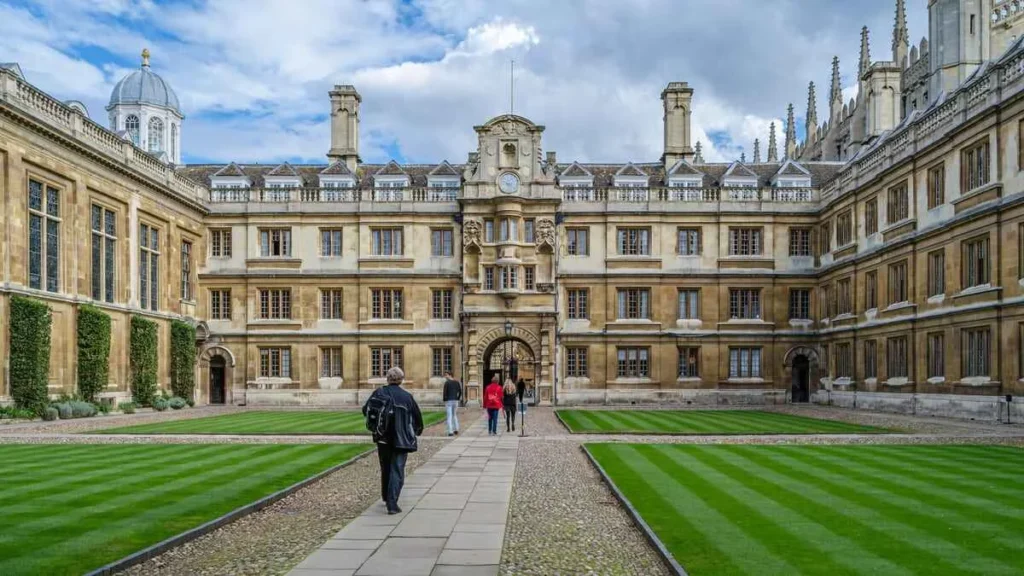
The prestigious University of Cambridge is currently embroiled in a significant controversy surrounding the recruitment and subsequent resignation of Professor Jason Arday. Calls are mounting for an independent inquiry into the appointment process, particularly in light of allegations of plagiarism and discrepancies in his academic CV, and the wider debate over whether the institution’s drive to enhance diversity played an undue role in the scrutiny applied to his application.
Background of a Groundbreaking Appointment
Jason Arday’s appointment in 2023 as Professor of Sociology of Education at the University of Cambridge was heralded as a landmark moment. At just 37 years old, he became Cambridge’s youngest-ever Black professor, a distinction that garnered considerable media attention and was seen by many as a significant step forward for diversity within the historically predominantly white echelons of British academia. His remarkable journey, often highlighted in public profiles, included overcoming significant personal challenges, making his rapid ascent through academic ranks even more compelling. This appointment was widely celebrated as evidence of Cambridge’s commitment to addressing the long-standing under-representation of Black academics at senior levels, aligning with broader national initiatives to promote diversity, equity, and inclusion (DEI) within higher education.
For years, UK universities, particularly the ancient institutions like Cambridge and Oxford, have faced sustained pressure to diversify their faculty and student bodies. Reports from organizations such as Universities UK and the Race Equality Charter have consistently highlighted the glaring disparities in representation, especially at professorial grades. The appointment of a Black professor at such a young age, particularly in a field like sociology of education which often examines societal inequalities, was therefore interpreted as a powerful statement of intent from the university.
Allegations Surface and Resignation Follows
The celebratory narrative surrounding Professor Arday’s appointment began to unravel as allegations of plagiarism and questions regarding claims made in his academic CV emerged. While the specific details of these allegations have not been fully disclosed by the university, they reportedly involve instances of academic misconduct and inaccuracies concerning his previous qualifications and appointments. These serious accusations prompted an internal review process at Cambridge. In the wake of these mounting questions, Professor Arday resigned from his university roles.
In response to the allegations, Professor Arday has consistently denied plagiarism and rejected suggestions that he deliberately misrepresented his achievements. He has acknowledged some errors in his early academic work, attributing them in part to challenges associated with autism and, in some instances, inadequate supervision during his formative years in academia. "What I am not is a liar," he has stated, steadfastly maintaining his integrity amidst the intense scrutiny. His defense highlights the complexity of academic careers, particularly for those from underrepresented backgrounds, and the potential for missteps, especially in the early stages, to be amplified under public scrutiny.
Calls for an Independent Investigation
The University of Cambridge has stated that an investigation into "new information" concerning Arday’s academic qualifications and appointments would feed into a wider review of its process for appointing senior academics. This internal review, the university suggests, will examine the robustness of its recruitment procedures and ensure they are fit for purpose.
However, this proposed internal investigation has been met with skepticism and strong calls for a fully independent inquiry. Leading this charge is Professor Priyamvada Gopal, a distinguished Cambridge professor of postcolonial studies. Professor Gopal, along with a growing group of academics, argues vehemently that the university cannot credibly investigate itself in a matter of such gravity and public interest. Speaking on BBC Radio 4’s Today programme, Professor Gopal underscored the "massive reputational damage" the controversy has already inflicted upon the institution, noting that it has caused considerable distress and concern among colleagues across various disciplines and political persuasions.
Professor Gopal highlighted the unusual nature of Professor Arday’s rapid rise, describing it as "very senior, very prestigious" for someone so early in their career. She further contended that Arday had subsequently been placed under an intense public spotlight, with "frankly a bit of a target on his back," suggesting a disproportionate level of scrutiny once the allegations surfaced. The demand for an independent investigation stems from a belief that only an external body can provide the necessary impartiality and transparency to fully uncover what transpired and to restore faith in Cambridge’s appointment processes.
The Diversity Dilemma and Scrutiny on Appointments
Beyond the immediate allegations against Professor Arday, the dispute has ignited a broader and more contentious debate about the pressures on universities to improve racial diversity and whether these pressures might inadvertently affect the rigor of scrutiny applied during recruitment processes. Critics argue that a fervent desire to meet diversity targets could, in some instances, lead to a lowering of academic standards or a less stringent vetting process for candidates from underrepresented groups.
Kathleen Stock, a philosopher and former University of Sussex professor, who resigned in 2021 amid controversy over her views on gender identity, has been a prominent voice in this discussion. Stock argued that Arday’s appointment reflected a broader desire among elite universities, particularly those like Cambridge and Oxford, to enhance their public image. "The elite universities like Cambridge and Oxford had a particular problem because they are perceived to be quite harsh places, quite unkind places and very white places. And they wanted to change that impression," she told the BBC.

Stock described the affair as a "watershed" moment, suggesting that universities might have been "desperate for good publicity" to such an extent that they potentially overlooked or failed to identify gaps and inconsistencies in a candidate’s record. This perspective implies a systemic issue where the pursuit of diversity metrics might inadvertently compromise the integrity of academic appointments. Her comments resonate with a segment of public opinion that questions the efficacy and potential pitfalls of aggressive DEI policies within institutions.
Counterarguments and Defense of Diversity Initiatives
Stock’s controversial comments have been robustly challenged by other academics who argue against the notion that Black academics receive preferential treatment. Professor Kehinde Andrews, director of the Centre for Critical Social Research and the first Black studies professor in the UK, strongly rejected the suggestion that Black academics have at any stage received preferential treatment from UK institutions. Andrews and others argue that such claims are not only unsubstantiated but also undermine legitimate efforts to correct historical injustices and systemic biases that have historically marginalized Black scholars.
Proponents of diversity initiatives contend that the existing structures of academia inherently favor certain demographics, and that proactive measures are necessary to level the playing field. They argue that the immense pressure on Black academics, who often face heightened scrutiny and isolation, makes it highly improbable that they would receive an easier path to senior roles. Instead, they often face additional hurdles and biases throughout their careers.
Broader Context: Persistent Under-representation in UK Academia
The controversy surrounding Professor Arday unfolds against a backdrop of persistent and stark under-representation of Black academics at senior levels across the UK higher education sector. Despite increasing awareness and numerous initiatives, progress in diversifying faculty, especially at the professorial rank, remains painfully slow.
According to the latest figures from the Higher Education Statistics Agency (HESA), a comprehensive body for UK higher education data, the overall picture of diversity shows significant disparities. While 14% of UK university professors are from an ethnic minority background, this figure masks critical distinctions. Out of 23,900 professors with known ethnicity, 3,320 are identified as being from an ethnic minority group. However, when disaggregated, Black academics account for a mere 1.13% of all professors nationwide. This translates to approximately 240 to 270 individuals across the entire country holding the highest academic rank.
This figure stands in stark contrast to the overall representation of ethnic minority staff within UK academia. HESA data indicates that 26% of all UK academic staff are from an ethnic minority background. The dramatic drop from 26% of all academic staff to just 1.13% of professors highlights a significant "leaky pipeline" issue, where ethnic minority, and particularly Black, academics struggle to progress to the most senior positions. This systemic barrier suggests that even when individuals enter academia, their advancement is often hindered, leading to a severe lack of Black role models and leaders within universities.
The situation is even more acute within elite institutions like Cambridge, which have historically struggled with diversity at all levels. While these universities have made public commitments to improving racial diversity, the slow pace of change and the high-profile nature of cases like Professor Arday’s underscore the deep-seated challenges and complexities involved in transforming long-established institutional cultures. The under-representation is not merely a matter of numbers but reflects systemic issues related to recruitment, promotion, mentorship, and institutional support for minority scholars.
Implications and Future Outlook
The controversy at Cambridge carries significant implications for the university’s reputation, the broader academic community, and the ongoing efforts to foster diversity in higher education. For Cambridge, the immediate challenge is to manage the fallout, restore public trust, and demonstrate a commitment to both academic integrity and genuine diversity. An independent investigation, as called for by many academics, could provide a necessary pathway to achieving this by ensuring transparency and accountability.
The affair also forces a critical re-evaluation of how universities balance the imperative to diversify their faculty with the rigorous standards required for academic appointments. It prompts questions about the robustness of vetting processes, the role of departmental and institutional oversight, and the potential for unconscious biases or pressures to influence decision-making. Universities may need to review their specific DEI strategies, ensuring they are implemented in a manner that upholds the highest standards of academic excellence and integrity.
Furthermore, the public nature of this dispute risks creating a chilling effect on diversity initiatives. Critics of DEI policies may use this case to argue against proactive measures, potentially making institutions more hesitant to champion diversity for fear of similar controversies. Conversely, advocates for diversity will argue that this situation underscores the need for even more robust and transparent processes to support and promote Black scholars, rather than retreating from these essential goals.
The experience of Professor Arday, who has consistently maintained his innocence regarding deliberate misrepresentation and suggested a "well orchestrated and co-ordinated campaign" against him, also highlights the intense pressures and vulnerabilities faced by high-profile academics from underrepresented backgrounds. Their achievements, while celebrated, can also make them targets for increased scrutiny, and any perceived misstep can be amplified, potentially overshadowing their genuine contributions.
Ultimately, the Cambridge controversy is a complex and multi-faceted issue that touches upon academic ethics, institutional governance, and the persistent struggle for racial equity in higher education. Its resolution will undoubtedly shape future policies and practices within UK universities, influencing how they navigate the critical balance between achieving diversity goals and upholding the uncompromised standards of academic excellence and integrity. The academic community now awaits a comprehensive and transparent resolution that addresses the core concerns raised by this challenging episode.