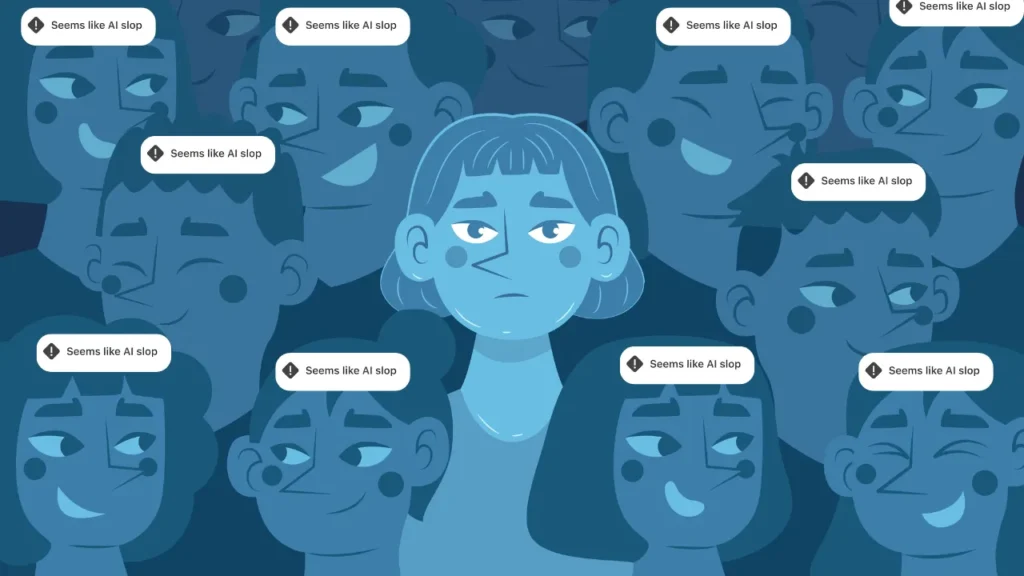
On July 30, 2026, LinkedIn rolled out a new feature within its platform, a button labeled "Seems like AI slop." This addition, accessible via the three-dot menu on every post, allows users to flag content they suspect has been generated by artificial intelligence. LinkedIn’s chief product officer confirmed that these user-generated flags would be instrumental in training the platform’s AI detection systems. While ostensibly a measure to combat the growing tide of AI-generated content, the implementation of this feature raises significant concerns about its potential for bias, inaccuracy, and unintended consequences for genuine human expression.
The immediate context for this new feature is the alarming proliferation of AI-generated content across professional networking platforms. Studies indicate that LinkedIn has become a particularly fertile ground for such material. A comprehensive analysis by AI-detection firm Pangram Labs, which examined approximately one million posts, revealed that a staggering 41% of long-form content (exceeding 250 words) on LinkedIn is now fully AI-generated. This figure positions LinkedIn as having the highest rate of AI-generated long-form content among major platforms, surpassing even X (formerly Twitter), Reddit, Substack, and Medium. Pangram Labs’ CEO has characterized this statistic as a conservative estimate, suggesting the true volume could be even higher.
Further compounding these concerns, a separate investigation by Originality.ai in July 2026 sampled 5,000 LinkedIn posts and concluded that over 80% exhibited characteristics of AI generation. The issue extends beyond long-form content; approximately a quarter of all replies on LinkedIn are now flagged by AI detectors, a rate significantly higher than the under 2% observed on platforms like Reddit. LinkedIn itself has acknowledged the scale of the problem, reporting the blocking of billions of automated comment attempts in recent months. In a telling move, the company has also begun retiring its own AI writing tools, a decision that underscores the growing recognition of the disruptive impact of generative AI on content integrity.
The rationale behind LinkedIn’s "Seems like AI slop" button, as presented by the company, is to leverage the collective intelligence of its vast user base. The argument is that platforms continuously learn from user interactions, and a feature that allows a billion users to flag content provides a powerful, crowdsourced signal. In principle, a large-scale mechanism for identifying low-effort AI content could be beneficial, especially on a network as expansive as LinkedIn. However, the practical implementation of this feature is where its effectiveness and fairness are called into question.
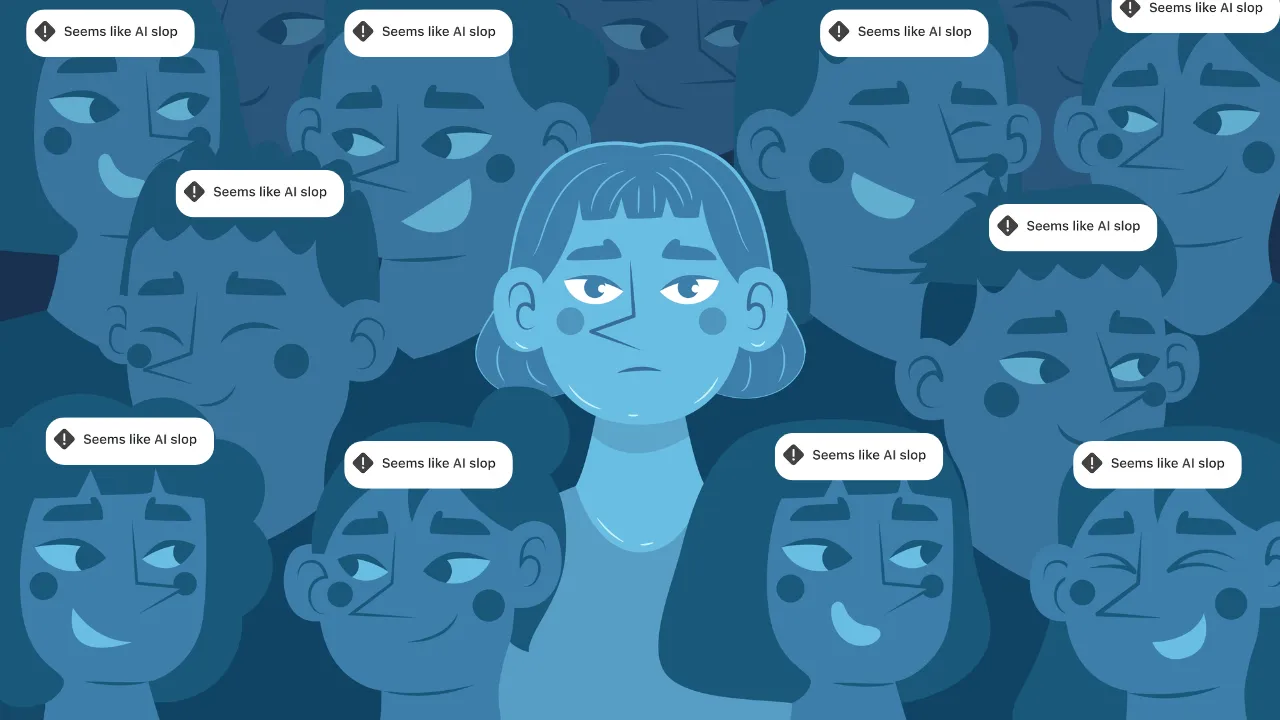
The core issue lies in the subjective nature of human flagging. The "Seems like AI slop" button does not require users to provide evidence or justification for their suspicions. Instead, it elicits a verdict, a gut reaction. This subjectivity is inherently prone to bias. Users may flag content based on factors entirely unrelated to AI generation, such as personal dislike for the author, professional jealousy, political disagreements, or simply a perception of overly formal or polished writing.
Consider the hypothetical founder, Marta, whose English is her third language. She meticulously crafts her posts, resulting in prose that is formal, precise, and perhaps a bit stiff – a natural outcome of careful composition when words do not flow effortlessly. A casual observer, unfamiliar with the nuances of non-native English expression, might interpret this carefulness as robotic and, therefore, flag it as "AI slop." This individual’s suspicion, however well-intentioned, is not a reflection of the content’s origin but a misinterpretation of the author’s linguistic style. When these subjective flags are fed into LinkedIn’s AI detection models, the algorithm risks learning to penalize individuals who write clearly and deliberately, rather than accurately identifying AI-generated content.
The implications of this biased training data are profound. AI detection models are designed to identify patterns. If the flagged content disproportionately includes posts from non-native English speakers, individuals who employ a more formal writing style, or even those with certain neurodivergent traits, the AI could learn to associate these characteristics with "AI slop." This creates a dangerous feedback loop: the more such content is flagged, the more the AI is trained to identify these human characteristics as signs of artificial generation, leading to the erroneous penalization of genuine human creators.
This problem is not theoretical; it is rooted in existing limitations of AI detection technology. Research conducted in 2023 by a team at Stanford University highlighted a significant bias in widely used AI detectors. When tested on 91 essays written by non-native English speakers, these detectors incorrectly flagged 61% of the human-written content as AI-generated. In contrast, the false-positive rate for essays written by native English speakers was approximately 5%. This stark disparity underscores the fact that current AI detectors often misinterpret the linguistic patterns of non-native speakers – characterized by predictable vocabulary and lower "perplexity" – as hallmarks of AI. The Stanford researchers demonstrated this by "enriching" the non-native essays with more complex vocabulary, which subsequently reduced the false-positive rate. Essentially, the machines were penalizing people for writing plainly and competently in a language that was not their first.
LinkedIn’s decision to incorporate crowdsourced flags into its AI detection system exacerbates this pre-existing bias. Even without user input, the best available AI detection science already struggles with accurately distinguishing human writing from AI, particularly when the human writer is not a native English speaker. Introducing a billion untrained human opinions, each carrying its own potential for bias, onto this already shaky foundation is a recipe for algorithmic discrimination.

The history of AI detection further illustrates the unreliability of such tools. OpenAI, the creator of ChatGPT, launched its own AI text classifier in January 2023. This tool proved to be alarmingly inaccurate, correctly identifying only 26% of AI-generated content while misclassifying human writing nearly 10% of the time. Six months later, OpenAI quietly discontinued the tool due to its low accuracy. This decision by the very company that developed one of the most advanced generative AI models highlights the inherent difficulty in reliably detecting AI-generated text.
The misuse of AI detection tools has also led to significant educational disruptions. At Texas A&M University–Commerce, a professor controversially issued zeros to students based on ChatGPT’s claim that it had written their essays, despite the students’ demonstrable proof of original work. Similarly, Vanderbilt University disabled Turnitin’s AI detector after calculating that even a claimed 1% false-positive rate would lead to hundreds of wrongful accusations of academic dishonesty annually. By 2026, numerous institutions, including Yale, Johns Hopkins, and Northwestern, had restricted or disabled AI detection features, citing high false-positive rates and the documented bias against non-native English speakers. The absurdity of these tools is further underscored by instances where historical documents, like the U.S. Constitution, have been flagged as predominantly AI-generated by popular detectors.
The divergence in results from different AI detection services further complicates the issue. Pangram Labs reported 41% AI-generated long-form content on LinkedIn, while Originality.ai’s sample showed a significantly higher figure. These discrepancies, often due to differing methodological thresholds, demonstrate that there is no fixed, objective truth to be crowdsourced. Instead, there are estimates that vary widely depending on how the detection is performed. LinkedIn’s approach, therefore, risks building its AI detection model on a foundation of inherently unreliable and contested data.
The concept of the "Slop Spiral" emerges as a critical concern from this scenario. Machine learning models learn by identifying commonalities in the data they are fed. If the "AI slop" flags are disproportionately generated by users who are biased against non-native writers, formal prose, or other specific groups, the AI will learn to associate these characteristics with AI generation. This creates a self-reinforcing cycle: the AI becomes more confident in flagging content that resembles the biased training data, leading to reduced visibility for such posts. As these posts are seen less, they are defended less, which in turn allows for more flags to be raised with less resistance. The model interprets this escalating volume of flags as confirmation of its accuracy, further solidifying the bias.
This phenomenon, aptly named the "Slop Spiral," describes a situation where a platform’s attempt to identify "AI slop" inadvertently trains its AI to accuse real people of being robots. The AI detector itself becomes a source of "slop" – producing confident, automated judgments that bear little resemblance to reality. This is particularly concerning given that the most formulaic and AI-friendly content genres on LinkedIn, such as "leadership and inspiration" posts, often outperform human-written content in engagement. Originality.ai found that AI-generated posts in this category saw a 75% increase in engagement compared to human-written ones. This suggests that the type of content that is most easily generated by AI and resonates with current platform trends is precisely the content that might bypass user suspicion, while genuine, carefully crafted human expression faces the risk of being flagged.

A significant point of irony in this situation is LinkedIn’s own past role in promoting AI-generated content. For years, the platform offered an "Enhance your post" feature, directly within its composer, which subtly rewrote user drafts into the characteristic "chummy, bullet-dappled corporate cadence" that became ubiquitous on the platform. Premium subscriptions even bundled generative writing capabilities as a selling point, implicitly encouraging users to adopt AI-assisted posting as a productivity enhancement. LinkedIn thus trained a generation of professionals to expect and utilize AI-generated content, only to later express surprise at the feed’s saturation with such material. The decision to retire the "Enhance your post" feature, replacing it with a more basic grammar checker, while simultaneously introducing the "Seems like AI slop" button, highlights a somewhat contradictory approach to addressing the problem it helped create.
The irony was further amplified when Pangram Labs analyzed the LinkedIn product chief’s announcement post regarding the new anti-slop crackdown and found it to be flagged as AI-generated by its own detector. This incident, whether coincidental or not, underscores the pervasive challenges in distinguishing AI from human-generated content, even for those actively seeking to combat it.
The long-term implications of the "Seems like AI slop" button extend beyond content moderation. LinkedIn’s core function as a professional networking platform is being redefined in the age of AI. The hiring pipeline, for instance, is increasingly automated. Studies indicate that by 2026, approximately 82% of companies utilize AI for resume screening, while candidates, in turn, employ AI to generate their resumes. This creates a scenario where machines are drafting applications and machines are reviewing them, with minimal human intervention. The emerging practice of "prompt injection," where job seekers embed hidden commands within their resumes to influence AI screeners, further illustrates this algorithmic arms race. This disconnect between human intent and algorithmic execution raises questions about the platform’s fundamental purpose and its ability to foster genuine human connection.
The shift of users seeking human connection to other platforms, even dating apps, for networking purposes highlights a growing disillusionment with the perceived inauthenticity of professional online spaces. LinkedIn’s "Slop Spiral" risks exacerbating this trend. By creating an environment where carefully articulated human thought can be misconstrued as AI-generated, the platform may inadvertently foster self-censorship. Professionals might begin to soften their insights, avoid contrarian takes, and flatten their prose for fear of being flagged. This chilling effect on authentic expression could undermine the very foundation of knowledge sharing and professional development that LinkedIn aims to facilitate.
In contrast to LinkedIn’s approach, other platforms are exploring more transparent methods for addressing AI-generated content. Snap, for instance, announced in July 2026 that wholly AI-generated videos would no longer be eligible for recommendation on its Spotlight feed. Importantly, Snap placed the onus on its own recommendation system rather than deputizing its users as content police. The company also committed to transparency by labeling AI-assisted content, acknowledging that no detection system is infallible. This approach prioritizes algorithmic responsibility and user transparency over crowdsourced suspicion.

For LinkedIn to truly address the "slop problem," it must move beyond a simplistic flagging mechanism. Publishing the false-positive rate of its AI detector, particularly for non-native English speakers, and establishing clear appeal processes with human oversight are crucial steps. Guaranteeing that individual flags do not automatically throttle content reach or directly influence the training model without corroboration is essential. Without such measures, the "Seems like AI slop" button risks becoming not a tool for quality control, but a sophisticated engine for laundering human bias into algorithmic judgment, ultimately eroding the authenticity and value of the professional network. The platform’s commitment to genuine connection and knowledge sharing hinges on its ability to distinguish between human ingenuity and artificial output, a challenge that requires more nuanced solutions than a simple button.