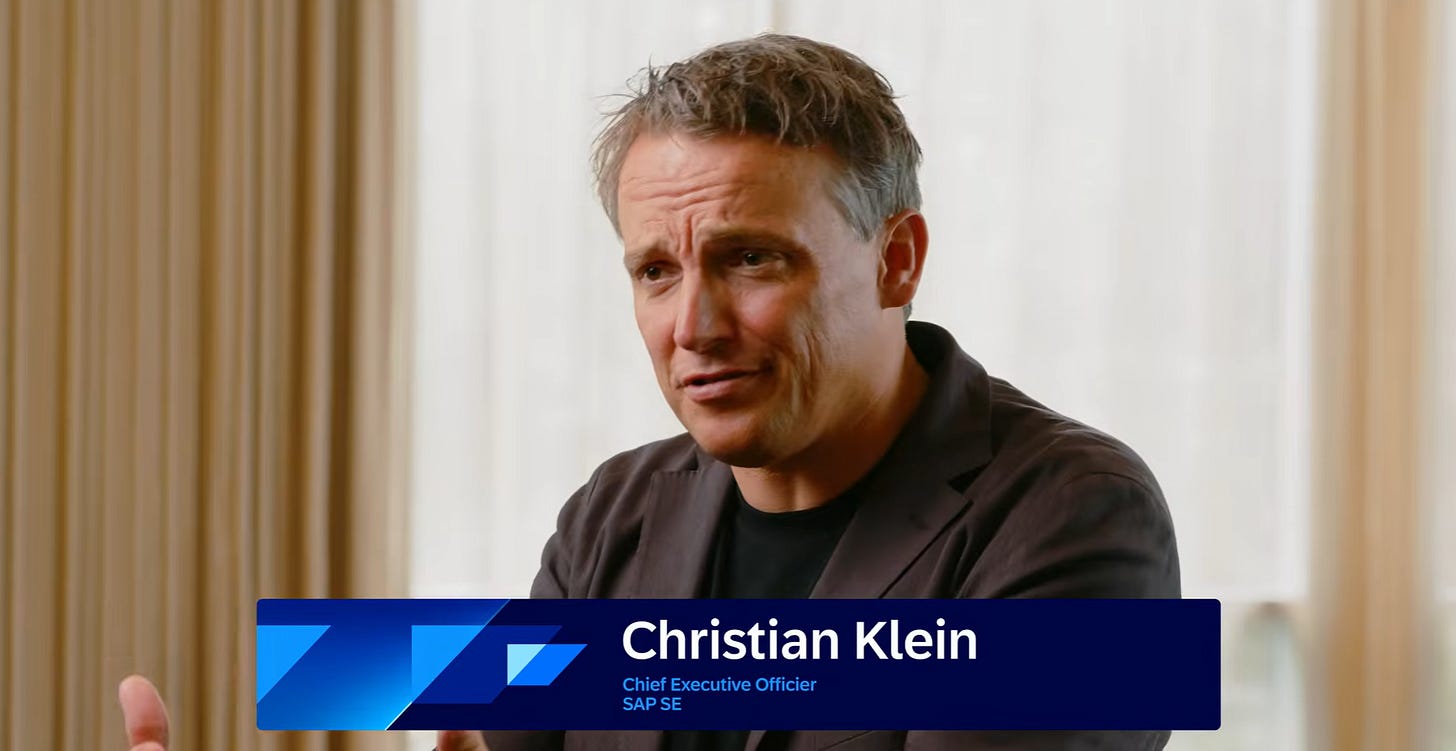
SAP’s recent unveiling of "The Autonomous Enterprise" represents a significant and sweeping declaration, positioning the enterprise software giant at the heart of the artificial intelligence revolution. CEO Christian Klein emphatically stated that this comprehensive AI architecture redefines SAP as an AI company from its core. This ambitious initiative, revealed during a major industry announcement, aims to weave AI capabilities into the fabric of enterprise operations, promising to automate processes, enhance decision-making, and fundamentally alter how businesses interact with their critical software systems.
The Genesis of "The Autonomous Enterprise"
The announcement, made by SAP leadership, signals the culmination of over three years of intensive development focused on AI, including the evolution of its intelligent assistant, Joule, and the integration of various data layers. This strategic pivot is not merely an incremental update but a fundamental reorientation of SAP’s product strategy. While the term "Autonomous Enterprise" might carry some semantic challenges, the underlying technological advancements and strategic intent are undeniably profound. SAP, as a provider of comprehensive Enterprise Resource Planning (ERP) systems, manages a vast array of business resources, from financials and human capital to complex supply chains and manufacturing processes. This deep integration across diverse business functions provides a unique foundation for AI’s transformative potential.
A New Era of Intelligent Business Operations
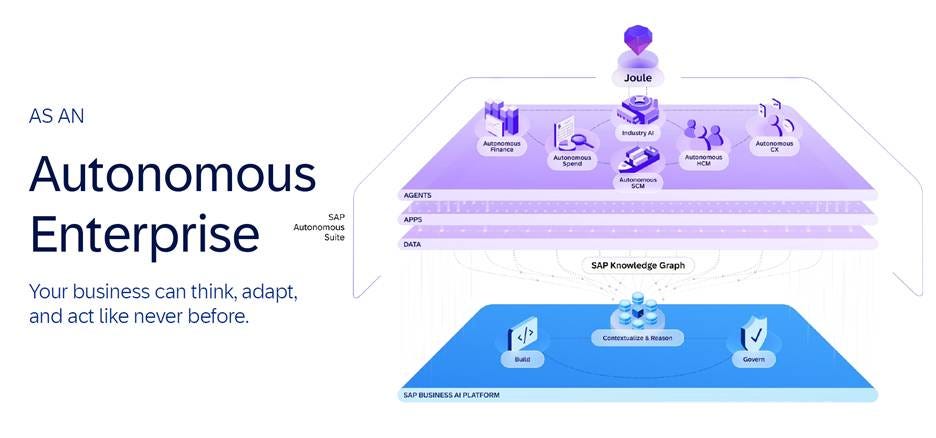
At its core, "The Autonomous Enterprise" is built upon three pillars:
- A Unified AI Platform: This platform serves as the engine for building, contextualizing, and governing AI agents. It provides the infrastructure necessary for developers and businesses to create and manage intelligent automation and decision-support tools.
- An Autonomous Suite: This suite comprises intelligent agents designed to execute core business operations with increasing levels of automation and insight. These agents are intended to proactively identify and address inefficiencies, optimize processes, and drive business outcomes.
- A Redefined User Experience: The initiative introduces a new paradigm for user interaction with enterprise software. By leveraging AI, SAP aims to create a more intuitive, conversational, and personalized experience, moving beyond traditional interfaces to more dynamic and adaptive interactions.
Christian Klein, CEO of SAP SE, articulated the vision: "The Autonomous Enterprise includes a unified AI platform for building, contextualizing and governing agents, an autonomous suite that executes core business operations and a new user experience that redefines how people work with enterprise software."
Deep Dive into SAP’s AI Architecture
SAP’s strategic move into AI is underpinned by a sophisticated technological architecture. At the heart of this new ecosystem lies a robust AI layer, integrated with a data fabric and a multitude of AI models. A key innovation highlighted is SAP’s proprietary tabular data model, SAP-RPT-1.5. This model is specifically optimized for analyzing, evaluating, and modeling the vast quantities of tabular data that form the bedrock of all business software. Unlike general-purpose Large Language Models (LLMs) that can sometimes struggle with structured data, SAP-RPT-1.5 is designed to handle massive spreadsheets and tables, enabling users to find, analyze, model, and pose complex "what if" scenarios on real-time business data. The introduction of a public playground for this model suggests SAP’s commitment to fostering developer engagement and innovation.
Central to the architecture is the SAP Knowledge Graph, a critical component that acts as the "brains" of the system. This graph maps the thousands of business entities, structures, and rules within SAP into a semantic layer that AI agents can understand and interact with. When a user poses a query, whether a simple request like "what’s family leave for my new baby?" or a more complex analytical question, the Knowledge Graph translates it into context-specific queries, retrieves the necessary data, and provides the relevant information or policy. This semantic understanding is crucial for enabling truly intelligent automation and insight generation.
Joule: The Intelligent Assistant and Development Hub
Joule, SAP’s intelligent copilot interface, has been significantly enhanced and plays a pivotal role in "The Autonomous Enterprise." Originally launched as a transactional chatbot, Joule has evolved into a sophisticated platform for both end-users and developers. The newly introduced Joule Studio is presented as an enterprise-grade development tool, enabling the design, building, testing, integration, and management of a wide array of AI agents, from simple automations to complex, multi-step workflows. This approach contrasts with what some perceive as the oversimplification offered by certain LLM-based tools, instead providing a robust environment for IT teams and SAP developers to build highly customized AI solutions tailored to their specific business needs.
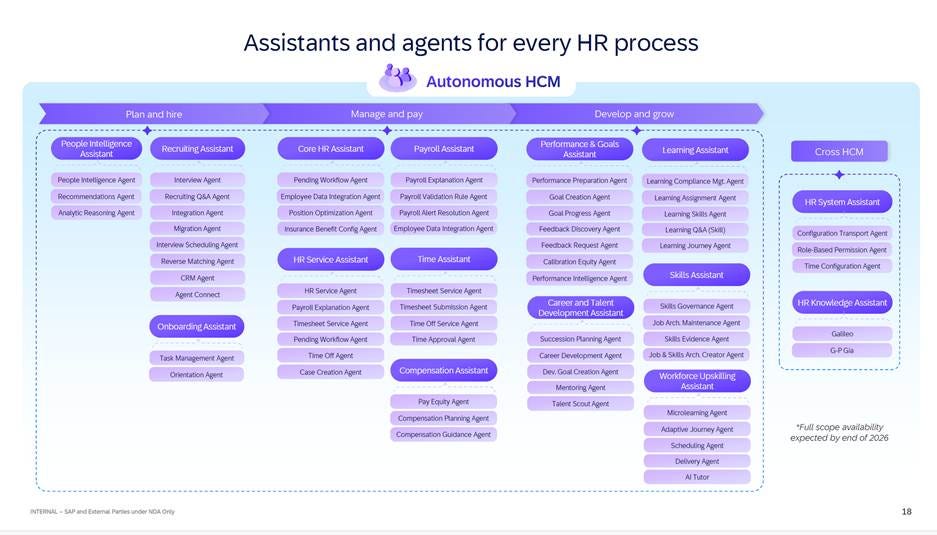
SAP’s strategy with Joule positions it as a comprehensive platform, akin to ServiceNow’s Otto or Workday’s Sana, but with a distinct advantage: direct access to SAP’s unique data objects and modules across its entire suite. This allows for the creation of highly personalized experiences, such as intricate onboarding processes that reflect individual employee options, role pathways, and developmental plans. The ability to build these custom agents from scratch or leverage pre-built SAP agents offers significant flexibility. Furthermore, SAP’s architecture allows for interoperability with non-SAP systems and agents, positioning it as a central hub for enterprise AI initiatives.
Automation vs. Process Redesign: A Key Distinction
A critical aspect of SAP’s announcement is the distinction between pure automation and process redesign. While SAP has launched numerous agents (over 224 announced, with 51 assistants across four major business areas), many are focused on automating existing processes. This approach, while valuable for streamlining current operations and reducing errors – particularly in complex areas like payroll – may not represent the full transformative potential of AI.

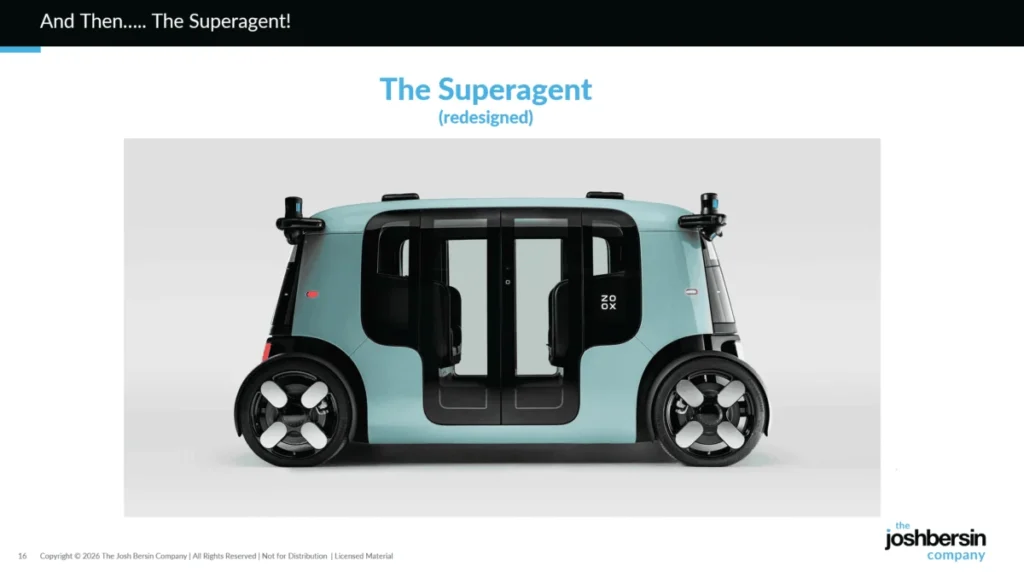
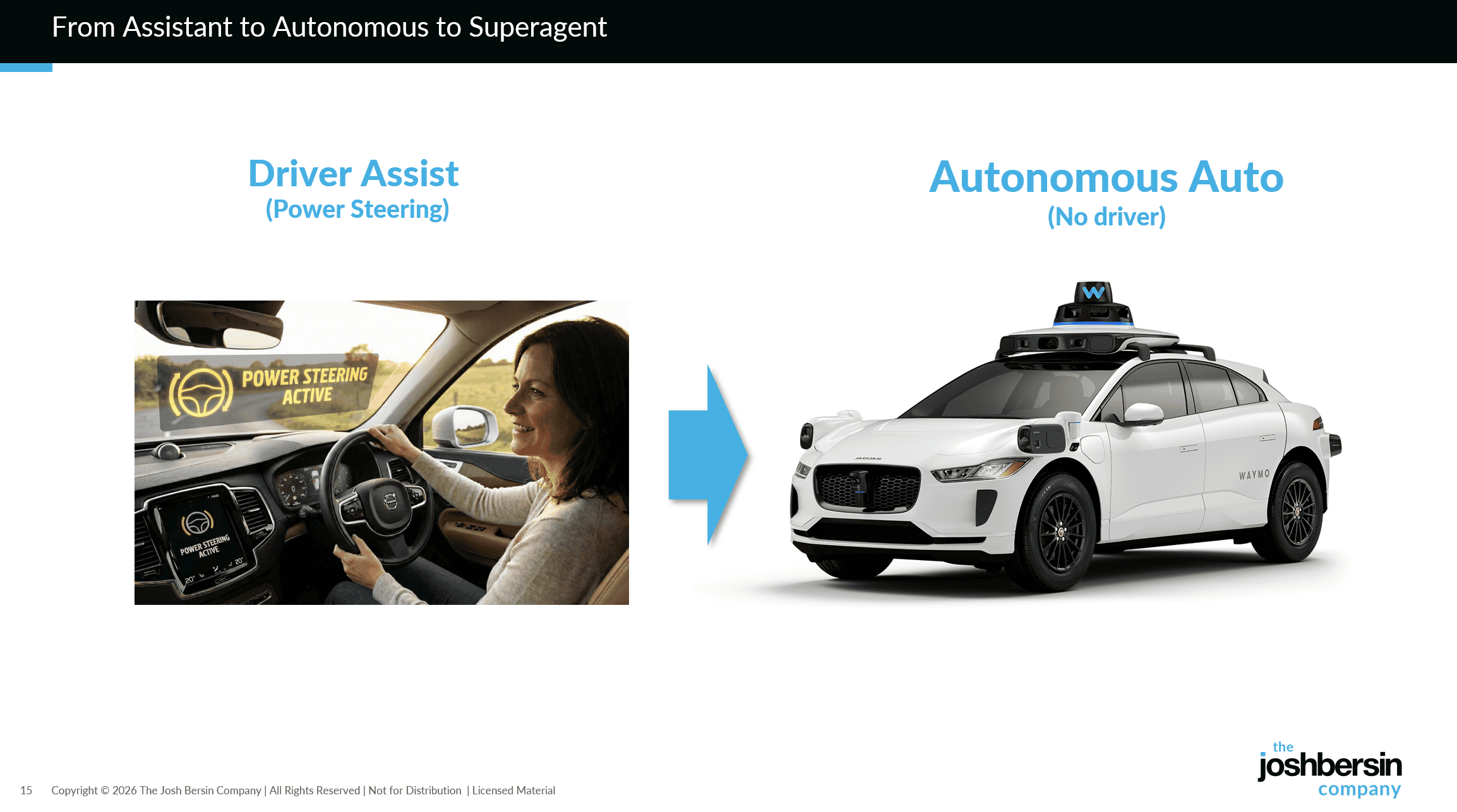
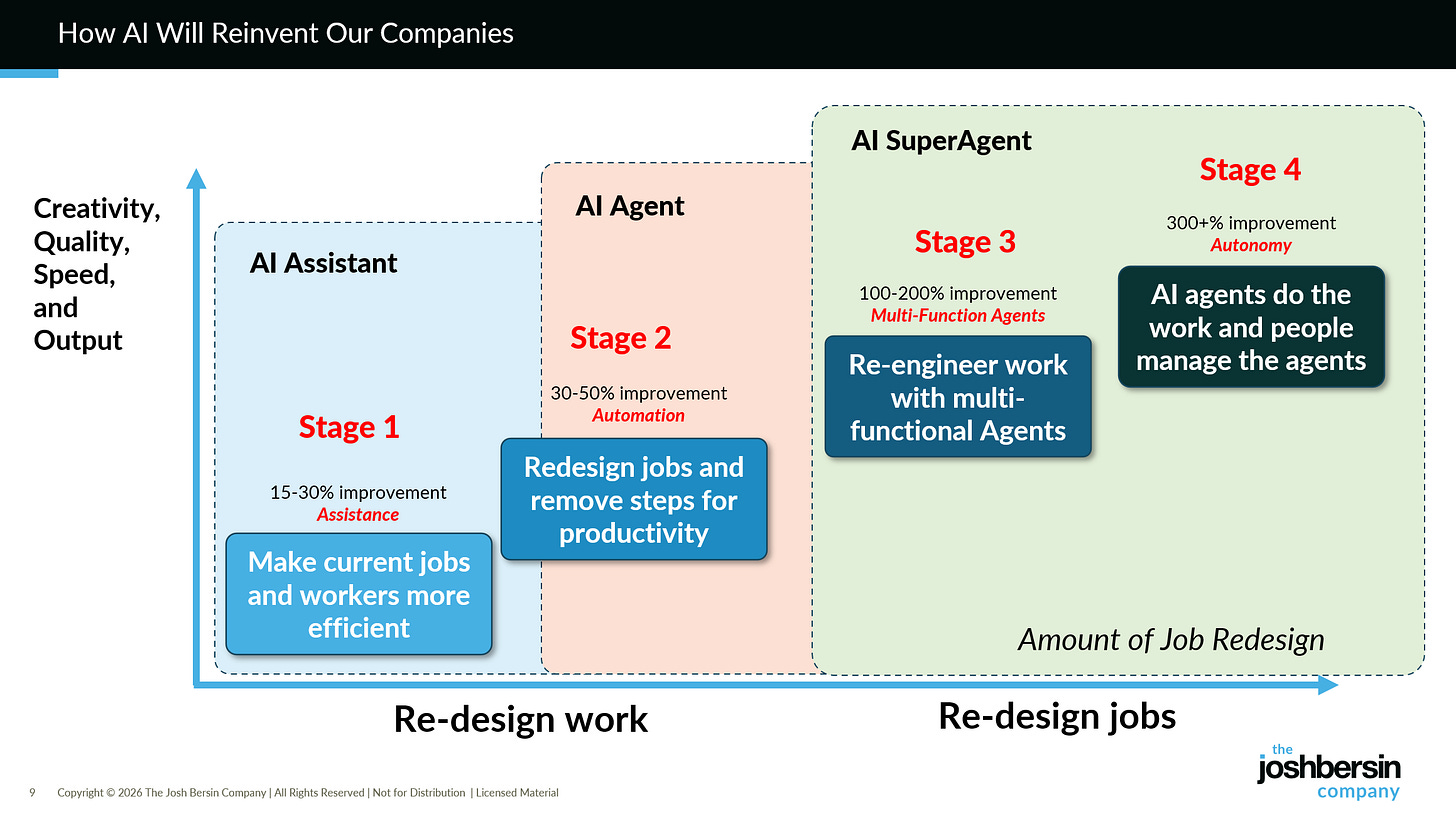
The author of the original analysis draws a parallel to the automotive industry, comparing SAP’s current approach to Waymo’s self-driving car technology that operates within the existing car framework, versus Zoox’s radical redesign of the automobile to optimize the passenger experience. SAP’s current AI layer primarily aims to make existing SAP systems operate more autonomously and effectively, rather than fundamentally changing how things are done. This is characterized as "Step 1: From Driver Assist to Autonomous Driving," where existing processes are automated. The ultimate goal, however, is "Step 2: From Autonomous (Old Process Automated) to Superagent (Redesigned)," which involves a more profound transformation of business workflows.
The Power of "Company Memory" and AI Governance
A significant, though perhaps understated, element of SAP’s vision is the development of massive context windows to store an entire "company memory." This concept envisions AI models retaining a comprehensive dataset of operational knowledge, encompassing customers, products, processes, rules, documents, and communications. This "company corpus" can then be used for continuous analysis, modeling, and improvement. Such a system, when implemented effectively, could directly identify the contributing factors to performance gaps, uncover operational best practices, and significantly enhance thousands of business activities. This "company model" approach holds immense potential for driving cross-domain process innovation and optimizing employee and customer experiences.
Recognizing the inherent risks associated with powerful AI agents, SAP has also introduced the AI Agent Hub. This system provides essential AI governance capabilities, including the creation of rules, data policies, security protocols, and operating limits. Similar to offerings from Workday and ServiceNow, SAP’s AI Agent Hub supports non-SAP agents and provides tools for managing agent consumption, verification, data connections, and coordination. The challenge of coordinating communication between multiple AI agents is acknowledged as a significant hurdle, particularly in complex domains like HR where agents for training, development planning, and performance management need to interact seamlessly.
Implications for the Enterprise Software Landscape
SAP’s declaration of being an "AI company" challenges the notion of a disruptive "SaaS Apocalypse" driven by agile startups. The company’s strategy, mirroring that of competitors like Workday and Oracle, focuses on re-engineering decades of research and development to embed AI capabilities directly into their existing ERP and HCM systems. This approach aims to leverage AI to drive process innovation, enhance user experiences, and create smarter business systems without necessitating a complete overhaul of deeply ingrained enterprise software.
The implications are substantial:
- Reduced Risk for Businesses: Companies can benefit from AI-driven improvements without discarding massive investments in their current SAP infrastructure. This mitigates the risk and cost associated with wholesale system replacements.
- Phased AI Adoption: The focus on agents and automation allows for a more gradual and manageable integration of AI into business operations.
- Shift to Outcome-Based Pricing: SAP’s financial model is expected to evolve towards consumption and outcomes, moving beyond traditional seat licenses. This aligns vendor incentives with customer success and demonstrable value.
- Reinvigoration of Legacy Systems: By infusing AI into its core, SAP aims to reinvent and reinvigorate its growth, leveraging its deep industry knowledge and established customer base.
While competitors like Workday are also pursuing similar agent-based platform strategies, SAP’s comprehensive approach, particularly with the advanced Joule Studio and the powerful SAP Knowledge Graph, positions it as a formidable player in the enterprise AI arena. The long-term success of "The Autonomous Enterprise" will hinge on the effective execution of this strategy, the seamless integration of its AI capabilities, and its ability to deliver tangible value and transformative outcomes for its global customer base. The coming years will likely see intense competition and innovation as major enterprise software vendors race to define the future of intelligent business operations.