
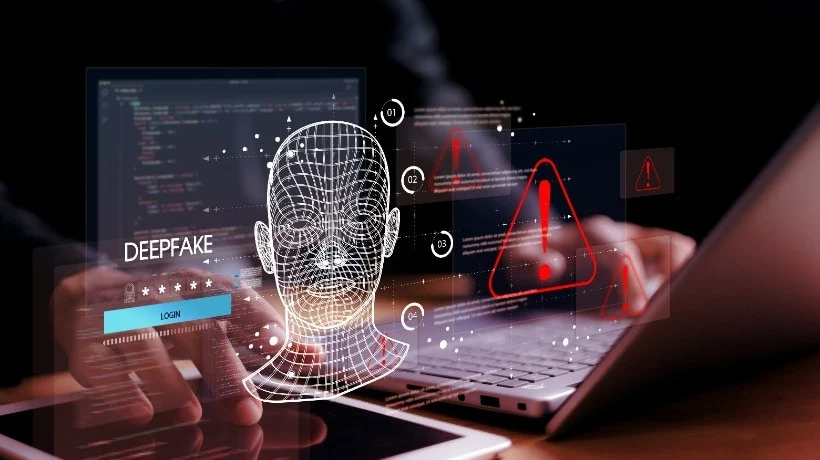
As of 2024, the emergence of high-fidelity synthetic media—commonly known as deepfakes—has moved from the realm of theoretical research into a weaponized reality for financial fraudsters. The transition marks the end of an era where visual or auditory realism could be used as a proxy for authenticity. Security experts now warn that the "phishing playbook" must be rewritten to prioritize rigid procedural verification over visual detection, as the technology used to create these fakes is advancing faster than the human ability to perceive them.
The $25 Million Catalyst: Anatomy of a Modern Heist
The urgency of this shift was punctuated in early 2024 by a landmark case involving a multinational engineering firm in Hong Kong. This incident serves as a primary case study for how deepfakes bypass traditional skepticism. A finance employee received an initial email regarding a confidential transaction—a classic phishing setup. Adhering to his training, the employee was initially suspicious, doubting the legitimacy of the request.
However, the attackers anticipated this resistance. They invited the employee to a video conference call. Upon joining, the employee saw the familiar faces of the company’s Chief Financial Officer (CFO) and several other recognizable colleagues. The digital recreations spoke in their correct voices, utilized corporate jargon, and interacted in a manner that appeared entirely natural. Reassured by what he perceived as a live, face-to-face confirmation, the employee proceeded to authorize 15 separate transfers totaling approximately $200 million Hong Kong dollars (roughly $25.6 million USD).
The Hong Kong police investigation later revealed that every participant on that call, other than the victim, was a deepfake generated from publicly available footage of the firm’s executives. This case illustrates a critical psychological pivot: the deepfake was not the hook that caught the victim; it was the "proof" that dissolved the skepticism his previous training had correctly raised. The attack succeeded specifically because it moved to a channel—video conferencing—that the firm’s security protocol had implicitly categorized as a "safe" or "trusted" tiebreaker.
The Rapid Obsolescence of Detection-Based Training
Historically, cybersecurity awareness programs have focused on "artifacts"—the tell-tale signs of a digital forgery. Employees were taught to look for unnatural blinking patterns, inconsistent lighting, distorted backgrounds, or glitches in the movement of a speaker’s mouth. While this advice was effective for the crude generative models of 2021 and 2022, it has become a liability in the current environment.
The rapid iteration of Large Language Models (LLMs) and Generative Adversarial Networks (GANs) means that every visual "tell" is essentially a bug report for developers. When a model is criticized for not showing enough sweat or for having "too many fingers," the next version of the software is optimized to fix those specific flaws. Consequently, training employees to look for glitches gives them a false sense of security. If an employee sees a perfectly rendered video without artifacts, their training leads them to believe the content is genuine. In the age of AI, the absence of a glitch is no longer evidence of authenticity; it is merely evidence of high-quality software.
Furthermore, the "detection" approach ignores the commercial normalization of synthetic media. A 2023 report by Gartner predicted that by 2026, 30% of enterprises would use synthetic media for marketing and internal communications. Major corporations are already deploying synthetic influencers and AI-generated spokespeople for training videos and brand campaigns. When legitimate business communication regularly features "fake" faces, the appearance of a generated person stops being a red flag and becomes a standard operating procedure.
Shifting the Paradigm: From Detection to Verification
To counter the threat of hyper-realistic deepfakes, cybersecurity experts are advocating for a shift toward "Verification-First" protocols. This strategy assumes that any digital channel—be it video, voice, or text—can be compromised or spoofed. The focus moves away from the medium and toward the process.
Multi-Channel Authentication for High-Value Requests
The most robust defense against deepfake fraud is the mandatory use of a secondary, out-of-band communication channel. Under this protocol, any request involving the movement of funds, the sharing of sensitive credentials, or changes to vendor payment information must be verified through a channel not controlled by the requester.
If a request arrives via a video call, the employee must initiate a separate call to the requester using a verified number stored in the internal company directory. The "callback" is a low-tech but highly effective barrier because while an attacker can spoof an incoming call or a video feed, they rarely have control over the victim’s outgoing telephony infrastructure.
The Formalization of Approval Chains
A significant portion of deepfake success relies on the exploitation of perceived authority. Attackers often pose as high-ranking executives to bypass standard scrutiny. Organizations must establish and publish clear, immutable approval hierarchies.
If a company policy states that no wire transfer over $10,000 can be authorized without a digital signature in a specific procurement system, then a voice or video call from the "CEO" should be insufficient to override that rule. By empowering employees to prioritize the written system over a verbal request, companies provide their staff with a "script" to handle high-pressure situations. This removes the social awkwardness of questioning a superior, as the employee is simply following a mandated procedural framework.
Addressing the Psychological Element: Urgency and Peer Support
Deepfake attacks are rarely just technical feats; they are psychological operations. Attackers almost always employ "manufactured urgency" to prevent the victim from thinking critically or seeking a second opinion. Phrases like "This must be done before the market closes" or "This is a highly confidential acquisition and you cannot tell anyone" are designed to isolate the target.
Modern training must teach employees to recognize urgency itself as a primary indicator of fraud. In a professional environment, a request that forbids consultation with colleagues or requires the bypassing of standard security checks should immediately trigger an internal alarm, regardless of who appears to be making the demand.
The Role of Internal Learning Champions
Top-down mandates from the IT department often face resistance or apathy. Research into AI adoption and corporate security suggests that peer-to-peer influence is more effective. Identifying "Learning Champions" within departments—such as a respected member of the finance or HR team—can help normalize the culture of skepticism.
When a peer demonstrates how easily a voice can be cloned using a four-minute clip of audio from a public webinar, the threat becomes tangible. These champions serve as an informal "second-opinion" channel, allowing employees to ask, "Does this seem off to you?" without the pressure of filing a formal security ticket. This creates a "verification culture" that exists in the daily interactions of the workforce rather than just in a policy manual.
Measuring Success through Behavior, Not Compliance
The metrics used to evaluate cybersecurity readiness are also in need of an overhaul. Traditionally, companies have measured the success of their programs by "completion rates"—how many employees watched a mandatory video or took a quiz. In the era of deepfakes, these metrics are meaningless.
A more accurate measure of resilience is "behavioral tracking" during simulated attacks. Forward-thinking companies are now conducting authorized voice-cloning drills. By cloning an executive’s voice (with their explicit consent) and attempting a simulated "vishing" (voice phishing) attack on the finance team, IT departments can gather data on how many employees actually performed the required callback and how long it took them to report the incident.
Crucially, the organization must protect the "near-miss" reporting process. If an employee challenges a genuine request from a real executive to ensure security, they must be praised rather than reprimanded. If a leader reacts with frustration to a security check, they effectively dismantle the company’s entire defensive posture by teaching employees that compliance is a career risk.
The Future of the Arms Race
The technological arms race between AI developers and security firms is unlikely to result in a permanent victory for either side. As synthetic media becomes indistinguishable from reality, the reliance on human perception must be phased out in favor of cryptographic signatures and rigid procedural hurdles.
The broader implications for the global economy are significant. As trust in digital communication erodes, the cost of doing business may increase due to the additional time required for verification. However, the alternative—a world where a single video call can drain a corporation’s treasury—is far more costly.
In conclusion, the most effective defense against the next generation of AI-driven fraud is not a better algorithm, but a more disciplined human process. By treating every digital interaction as a potential fabrication and institutionalizing verification protocols, organizations can close the blind spot in their phishing playbooks and protect their assets in an increasingly synthetic world. Training that promises to give employees "sharper eyes" is a temporary fix; training that gives them a "reliable process" is a permanent defense.






