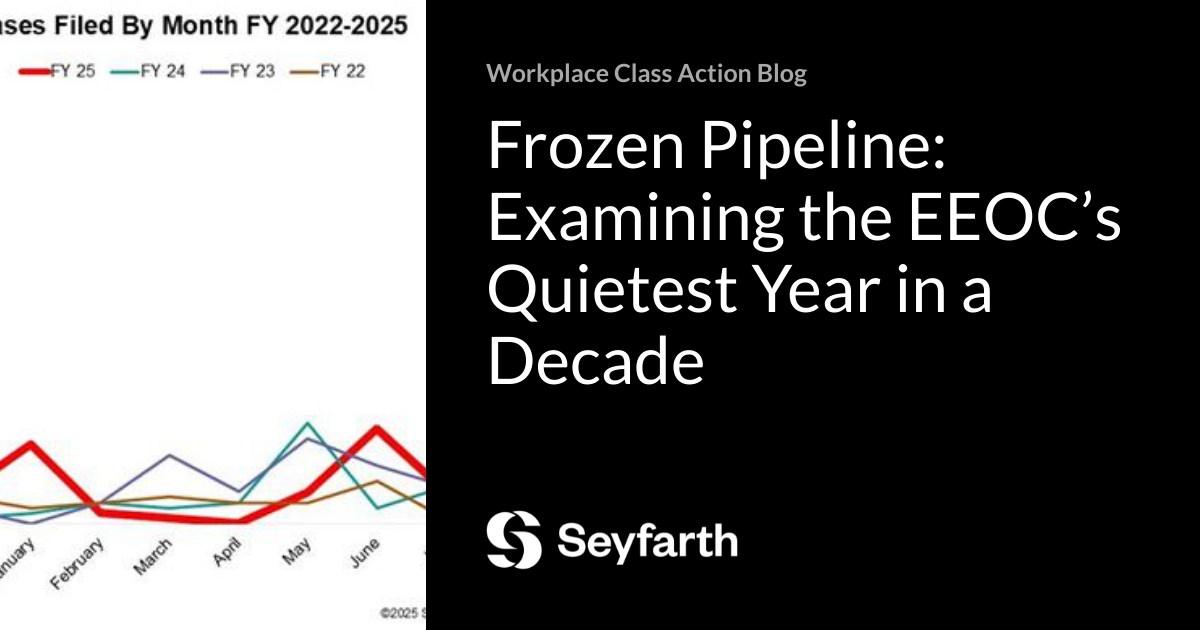
The U.S. Equal Employment Opportunity Commission (EEOC) concluded its 2025 fiscal year on September 30, recording one of the lowest levels of litigation activity in the agency’s nearly 60-year history. With only 93 merit lawsuits filed over the past twelve months, the Commission has signaled a dramatic departure from the aggressive enforcement strategies seen during the Biden administration. This figure represents a ten-year low and reflects the immediate impact of sweeping leadership changes, budgetary constraints, and a fundamental shift in ideological priorities initiated under the second Trump administration.
While the beginning of the fiscal year suggested a potential continuation of high-volume litigation, the trajectory of the agency was fundamentally altered by executive actions in early 2025. The removal of key Democratic leadership and the subsequent loss of a voting quorum have left the Commission in a state of transition, focusing on a narrower band of legal issues while backing away from controversial "systemic" litigation and gender identity cases. For employers, the FY 2025 data offers a roadmap of the new enforcement landscape, where religious freedom and pregnancy protections have moved to the forefront, while race-based and LGBTQ-related claims have seen a precipitous decline.
A Chronology of Transition: From Momentum to Pullback
The 2025 fiscal year began in October 2024 under the momentum of the Biden administration’s enforcement agenda. At that time, the EEOC was led by a Democratic majority and a General Counsel, Karla Gilbride, who had expressed a commitment to broad, systemic litigation. In the first four months of the fiscal year, the Commission filed 24 lawsuits, including a surge of 15 filings in January 2025 alone. Legal analysts suggest this early activity was an attempt by career enforcement personnel to move cases through the pipeline before the anticipated change in presidential administrations.
The landscape shifted abruptly following the inauguration of President Donald Trump. In late January 2025, the administration took the unprecedented step of firing EEOC General Counsel Karla Gilbride. In a move that tested the constitutional limits of presidential power over independent agencies, President Trump also terminated Commissioners Charlotte Burrows and Jocelyn Samuels, despite both having years remaining on their appointed terms. This left the Commission with only two members: Acting Chair Andrea Lucas and Commissioner Kalpana Kotagal.
By February 2025, the loss of a quorum—the minimum number of members required to make official decisions—effectively curtailed the Commission’s ability to authorize high-stakes litigation. Under the EEOC’s internal delegation of authority, the General Counsel can only file "routine" cases without a full Commission vote. Cases involving systemic discrimination, unsettled areas of law, or those likely to generate public controversy were largely sidelined. Consequently, the traditional "September Surge," where the EEOC typically files dozens of cases to meet year-end goals, was significantly muted. The 35 lawsuits filed in September 2025 stand in stark contrast to the 71 filed during the same month in 2023.
Statutory Trends: The Rise of Religious and Pregnancy Protections
An analysis of the 93 merit lawsuits filed in FY 2025 reveals a distinct shift in the types of claims the EEOC is willing to pursue. While the Americans with Disabilities Act (ADA) remained a primary vehicle for litigation, other areas saw significant reallocation of resources.
The Surge in Religious Discrimination
One of the most notable trends of FY 2025 was the elevation of religious discrimination claims. The Commission filed 11 lawsuits asserting religious discrimination or failure to accommodate religious beliefs under Title VII. This represents a significant increase in focus, likely fueled by the massive backlog of charges stemming from COVID-19 vaccine mandate disputes. Acting Chair Andrea Lucas has been vocal about this shift, stating in August 2025 that the agency is "restoring evenhanded enforcement" to ensure workers are not forced to choose between their faith and their livelihoods.

Pregnancy and the PWFA
The EEOC also maintained a robust focus on sex-based discrimination, specifically regarding pregnancy. With 10 lawsuits filed under the Pregnancy Discrimination Act and the newly enacted Pregnant Workers Fairness Act (PWFA), the Commission demonstrated its intent to enforce recent legislative expansions. When combined with general sex discrimination claims, this category accounted for 37 cases, making it the most litigated area of the year.
The Decline of Race and National Origin Claims
In a historic reversal, race and national origin discrimination lawsuits plummeted to their lowest levels in over a decade. The EEOC filed only three such lawsuits in FY 2025, compared to 27 in FY 2023. Notably, the cases that were filed leaned toward theories of "reverse discrimination." For instance, EEOC v. Seward and Son Planting Co. alleged that an employer favored non-Black, non-American workers over Black American citizens. This aligns with the administration’s stated goal of protecting American workers from what it terms "anti-American bias."
Policy Reversals: Biological Truth and Gender Identity
The 2025 fiscal year marked a definitive end to the EEOC’s pursuit of litigation related to gender identity and transgender rights. In October 2024, early in the fiscal year, the Commission had filed two lawsuits concerning the rights of transgender workers. However, following President Trump’s January 2025 Executive Order, "Defending Women From Gender Ideology Extremism," the EEOC took the rare step of moving to dismiss its own pending actions in these matters.
Acting Chair Lucas underscored this policy shift in a January 28 statement, asserting that "biological sex is real" and that the agency would no longer view the use of pronouns corresponding to biological sex as a form of workplace harassment. This pivot represents one of the most significant ideological changes in the agency’s history, moving it away from the "Sexton" and "Bostock" interpretations favored by the previous administration and toward a more traditionalist interpretation of Title VII.

Geographic and Industry Focus
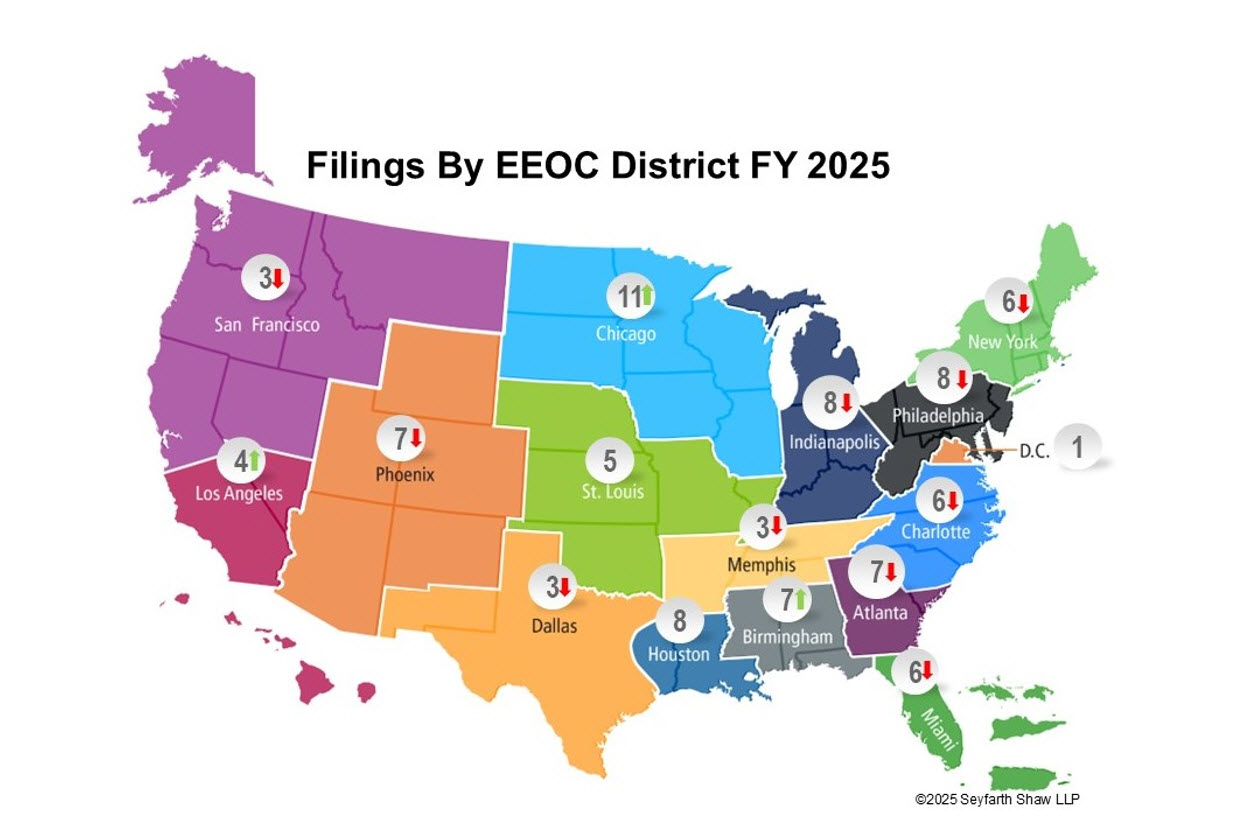
The distribution of EEOC filings in FY 2025 shows that litigation remains concentrated in specific regional hubs, while traditional "litigation-heavy" districts have gone quiet.
- Active Districts: The Chicago District Office reclaimed its position as a leader in enforcement, filing 11 lawsuits. It was followed closely by Philadelphia, Indianapolis, and Houston, each filing eight merit lawsuits. These offices have consistently maintained higher activity levels, focusing on mid-market employers and regional industries.
- Quiet Districts: Historically active offices in Los Angeles, New York, and San Francisco saw a dramatic drop in activity, filing only four, six, and three lawsuits, respectively. This continuing trend suggests a strategic withdrawal from West Coast jurisdictions that were once the primary battlegrounds for Obama-era EEOC initiatives.
- Healthcare Industry Targets: Industry-specific data shows that the healthcare sector remains under the EEOC’s microscope. Nearly 20% of all merit lawsuits filed in FY 2025 targeted healthcare providers, often involving claims related to disability accommodations or religious exemptions.
The Impact of the Quorum Vacancy
The absence of a quorum is perhaps the most significant hurdle facing the EEOC as it enters FY 2026. Without at least three Commissioners, the agency is legally restricted from launching "systemic" or "pattern or practice" lawsuits—the types of cases that typically result in multi-million dollar settlements and broad injunctive relief.
The General Counsel’s current delegated authority is limited to routine, individual-level cases. If the Commission attempts to litigate complex class-action suits without a quorum, they face immediate legal challenges from defense counsel regarding their authority to proceed. This procedural limitation explains why the average scope of the lawsuits filed in late 2025 was noticeably narrower than in previous years.
Implications for Employers and the Private Bar
While the reduction in total lawsuits might suggest a reprieve for employers, legal analysts warn against complacency. The EEOC’s shift in focus creates new compliance challenges, particularly in the realms of religious accommodation and the Pregnant Workers Fairness Act. Employers must now navigate a landscape where "woke" corporate policies—such as certain Diversity, Equity, and Inclusion (DEI) initiatives—may themselves become the target of EEOC "reverse discrimination" investigations.
Furthermore, the private plaintiffs’ bar often fills the vacuum left by a retreating federal agency. When the EEOC dismisses cases or narrows its focus, private litigants frequently intervene or file parallel state-court actions. The "follow-the-leader" phenomenon suggests that the themes highlighted by Acting Chair Lucas—such as religious freedom and the protection of biological sex distinctions—will likely become the next wave of private employment litigation.
As the EEOC awaits the confirmation of new Trump-appointed Commissioners and a permanent General Counsel, the 2025 fiscal year stands as a landmark period of contraction and realignment. The agency has moved from a philosophy of broad social engineering back to a more restrained, statutory-focused enforcement model, albeit one that is heavily influenced by the prevailing political climate.