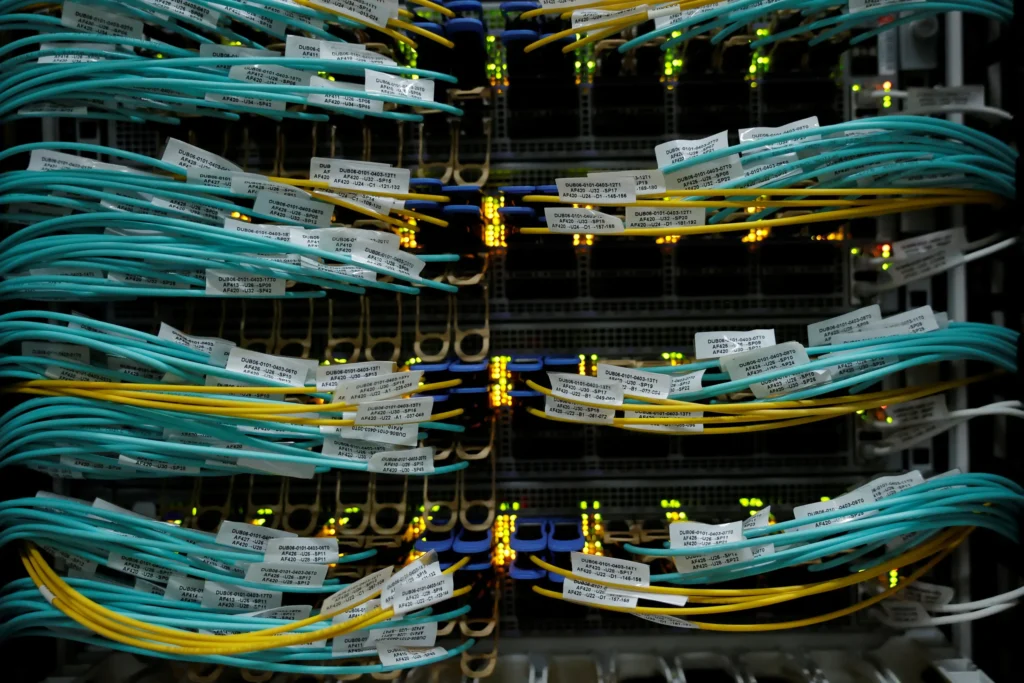
The relentless expansion of artificial intelligence technologies has fueled an unprecedented demand for data processing power, necessitating the construction of massive data centers. These facilities, however, are significant consumers of electricity and water, and their footprint can strain local infrastructure and resources. As a result, a growing number of governments, regulatory bodies, and municipalities across the globe are re-evaluating their policies, leading to freezes, restrictions, and outright bans on new data center development. This trend reflects a broader societal rebalancing, attempting to reconcile technological advancement with environmental sustainability and community well-being.
The Growing Tide of Restrictions
The concerns driving these policy shifts are multi-faceted. The sheer energy requirements of data centers, particularly those supporting AI workloads, are immense. As AI models become more sophisticated and their adoption accelerates, the power grid’s capacity to meet this demand without compromising reliability or increasing carbon emissions is being severely tested. In parallel, water resources, essential for cooling these energy-intensive facilities, are becoming increasingly scarce in many regions, leading to conflicts over allocation and usage. Land availability for such large-scale infrastructure projects is also a growing challenge, particularly in densely populated areas. Furthermore, the visual impact, noise pollution, and the influx of construction and operational activity can impose a significant burden on local communities, prompting calls for greater transparency and local consent.
Key Global Responses to the Data Center Boom
The global response to these challenges is varied, with different jurisdictions adopting distinct approaches, ranging from executive orders and legislative moratoria to ballot-box bans and planned regulatory frameworks.

United States: A Patchwork of State and Local Actions
In the United States, a significant number of states and municipalities are enacting measures to control data center growth.
Pennsylvania: Governor Josh Shapiro has taken a proactive stance by signing an executive order designed to impose environmental and transparency safeguards on new AI data centers. Crucially, the order mandates that such projects must secure local community approval. This directive, effective immediately, has removed data centers from the state’s Fast Track permit program, streamlining the process for certain industries but now imposing stricter oversight on data centers. Additionally, Governor Shapiro’s administration has barred any office or agency under his jurisdiction from entering into non-disclosure agreements with data center developers. This move aims to foster greater public scrutiny and accountability in the siting and development of these critical, yet impactful, infrastructure projects. This policy shift signifies a move towards prioritizing community engagement and environmental responsibility over unchecked industrial expansion.
Texas: The Lone Star State has seen Governor Greg Abbott order a pause on the approval of new data center projects through the state’s grid interconnection process. This decision stems from concerns that a projected surge in electricity demand from these facilities could jeopardize the reliability of the state’s power grid. This pause is particularly significant given Texas’s history with grid instability, notably during severe weather events. Under Governor Abbott’s directive, data center developers will now be required to furnish more comprehensive information regarding their power consumption, water usage, the tax incentives they seek, their ownership structures, and the specific measures they plan to implement to mitigate any adverse local impacts. This heightened level of scrutiny aims to ensure that future data center developments align with the state’s energy security and resource management objectives.
New York State: Governor Kathy Hochul has implemented a one-year construction moratorium on data centers that utilize 50 megawatts or more of power. This action positions New York as the first U.S. state to enact a comprehensive moratorium of this magnitude. During this freeze, the New York State Department of Environmental Conservation will refrain from issuing new discretionary permits. This period will be utilized by state officials to develop robust standards for assessing the environmental impact of data centers, aiming to establish a more sustainable framework for future development. This moratorium reflects a growing recognition that the rapid growth of digital infrastructure must be carefully managed to prevent unintended environmental consequences.

Maine (Vetoed Legislation): In contrast to the proactive measures in other states, Maine’s Governor Janet Mills vetoed bipartisan legislation that proposed an 18-month moratorium on new data centers exceeding 20 MW of power. While Governor Mills expressed support for the principle of a moratorium, her objection centered on the bill’s failure to include an exception for a specific data center project planned for the Town of Jay. This veto highlights the complex balancing act faced by policymakers, who must weigh broad regulatory goals against the economic interests and specific circumstances of individual projects and communities.
Monterey Park, California: Demonstrating the power of direct citizen action, residents of Monterey Park voted in June 2026 to permanently ban data centers within the city limits. This landmark decision, made at the ballot box, followed significant public backlash against a proposed data center facility, marking Monterey Park as the first U.S. city to enact such a ban through popular vote. This outcome underscores the increasing influence of local communities in shaping the development of digital infrastructure within their neighborhoods.
Europe: A Strong Regulatory Push
European nations are also at the forefront of implementing stringent data center regulations.
Amsterdam, Netherlands: The Dutch capital has been a leader in addressing data center impacts. In 2019, Amsterdam imposed a one-year moratorium on new data center developments. This initial measure was followed by a more significant policy in April 2025, which barred new data centers or expansions within the municipality until at least 2030. This extended freeze reflects a long-term strategy to manage the city’s infrastructure and resource capacity. Separately, the Dutch government’s 2022 hyperscale ban restricts the development of very large facilities to two designated locations nationwide. While this policy aims to concentrate the impact of these massive operations, Microsoft secured approval in January 2026 for a project that circumvented the size threshold by splitting it into three individual towers, each below the ban’s limit. This instance illustrates the ongoing challenge of crafting regulations that can effectively govern complex and evolving technological deployments.

Dublin, Ireland (Restriction Now Lifted): Ireland’s grid operator took decisive action in 2021, effectively blocking new data center connections around Dublin. This move was prompted by warnings that these facilities were placing an unsustainable strain on the national power grid. The freeze on new connections persisted until December 2025. The resolution now requires new data center connections to provide their own on-site power generation, a significant shift that places a greater onus on developers to manage their energy footprint and reduce reliance on the national grid. This measure aims to ensure grid stability while still allowing for controlled growth in the digital infrastructure sector.
Australia and Denmark: Forward-Looking Policy Development
Other nations are adopting a more strategic, long-term approach to managing the growth of data centers.
Australia (Planned Legislation): Prime Minister Anthony Albanese has announced Australia’s intention to establish a dedicated government office, the "Office of AI." This new body will be tasked with overseeing the development of AI standards, including specific rules for large data centers. These rules are expected to cover critical aspects such as their location, power consumption, and water usage. Legislation outlining these new frameworks is anticipated early next year. Australia currently operates without specific AI laws, relying on a combination of privacy and consumer protection legislation, along with a voluntary AI ethics framework. The planned establishment of the Office of AI and the associated regulations signal a proactive move towards a more comprehensive and enforceable approach to governing the burgeoning AI sector and its infrastructure.
Denmark: Denmark’s government has put forth a draft bill to its parliament that would assign the lowest priority to new data centers for power grid connections. This proposal arises amid growing capacity shortages within the national grid. The draft law, which enjoys broad cross-party support representing 80% of the parliament, would prioritize households, healthcare facilities, industry, transport, and renewable energy projects for grid access. Denmark’s power grid has experienced significant strain due to a surge in electricity demand and a high volume of connection requests, including those from numerous large data centers. This policy aims to ensure that essential services and sustainable energy initiatives are not jeopardized by the increasing energy demands of the digital economy.

Implications and Future Outlook
The global trend towards regulating data center construction signifies a critical inflection point. As the world increasingly relies on digital infrastructure for economic growth, innovation, and daily life, the environmental and social costs associated with this expansion can no longer be ignored. The varied approaches being adopted – from outright bans and moratoria to stricter permitting processes and dedicated regulatory bodies – reflect a global effort to find a sustainable equilibrium.
The implications of these policies are far-reaching. For the technology industry, it may necessitate a shift towards more energy-efficient technologies, greater investment in renewable energy sources for data center operations, and more distributed or decentralized computing models. For local communities, it offers a greater voice in the development of infrastructure that directly impacts their environment and resources. For governments, it presents the challenge of balancing economic development driven by the AI boom with the imperative of environmental stewardship and the well-being of their citizens.
The coming years will likely see further evolution in these policies as governments and regulators continue to grapple with the complex interplay between technological advancement, resource management, and societal impact. The successful navigation of this landscape will require ongoing dialogue, innovation, and a commitment to sustainable practices from all stakeholders involved in the digital infrastructure ecosystem. The current wave of restrictions is not merely a pause; it is a fundamental recalibration of how the world builds and powers the future.