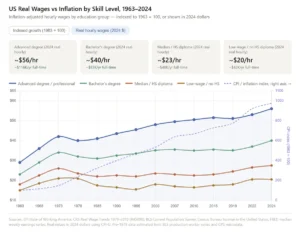
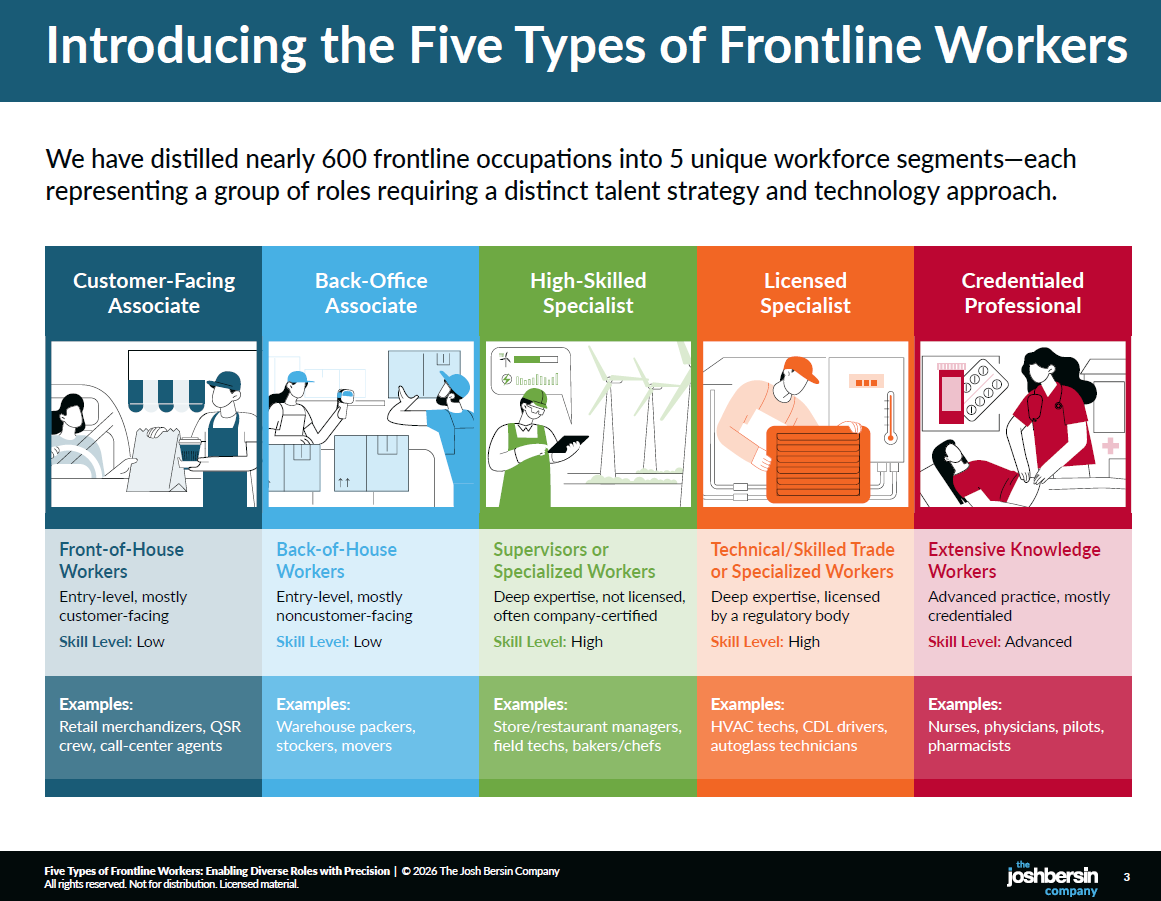
Frontline workers, comprising over 70% of the total workforce, are the backbone of industries ranging from hospitality and retail to transportation and services. These roles, often characterized by minimal pre-requisite skill requirements, create a highly competitive labor market where hourly wages are a primary driver of employee mobility. This dynamic sees a significant portion of frontline staff frequently moving between employers, driven by the pursuit of even marginal increases in pay.
The core of this phenomenon lies in the ease of entry and the abundance of similar opportunities. A typical restaurant, retail, or service position, as well as many transportation roles, requires little specialized training. Consequently, applicants often apply to numerous openings simultaneously. In this environment, the speed of an employer’s response becomes critical, but ultimately, the deciding factor for an applicant is often the hourly wage offered. Employers, in turn, face the challenge of sifting through hundreds of applications, conducting timely interviews, and completing background checks to secure candidates before they accept positions elsewhere. The consequence of delays can be significant: a candidate might accept a job on a Friday, only to not appear for their Monday start because they secured a role offering a higher wage, sometimes as much as $5 more per hour, with a competitor.
This cycle of recruitment and attrition is further amplified by the proliferation of automated job application platforms and "apply-bots." Websites such as jobhire.ai, jackandjill.ai, aiapply.co, and applyblast.com, among many others, enable workers to apply for multiple positions rapidly. When one of these automated systems identifies an opportunity with a significantly higher pay rate—potentially $10 or more per hour—the worker is incentivized to switch. While other factors like the nature of the work, company brand, work hours, and working conditions are important, compensation remains a fundamental need and a significant lever in retaining frontline talent.

A pivotal development influencing this dynamic is the evolving treatment of tips, particularly in light of recent IRS regulations. Companies can broadly be categorized into those that actively collect and manage tips, and those that do not. For businesses that facilitate tip collection, whether through cash or digital means, tips are typically treated as an employee liability rather than direct company revenue or expense. This accounting treatment means tips do not directly impact a company’s profit, revenue, or capital requirements, effectively making them a "free" mechanism for enhancing employee compensation. Historically, this has been seen as an incentive for employees to provide superior service.
The distinction between "tipping" companies (e.g., Starbucks, Uber) and "non-tipping" companies (e.g., Target, Walmart, Costco, FedEx) has become more pronounced. Tipping companies now possess a distinct advantage: the ability to offer higher effective compensation to their employees at a lower direct cost to the business. The magnitude of this advantage has been significantly amplified by recent federal tax policies.
The IRS Tip Credit and Its Financial Impact
A significant shift occurred with the implementation of new IRS rules pertaining to tips, often referred to as the "no tax on tip" provision. According to IRS data, in the first half of 2026, this provision led to 3.5 million tax filings with an average tax refund or reduction of $1,300 per individual. This translates to a substantial federal subsidy totaling approximately $4.5 billion during that initial period. While presented as a benefit to employees, the allocation and ultimate impact of this subsidy on both workers and employers warrant careful examination.
Analysis of the IRS data suggests that approximately 2.1% of all U.S. workers filed under this provision. If the average tax reduction was indeed $1,300, and assuming an average federal tax rate of 8-10% for hourly workers (considering that many low-wage earners pay little to no federal tax), this implies that these tipped workers received between $13,000 and $16,000 in tips annually. While these figures are substantial and raise questions about potential IRS data inflation, they offer a compelling perspective on the financial implications of the tip credit.
When considering the average annual hours worked by hourly employees, typically between 1,700 and 2,000 hours, this annual tip income translates to an additional $6 to $10 per hour in earnings. When the $1,300 tax refund is factored in, the effective tip income per hour for these workers can range from $7 to $11. This additional income represents a significant boost, potentially increasing the effective hourly earnings of tipped workers by nearly a third or more compared to their base wage.
The Growing Wage Disparity: Tipped vs. Non-Tipped Employers
This IRS-driven financial advantage creates a substantial disparity in the labor costs for different types of companies. For instance, if the average hourly wage for a frontline role is $20, and tipped workers effectively earn an additional $7 to $11 per hour, their total effective compensation can reach $27 to $31 per hour. In contrast, non-tipped employers must cover their entire compensation package through direct wages.
Consider the following hypothetical breakdown for a standard 40-hour work week:
- Non-Tipped Employer: An employee earning $20 per hour would receive $800 weekly.
- Tipped Employer: An employee earning a base wage of $20 per hour, plus an effective $9 per hour in tips (mid-range of $7-$11), would have an effective weekly compensation of $1,160 ($20 base + $9 tips = $29/hour * 40 hours).
This difference highlights how companies that can leverage tips can effectively secure their workforce at a significantly lower direct expense. While the exact figures vary by industry, location, and specific job roles, the analysis suggests that "tipping" companies can achieve a workforce cost that is approximately 35% lower than their "non-tipping" counterparts when considering the full financial picture. This disparity has profound implications for competition and hiring strategies across various sectors.

Implications and Emerging Trends
The implications of this shift in the labor market are multifaceted and extend beyond immediate compensation concerns.
Employer Advantage and Cost Management
One of the most immediate implications is the strategic advantage it grants to employers who collect tips. Companies that do not benefit from tip income are compelled to offer higher base wages to attract and retain frontline staff. Conversely, businesses that can facilitate tip collection can potentially pay less in direct wages while still offering competitive overall compensation. This suggests that the federal subsidy, intended as a benefit to workers, could disproportionately bolster the profitability of "tipping" companies by allowing them to reduce their direct labor expenses. It raises the question of whether the intended outcome of higher overall worker earnings is being fully realized, or if the benefit is being captured primarily by employers to offset their own costs.
The Expanding Reach of Tipping Culture
The trend of increased tipping is evident across various consumer touchpoints. Mobile applications, point-of-sale systems, and even self-checkout kiosks are increasingly prompting customers for tips. Services like Uber and DoorDash have notably removed the option to bypass tipping prompts, a change that drivers report coincides with a decline in their base pay. This pervasive tipping culture, while intended to supplement worker income, is also raising concerns among consumers. Data indicates a growing sentiment that tipping is becoming excessive, with a significant portion of Americans perceiving current tipping practices as out of control. This consumer sentiment could eventually lead to pushback or a reevaluation of tipping norms.
Income Inequality and Government Subsidies
The allocation of approximately $4.5 billion in government subsidies through the tip credit raises questions about equity and the most effective use of public funds. While the political intent was to support hourly workers, the potential for this subsidy to primarily benefit employers who can reduce their direct wage costs is a significant concern. The debate continues on whether this mechanism is the most equitable way to support frontline workers and whether it inadvertently exacerbates income inequality by favoring certain business models over others.
Societal Shift Towards a "Work for Hire" Model
The increasing reliance on tips signifies a broader societal shift towards a "work for hire" employment model. This trend, as detailed in broader analyses of the worker-employer relationship, can further decouple the traditional bond between employee and employer. While tips can incentivize customer focus, the employer’s role in providing a stable wage and benefits is subtly diminished. This evolving dynamic introduces uncertainty regarding the long-term stability and comprehensive support for frontline workers.
Distribution and Fairness of Tips
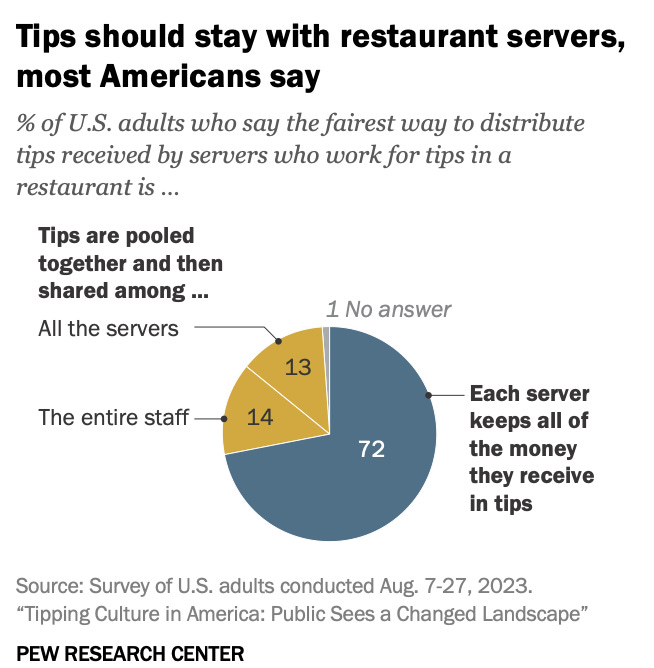
A persistent issue surrounding tips is their fair distribution. While digital collection methods have improved transparency, concerns remain about whether tips are equitably distributed among all staff who contribute to the customer experience, or if they are primarily pooled and allocated to specific roles, often leaving behind essential support staff. Consumers generally prefer their tips to directly benefit the individuals who provided their service, rather than being distributed through a company-controlled pool.
Future Outlook
The current landscape indicates that tipping is likely to continue its expansion, with tip prompts becoming a commonplace feature across an ever-wider array of services and transactions. The long-term societal and economic impacts of this evolving compensation model, fueled by government policy and technological advancements, remain subjects of ongoing analysis and debate. As the frontline labor market continues to adapt, the interplay between wages, tips, and regulatory frameworks will undoubtedly shape the future of employment for millions of American workers. The challenge lies in ensuring that policies designed to support workers truly achieve that goal without creating unintended consequences that favor employers or exacerbate existing economic disparities.