
The global business community is abuzz with discussions centered on reskilling, upskilling, and the accelerated adoption of artificial intelligence. This pervasive theme was starkly evident during recent high-level engagements, including meetings with over 200 Chief Human Resource Officers (CHROs) in India and Singapore. The unequivocal top priority for these leaders was "AI readiness" – a critical challenge focused on how organizations can rapidly enhance AI fluency and capabilities across all operational facets. This pressing need underscores a fundamental shift in how businesses must approach talent development in the digital age.
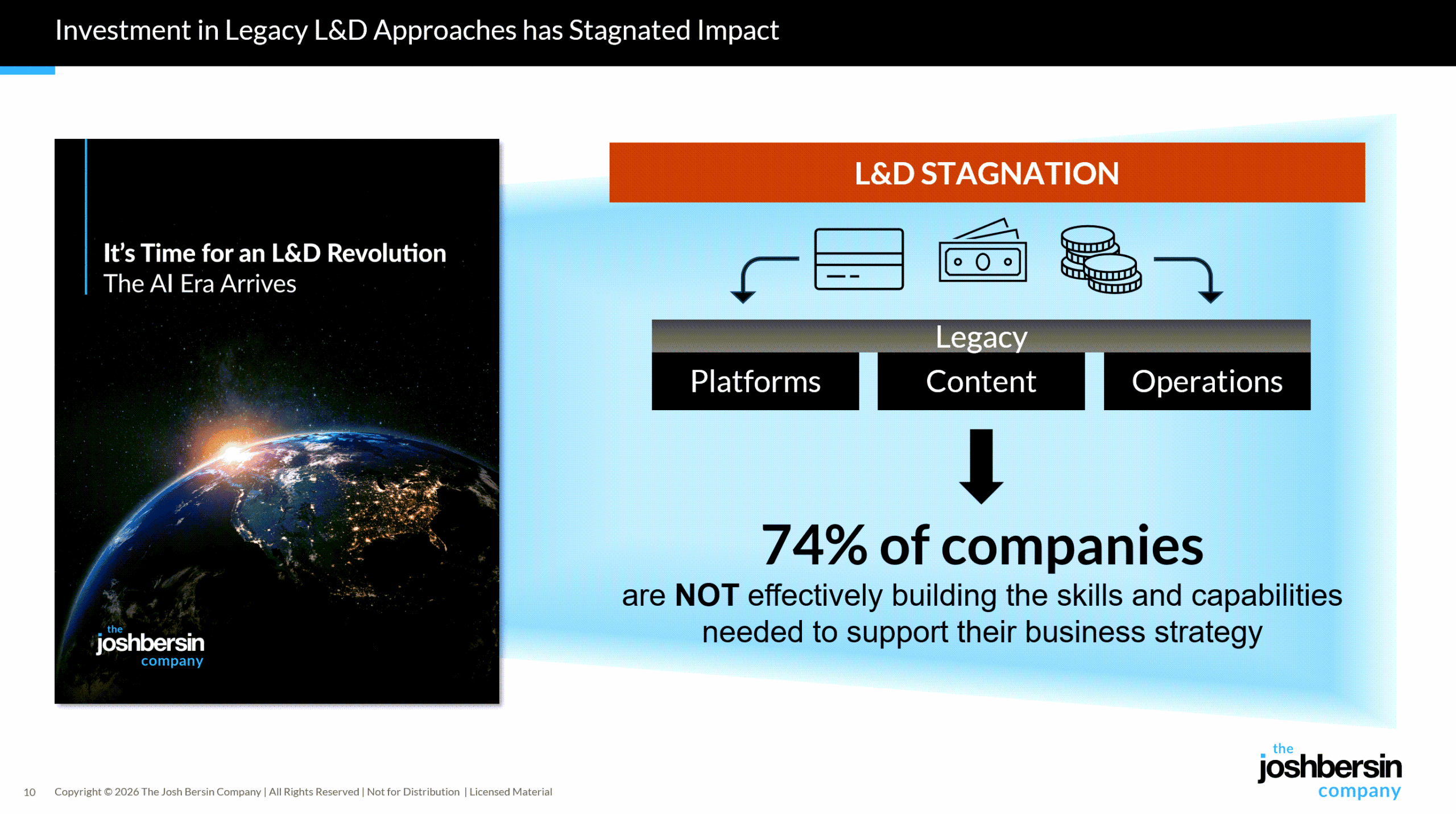
The conventional wisdom and established methodologies surrounding corporate learning and development (L&D) appear to be falling short of meeting these escalating demands. A comprehensive, multi-year study of corporate training, encompassing philosophies, technological stacks, and operational models, has revealed a startling reality: the current approaches are largely outdated. This conclusion is substantiated by the findings of the fifth major study on corporate L&D, which indicates that a significant 74% of companies report they are struggling to keep pace with their organization’s evolving skill requirements. This statistic is particularly concerning given the substantial global investment in corporate training, estimated at $400 billion annually, encompassing content libraries, L&D technology, trainers, and consultants. The fact that three-quarters of these efforts are failing to meet demand suggests billions of dollars in potentially wasted resources.

The Limitations of Traditional Learning Paradigms
The core of the issue, as identified by researchers and industry analysts, lies not in a lack of investment but in a misdefinition of the problem itself. The current skills challenge is less about "learning" or "training" in a traditional sense and more about dynamically sharing information, fostering exploration, encouraging questioning, and enabling the practical application of new ideas. The long-standing pedagogical paradigm of "training," characterized by structured courses and predetermined content, is proving to be a significant impediment to agility and responsiveness in the face of rapid technological advancement.
This stagnation is further highlighted by extensive research that has tracked the evolution of corporate learning. The hypothesis that Artificial Intelligence (AI) is poised to fundamentally reinvent how organizations facilitate learning has been rigorously tested. As the latest comprehensive study is released, there is growing consensus that this prediction is not only accurate but already in motion. AI-native systems, capable of dynamically generating and sharing content, are emerging as a transformative force, poised to redefine the very nature of how employees are trained, upskilled, supported, and ultimately "enabled."
The Dawn of AI-Native Learning
AI-native learning represents a paradigm shift, leveraging generative AI’s inherent ability to create content dynamically. Unlike traditional methods that involve manual design, development, and updating of static courseware, AI platforms can construct content on demand, adapting to diverse formats and user needs. This approach drastically reduces the time required for content creation, enabling new courses to be built in days rather than months. Crucially, when new information or topics emerge, the entire system can be updated instantaneously, ensuring employees have access to the most current knowledge.

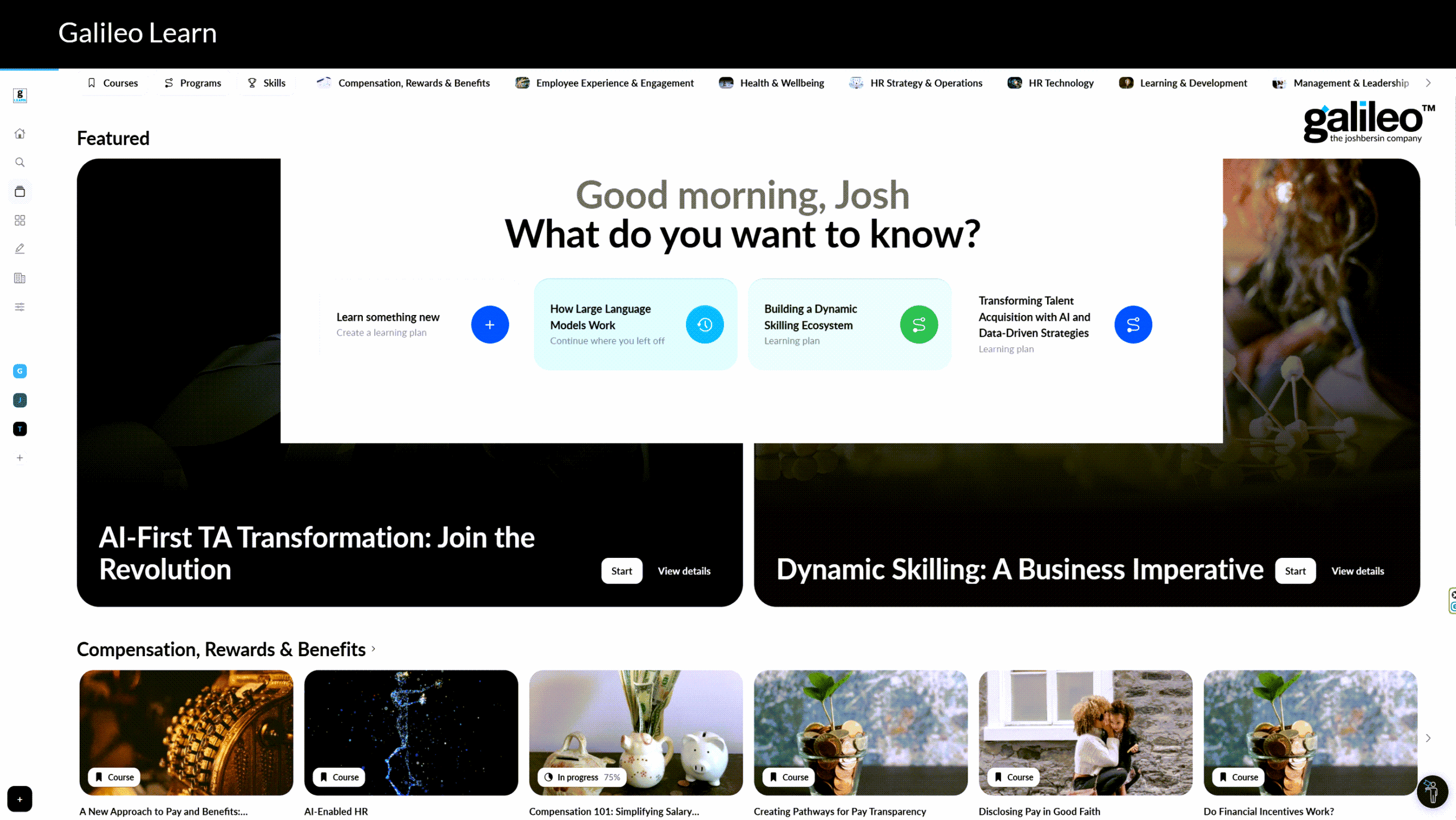
This dynamic content generation fosters a more engaging and effective learning experience. Employees can explore, question, and apply new ideas with unprecedented ease. The system automatically categorizes content into defined "skills" based on a pre-established taxonomy. As employees interact with the platform, their skill levels are inferred from their activities, providing personalized learning pathways. Furthermore, the interconnected nature of content within these systems means that users do not need to locate specific courses to find answers. Instead, new information automatically updates the entire knowledge base, functioning as a cohesive "intelligence system" for the organization.
The widespread adoption and success of platforms like ChatGPT, with a significant portion of its user base reportedly engaged in learning activities, illustrates the efficacy of this new paradigm. The sheer scale of engagement with such tools far surpasses the reach of traditional course catalogs, demonstrating a fundamental shift in how individuals seek and acquire knowledge. This approach also extends to incorporating expert interviews and recordings directly into the learning ecosystem, ensuring continuous updates with new insights and practical findings. The implications of this AI-driven transformation are profound, with the potential to unlock trillions of dollars in business improvement.
A New Framework: The Learning Maturity Model
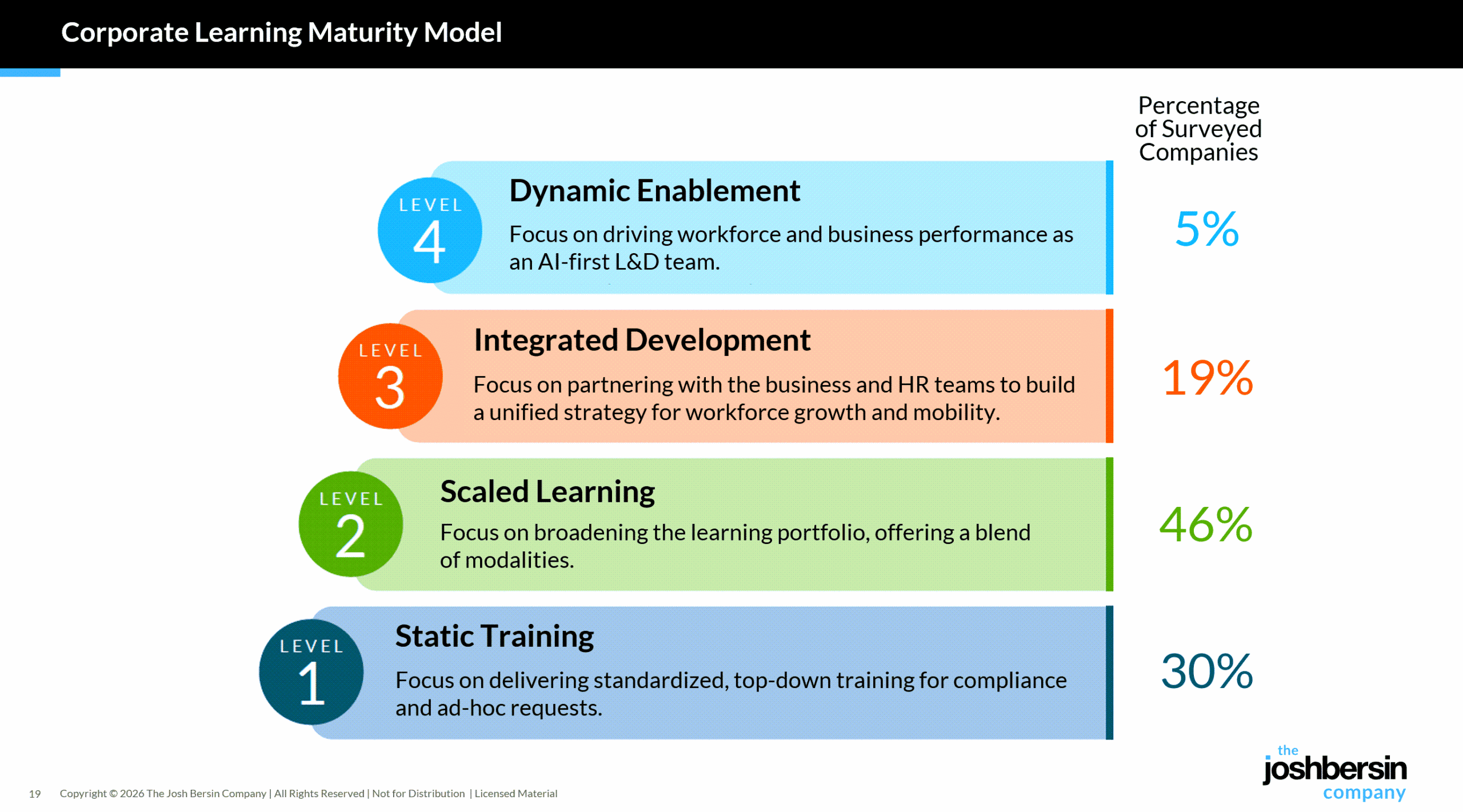
To navigate this evolving landscape, a new framework for understanding organizational maturity in learning and development has been developed. This model outlines four distinct levels, charting the progression from traditional training to the transformative potential of AI-native learning.
Level 1: Static Training Programs
At the foundational stage, companies typically implement "static training" programs. These involve the creation or procurement of courses designed for compliance-based learning or top-down, mandatory completion. This segment represents nearly a third of the market, with a focus on compliance, new product launches, or other episodic learning needs. While cost-effective to develop or acquire, these programs offer limited scope for skills-based learning and primarily aim to keep employees informed about new developments.
Level 2: Scaled Learning
As organizations mature, approximately 46% of them expand their offerings to include "scaled learning." This involves incorporating a wider variety of formats, such as videos, audio materials, and job aids, to create a more diverse learning portfolio. These initiatives often rely on content from external vendors and aim to provide employees with more choices. However, the onus remains on the individual learner to identify and select the most relevant content for their needs. Major providers like LinkedIn Learning, Coursera, Skillsoft, and Pluralsight largely operate within this category.
Level 3: Integrated Development
The next stage, "integrated development," sees companies begin to tailor learning programs around specific job roles, skills, and career paths. This involves building comprehensive "development programs" rather than simply isolated training modules. This level introduces significant complexity, requiring the management of multi-dimensional skill sets, professional competencies, job roles, and hierarchical levels.
The challenge at Level 3 is the dynamic nature of the professional landscape. With studies indicating that up to 70% of job-related skills become outdated annually, maintaining these tailored programs becomes an arduous task. Nevertheless, this approach remains valuable for specialized training, such as channel enablement, technical certifications, and onboarding for new employees. However, the expansion of these programs often leads to a substantial increase in the size and cost of L&D departments, necessitating the creation, maintenance, and regular refreshing of numerous programs, curricula, and content assets. This decentralization, where a significant portion of training occurs within functional domains like sales or manufacturing, creates a complex operating model.
Level 4: AI-Native Transformation
The apex of this maturity model is "AI transforms everything," marking the advent of AI-native learning and a new domain termed "Dynamic Enablement." This level envisions a unified platform that houses all organizational knowledge, encompassing not only formal courses but also documents, policies, and expert interviews. In this paradigm, L&D can publish information in days, and employees can access learning in their preferred manner.
AI-native platforms are poised to replace traditional Learning Management Systems (LMS) for compliance programs and Learning Experience Platforms (LXPs), as well as most content development tools. Early adopters are reporting significant reductions in internal L&D spend, often in the range of 40-50%. This transformation allows learning to be seamlessly embedded into everyday workflows, integrated into corporate chatbots and agents. For instance, an employee filling out benefits forms could ask for comparative information, or a salesperson entering a new opportunity into a CRM could receive coaching on industry-specific strategies. Similarly, frontline workers can query their systems for updates on departmental processes or best practices.
This "Dynamic Enablement" signifies a move beyond mere "learning" to empowering individuals to perform at higher levels and drive business growth. The benefits are manifold, including substantial savings in time and resources for delivering learning solutions, and a vastly improved employee experience. The integration of AI-native learning into existing business processes promises to revolutionize how organizations foster innovation, execute strategies, and adapt to change.
Proven Returns and the Path Forward
The quantifiable returns on investment for Level 4 organizations are compelling. These companies are demonstrably more likely to be innovation leaders, exceed financial targets, and exhibit superior adaptability to change. The transition from formal training to dynamic enablement is directly correlated with increased speed and innovation.
For companies looking to embark on this journey, the shift to AI-native learning is not simply about accelerating course creation. It necessitates a fundamental replacement of traditional SCORM-based LMS platforms with dynamic content systems. The roadmap involves rationalizing existing content, transforming legacy SCORM courses into AI-native formats, and establishing new governance models for L&D.
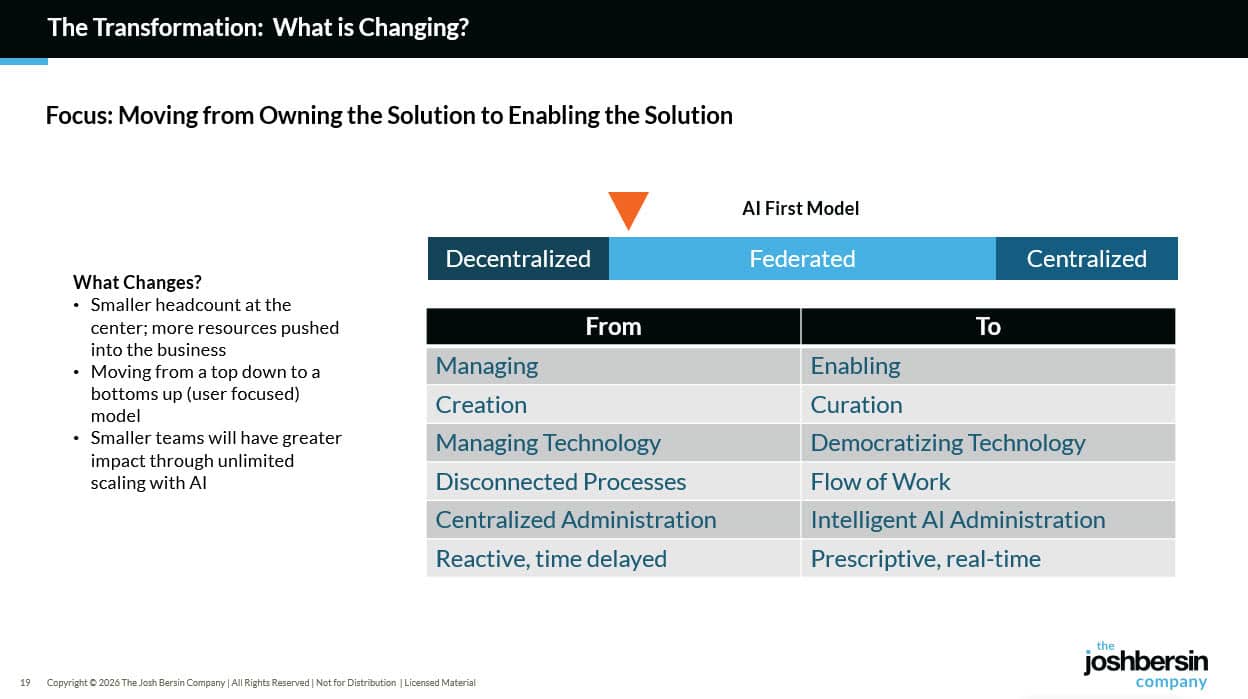
A hybrid or distributed operating model emerges as a key strategy, enabling agility. Corporate HR can then concentrate on global initiatives like leadership development, compliance, culture, and business strategy, while individual business units can establish dedicated "Enablement Academies" for specific domains such as sales or manufacturing. This distributed approach empowers local staff to manage domain-specific training once the core system is established, creating a more responsive and scalable learning ecosystem.
The implications of this transition are far-reaching. Organizations that embrace AI-native learning are positioning themselves for significant competitive advantages, driven by a workforce that is continuously equipped with the skills and knowledge needed to thrive in a rapidly evolving global economy. This evolution in corporate learning is not merely an enhancement; it is a fundamental restructuring of how businesses empower their most valuable asset: their people.