
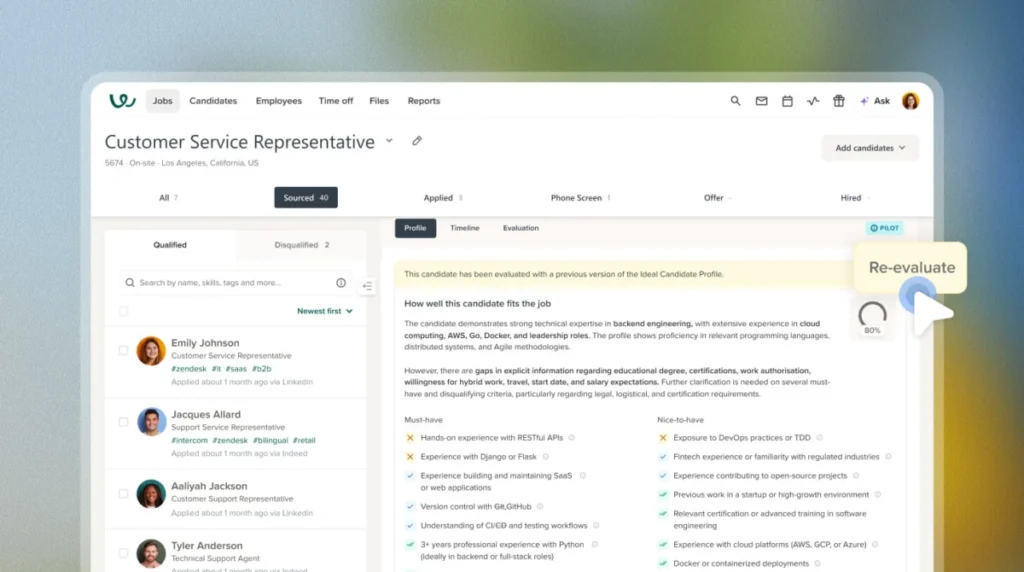
This significant update to Workable’s AI-powered hiring agent addresses a critical pain point in modern recruitment: the inherent fluidity of job requirements. In today’s rapidly evolving professional landscape, the initial specifications for an open role rarely remain static throughout the entire hiring cycle. What begins as a search for a candidate with five years of experience might, through deeper internal discussions or shifts in market demand, become a role better suited for someone with three years and specific project experience. A skill initially deemed "must-have" could later be reclassified as "nice-to-have" or even "trainable," particularly as teams gain new insights into project scope or discover internal capabilities. Historically, when such adjustments occurred, recruiting teams using AI tools faced limitations, often finding themselves with a candidate pipeline generated against an outdated Ideal Candidate Profile (ICP). This discrepancy necessitated extensive manual review, effectively undermining the efficiency benefits promised by automation. Workable’s latest enhancement directly tackles this challenge by introducing unprecedented flexibility in ICP management.
The Dynamic Nature of Modern Hiring
The contemporary job market is characterized by its volatility and rapid change, driven by technological advancements, economic shifts, and evolving business strategies. For talent acquisition professionals, this translates into a constant need for adaptability. A job description, once finalized, can quickly become obsolete as new departmental needs emerge, project scopes shift, or budgetary constraints are introduced. For instance, a software development role might initially prioritize expertise in one programming language, only for a new product direction to emerge, making proficiency in another language more crucial. Similarly, a sales position might initially target candidates with extensive enterprise experience, but a pivot to a new market segment could make candidates with strong mid-market growth experience more valuable.
Prior to this update, Workable’s Agent, while powerful in its initial candidate sourcing and screening capabilities, presented a common limitation observed in many AI-driven recruitment platforms. Users could adjust the weighting of existing criteria within the ICP, marking some as "must-have" or "nice-to-have," and setting disqualifiers. However, the core criteria themselves—such as specific skills, experience levels, or educational requirements—remained largely immutable once the initial profile was established. This rigidity meant that if the actual hiring requirements diverged significantly from the initial ICP, the Agent’s subsequent actions—from sourcing new candidates to scoring existing ones and making auto-advance/disqualify decisions—would be based on an increasingly inaccurate benchmark. Recruiters would then be forced to manually override or re-evaluate the Agent’s recommendations, defeating the purpose of an automated system and reintroducing the very inefficiencies AI was designed to eliminate.
Understanding the Workable Agent’s Role
At its core, the Workable Agent is designed to act as an intelligent assistant for hiring teams, leveraging artificial intelligence to streamline and optimize various stages of the recruitment funnel. Upon a job’s creation, the Agent constructs an Ideal Candidate Profile (ICP) based on the job description and recruiter input. This ICP then serves as the blueprint for all subsequent automated actions. The Agent utilizes this profile to proactively source candidates from various platforms, score applicants based on their alignment with the defined criteria, and automate decisions to advance promising candidates or disqualify unsuitable ones. Its primary objective is to free up recruiters from repetitive, time-consuming tasks, allowing them to focus on strategic engagement and candidate relationship building. However, the efficacy of such an agent is directly tied to the accuracy and relevance of its underlying ICP. When the ICP drifts from the real-world needs of the hiring team, the Agent’s utility diminishes, transforming it from an accelerator into a potential source of misalignment and additional manual workload.
The Transformative Changes: A Deep Dive into ICP Editing
The latest update fundamentally alters how hiring teams interact with and manage their Ideal Candidate Profiles within Workable. The system now empowers users with unprecedented control, enabling comprehensive modifications to the ICP at any stage of the hiring process.
Key Enhancements Include:
- Full Editability of Criteria: Beyond merely re-weighting existing criteria, users can now directly edit, add, or remove specific requirements. This means if a team realizes that "three years of experience" is sufficient instead of "five," or that a new software proficiency is now essential, these changes can be implemented directly within the ICP.
- Dynamic Skill and Experience Modification: Recruiters can adjust granular details such as required skill sets, proficiency levels, educational background, or industry experience. This flexibility allows for immediate adaptation to evolving market conditions or internal strategic pivots.
- Seamless Integration with the Job Canvas: The editing process is integrated directly into the existing job interface, making it intuitive and accessible. Users can open the ICP from their job posting and make changes within the familiar canvas used for its initial creation.
- Version Control and Auditability: Crucially, any meaningful change to the ICP—such as altering an experience requirement or adding a new skill—automatically generates a new version of the profile. This meticulous version control ensures a clear, auditable record of what criteria candidates were measured against at different points in the hiring process. This transparency is vital for compliance, internal reporting, and understanding the evolution of a role’s requirements.
How the Re-evaluation Mechanism Works
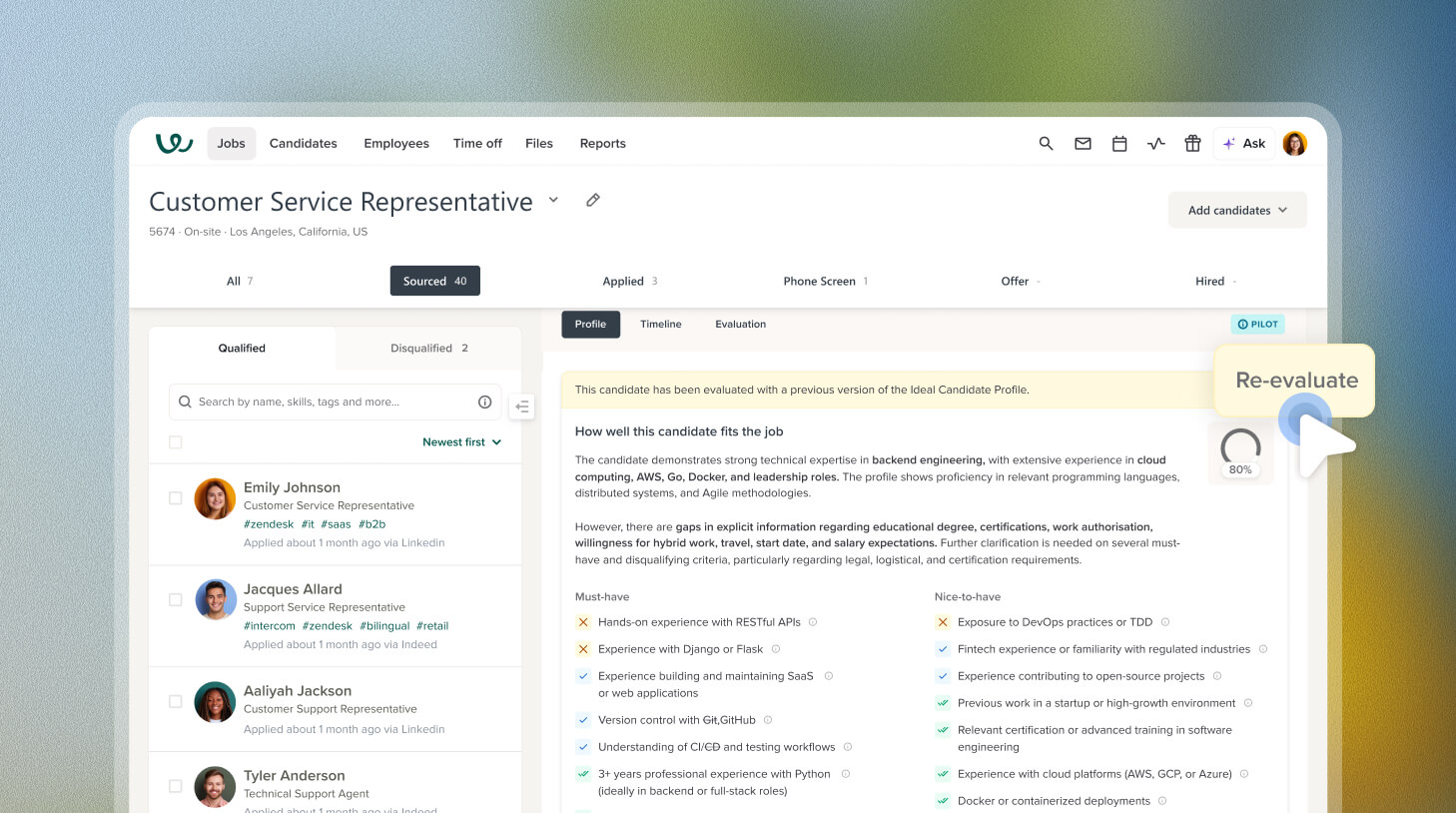
Perhaps the most impactful aspect of this update is the Agent’s ability to retroactively apply the revised ICP to the entire candidate pipeline. This is where Workable truly differentiates itself:
- Comprehensive Re-scoring: Upon saving an edited ICP, the Agent doesn’t just apply the new profile to future candidates. It initiates a comprehensive re-evaluation of every candidate already in the pipeline, including those who have been partially or fully processed. This ensures that all applicants, regardless of when they applied, are assessed against the most current and accurate set of criteria.
- Refreshing Automated Decisions: The re-evaluation extends to automatically refreshing auto-advance and auto-disqualify decisions. If a candidate was previously disqualified based on an outdated criterion that has now been removed or softened, they might be re-evaluated and potentially advanced. Conversely, a candidate who previously met less stringent criteria might now be disqualified if new, more demanding requirements have been introduced.
- Transparency and Notification: During the re-evaluation process, affected candidates are temporarily marked as "under review" within the system. Once the evaluation is complete, the Agent provides a clear, concise comment for each affected candidate, explaining the outcome and the rationale behind any change in their status. This eliminates "silent changes," maintaining transparency and ensuring that recruiters understand why a candidate’s status has shifted. This prevents a "split standard" where older candidates are held to different criteria than newer ones, ensuring fairness and consistency across the entire talent pool.
The Development Journey: A Chronology of Innovation
While the precise internal timeline for Workable’s development of this feature is proprietary, the release reflects a logical progression in AI-driven HR technology, likely driven by extensive user feedback and market analysis. The journey would have likely followed a structured development cycle:
- Phase 1: Identification of User Pain Points (Early 2020s – Ongoing): As AI recruitment tools gained traction, users consistently highlighted the need for greater flexibility in managing dynamic job requirements. The rigidity of initial ICPs became a recurring theme in feedback.
- Phase 2: Conceptualization and Design (Mid-2020s): Workable’s product teams would have begun exploring solutions to this challenge, focusing on how to introduce ICP editability without compromising the Agent’s efficiency or data integrity. Key considerations would have included versioning, the re-evaluation mechanism, and transparent reporting.
- Phase 3: Development and Prototyping (Late 2020s): Engineering teams would have built the core functionality, integrating the editing capabilities into the existing platform architecture and developing the complex algorithms required for mass re-evaluation.
- Phase 4: Internal Testing and Quality Assurance (Late 2020s – Early 2026): Rigorous internal testing would have been conducted to ensure the feature’s stability, accuracy, and performance across various scenarios.
- Phase 5: Beta Testing (Potentially Early-Mid 2026): A select group of Workable clients might have participated in beta testing, providing real-world feedback to refine the user experience and address any unforeseen issues.
- Phase 6: Public Release (August 2026): The feature is rolled out to all Workable Agent users, marking a significant milestone in the platform’s evolution.
This iterative development process underscores Workable’s commitment to responding to evolving user needs and staying at the forefront of HR technology innovation.
Broader Impact and Strategic Implications
The introduction of editable ICPs with full pipeline re-evaluation capabilities carries significant implications for talent acquisition and the broader HR tech landscape:
- Enhanced Hiring Quality: By ensuring that every candidate is evaluated against the most current and accurate job requirements, organizations are far more likely to make hires that truly align with their immediate and evolving needs. This directly translates to improved employee performance, higher retention rates, and a stronger organizational fit. Studies consistently show that misaligned job descriptions are a leading cause of prolonged hiring cycles and suboptimal hires, costing companies an estimated 30% to 150% of an employee’s annual salary for each bad hire. Workable’s update aims to mitigate these substantial costs.
- Optimized Efficiency and Reduced Time-to-Hire: The ability to swiftly adapt the ICP and instantly re-evaluate an entire pipeline drastically reduces the manual effort previously required to recalibrate a search. Recruiters no longer need to manually review candidates against new criteria or start a search from scratch. This accelerates the hiring process, which is crucial in competitive markets where delays can mean losing top talent. Data suggests that companies with optimized recruitment processes can reduce their time-to-hire by up to 50%, a metric directly impacted by the efficiency of tools like the Workable Agent.
- Fairness and Consistency in Evaluation: One of the persistent challenges in large-scale recruitment is maintaining consistent evaluation standards across a diverse candidate pool and over extended hiring periods. The new feature ensures that a candidate who applied on day one is held to the exact same, up-to-date standard as a candidate who applies weeks later. This consistency is vital for mitigating unconscious bias and promoting equitable hiring practices, reinforcing trust in the AI’s judgments.
- Agile Recruitment and Strategic Talent Acquisition: This update empowers HR and hiring managers to adopt a more agile approach to talent acquisition. They can continuously refine their ideal candidate profile based on new market intelligence, feedback from initial interviews, or shifts in project priorities. This proactive adaptation transforms recruitment from a reactive process into a dynamic, strategic function that can quickly pivot to meet business demands. It allows for continuous optimization, moving beyond the static "set it and forget it" model of some older AI systems.
- Strengthening Trust in AI-Driven Hiring: A common barrier to the full adoption of AI in HR has been a lack of trust, often stemming from a perceived loss of control or an inability to easily correct AI outputs. By providing comprehensive control over the ICP and transparent re-evaluation processes, Workable is addressing these concerns head-on. The mantra "AI-driven hiring only works if you trust the decisions, and trust comes from control and consistency" perfectly encapsulates the strategic intent behind this release. It positions the Workable Agent as a tool that augments human judgment rather than replacing it, ensuring that the AI’s decisions are always a reflection of the hiring team’s most current judgment.
- Competitive Advantage in HR Tech: In a crowded HR technology market, features that genuinely solve critical user problems and enhance user control are key differentiators. This update positions Workable as a leader in responsive and adaptable AI-powered recruitment solutions, offering capabilities that many competitors may not yet possess. It signals a move towards more intelligent, self-correcting AI systems in HR, capable of learning and adapting alongside human users.
Conclusion
Workable’s latest enhancement to its AI Agent, allowing for comprehensive editing of the Ideal Candidate Profile and subsequent re-evaluation of the entire candidate pipeline, marks a significant leap forward in recruitment technology. It acknowledges the inherent dynamism of modern hiring, providing a robust solution to the challenge of evolving job requirements. By offering unparalleled control, transparency, and consistency, Workable is not only improving the efficiency and quality of hiring but also fostering greater trust in AI-driven recruitment processes. This development underscores the continuous evolution of talent acquisition tools, moving towards more intelligent, adaptable, and human-centric automation.
The ability to edit the ideal candidate profile is available now for all jobs managed by the Workable Agent. Organizations looking to optimize their hiring process and ensure their talent pipeline remains perfectly aligned with their evolving needs are encouraged to explore this new functionality.
Try a free demo of Workable!






