
The global learning and development (L&D) landscape has reached a critical inflection point where the theoretical promise of Artificial Intelligence (AI) is meeting the hard reality of organizational implementation. According to a comprehensive benchmark report released by eLearning Industry, which surveyed more than 500 practitioners and technology providers, a significant "expectation gap" has emerged between the developers of learning technology and the corporate buyers who utilize them. While both parties agree that AI is a cornerstone of future strategy, they remain sharply divided on priorities, adoption maturity, and the specific features that deliver the most business value.

The State of AI Integration in 2026
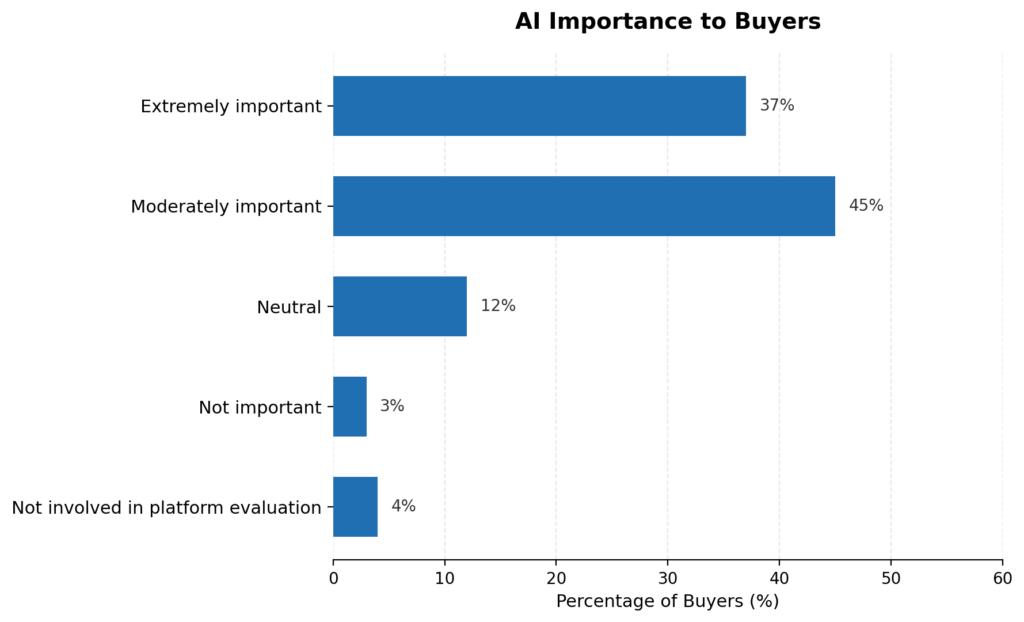
As of mid-2026, AI has transitioned from a speculative "add-on" to a foundational requirement for modern learning management systems (LMS) and learning experience platforms (LXP). The report indicates that 82% of buyers now view AI capabilities as a vital component of their procurement process, with 37% labeling it as "extremely important" and 45% as "moderately important." This leaves a negligible 3% of the market that views AI as irrelevant to their needs.
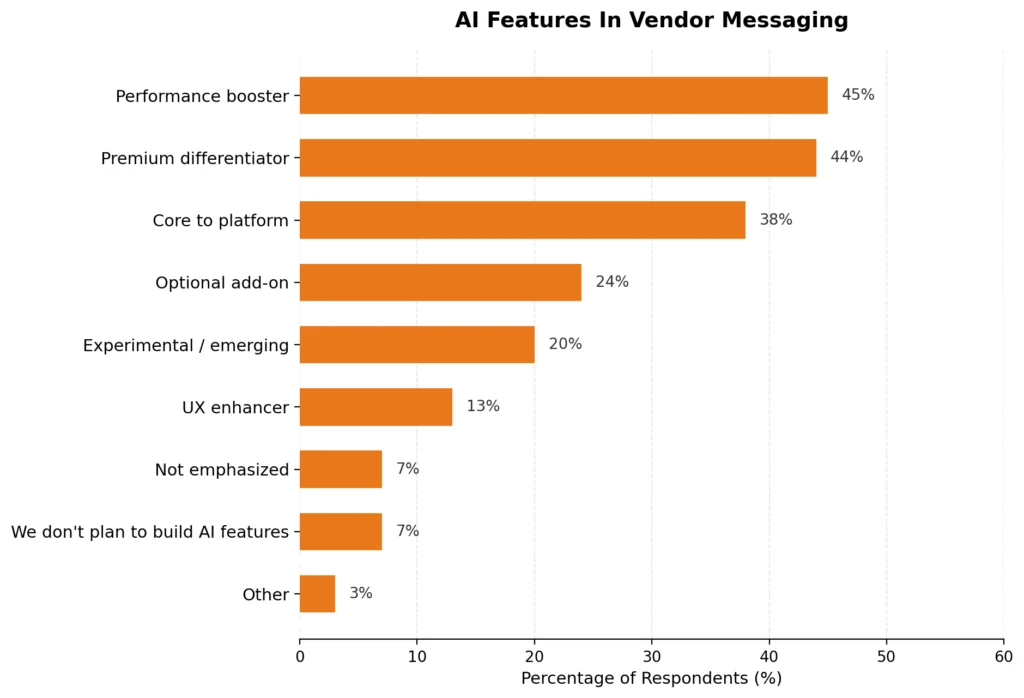
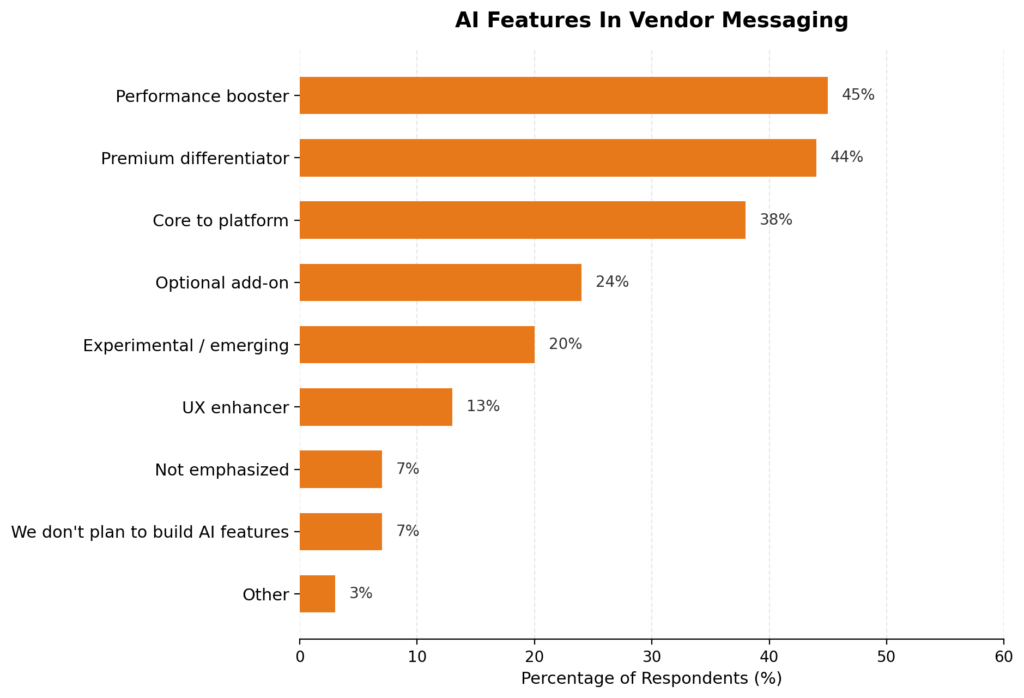
On the supply side, vendors have responded with aggressive marketing and product development. Approximately 93% of learning tech providers now feature AI prominently in their brand messaging. For these vendors, AI is not merely a tool but a strategic positioning mechanism: 45% use it to promise performance boosts, 44% treat it as a premium differentiator to justify higher price points, and 38% have woven it into the core architecture of their platforms.
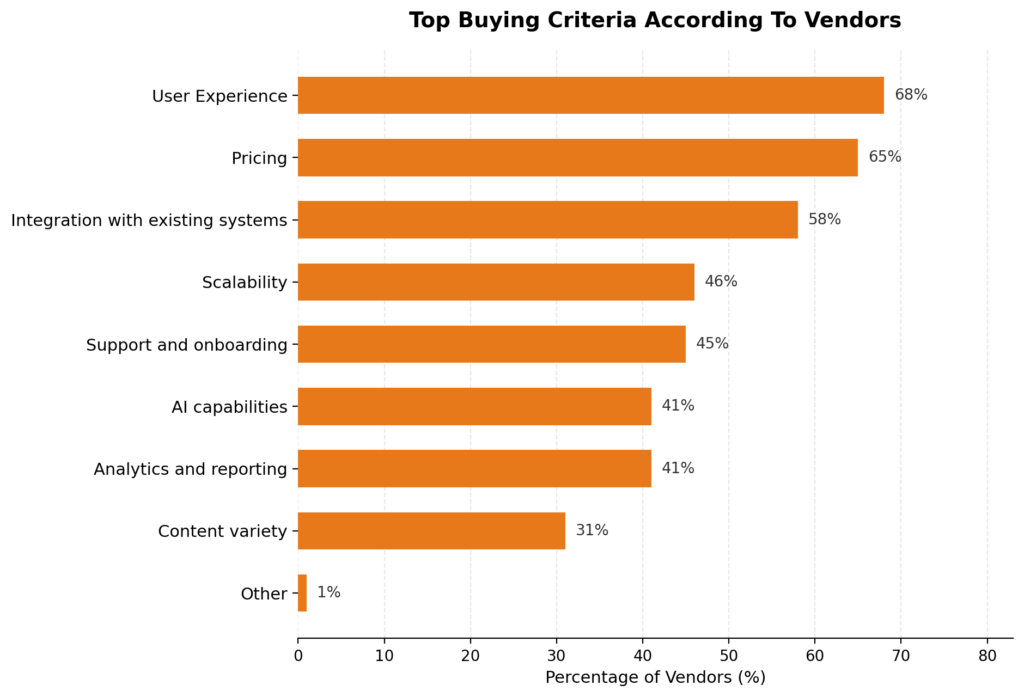
However, the "Market Signal" identified in the research suggests a looming challenge for vendors. While AI is a competitive expectation, buyers are increasingly evaluating it through a holistic lens. They are no longer dazzled by the "AI" label alone; instead, they are scrutinizing how these tools integrate with existing workflows and whether they genuinely improve learner outcomes.
A Chronology of the AI Transition in L&D
To understand the current gap, it is necessary to look at the rapid evolution of the sector over the last three years.
- 2023-2024: The Generative Explosion. Following the public release of advanced large language models, the L&D industry entered a phase of frantic experimentation. Vendors rushed to add basic chatbot functionalities and automated text summaries to their platforms.
- 2024-2025: The Pilot Phase. Organizations began small-scale pilots. During this period, the focus shifted from "what can AI do?" to "how do we secure our data?" This era saw the rise of private AI instances and the first major discussions regarding GDPR compliance in automated learning.
- 2025-2026: The Maturity Gap. Entering the current year, vendors have achieved a high level of technical integration, but buyers have become more cautious. The initial hype has been replaced by a demand for "Practical AI"—tools that solve specific administrative or pedagogical problems rather than just generating content.
The Adoption Chasm: Development vs. Implementation
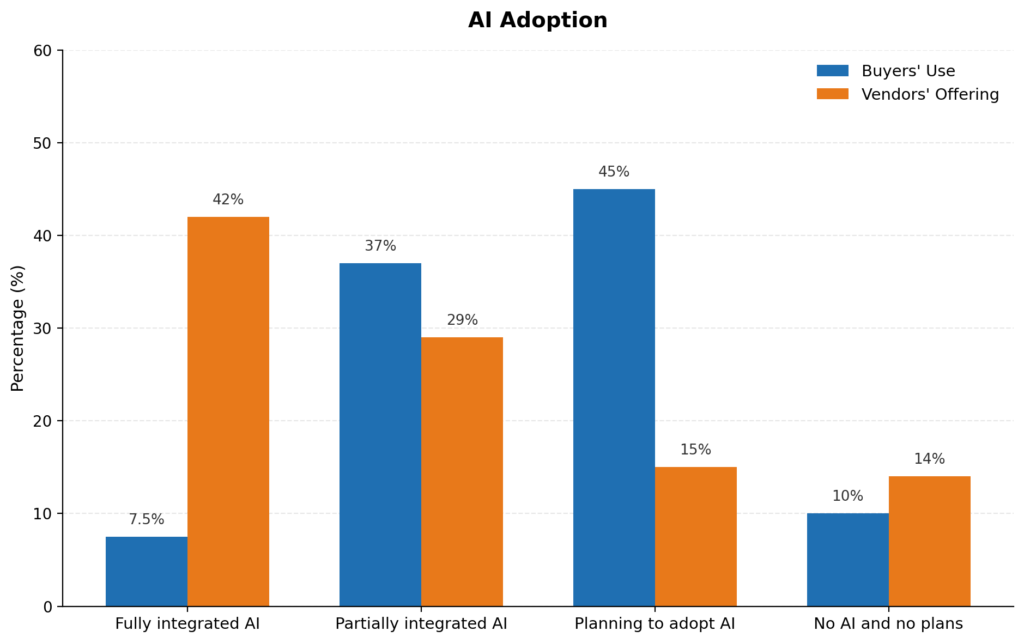
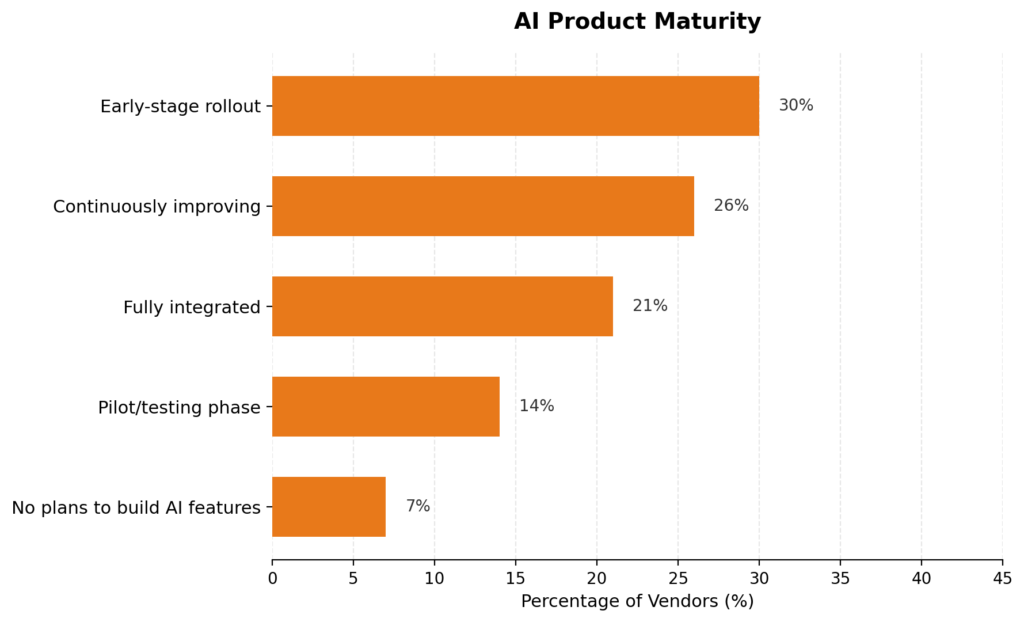
The most striking data point in the 2026 report is the disparity in adoption maturity. While 42% of technology vendors claim to have "fully integrated" AI capabilities within their offerings, only 7.5% of buyers describe their own learning environments as fully AI-integrated.
This 34.5% gap suggests that while the software is ready, the organizations are not. Nearly half of the buyers (45%) report being in the "active planning" phase. This delay is attributed to several factors, including the need for internal upskilling, the revision of corporate data policies, and a general "wait and see" approach to ensure that the AI tools provided by vendors are stable and produce accurate results.
For vendors, this represents a significant business risk. They are building for a future demand that has not yet fully materialized on the balance sheets of their clients. The report suggests that the most successful providers in the coming year will be those who move beyond feature development and provide "bridge services"—education, implementation support, and change management—to help buyers close this adoption gap.
Divergent Priorities: What Buyers Want vs. What Vendors Build
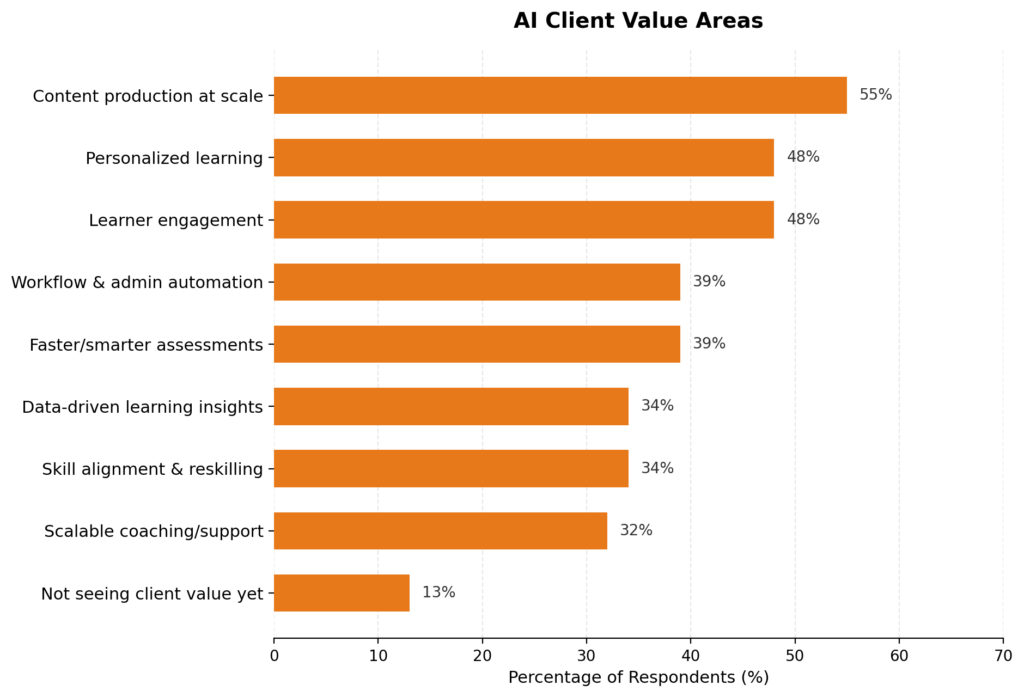
Perhaps the most critical finding for product roadmaps is the misalignment of feature prioritization. When asked which AI applications provide the most value, 65% of buyers identified "personalized learning paths" as their top priority. They seek systems that can analyze a learner’s current skills, identify gaps, and automatically curate a bespoke journey.
In contrast, vendor investment is heavily skewed toward "content generation." Seventy percent of providers are focusing their R&D budgets on tools that can create videos, quizzes, and modules from scratch. While 48% of buyers do see value in content scaling, it ranks significantly lower than personalization.
A similar divergence is seen in the realm of AI coaching and chatbots. Over half of vendors (55%) are betting on these interactive agents, yet only 35% of buyers currently view them as a "most valuable" feature. This suggests that vendors are prioritizing features that are easier to scale and demonstrate, while buyers are looking for deeper, more complex analytical tools that impact the individual learner’s experience.
Organizational and Structural Impacts
AI is not just changing software; it is reshaping the workforce within both vendor and buyer organizations. The report finds that AI has become a catalyst for structural reorganization:
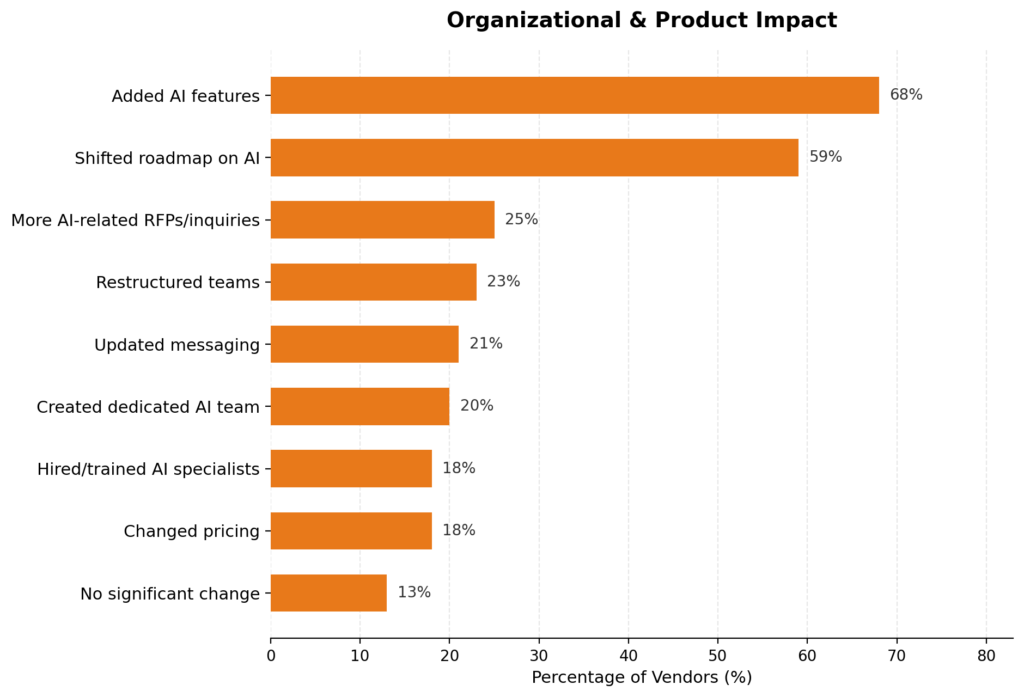
- Vendor Shifts: 68% of vendors have added specific AI features to their roadmap, and 59% have shifted their entire strategic priority toward AI. More importantly, 25% of vendors have undergone internal restructuring, creating dedicated AI divisions or hiring specialist AI ethists and data scientists.
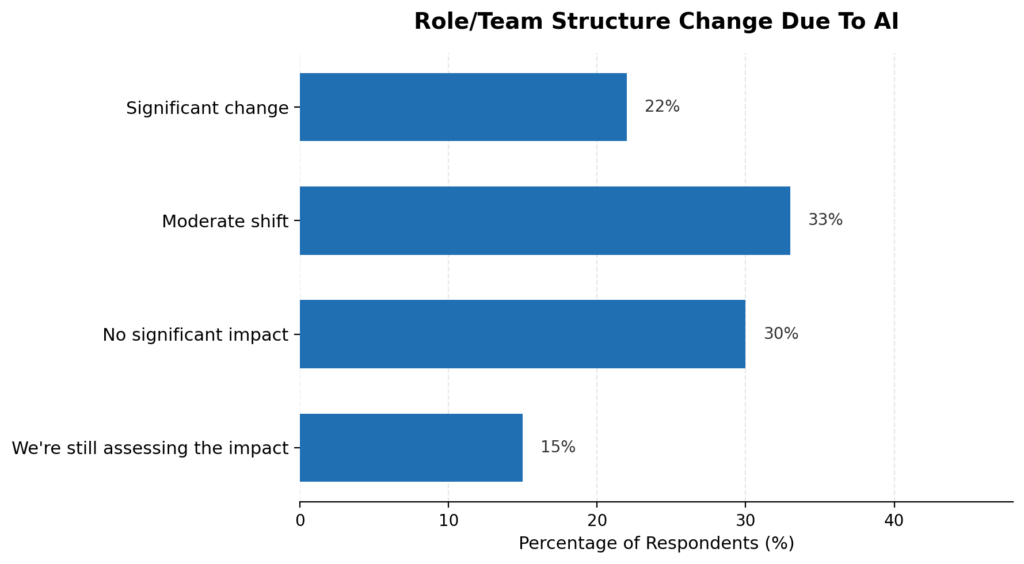
- Buyer Shifts: The impact on the buyer side is equally significant. 22% of L&D leaders report that AI has already caused "significant changes" to their team structures or roles. An additional 33% report moderate changes. This often involves moving away from manual content curation roles toward "AI Prompt Engineers" or "Learning Data Analysts."
These shifts indicate that AI is being treated as a strategic business initiative rather than a simple IT upgrade. The organizations that are seeing the most success are those that treat AI as a "team member" that requires a defined role and oversight.
Barriers to Progress: Execution and Awareness
Despite the momentum, the path to a fully AI-enabled L&D ecosystem is fraught with obstacles. Vendors cite two primary challenges:
- The Innovation Treadmill: 48% of vendors struggle to keep pace with the sheer speed of AI advancement. Features that are cutting-edge in Q1 can become obsolete by Q3.
- Integration Complexity: 45% of providers report that making AI work seamlessly with legacy systems (such as older HRIS or ERP platforms) is a major technical hurdle.
Interestingly, "customer trust" is cited as a major barrier by only 10% of vendors. Instead, they point to a "customer awareness gap" (31%). This implies that buyers are not necessarily afraid of AI; they simply do not yet fully understand how to apply it to their specific workflows. Market education is therefore becoming as important as the code itself.
Governance, Ethics, and the Trust Factor
As AI becomes more pervasive, the conversation is shifting from "functionality" to "governance." Data privacy and GDPR compliance are the top concerns for 59% of buyers and 69% of vendors. This shared concern suggests a maturing market where both sides recognize the legal and reputational risks of mishandling data.
However, a "trust gap" remains regarding ethics and dependency. 54% of buyers express deep concern over AI bias and ethical decision-making, while only 38% of vendors seem to prioritize this in their messaging. Furthermore, 29% of buyers are worried about "vendor lock-in"—becoming so dependent on a single provider’s proprietary AI that they cannot easily switch platforms. Only 7% of vendors acknowledge this as a significant concern for their clients.
To build long-term trust, buyers are demanding more control. The report highlights that 60% of buyers want direct control over AI settings and "human-in-the-loop" overrides. They are not looking for a "black box" that makes decisions autonomously; they want a "glass box" where the logic is transparent and the parameters can be adjusted by L&D professionals.
Implications for the Future of Learning Technology
The findings of the 2026 eLearning Industry report suggest that the "honeymoon phase" of AI in L&D is over. The market is entering a period of "Practical Realism." For vendors, the message is clear: stop focusing solely on content generation and start investing in personalization and transparent governance. For buyers, the challenge lies in moving from the planning phase to active implementation, which will require a significant investment in internal digital literacy.
Ultimately, the winners in the 2026-2027 cycle will not be the companies with the most "innovative" AI, but those who can prove that their AI is reliable, ethical, and directly tied to measurable learner outcomes. The "Expectation Gap" is not just a challenge; it is a roadmap for the next generation of learning technology development. As the industry moves forward, the focus must shift from the technology itself to the human experience it is intended to enhance.






