This week, Cornerstone OnDemand, a titan in the corporate learning technology sector with an estimated annual revenue of $1 billion, has unveiled a significant strategic pivot into the complex and rapidly evolving landscape of artificial intelligence. This move by the company, which is roughly four times the size of Docebo, signals a proactive response to the seismic shifts AI is bringing to the future of work and learning. As the industry prepares for the upcoming HR 2030 report, this reinvention by Cornerstone warrants a detailed examination of its current standing, the disruptive forces at play, and the potential implications for the broader market.
Cornerstone OnDemand: A Legacy of Talent Management
Cornerstone OnDemand has established itself as a dominant force in the human capital management space. With a client roster exceeding 7,000 enterprise customers, including many of the world’s most recognizable brands, the company currently serves approximately 140 million users globally. Its core revenue streams are derived from its robust Learning Management System (LMS) and Learning Experience Platform (LXP) software, complemented by a substantial contribution from its integrated talent management suite.

Founded 27 years ago as an e-learning platform provider, Cornerstone pioneered the concept of the "talent-driven learning platform." Over its history, it has consistently outmaneuvered or acquired competitors, solidifying its position in a market estimated to be worth around $30 billion. While large human capital management players like Workday, Oracle, and SAP also command significant market share, Cornerstone is widely recognized for offering superior functionality across its offerings.
Following its acquisition by private equity in 2021 for $5.5 billion, a valuation representing approximately five times its current revenue, Cornerstone has strategically expanded its portfolio. Notable acquisitions include EdCast for its LXP capabilities, Skyhive for its crucial skills and labor market data, and Tailspin for its virtual reality (VR) learning solutions, alongside several smaller content providers. Despite its profitability, the company’s market valuation has seen more modest growth, partly due to perceived stagnation in the traditional learning market it has historically dominated. Cornerstone has been actively addressing this by enhancing its channel partnerships, promoting integrated solutions, and expanding its feature set. However, the company acknowledges that its brand perception may be perceived as dated by some, leading to increased customer scrutiny during renewal periods. This challenge is not unique to Cornerstone, as many established technology providers face the natural evolution of customer expectations and the allure of newer, more agile solutions.
The AI Disruption: A Paradigm Shift in Learning and Development
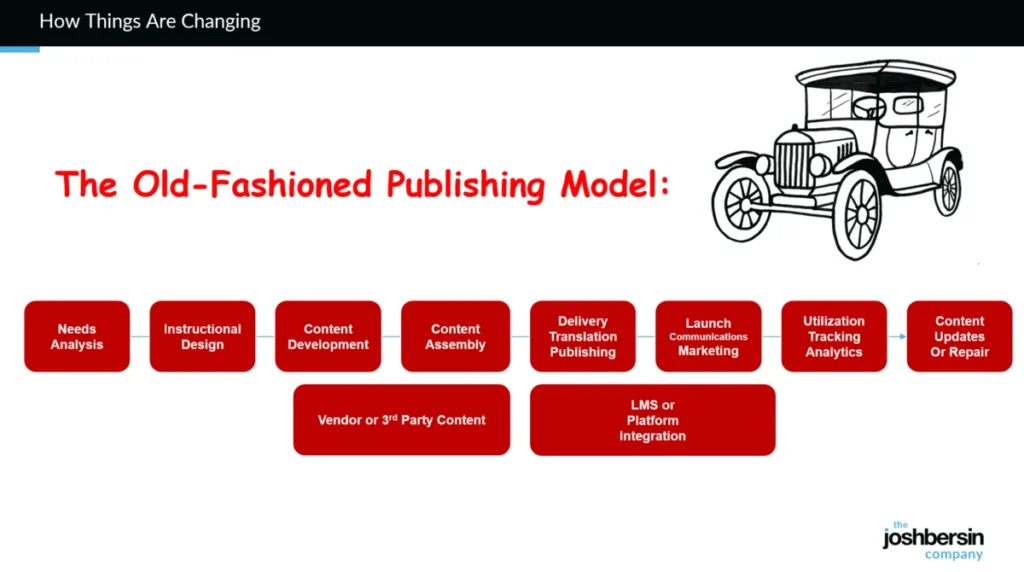
The landscape of corporate learning has been irrevocably altered by the advent of generative AI, epitomized by the widespread adoption of tools like ChatGPT starting in the fall of 2022. The traditional "e-learning" or "published training content" market, a vast segment valued at over $400 billion, is undergoing a rapid and profound reinvention. For decades, the creation of corporate training content followed a laborious and time-consuming process. Instructional designers, graphic artists, and subject matter experts meticulously authored, produced, and licensed content in various formats, including courses, videos, assessments, and simulations. This process, akin to writing and publishing a book, involved extensive design, content sourcing, audience targeting, translation, testing, and finally, publishing into an LMS, often adhering to the 35-year-old SCORM tracking standard.
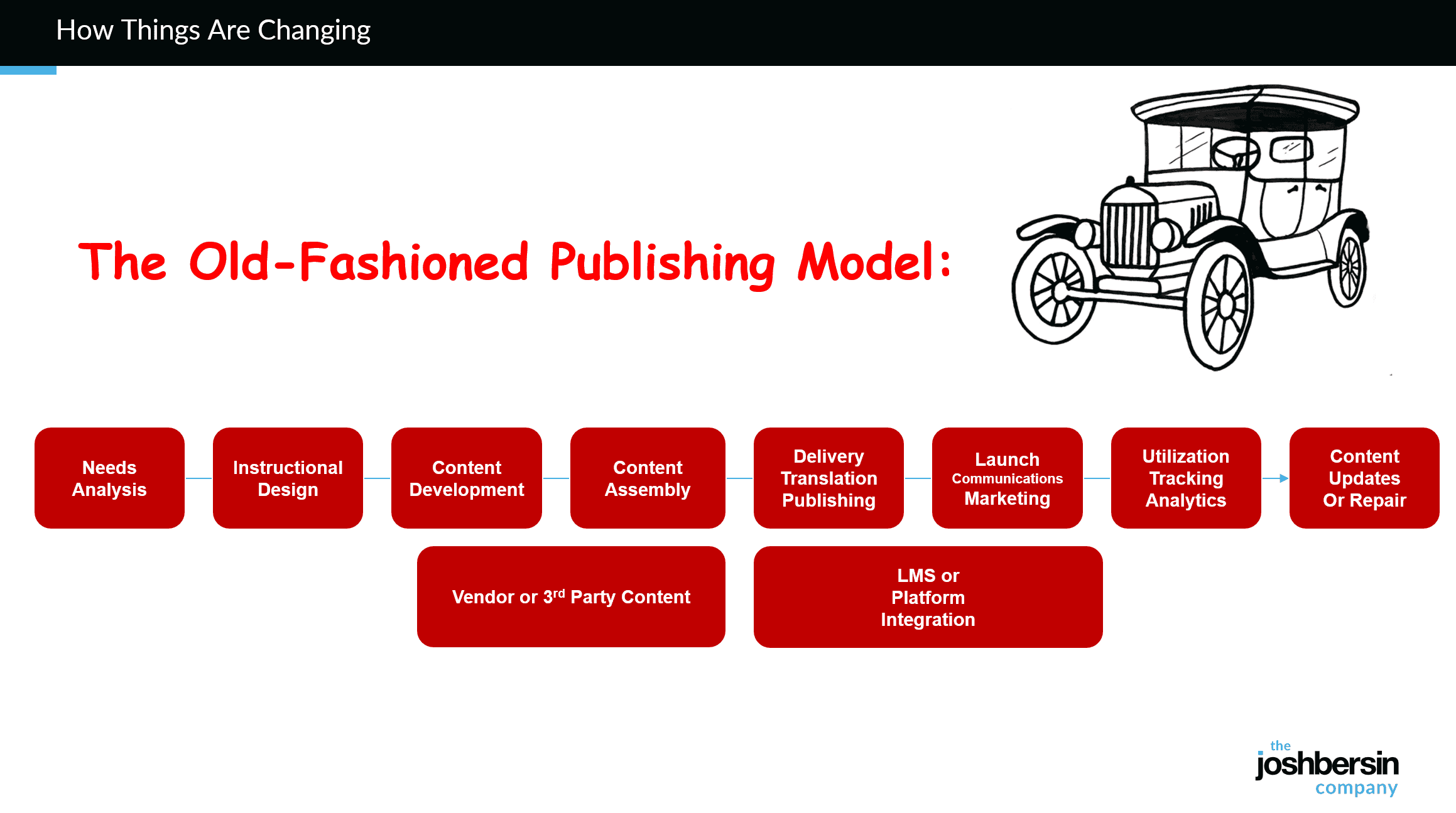
The creation of a single, high-quality course could cost tens of thousands of dollars and months of effort. This inherent inefficiency, coupled with the inherent inflexibility of SCORM-compliant content for rapid updates, has led to a system where L&D departments and content providers are perpetually constrained by time and budget. The return on investment (ROI) for these extensive development efforts has often been a subject of debate and scrutiny. While platforms like YouTube offer readily accessible learning materials, they typically lack the corporate security, tracking, and integration capabilities essential for enterprise use. This created a significant gap, with a substantial market of content ripe for disruption.
AI’s Transformative Impact on Learning Content and Delivery
Artificial intelligence is fundamentally changing the economics and efficacy of learning content creation and delivery. While early AI-generated content may have faced skepticism, the rapid advancements in AI models have demonstrated their ability to produce high-quality, relevant learning materials in a fraction of the time. The creation and refinement of an AI-authored course can now take days or even hours, rather than months. Even if an AI-generated course is initially 70% accurate, the remaining time can be efficiently dedicated to crucial tweaking and customization.
Beyond content generation, AI introduces a more dynamic and interactive learning experience. Instead of passively navigating through chapters, learners can engage with AI-powered content by asking questions directly. This transforms a static course into a responsive, almost "living" expert, capable of providing personalized explanations and guidance. This allows for the creation of custom learning experiences tailored to the specific needs of each employee, a feat largely unattainable with traditional SCORM-based materials.
Furthermore, AI-native learning platforms can interlink all learning resources within an organization. If an employee working in a refinery needs information about handling sulfur dioxide, a highly poisonous substance, they can simply ask the system. The AI can instantly retrieve relevant information from any course or document, eliminating the need to search for a specific "sulfur dioxide safety" course. This shift from traditional "learning" to "enablement" is critical. While employees may engage in formal learning when time permits, the majority of their workday involves immediate problem-solving, requiring rapid access to information, tips, advice, and knowledge. AI-native learning environments are exceptionally well-suited to this need, acting as intelligent assistants.
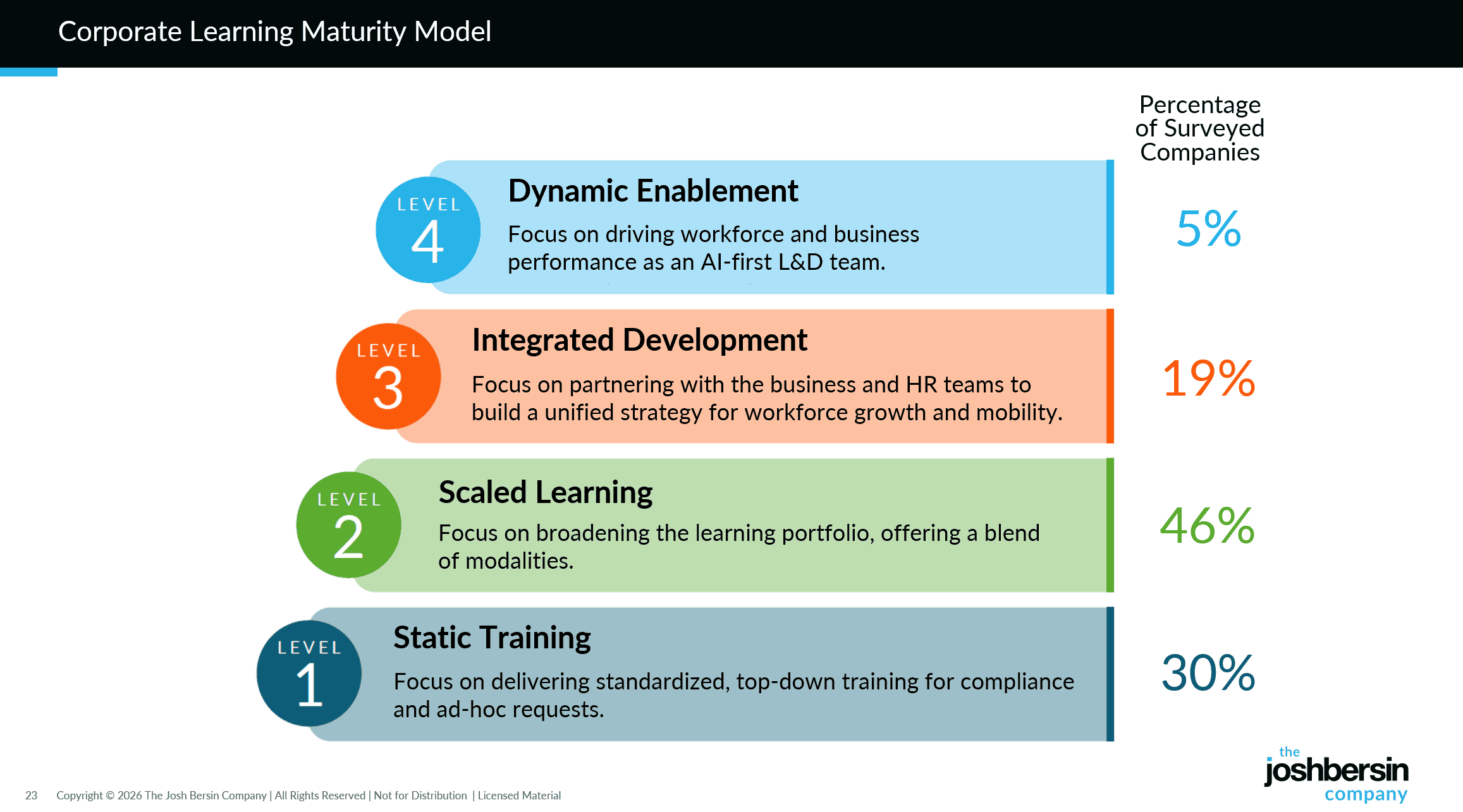
This revolution is not confined to Learning and Development (L&D) departments; it is a broader business revolution. L&D functions are poised to become more streamlined, with many roles shifting from content creation to becoming direct business enablers, focusing on "enablement" operations. For many organizations, the L&D department’s role may evolve beyond HR compliance and into a core driver of business performance, directly supporting strategic objectives. Research, such as the "Learning Maturity Model" based on surveys of over 700 companies, indicates that organizations operating at higher maturity levels are significantly more innovative and responsive in their skills development, earning high marks from the business for their agility and impact.
Cornerstone’s Strategic Response: Workforce AI
In this rapidly transforming market, new players like Sana, Docebo, Absorb, Uplimit, Arist, and others are already offering AI-native learning solutions. Major AI players like OpenAI are also beginning to integrate content from established platforms, signaling a broad industry embrace of AI-driven learning. The future points towards a scenario where every employee has access to a personalized AI agent, akin to Microsoft Copilot, that understands their role, communications, documents, and daily work. This agent can meticulously track an individual’s skills, experiences, strengths, and weaknesses, further enhanced by peer feedback and performance data.
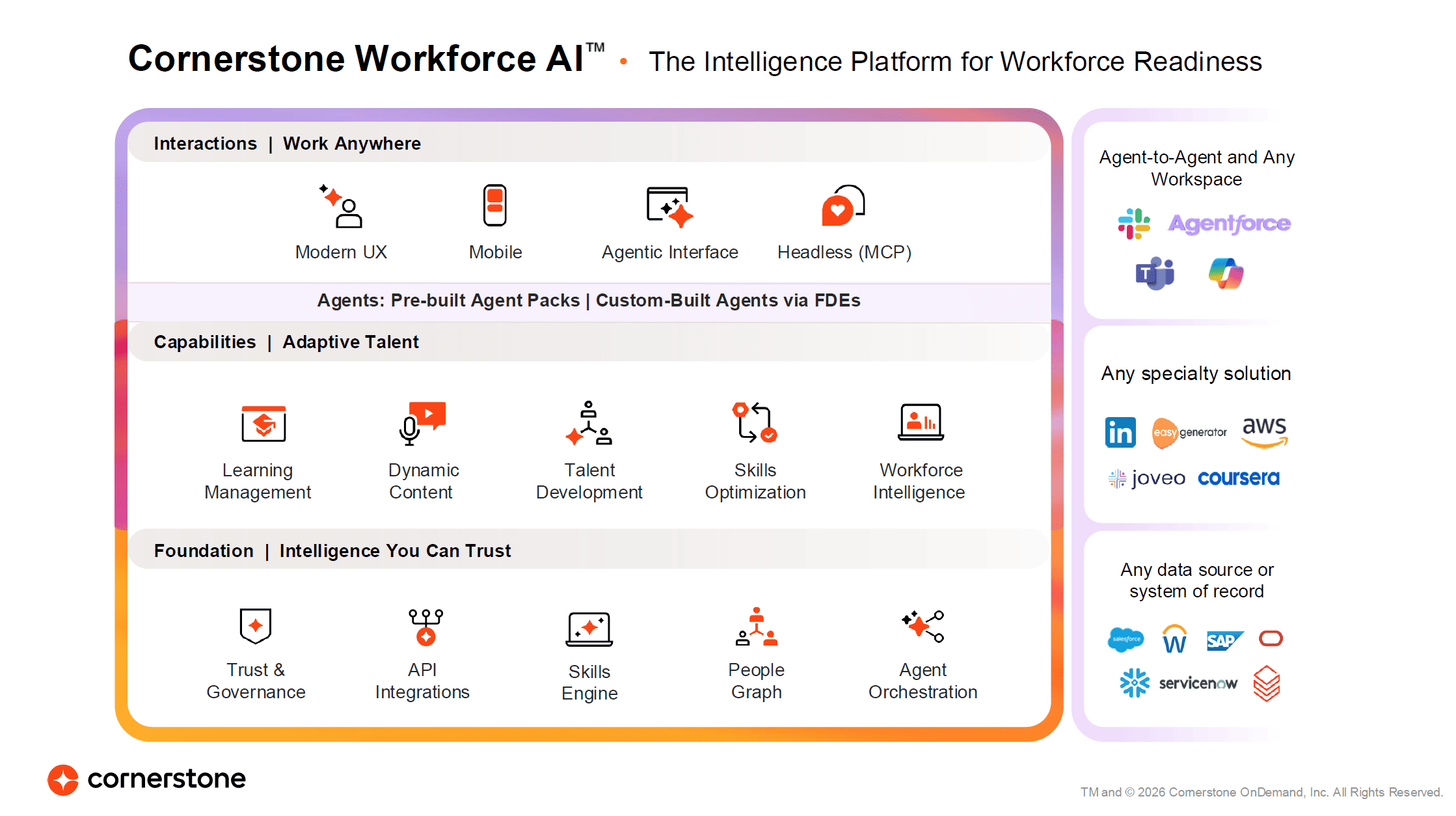
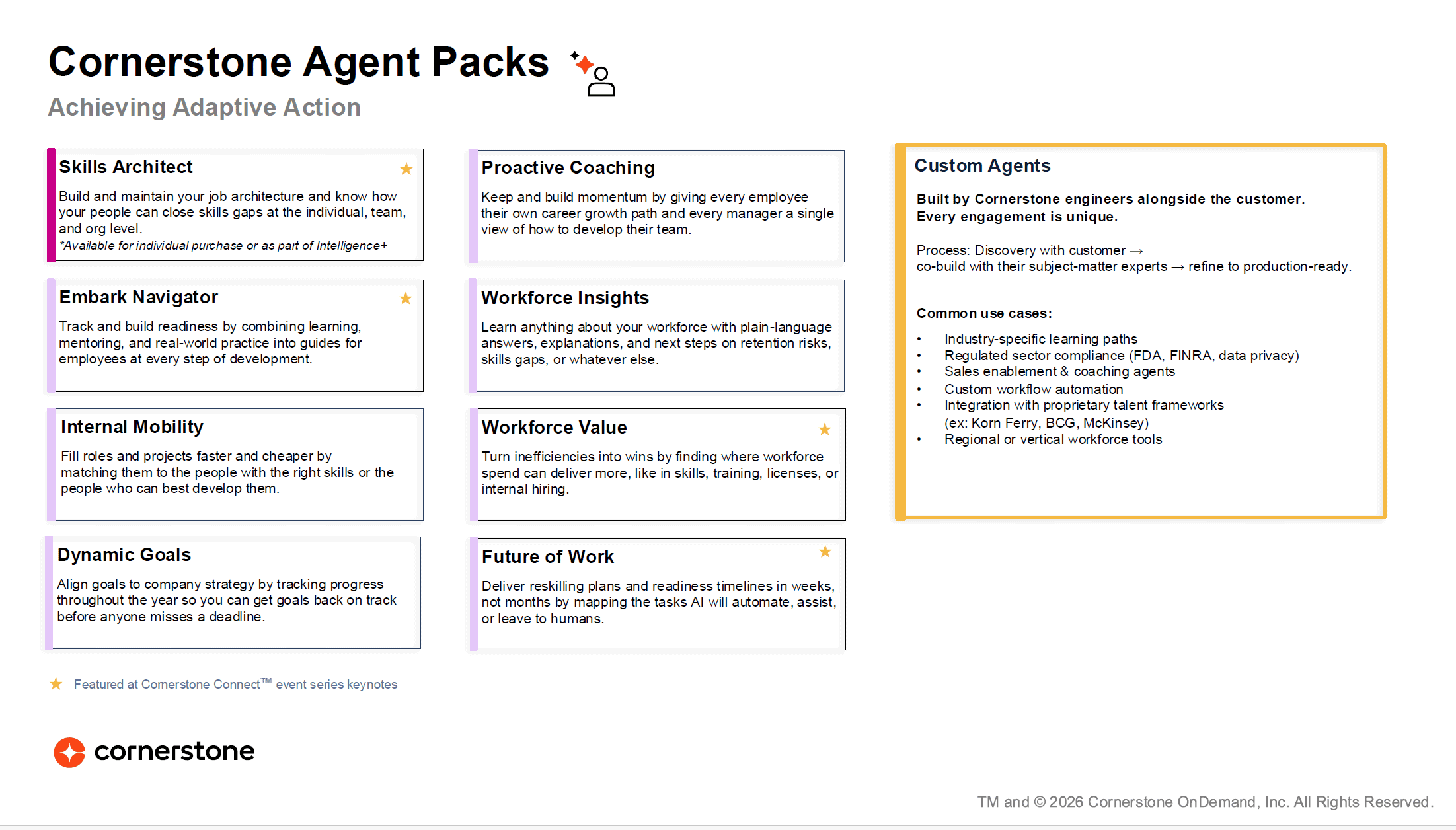
Cornerstone’s recent announcement of its "Workforce AI" platform represents a significant strategic pivot designed to harness these AI capabilities. Led by Guna Jayaraman, the new AI team has developed a platform aimed at reinventing the company’s offerings. While still in its nascent stages, Workforce AI integrates skills and capability inference, an open "People Graph" designed to ingest data from diverse systems (HRIS, LMS, project management tools, employee surveys, etc.), and a suite of data services. These services include labor market intelligence from Skyhive and pre-built "Readiness Agents" designed to address immediate business challenges.
The platform aims to bridge the gap between existing Cornerstone Galaxy functionalities and the new AI-driven capabilities. Customers can adopt these new features either as a fresh implementation or by upgrading their existing licenses to unlock the full suite of AI functionalities. Early adopters, including a wealth management firm and a large media company, along with insights from discussions with Cisco, have highlighted the platform’s potential in driving significant improvements in skills development, employee mobility, organizational redesign, and risk mitigation.
While Workforce AI is not yet a fully "AI-native" platform in the vein of some newer entrants, it represents a substantial leap forward for Cornerstone. The company has already launched AI content development tools and administrative agents for its existing platform, indicating a phased integration of AI-native features into both new and legacy environments. The currently available "packaged Agents" are designed to leverage the comprehensive data and intelligence within Workforce AI, although they are not yet fully customizable by users.
Implications for Cornerstone and the Learning Technology Market
The implications of AI for Cornerstone and the broader learning technology market are profound. The traditional reliance on static, SCORM-compliant content is rapidly diminishing, and L&D budgets are increasingly being reallocated towards AI-native solutions. This shift presents both a challenge and a significant opportunity for Cornerstone. While established vendors like Sana and Docebo are already making inroads, Cornerstone’s extensive customer base and its strategic investment in Workforce AI position it to compete effectively.
The success of Cornerstone’s reinvention will hinge on its ability to clearly articulate the value proposition of Workforce AI in the fast-paced and often volatile AI market. The company faces the delicate task of transitioning its existing customer base towards these new AI-driven solutions without alienating those who may be slower to adopt. However, as the author of this analysis notes, this is precisely the moment for Cornerstone to lead and shape the future of the market.
The traditional model of L&D spending on legacy tools is projected to decline, while AI-focused budgets are poised for substantial growth. For L&D professionals who embrace these AI-native solutions, the potential for enhanced impact and relevance is immense. The ability for every employee to feel "enabled to succeed" in a personalized and dynamic manner represents a compelling vision for the future of work. Cornerstone’s ambitious move into AI signifies its intent to remain a central player in this transformative era, but its long-term success will depend on its execution and adaptability in a landscape that continues to evolve at an unprecedented pace.