The contemporary business environment is characterized by an unrelenting tide of complexity, constant flux, and, all too frequently, disruptive crises. These conditions have amplified an already formidable landscape, underscoring the critical imperative for both individuals and organizations to respond with exceptional agility. However, while the capacity to react swiftly may equip businesses to weather immediate storms, it is demonstrably insufficient for achieving sustained growth and competitive advantage. In this era of perpetual disruption, merely keeping pace is no longer a viable strategy for enduring success.
This reality presents a stark urgency for organizations to identify and cultivate their unique differentiators. This, in turn, necessitates a profound understanding of the specific behaviors and mindsets that effective leaders must embody. The path forward is often obscured by ambiguity, with the present and future frequently shrouded in uncertainty. Distinguishing clearly between the leadership behaviors and mindsets that guide decision-making and action, and the organization’s overarching strategic objectives, is a persistent challenge. This intricate interplay between leadership and strategy is where the concept of organizational capabilities emerges as a pivotal, yet often overlooked, element.
The Nexus of Organizational Capabilities and Leadership Strategy
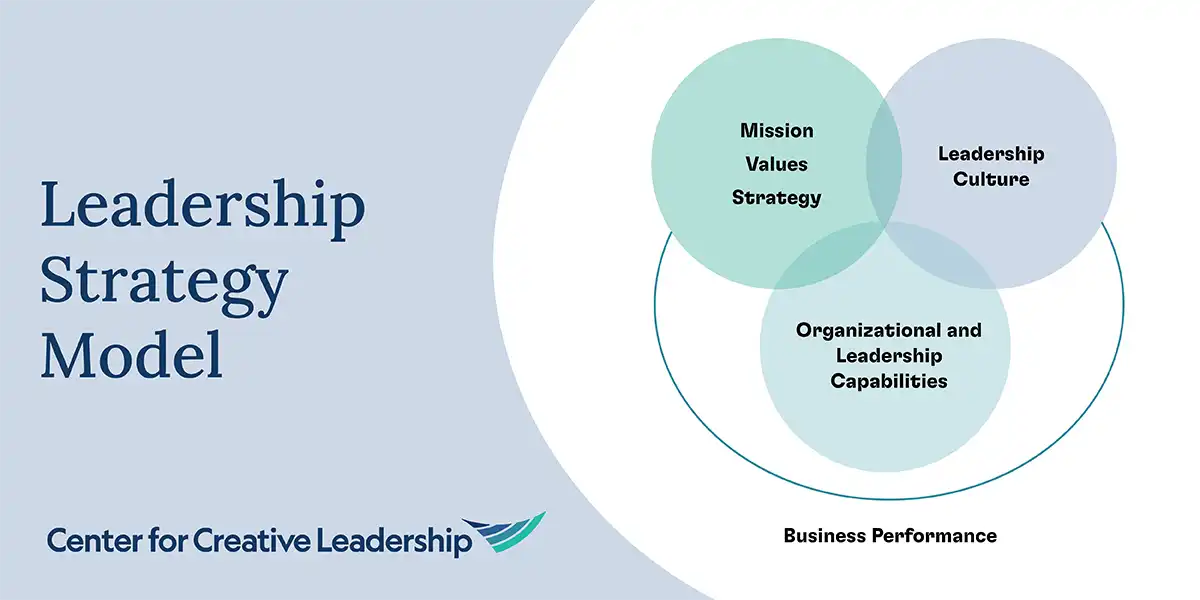
A robust framework is essential to bridge the gap between the daily practices of leaders and the achievement of long-term, sustainable organizational success. Research and extensive experience have culminated in the development of a comprehensive Leadership Strategy Model, which hinges on five interconnected elements. At the heart of this model lies organizational capabilities, acting as the crucial conduit that links overarching strategy to the development of vital leadership behaviors.
This model posits a strategic spine formed by an organization’s mission, values, and strategy. Equally vital is the leadership culture – the collective beliefs and norms that dictate how leadership is enacted and recognized on a day-to-day basis. From this foundation, organizational capabilities imbue the business with its distinctive competitive identity. Concurrently, leadership capabilities empower leaders to build and sustain these very organizational strengths. Collectively, these components transform strategic intent into tangible, executable action.
A common pitfall observed across industries is the tendency for organizations to leap directly from high-level business strategy to the expectations of individual leader behaviors, without first establishing what the organization needs to excel at collectively. Organizational capabilities serve as this indispensable bridge. Gaining clarity on these capabilities prior to defining leadership behaviors ensures that subsequent efforts are more purposeful, precise, and aligned with the organization’s core strengths and strategic imperatives.
Defining Organizational Capabilities and Their Strategic Significance
Organizational capabilities represent the sum of an organization’s collective knowledge and competencies – encompassing both its inherent strengths and its developmental areas. They serve as a powerful indicator of the customer segments a business is best positioned to serve and the strategies it is most likely to execute effectively. These capabilities are manifested through observable leadership behaviors that can be tracked and measured. Crucially, they only materialize when individuals bring the appropriate combination of skills, knowledge, and attributes to their work, making the separation of collective organizational capabilities from individual leader behaviors an impossibility.
The expectation that strategy will spontaneously translate into action through individual behaviors alone, without a prior articulation of necessary collective capabilities, creates a critical void. Leaders may lack the contextual understanding required to prioritize the most impactful behaviors, and the organization may struggle to achieve the necessary coherence for successful execution. When organizational capabilities are clearly defined, they synchronize the business and human systems, enabling the organization to create value in ways that competitors find exceedingly difficult to replicate.

The concept of organizational capabilities is not novel; it traces its roots back to the business thinking of the 1990s. At that time, the focus shifted from an external market-centric view to an internal examination of an organization’s core strengths, compelling leaders to make deliberate trade-offs regarding investment priorities. This foundational thinking has evolved, notably to address the imperative for organizations to adapt their capabilities amidst an environment of perpetual disruption.
For decades, organizational leadership practices have leveraged a research-based set of organizational capabilities to assist clients navigating large-scale change and transformation initiatives. This work has been guided by a profound understanding of leadership as a social process and the influential role of leadership culture in demonstrating these capabilities. Extensive studies of numerous executive teams over a twenty-year period have informed the identification of a set of capabilities that consistently contribute to successful organizational transformations.
More recently, this research has been revisited and refined to account for the seismic shifts brought about by technological advancements, globalization, and other influential factors. The behavioral components of these capabilities have also been elaborated upon to enhance understanding and facilitate a more precise connection to leadership capabilities.
A Research-Informed Framework of Organizational Capabilities
The extensive research and practical application have yielded a framework comprising eleven core organizational capabilities. Each of these capabilities is intrinsically linked to an organization’s strategic and cultural identity and describes what effective execution looks like in practice. These capabilities include:
- Fostering Innovation: The ability to generate novel ideas, products, services, and processes.
- Driving Productivity: Optimizing operational efficiency and output through effective resource utilization and workflow management.
- Leading Transformation: Guiding and managing significant organizational change initiatives.
- Developing Talent: Cultivating the skills, knowledge, and potential of the workforce.
- Ensuring Agility: The capacity to respond rapidly and effectively to changing market conditions and unforeseen challenges.
- Building Partnerships: Establishing and nurturing collaborative relationships with internal and external stakeholders.
- Delivering Customer Value: Exceeding customer expectations through superior products, services, and experiences.
- Managing Risk: Identifying, assessing, and mitigating potential threats to the organization.
- Driving Growth: Pursuing opportunities for market expansion and revenue generation.
- Championing Sustainability: Integrating environmental, social, and governance principles into business operations.
- Ensuring Accountability: Establishing clear ownership and responsibility for outcomes.
While all these capabilities contribute to a high-performing organization, the strategic challenge lies in identifying a focused subset, typically three to four, that become the primary drivers of excellence for a specific organization. This chosen set of capabilities articulates a clear narrative about how the organization positions itself to confront strategic challenges and what it distinctly does to achieve success.
Consider a hypothetical services company aiming to become an AI-driven entity, integrating AI into its core processes and client offerings. If the organization already possesses inherent strengths in "Fostering Innovation" and "Driving Productivity," its executive team might decide to further enhance these capabilities. This could translate into emphasizing leadership behaviors such as "rapidly developing and launching new products and services" and "continually refining the organization’s structure and workflows." Simultaneously, given the profound transformation required, the organization might deem it necessary to build a "Leading Transformation" capability, while potentially reframing its focus on "Determining Performance" to align with the new AI-centric model.
The process of narrowing down to the most critical three to four organizational capabilities is not merely a matter of achieving consensus. It necessitates a rigorous evaluation of multiple factors, including which capabilities warrant significant investment and what constitutes acceptable performance levels for the remaining ones.
The greater the alignment among the executive team and other stakeholders regarding these essential capabilities, the clearer and more streamlined the path becomes for their establishment and sustained development. For decades, executive teams have been guided through this complex process using a well-established methodology that fosters direction, alignment, and commitment (DAC). This structured approach paves the way for effectively translating organizational capabilities into both the individual and collective leadership behaviors that bring them to life.
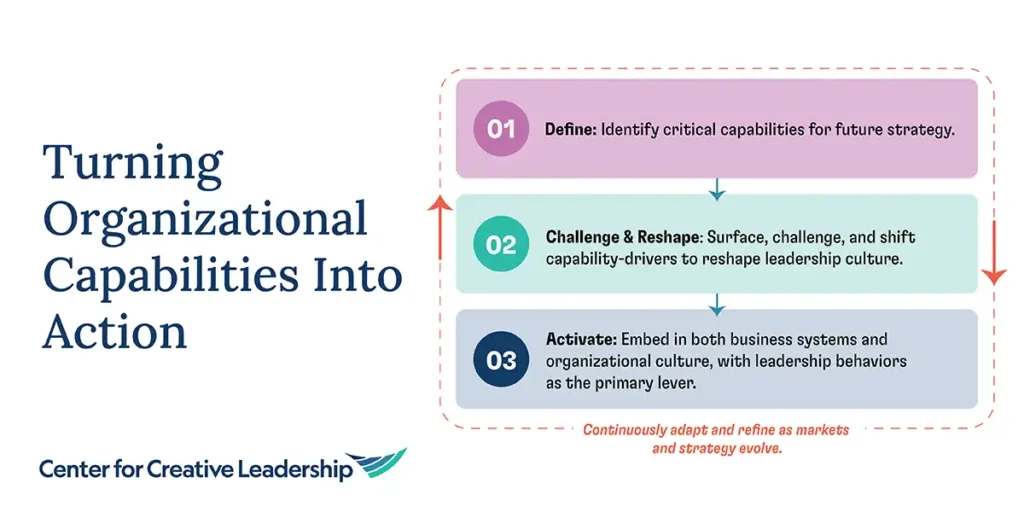
A Three-Phase Approach for Executive Teams
Translating organizational capabilities into actionable strategies requires a dual focus: looking both outward towards future opportunities and inward towards internal strengths and development areas. This dual perspective forms the bedrock of a proven three-phase approach designed for executive teams.
The initial phase, Discovery, involves a comprehensive assessment of the current organizational landscape. This includes a deep dive into the existing mission, values, and strategic imperatives. Crucially, it involves a thorough evaluation of the prevailing leadership culture, identifying its strengths and limitations. This phase also necessitates an honest appraisal of current organizational capabilities, pinpointing areas of strength and those requiring significant development. This thorough diagnostic work ensures a clear understanding of where the organization stands before charting a course forward.
The second phase, Design, focuses on defining the future state. This involves identifying and prioritizing the core organizational capabilities that will differentiate the organization and drive its strategic success. This is a critical juncture where the executive team must make deliberate choices about which capabilities to cultivate as core strengths. Concurrently, this phase involves translating these organizational capabilities into a clear set of desired leadership behaviors and mindsets. This ensures that the link between organizational objectives and leadership expectations is explicit and actionable.
The final phase, Deployment, is where the strategy is put into action. This involves developing targeted initiatives to build and strengthen the identified organizational and leadership capabilities. This phase emphasizes the importance of embedding these capabilities into the organization’s systems, processes, and daily operations. It also includes establishing robust mechanisms for measuring progress and ensuring accountability, fostering a continuous cycle of improvement and adaptation.
Translating Strategy into Leadership Practice
As organizations envision their future trajectory and the evolving needs of their leaders, organizational capabilities emerge as a paramount bridging mechanism. By strategically directing energy towards defining and cultivating the organization’s differentiating strengths, organizational capabilities position the enterprise for enduring strategic success. Furthermore, they bring invaluable clarity to the specific behaviors that leaders must excel in to drive that success.
The future is inherently dynamic, and with it, organizational strategies and the leadership competencies required for their execution will inevitably evolve. However, when an organization harmonizes its mission, values, strategy, and leadership culture around a precisely defined set of core capabilities, it not only strengthens its execution capacity in the present but also enhances its resilience and adaptability for the future. This integrated approach ensures that every element of the Leadership Strategy Model, and every individual within the organization, remains aligned and on the optimal track for sustained achievement.
Ready to Take the Next Step?
The consequential work of identifying the organizational capabilities that transform an organization’s strategy into a distinctive competitive identity, and cultivating the leadership culture to sustain them, rests squarely on the shoulders of executive teams. The expertise required for this endeavor is substantial, and guidance is often essential. Consulting firms specializing in organizational leadership are equipped to navigate this intricate process, partnering with organizations to define, align, and activate the most critical capabilities for sustained business performance. Exploring these consulting services can provide executive teams with the structured approach and expert support needed to embark on this transformative journey.