
The Evolution of Corporate Learning Personalization
The concept of personalization in corporate training has undergone several significant iterations over the last two decades. In the early 2000s, personalization was largely synonymous with "self-pacing," where employees could access digital modules at their convenience. By the mid-2010s, the rise of Learning Experience Platforms (LXPs) introduced "Netflix-style" recommendations, which utilized basic algorithms to suggest content based on a user’s previous clicks or stated interests.
However, industry data suggests that these automated recommendations often failed to bridge the gap between learning and actual job performance. According to recent industry surveys, while 80% of organizations claim to offer some form of personalized learning, only a fraction report a measurable impact on business KPIs. The iSpring Solutions guide identifies this disconnect as the "personalization plateau," where the sheer volume of available content becomes a barrier rather than an enabler of growth.
The "Big Shift" proposed in the new guide represents a move toward "Personalization 3.0." This stage focuses not just on what the learner wants to see, but on what the business requires the learner to master to achieve specific performance goals. This shift marks the transition of personalization from an L&D-centric initiative to a core business capability.
A Four-Layered Framework for Strategic Personalization
At the heart of the iSpring Solutions guide is a multi-dimensional framework that categorizes personalization into four distinct layers. This structure is designed to help L&D leaders diagnose where their current strategies are lacking and how to build a more robust, scalable system.
Layer 1: Entry and Role Alignment
The first layer focuses on the initial touchpoints of an employee’s journey. Effective personalization begins at onboarding, where the learning path is tailored to the individual’s existing skill set, previous experience, and the specific nuances of their new role. Rather than a "one-size-fits-all" orientation, this layer ensures that time-to-productivity is minimized by focusing only on the knowledge gaps relevant to the new hire.
Layer 2: Targeted Professional Development
Once an employee is established, personalization shifts toward long-term career trajectories. This involves aligning learning opportunities with the individual’s career aspirations and the organization’s succession planning. By utilizing data from performance reviews and competency mappings, L&D teams can curate paths that prepare employees for future roles, thereby increasing internal mobility and retention.
Layer 3: Just-in-Time Performance Support
This layer addresses the need for learning at the moment of need. It moves away from structured courses and toward "micro-learning" interventions. When an employee encounters a specific challenge during their daily tasks, a personalized system should provide the exact resource—be it a video, a checklist, or a technical guide—required to solve that problem immediately. This layer is critical for maintaining operational efficiency and reducing errors.
Layer 4: Learning in the Flow of Work
The final and most advanced layer involves embedding learning directly into the tools employees use daily, such as Slack, Microsoft Teams, or CRM platforms. By analyzing real-time workflow data, the learning system can push relevant updates or training tips without requiring the employee to leave their workspace. This creates a seamless integration between doing and learning, which is the ultimate goal of modern corporate education.
Supporting Data and Market Trends
The release of this guide is supported by a growing body of evidence highlighting the economic necessity of personalized L&D. According to the LinkedIn Learning 2024 Workplace Learning Report, "proactive upskilling" is now the top priority for L&D leaders globally. Furthermore, data indicates that companies with high levels of employee engagement—often driven by robust development programs—see 21% higher profitability.
The "half-life" of professional skills has also plummeted. Research from the World Economic Forum suggests that the average half-life of a learned skill is now approximately five years, and even shorter in technical fields. This rapid obsolescence makes static, non-personalized training programs obsolete almost as soon as they are deployed.
![Learning Personalization: The Big Shift For L&D And Business [eBook Release]](https://cdn.elearningindustry.com/wp-content/uploads/2026/08/shutterstock_2664109645.jpg)
iSpring Solutions’ focus on scalability addresses another major market pain point. As organizations expand across different regions, they face the challenge of maintaining a consistent learning culture while respecting local languages, regulations, and business contexts. The guide provides a roadmap for using technology to automate these nuances, ensuring that personalization does not become a manual, unmanageable burden for L&D staff.
Industry Reactions and Expert Analysis
While iSpring Solutions has positioned this guide as a practical manual, industry analysts view it as a response to the "efficiency mandate" currently sweeping the corporate world. In an era of high interest rates and tightened budgets, every department—including L&D—is under pressure to prove a direct return on investment (ROI).
"The shift we are seeing is a move away from ‘learning for the sake of learning’ toward ‘learning for the sake of performance,’" notes an independent L&D consultant familiar with the guide’s framework. "iSpring is correctly identifying that personalization is the only way to handle the sheer complexity of modern roles. You cannot train 5,000 people the same way and expect them all to excel in 5,000 slightly different contexts."
Furthermore, the role of Artificial Intelligence (AI) is an unspoken but ever-present backdrop to this shift. While the guide focuses on strategy and framework, the implementation of the "four layers" increasingly relies on AI-driven data analytics to map skills and predict learning needs. Analysts suggest that organizations that adopt these frameworks now will be better positioned to leverage generative AI tools in the coming years.
Chronology of Development in Learning Personalization
To understand the significance of the "Big Shift," it is helpful to look at the timeline of corporate training evolution:
- 1990s – Early 2000s: The era of the LMS (Learning Management System). Focus was on administration, tracking, and compliance. Personalization was non-existent; training was a mandatory, "push" activity.
- 2010 – 2015: The rise of E-learning and mobile access. "Anywhere, anytime" became the mantra. Personalization began with elective catalogs.
- 2016 – 2020: The LXP (Learning Experience Platform) boom. Social learning and AI-based content recommendations (the "Netflix" model) gained popularity.
- 2021 – Present: The Post-Pandemic Pivot. Organizations realized that content libraries weren’t enough. The focus shifted to "skills-first" organizations and the need for learning to be deeply integrated into business outcomes.
- 2024 and Beyond: The era of Strategic Personalization. As outlined in the iSpring guide, personalization becomes a holistic business strategy that scales through smart frameworks and technology.
Broader Impact and Organizational Implications
The implications of adopting a personalized learning framework extend far beyond the L&D department. For HR leaders, it serves as a powerful tool for talent acquisition and retention. In a competitive labor market, the promise of a bespoke professional development path is a significant differentiator.
For C-suite executives, the shift represents a more agile organization. When learning is personalized and aligned with role requirements, the workforce becomes more adaptable to market changes. If a company needs to pivot its strategy, a personalized learning system can identify which employees need which specific new skills to support that pivot, rather than retraining the entire workforce on irrelevant material.
However, the transition is not without challenges. Implementing the four layers of personalization requires high-quality data and a willingness to break down silos between HR, IT, and department heads. Organizations must also navigate the ethics of data collection, ensuring that the monitoring required for "learning in the flow of work" does not infringe on employee privacy or create a culture of surveillance.
Conclusion and Future Outlook
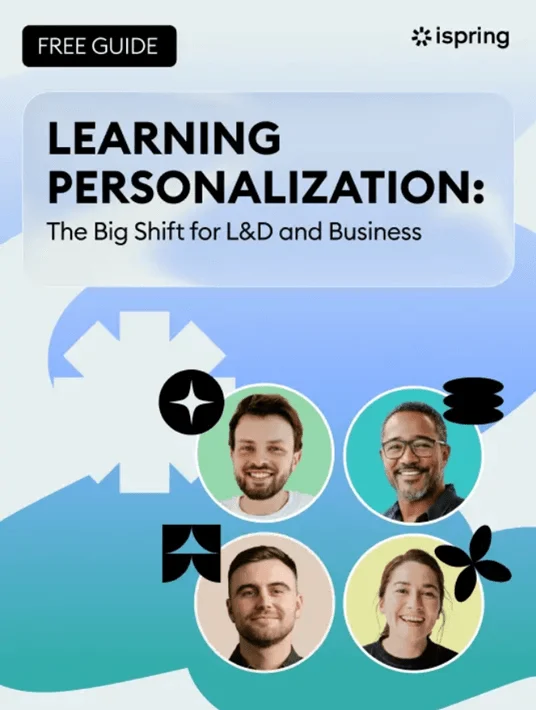
Learning Personalization: The Big Shift For L&D And Business serves as both a critique of current shortcomings and a blueprint for future success. By defining personalization as a business capability rather than a technical feature, iSpring Solutions encourages a fundamental rethink of how human capital is developed.
As the global corporate training market continues to grow—projected to exceed $480 billion by 2027—the ability to deliver effective, personalized education at scale will likely become the primary factor distinguishing high-performing companies from their competitors. The "Big Shift" is not merely a change in training tactics; it is a necessary evolution for any organization seeking to remain resilient in an increasingly volatile economic landscape.
The guide is currently available as a free resource, signaling iSpring Solutions’ intent to lead the conversation on the future of work and the pivotal role of L&D in shaping it. For professionals tasked with navigating this transition, the framework provided offers a structured path through the complexities of modern workforce development.






