
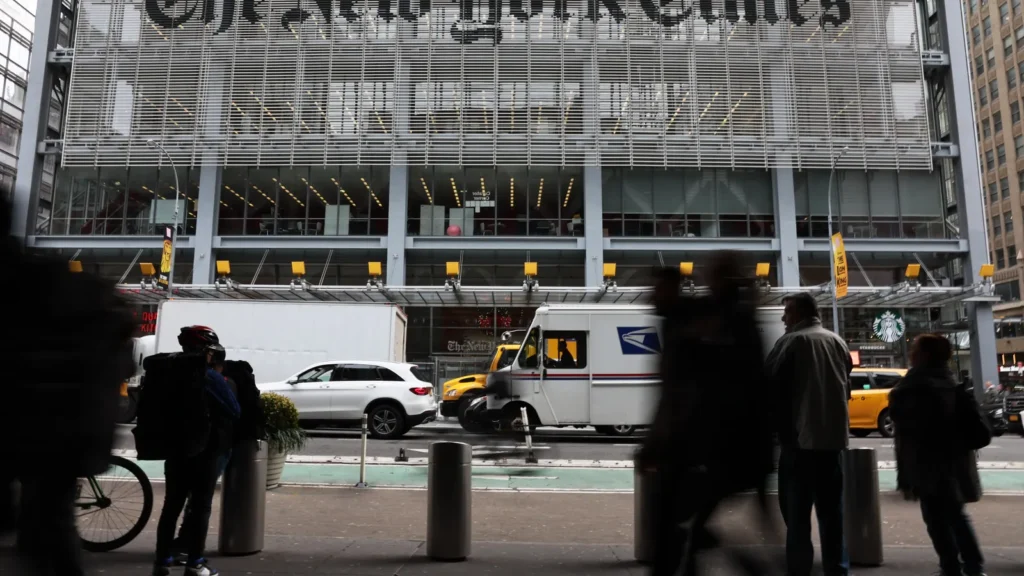
The New York Times Company has initiated legal action against the U.S. Equal Employment Opportunity Commission (EEOC), alleging that the federal agency has systematically delayed and ignored its Freedom of Information Act (FOIA) requests. Filed on August 24, 2026, the lawsuit underscores a growing tension between the prominent media organization and the federal watchdog, set against a backdrop of intertwined legal battles and broader debates about government transparency and employment discrimination. The media giant claims the EEOC has failed to adhere to statutory deadlines, provide essential communications, and offer a clear timeline for the release of requested information, compelling The Times to seek judicial intervention to compel disclosure and potentially forfeit associated fees.
The Heart of the Dispute: FOIA and Alleged Delays
At the core of The New York Times’ complaint is the principle enshrined in the Freedom of Information Act, a landmark federal law enacted in 1966. FOIA mandates that federal agencies disclose government records to the public upon request, serving as a crucial tool for journalists, academics, and citizens to hold government accountable. Under the law, federal agencies are typically required to respond to FOIA requests within 20 business days. While agencies can seek an extension of an additional 10 days under "unusual circumstances" — such as the need to search for records in multiple locations or review a voluminous amount of material — these extensions must be justified and communicated transparently. The spirit of the law emphasizes promptness and full disclosure, with exemptions narrowly construed to protect national security, personal privacy, and certain law enforcement or internal agency deliberations.
The New York Times’ specific FOIA request, which sought information pertinent to its journalistic endeavors, was formally acknowledged by the EEOC on June 25, 2026. At that time, the agency assigned a tracking number to the request and, citing "unusual circumstances," indicated that the search for records would necessitate pulling information from various field offices in addition to its main headquarters. Consequently, the EEOC informed The Times that it would "make every effort" to provide a substantive response by July 31, 2026. This extended timeline, while permissible under certain conditions, began what The Times alleges has been a pattern of evasion and unresponsiveness.
According to the lawsuit, the contact person provided by the EEOC for further discussion regarding the request allegedly failed to respond to inquiries throughout July. An anticipated meeting in August, intended to clarify the status of the request, was abruptly canceled the day before it was scheduled to occur. Since that cancellation, The Times claims, the EEOC contact has remained silent, offering no further updates or timelines for when the requested information might be provided. Furthermore, the agency reportedly failed to furnish a fee estimate letter, which it had previously indicated would be forthcoming. Such a letter is standard practice, outlining potential costs associated with fulfilling a request, particularly when large volumes of documents are involved.
In light of these alleged failures, The New York Times is petitioning the court for several key declarations. First, it seeks a judicial order compelling the EEOC to disclose the requested records immediately. Second, it requests the court to impose a strict 20-day timeline for the agency to fulfill its obligations, bypassing any further extensions. Finally, and significantly, The Times is asking the court to declare that the EEOC has forfeited its right to charge any associated fees for the processing and release of the information, a punitive measure often sought when agencies are found to have acted in bad faith or to have unduly delayed responses.
A Chronology of Confrontation
The lawsuit filed by The New York Times is not an isolated incident but rather a significant development within a complex and escalating series of legal and public relations confrontations involving the EEOC and other prominent entities. The timeline of these events paints a picture of increasing friction:
- March 2026: The National Association for the Advancement of Colored People (NAACP) submits its own FOIA request to the EEOC, seeking communications related to the agency’s handling of discrimination claims, with a particular focus on its solicitation of charges from White men. This request signals an early interest from civil rights organizations in the EEOC’s internal processes and priorities.
- May 2026: The EEOC files a discrimination lawsuit against The New York Times Company. The federal agency accuses the media company of race and sex bias, specifically alleging that The Times failed to promote a White male journalist to an editorial position, instead selecting a non-White journalist who, the EEOC contended, possessed less experience for the particular beat. This lawsuit marks a direct legal clash between the two entities.
- June 2026: The NAACP, facing similar alleged stonewalling from the EEOC regarding its March FOIA request, files a lawsuit against the agency. This action highlights a potential pattern of unresponsiveness from the EEOC towards significant public information requests. Concurrently, The New York Times submits its own FOIA request to the EEOC, initiating the chain of events that would lead to its current lawsuit. The EEOC acknowledges The Times’ request on June 25, assigning it a tracking number and citing "unusual circumstances" for an extended response time.
- July 2026: The EEOC promises The New York Times a response to its FOIA request by July 31, but allegedly fails to deliver. In a related development, The New York Times files a counterclaim against the EEOC in response to the discrimination lawsuit. The media company alleges that the EEOC’s lawsuit is a retaliatory action, spurred by The Times’ critical coverage of the current administration. Also in July, the EEOC provides its "first and final" responses to the NAACP’s FOIA request, including over 1,200 records but withholding more than 1,000 others, citing various exemptions. The NAACP expresses its intent to contest these redactions.
- August 2026: An anticipated meeting between The New York Times and the EEOC regarding the FOIA request is canceled the day before it is set to occur, with no subsequent communication from the agency. On August 24, The New York Times files its lawsuit against the EEOC, seeking to compel the disclosure of records and declare the agency’s forfeiture of fees.
This chronology reveals a complex web of legal entanglements, where allegations of discrimination, retaliation, and a lack of transparency are now converging in the federal court system.
Broader Context: A Pattern of Accusations and Political Undertones
The New York Times’ lawsuit is not merely a dispute over procedural delays; it resonates with broader concerns about government transparency and accountability, particularly within an agency tasked with upholding civil rights. The fact that this is at least the second FOIA complaint against the EEOC in recent months, following the NAACP’s similar filing in June, suggests a potential systemic issue within the agency’s FOIA processing capabilities or its willingness to disclose certain types of information.
The NAACP’s lawsuit, like The Times’, sought communications related to the EEOC’s handling of discrimination claims. Specifically, the NAACP was interested in the agency’s solicitation of "charges from White men" — a phrase that has become a flashpoint in contemporary debates about reverse discrimination and the efficacy of diversity, equity, and inclusion (DEI) initiatives. The NAACP’s interest implies a concern that the EEOC might be unduly prioritizing certain types of discrimination claims or that its internal processes are being influenced by political agendas. The partial release of over 1,200 records to the NAACP, coupled with the withholding of more than 1,000 others under various exemptions, further fuels the debate over what information the public is entitled to access and what constitutes legitimate grounds for redaction. The NAACP’s decision to contest these redactions signals a deep commitment to uncovering the full scope of the agency’s actions.

The backdrop of the EEOC’s discrimination lawsuit against The New York Times adds another layer of complexity and potential motivation to the FOIA dispute. The EEOC’s accusation that The Times engaged in race and sex bias by not promoting a White male journalist and instead selecting a non-White journalist with allegedly less experience on the beat has been met with fierce resistance from the media company. The New York Times’ subsequent counterclaim, alleging that the EEOC’s lawsuit itself constitutes retaliation for the company’s critical journalistic coverage of the administration, introduces a significant dimension of political motivation into the legal fray.
This allegation of retaliation gained further credence from an unusual public statement by EEOC Commissioner Kalpana Kotagal. In a May LinkedIn post, Kotagal openly expressed her dissenting vote against authorizing the litigation against The New York Times. She voiced concern that the lawsuit might be driven by "a desire to advance the administration’s political agenda," rather than by objective legal merit. Such an internal dissent from a high-ranking official within the agency itself lends significant weight to The Times’ retaliation claim and casts a shadow over the EEOC’s motivations in its dealings with the media organization. The confluence of these lawsuits — the EEOC suing The Times for discrimination, The Times counter-suing for retaliation, and now The Times suing the EEOC for FOIA non-compliance — creates an intricate legal and ethical dilemma, raising questions about the independence and impartiality of a crucial federal agency.
The Principle of Transparency and Public Information
The Freedom of Information Act is a cornerstone of democratic governance, designed to foster transparency and accountability by granting the public the right to request access to government records. In fiscal year 2023, federal agencies collectively received over 900,000 FOIA requests, a testament to the public’s active engagement with government operations. While most requests are processed without incident, a significant number encounter delays or are partially or fully denied. According to data compiled by various transparency advocacy groups, average processing times can vary widely, from a few days for simple requests to several months or even years for complex ones involving multiple agencies, sensitive information, or large volumes of documents. Common reasons for delays include understaffing in FOIA offices, the complexity of requests, and the need for inter-agency coordination or extensive legal review to apply exemptions.
For journalistic organizations like The New York Times, FOIA is an indispensable tool for investigative reporting. It allows reporters to uncover facts, scrutinize government actions, and inform the public about issues ranging from environmental hazards to civil rights enforcement. Delays or outright denials of FOIA requests can severely impede the press’s ability to fulfill its watchdog role, potentially leaving the public in the dark about critical government functions. The current dispute highlights the tension between the public’s right to know and the administrative challenges or, as alleged by The Times and the NAACP, potential recalcitrance of federal agencies in complying with transparency laws.
The types of records sought by The New York Times and the NAACP — communications related to the handling of discrimination claims and the solicitation of charges — are particularly sensitive. They delve into the internal decision-making processes of a federal agency responsible for enforcing anti-discrimination laws. The public interest in such information is high, as it directly relates to how effectively and fairly the EEOC is executing its mission, especially given the heightened national discourse surrounding issues of race, gender, and workplace equity.

Reactions and Future Implications
Danielle Rhoades Ha, senior vice president of communications for The New York Times, declined to comment further on the FOIA lawsuit specifically when approached by HR Dive, instead directing inquiries to a July statement that pushed back vigorously against the EEOC’s discrimination claim. This strategic redirection emphasizes The Times’ unified stance across its legal battles, linking the FOIA dispute to the broader narrative of alleged retaliation by the EEOC. The July statement likely reiterated The Times’ commitment to diversity, its robust internal promotion processes, and its belief that the EEOC’s initial lawsuit was unfounded and politically motivated. The EEOC, for its part, did not respond to requests for comment by press time, maintaining its silence on the unfolding legal challenges.
The outcome of The New York Times’ FOIA lawsuit against the EEOC carries significant implications. If the court rules in favor of The Times, it could compel the EEOC to expedite the release of records and potentially face financial penalties by forfeiting its right to charge fees. Such a ruling would serve as a powerful affirmation of FOIA’s enforceability and send a clear message to federal agencies about their obligations under the law. Conversely, if the court finds in favor of the EEOC, it could legitimize the agency’s current processing methods or its application of exemptions, potentially setting a precedent that could affect future FOIA requests.
Beyond the immediate legal remedies, this case has broader ramifications for government transparency, journalistic access, and the intricate relationship between federal agencies and the media. A prolonged and contentious legal battle could further erode public trust in the EEOC, particularly if allegations of stonewalling and political motivation are substantiated. It could also galvanize other organizations and media outlets to more aggressively pursue FOIA litigation when faced with similar delays, potentially increasing the legal burden on federal agencies.
Furthermore, the interwoven nature of these lawsuits — the discrimination claim, the retaliation counterclaim, and the FOIA dispute — will inevitably impact the ongoing public debate surrounding employment discrimination, diversity initiatives, and the role of government oversight. The specific focus on "charges from White men" and the concerns about political agendas underscore the deeply polarized environment in which these legal battles are being fought. The resolution of these cases will not only determine the legal rights and obligations of The New York Times and the EEOC but will also contribute to shaping the future landscape of media scrutiny, government accountability, and the enforcement of civil rights in the workplace. The public, through its media, stands to gain crucial insights into the inner workings of a vital federal agency, or conversely, may face continued opacity if the current legal challenges fail to compel greater transparency.






