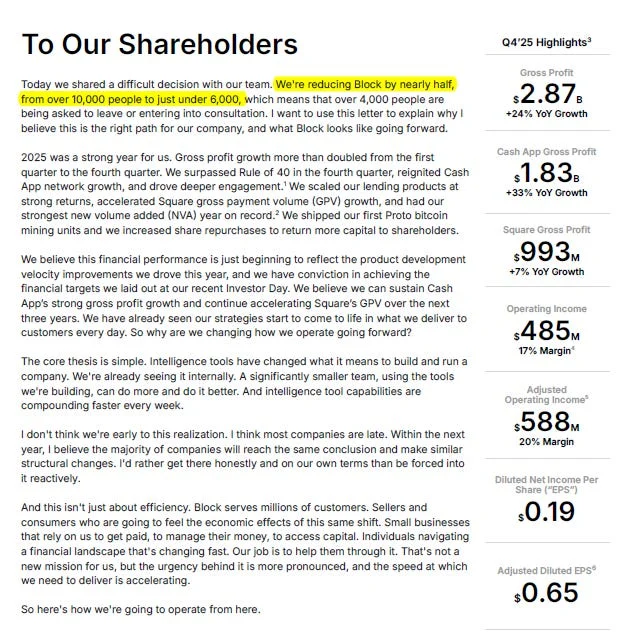
Block Inc., the financial technology giant helmed by CEO Jack Dorsey, recently ignited a firestorm of debate with its audacious announcement to potentially eliminate 40% of its workforce, approximately 4,000 employees, and replace them with artificial intelligence. This sweeping declaration, delivered with minimal detail, has sent ripples of concern and curiosity across the tech and business landscapes. While the company’s vision hinges on leveraging AI for operational efficiency, a closer examination reveals a complex interplay of strategic ambition, economic pressures, and fundamental questions about the true impact and cost of AI integration in the modern enterprise.
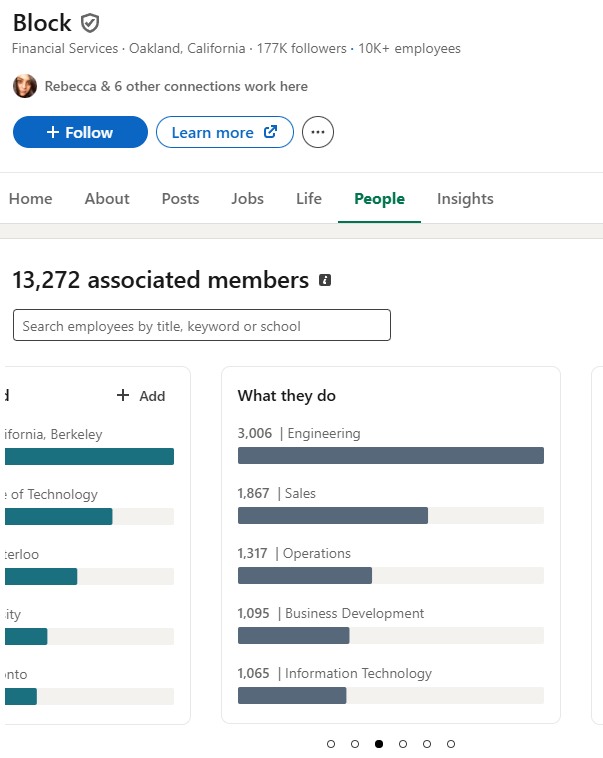
The initial announcement from Block Inc. was stark and direct: a significant portion of its over 10,000 employees would be phased out, with AI poised to fill the void. This news, first reported, lacked specifics on the implementation timeline, the precise roles targeted, or the technological frameworks underpinning this radical shift. LinkedIn data indicates Block Inc. employs approximately 13,000 individuals, with a substantial concentration in engineering, information technology, operations, and sales. The sheer scale of the proposed layoffs suggests a fundamental re-evaluation of the company’s operational structure.

Context and Initial Reactions
The revelation quickly drew attention from industry observers and tech professionals. One insider, associated with Anthropic, a leading AI research company, immediately highlighted the story’s significance, emphasizing the growing trend of job displacement due to advancements in artificial intelligence. This perspective underscores the broader societal conversation surrounding AI’s disruptive potential.
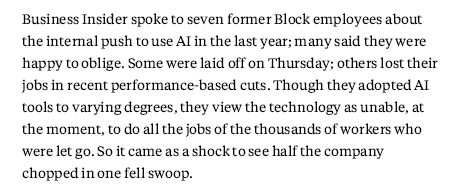
However, the lack of concrete details prompted scrutiny. Business Insider, in an interview with seven Block Inc. employees, found a consensus of uncertainty regarding the precise mechanisms of this AI-driven transformation. This suggests a potential disconnect between leadership’s pronouncements and the ground-level understanding of the proposed changes. The author of the original report, who frequently engages with senior HR leaders, expressed surprise at the lack of precedent for such a large-scale, AI-driven workforce reduction, prompting a deeper investigation into the underlying motivations and feasibility of Block’s strategy.

Is AI Merely a Catalyst for Performance Management?
A critical question emerging from this announcement is whether the embrace of AI is a genuine technological imperative or a convenient justification for streamlining operations and addressing performance issues. The author’s research indicates that while AI is indeed eliminating certain tasks, its widespread replacement of entire job functions is not yet the reality for most organizations. Instead, AI is often employed to augment human capabilities and improve efficiency.
The parallels drawn to Elon Musk’s acquisition of Twitter and subsequent significant layoffs are noteworthy. In that instance, the justification often cited was the presence of extensive bureaucracy. Similarly, the Block Inc. announcement raises the possibility that AI is being leveraged as an "excuse" to reorganize and optimize the company’s structure, potentially addressing perceived inefficiencies or underperforming departments.
Block Inc.’s Financial Landscape: A Driving Force?
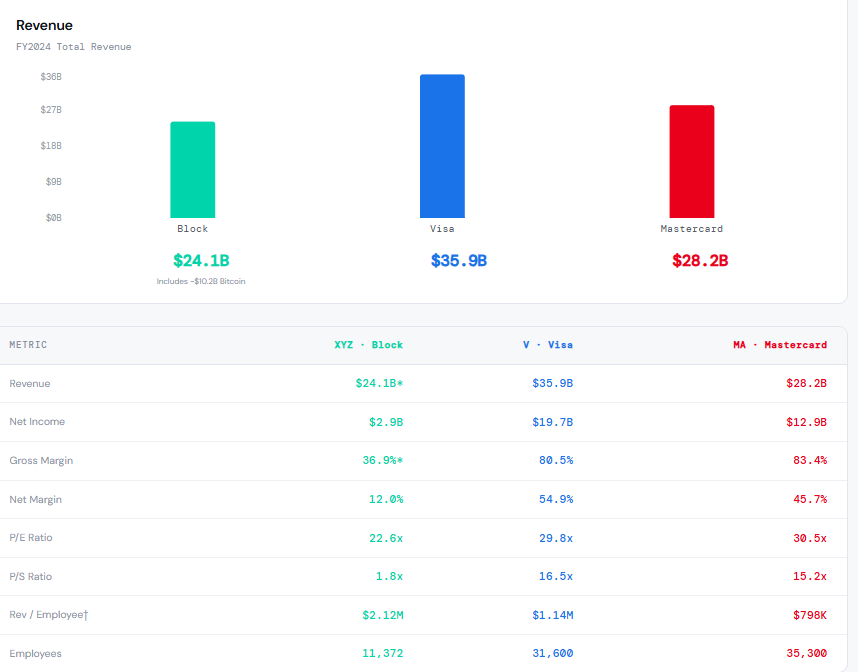
To understand the impetus behind such a drastic move, a comparative financial analysis of Block Inc. against industry peers provides valuable context. When contrasted with companies like Visa, Mastercard, and Shopify—while operating in different, albeit related, sectors—Block Inc. exhibits notably lower profitability and a significantly smaller gross margin. This financial disparity suggests that Block may not be operating at the same level of economic scale or efficiency as its competitors.
This observation leads to a crucial hypothesis: the AI-driven workforce reduction may be a strategic maneuver to enhance operational efficiency and address investor concerns about profitability. In a market increasingly focused on lean operations and demonstrable returns, the promise of AI-powered cost savings, even if initially an oversimplification, could be a powerful narrative.
The True Cost and Complexity of AI Integration
The notion of AI seamlessly replacing thousands of human workers is often oversimplified. The implementation and scaling of enterprise-level AI systems are not cost-free endeavors and, in fact, require significant human capital.
The Lifecycle of Enterprise AI Deployment
- Development and Implementation: Building, training, and deploying sophisticated AI agents and superagents demand specialized expertise. This involves hiring and retaining AI engineers, data scientists, and machine learning specialists. These roles are crucial for developing the core AI functionalities, ensuring data integrity, and customizing solutions to specific business needs.
- Ongoing Management and Maintenance: AI systems are not static. They require continuous monitoring, updating, and fine-tuning to maintain optimal performance and adapt to evolving data and business requirements. This includes tasks such as model retraining, performance evaluation, and bug fixing. The non-deterministic nature of some AI technologies also necessitates rigorous verification processes to prevent unexpected or erroneous outputs.
- Operational Costs: Beyond the initial development, the ongoing operational costs of AI can be substantial. This includes significant compute power for processing and training models, which can translate into considerable expenses for data centers and cloud infrastructure. Furthermore, the management of data, ethical considerations, and governance protocols add layers of complexity and cost.
AI in Customer Support vs. Engineering
The financial implications of AI adoption vary significantly depending on the application.
- Customer Support: Replacing human agents in customer support roles with AI offers a more direct path to cost reduction. If an outsourced agent earns approximately $35,000 annually, an AI agent, even with associated development and operational costs, might represent a saving of 50-60%. However, even in this scenario, the AI "agent" can still cost between $15,000-$20,000 per year, assuming it can handle voice interactions effectively. This figure does not include the expenses for training, ecosystem maintenance, and data governance.
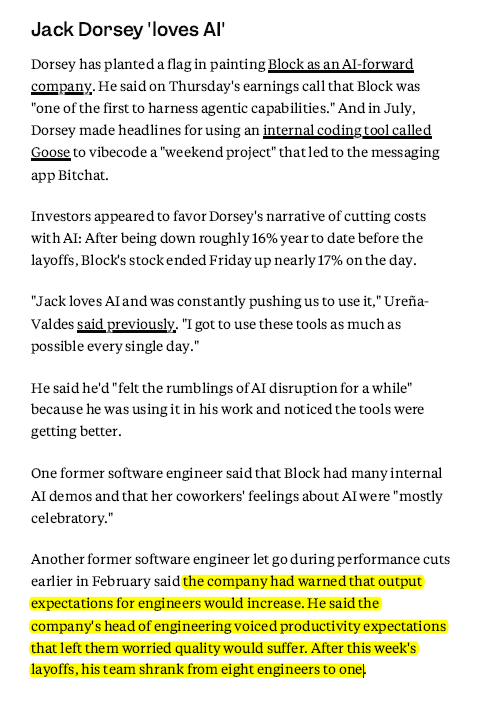
- Software Engineering: The cost-benefit analysis for AI in software engineering is far more nuanced. While AI tools can automate many coding tasks, potentially freeing up engineers for higher-level problem-solving, the cost of sophisticated AI models can rival or even exceed the cost of a human engineer. Software engineering is a high-context, non-linear task that requires deep understanding of complex codebases. The "reasoning tokens" required for AI to comprehend and interact with such systems can be computationally expensive. For instance, if 100 engineers earning $100,000 each represent an annual payroll of $10 million, and AI could theoretically eliminate 80% of their manual coding time, yielding $8 million in labor capacity, the actual cost of the AI solution, including compute, licensing, and maintenance, must be meticulously calculated. Early analyses suggest that the operational cost of AI in this domain might not always be a clear-cut reduction compared to human labor.
The True Return on Investment: Re-engineering Processes
The most impactful transformations driven by AI rarely stem from a primary objective of job displacement. Instead, the most significant returns on AI investment are realized through the re-engineering of business processes. Companies that have achieved substantial gains from AI typically focus on:
- Process Optimization: Implementing AI to streamline workflows, automate repetitive tasks, and improve decision-making accuracy. Examples include Allianz’s use of digital twins for claims processing and knowledge sharing, and Travelers’ application of AI for employee enablement and faster time-to-market.
- Service Innovation: Developing new products and services enabled by AI capabilities. HubSpot, for instance, leverages AI to offer enhanced client services rather than simply reducing its workforce.
- Scalability: Utilizing AI to expand operational capacity without a proportional increase in human resources. Companies like Josh Bersin’s own AI-powered platform, Galileo, are designed to scale businesses by orders of magnitude, reaching a broader client base than would be feasible through traditional human-led operations.
Therefore, while Block Inc.’s announcement begins with layoffs, its long-term success will likely depend on its ability to fundamentally re-engineer its business model around AI. The true measure of its strategy will be whether it can achieve a 10x or 100x transformation, not just a reduction in headcount.
The Question of Talent Density
Leading organizations continuously strive to increase "talent density"—the concentration of highly skilled and productive individuals within their workforce. This approach moves away from the traditional "hire to grow" model, which can dilute overall productivity as headcount increases. The strategic integration of AI should ideally contribute to this goal by augmenting the capabilities of existing talent, enabling them to achieve more. The absence of a clear, visible re-engineering project at Block Inc. raises questions about whether this strategic imperative is being fully addressed.
Key Lessons from AI Transformation
The Block Inc. situation serves as a crucial reminder for businesses contemplating AI integration:
- AI Transformation is Not Solely About Job Elimination: A short-term focus on job elimination through AI is likely to be a fleeting strategy. The long-term benefits lie in leveraging AI to fundamentally transform how work is done. The development, implementation, and ongoing management of AI systems themselves require skilled personnel, creating new roles and demanding new expertise.
- The Cost of AI is Significant and Multifaceted: While AI can offer cost savings in certain areas, the capital and operational expenses associated with building and maintaining these systems are substantial. The cost of compute power, data management, and specialized talent must be factored into any ROI calculation.
- The Real ROI Lies in Process Re-engineering: The most profound impact of AI is its potential to revolutionize business processes. Companies that successfully harness AI do so by redesigning their operations to leverage AI’s unique capabilities, leading to innovation, scalability, and enhanced efficiency.
In conclusion, Block Inc.’s ambitious plan to replace a significant portion of its workforce with AI presents a compelling case study in the evolving landscape of artificial intelligence in business. While the immediate announcement focuses on workforce reduction, the underlying drivers and the true potential for AI-driven transformation lie in a more profound re-engineering of the company’s operational architecture. The success of Block’s strategy will ultimately be measured not by the number of jobs eliminated, but by its ability to innovate, adapt, and thrive in an AI-augmented future. As the business world watches, the question remains: will Block Inc. successfully orchestrate a true AI revolution, or will its bold pronouncements be overshadowed by the complex realities of technological integration and economic pressures?