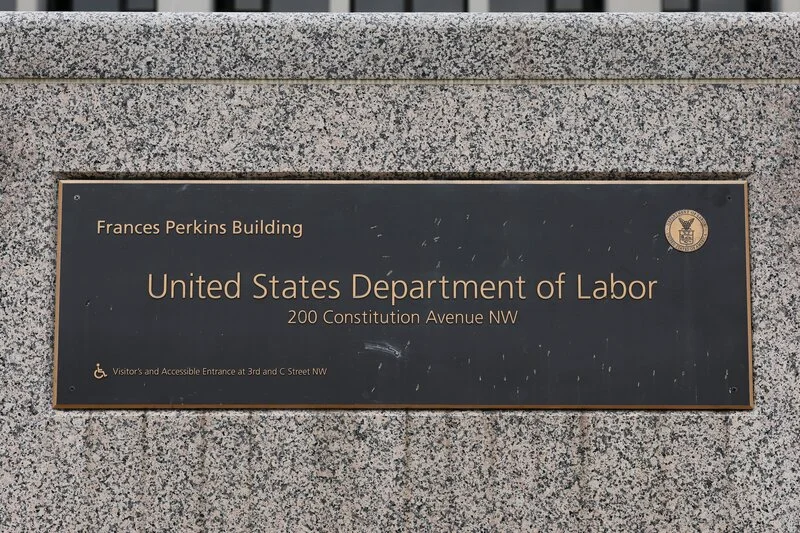
The leadership of the House Committee on Education and the Workforce has intensified its oversight of the U.S. Department of Labor (DOL), formally requesting that the agency’s Office of Inspector General (OIG) broaden its current investigation into information-sharing practices. In a detailed letter sent to the DOL watchdog, Republican committee members expressed grave concerns regarding whether confidential investigative materials and sensitive employer data were improperly disclosed to outside organizations, including labor unions and advocacy groups, during the Biden administration. This expansion request specifically identifies three additional sub-agencies within the Department of Labor that the committee believes may have engaged in unauthorized or unethical data-sharing arrangements, potentially compromising the integrity of federal investigations and the privacy of American businesses.
The move marks a significant escalation in the ongoing tension between the executive branch’s labor regulators and congressional oversight bodies. While the Office of Inspector General had already initiated a preliminary review of certain data-sharing protocols, the House Committee argues that the initial scope was too narrow to capture the full extent of the administration’s collaborative efforts with non-governmental entities. The lawmakers are now pushing for a comprehensive audit of the Occupational Safety and Health Administration (OSHA), the Wage and Hour Division (WHD), and the Office of Federal Contract Compliance Programs (OFCCP), alleging that these agencies may have bypassed standard disclosure protocols to provide strategic advantages to third-party organizations.
The Push for Expanded Transparency in Labor Oversight
The core of the committee’s inquiry centers on the "Memoranda of Understanding" (MOUs) and informal partnerships established under the Biden administration. These agreements were ostensibly designed to enhance the enforcement of labor laws by leveraging the expertise and "on-the-ground" presence of worker advocacy groups. However, Republican lawmakers, led by Committee Chairwoman Virginia Foxx, argue that these arrangements have crossed a legal line, transforming federal enforcement agencies into collaborative arms of organized labor.
The committee’s request for an expanded probe highlights a concern that the DOL has been using its investigative powers to collect proprietary information from businesses—such as payroll records, safety protocols, and internal communications—and subsequently sharing that information with outside groups that have a vested interest in unionization efforts or private litigation. According to the committee, such practices would not only violate the Privacy Act and the Trade Secrets Act but would also undermine the neutrality required of federal regulatory bodies.
A Chronology of Information-Sharing Policy (2021–2026)
To understand the current friction, it is necessary to examine the evolution of the Department of Labor’s enforcement strategy over the last several years. Upon taking office in 2021, the Biden administration signaled a shift toward "whole-of-government" enforcement, encouraging agencies like the DOL to work more closely with the National Labor Relations Board (NLRB) and the Department of Justice (DOJ).
In 2022, the Wage and Hour Division and OSHA began formalizing partnerships with community-based organizations (CBOs) through the "Worker Rights Consortium" and various grant programs. These partnerships were intended to educate vulnerable workers about their rights. However, by 2023, industry groups began reporting instances where confidential information provided during routine OSHA inspections appeared to have been leaked to union organizers.
By mid-2024, the House Committee on Education and the Workforce began receiving whistleblower complaints suggesting that internal "enforcement maps" and "target lists" were being shared with advocacy groups to help them coordinate protest actions and legal filings. In late 2025, the DOL IG launched an initial, limited probe into the Wage and Hour Division’s data-handling practices. The August 2026 request by the House Committee represents the latest effort to ensure that OSHA and the OFCCP are also held accountable for their data-sharing activities.
The Three Agencies Under Scrutiny: OSHA, WHD, and OFCCP
The House Committee’s demand for a wider probe focuses on three specific pillars of the Department of Labor, each of which handles vast amounts of sensitive corporate data.
The Occupational Safety and Health Administration (OSHA)
OSHA is responsible for ensuring safe working conditions through inspections and citations. During these inspections, OSHA compliance officers often gain access to blueprints, chemical formulas, and internal safety audits. The committee alleges that OSHA has allowed "walk-around" representatives from outside unions to accompany inspectors and potentially gain access to trade secrets, which are then used for leverage in collective bargaining.
The Wage and Hour Division (WHD)
The WHD oversees the enforcement of the Fair Labor Standards Act (FLSA), which involves reviewing detailed payroll data and employee classification records. The committee’s concern is that the WHD has shared "employer non-compliance trends" with litigation-focused nonprofits, essentially providing them with a roadmap for filing class-action lawsuits against specific companies before the federal government has even concluded its own investigations.
The Office of Federal Contract Compliance Programs (OFCCP)
The OFCCP monitors federal contractors to ensure they are meeting affirmative action and non-discrimination requirements. This involves the collection of highly sensitive demographic data and compensation structures. The committee is investigating whether the OFCCP shared "pay equity" data with outside activists, potentially violating the confidentiality agreements that contractors sign when they bid for federal work.
Supporting Data on Enforcement and Data Disclosure
The scale of the DOL’s data collection has grown significantly in recent years. According to the Department’s own budget justifications for the 2025 and 2026 fiscal years, the DOL increased its enforcement budget by nearly 12%, with a specific emphasis on "data-driven targeting."
Internal reports from the DOL indicate that in 2025 alone, the Wage and Hour Division conducted over 25,000 investigations, recovering more than $300 million in back wages. During the same period, OSHA conducted over 35,000 inspections. Critics of the current administration’s policies point to a 15% increase in Freedom of Information Act (FOIA) requests from labor-affiliated organizations, many of which were granted in "expedited" fashion.
Furthermore, a 2025 survey of mid-to-large-scale manufacturers conducted by a leading trade association found that 42% of respondents felt their confidential business information was "less secure" during a federal audit than it was five years ago. This data has been cited by the House Committee as evidence of a systemic breakdown in the DOL’s duty to protect sensitive information.
Legal and Ethical Implications of Proprietary Data Sharing
The legal implications of the House Committee’s allegations are profound. Federal law, specifically 18 U.S.C. § 1905 (the Trade Secrets Act), prohibits federal employees from disclosing confidential corporate information unless authorized by law. Violations can lead to criminal penalties. Additionally, the Administrative Procedure Act (APA) requires that agencies act in a manner that is not "arbitrary, capricious, or an abuse of discretion."
The committee argues that by favoring specific outside groups with information, the DOL is violating the principle of administrative neutrality. If the IG probe finds evidence of systematic disclosure of confidential files, it could lead to a wave of litigation against the Department of Labor. Companies that were the subject of enforcement actions could potentially argue that their due process rights were violated because the government was "colluding" with their legal adversaries.
Official Responses and Political Reactions
While the Department of Labor has not yet issued a formal response to the August 26 letter, past statements from DOL leadership have defended the agency’s collaborative approach. Acting Secretary of Labor Julie Su has previously stated that "enforcement is most effective when the government works alongside the workers and communities most affected by labor violations." Supporters of the Biden administration’s policies argue that "information sharing" is a vital tool for protecting workers who might otherwise be intimidated by large corporations.
In contrast, Representative Virginia Foxx (R-NC) issued a statement alongside the expansion request, saying, "The Department of Labor exists to enforce the law, not to act as a research and development arm for labor unions. When confidential investigative material is funneled to outside groups, it compromises the fairness of our regulatory system and puts American businesses at an unfair disadvantage. The Inspector General must look deeper into these shadows."
Democrats on the committee have largely dismissed the probe as a politically motivated attack on worker protections. Ranking members have argued that the GOP’s focus on "data sharing" is a distraction from the fundamental mission of ensuring that workers are paid fairly and remain safe on the job.
Broader Impact and Future Implications
The outcome of this expanded IG investigation could have lasting effects on how federal agencies interact with the public and private sectors. If the Inspector General confirms the committee’s suspicions, it could lead to:
- Stricter Disclosure Protocols: Future administrations may be forced to implement more rigorous firewalls between enforcement agencies and outside advocacy groups.
- Legislative Reform: Congress may introduce new legislation specifically barring the DOL from entering into MOUs with non-governmental organizations regarding enforcement data.
- Impact on Unionization: If unions lose access to the "strategic intelligence" provided by federal agencies, it could change the landscape of labor organizing in the United States.
- Business Cooperation: The willingness of companies to cooperate voluntarily with federal audits and inspections is likely to diminish if they fear their data will be shared with competitors or activists.
As the 2026 election cycle approaches, the House Committee’s scrutiny of the DOL is expected to remain a central point of debate regarding the role of the federal government in the economy. The Inspector General’s office now faces the daunting task of auditing thousands of pages of correspondence and internal records to determine if the Department of Labor has indeed overstepped its bounds. For now, the business community and labor advocates alike are watching closely, as the results of this probe will likely dictate the rules of engagement for federal labor enforcement for years to come.