
The burgeoning field of enterprise Artificial Intelligence (AI), while currently dominated by the massive valuations of companies like Anthropic and OpenAI, is demonstrating that its true return on investment (ROI) is being generated not by the foundational models themselves, but by the innovative applications and the strategic utilization of data. This paradigm shift mirrors a similar evolution witnessed in the relational database market during the 1990s, where the underlying technology became commoditized, and value accrued to the applications built upon it.
As advanced "frontier" models from major players such as OpenAI, Anthropic, Google, and Microsoft (MAI) become increasingly accessible, and a robust ecosystem of free, open-source alternatives like GLM, Deepseek, Kimi, Mistral, and IBM’s Granite emerges, a critical inflection point appears to have been reached. The initial allure of simply "buying AI" for its novelty is giving way to a more pragmatic approach: viewing AI as a sophisticated tool within a broader solution-building strategy. This perspective is gaining significant traction, notably echoed by Microsoft CEO Satya Nadella in his recent Wall Street Journal op-ed, "We Can’t Let AI Giants Eat the Economy."
The Enterprise AI Landscape: From Experimentation to Application

Recent research, including an in-depth report on enterprise AI adoption involving over 200 companies, indicates that a relatively small percentage, approximately 8%, are actively developing and deploying "real" enterprise applications leveraging AI. A significant portion of organizations appear to be adopting AI tools with an expectation that individual employees will autonomously discover and implement valuable use cases. This often manifests as AI being provided as an employee benefit, with an implicit hope that widespread adoption will organically lead to tangible business outcomes.
However, this broad, unfocused approach carries a considerable risk of inefficiency and wasted resources. As experienced with tools like Galileo, which, while utilizing models like Claude, emphasizes domain-specific problem-solving, haphazard exploration of AI capabilities without a clear objective can lead to unproductive "playing around." The initial exuberance surrounding generative AI’s capabilities—its prowess in coding, image generation, data analysis, and information retrieval—is now being tempered by a more realistic assessment of its actual business value. The core lesson emerging is that the true payoff from AI is intrinsically linked to an organization’s proprietary data, its specific applications, and its unique operational context.
This recalibration is also evident in the economic discourse surrounding AI. Inflated expectations are beginning to recede as the practical challenges and strategic requirements for realizing AI’s potential become clearer. The initial investment surge, estimated at $1.5 trillion by forward-looking investors, has fueled the development of the underlying infrastructure—engineers, data centers, NVIDIA processors, and power. However, this era of largely subsidized experimentation is likely drawing to a close. As costs become more directly attributable to usage, organizations will face a more direct financial impetus to transition from exploration to demonstrable value generation. Apple’s recent 20% price increase on its AI-related offerings serves as a microcosm of this broader trend towards monetization.
The Maturation of a Technology: Lessons from the Relational Database Era
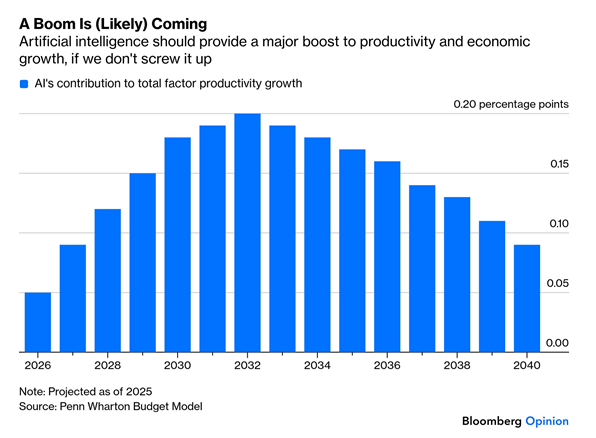
The current trajectory of AI in the enterprise echoes the evolution of relational database management systems (RDBMS) in the late 1990s. At that time, RDBMS vendors like Oracle, Sybase, Informix, and Ingres were at the forefront, competing fiercely on sophisticated features such as stored procedures and advanced indexing techniques. While these innovations were significant, the market eventually matured to a point where the underlying database technology itself became largely commoditized. The focus of business value then shifted decisively towards the applications that leveraged these databases to solve specific business problems.
A similar transition is now unfolding in the AI space. The "frontier" models, while undeniably powerful, are increasingly viewed as foundational components rather than end-to-end solutions. This is underscored by the emerging "price wars" among leading AI vendors, as reported by The Wall Street Journal. The threat of aggressive price reductions is characteristic of commodity markets where switching costs are low and differentiation lies less in the core technology and more in the value-added services and applications built upon it. Microsoft’s strategic positioning of its MAI models at a fraction of the cost of frontier offerings exemplifies this market dynamic, aiming to make AI more accessible and cost-effective for enterprise adoption.
Shifting Focus: From AI Implementation to Business Reengineering
In a typical enterprise technology adoption cycle, organizations meticulously build business cases, collaborate with IT departments to ensure security and data integrity, and then procure systems with clearly defined goals and measurable ROI. This rigorous process is standard for solutions like Paradox, Eightfold, or Radancy, which are designed as specific AI applications. However, this structured approach has not always been applied to the more open-ended adoption of foundational AI models, where the expectation has sometimes been that employees will simply "figure it out."

The reality for successful enterprise AI adoption lies in recognizing it as a reengineering process, not a magical output from a large language model (LLM). The HR 2030 model, a blueprint for high-value AI solutions in human resources, illustrates this point effectively. Transforming and accelerating hiring, for instance, necessitates a series of integrated agents and "superagents." This requires not only the purchase of specialized software but also close collaboration with IT and a fundamental redesign of existing talent acquisition workflows. Companies like Paradox, Maki, Radancy, and Smartrecruiters are at the forefront of offering such integrated solutions, which often lead to significant changes in talent acquisition roles and responsibilities.
Similarly, enhancing employee service centers involves leveraging platforms like Microsoft Copilot, Workday Sana Core, or ServiceNow, alongside specialized vendors. However, these initiatives are substantial projects demanding policy consolidation, robust governance frameworks, meticulous data management, and cross-functional teamwork. The outcome is often a reorganization of learning and development functions, rather than a simple deployment of a new tool.
Building a high-performance onboarding program, as exemplified by companies like Rolls Royce and Lockheed Martin, is another case in point. Such initiatives require broad consensus on program elements, the development of numerous global and role-specific use cases, and a sophisticated governance model to integrate tactical and strategic content. While the LLM is a component, it is a small fraction of the overall solution, which is heavily reliant on organizational alignment and process design.
The Path Forward: Applying AI for Tangible Business Value
The HR 2030 blueprint identifies approximately 130 distinct "Agents" that can be leveraged within HR functions, with options to either purchase pre-built solutions or develop custom ones. For organizations aiming to achieve a substantial ROI from AI, the focus must shift towards prioritizing strategic implementation areas, engaging closely with IT departments, and preparing the workforce for evolving roles, new skill requirements, and streamlined workflows.
The company’s own journey with Galileo, which models entire organizations and addresses complex issues in reorganization, compensation structures, and skill analytics, took nearly four years of dedicated effort. This involved extensive training, workflow integration, and the strategic leveraging of LLM features, underscoring that the system did not magically achieve its capabilities. It was the result of painstaking human effort in applying AI to solve specific, high-value problems.
This emphasis on problem-solving and application development is crucial for unlocking the return on the significant $1.5 trillion invested in the AI sector. As the market matures, the emphasis will continue to move from the "magic" inherent in LLMs to the architectural and engineering prowess required to build, buy, and customize AI-driven solutions. This transition from experimentation to strategic application promises to yield enormous payoffs for organizations that embrace this reengineering imperative.
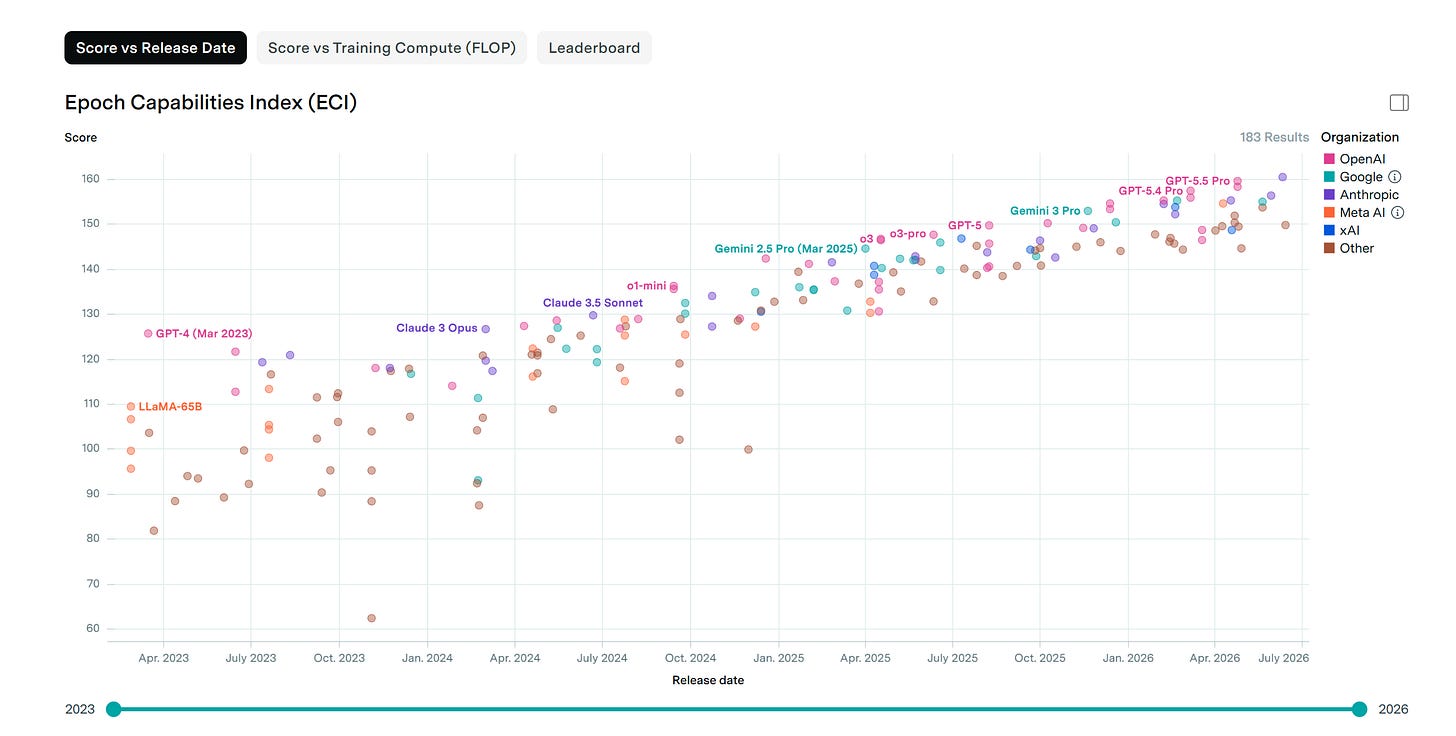
The slowing pace of fundamental model improvement, as depicted in capability evolution charts, is actually a positive development. It signals a maturation of the core technology, allowing businesses to focus on applying these increasingly capable tools to solve complex, domain-specific challenges. This shift is essential for moving beyond the initial phase of hype and into an era where AI demonstrably contributes to organizational efficiency, innovation, and strategic advantage. The future of enterprise AI lies not in the sophistication of the underlying models, but in the ingenuity and strategic focus applied to their implementation.