
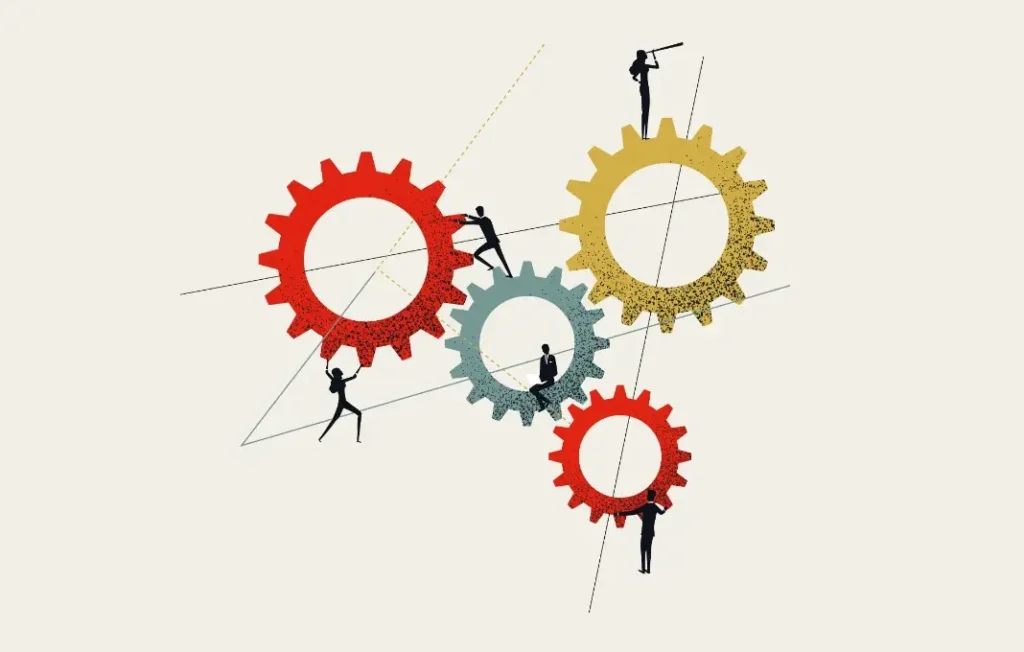
For decades, the bedrock of business strategy revolved around the creation and delivery of superior products and services. Companies competed on innovation, efficiency, and customer satisfaction, aiming to craft experiences that customers would simply consume. This transactional model, where value flowed predominantly from the company to the consumer, remained largely unchanged even with the advent of digital transformation. Speed and convenience improved, but the fundamental dynamic—companies as creators, customers as recipients—persisted. However, the emergence of generative artificial intelligence (AI) is poised to fundamentally redefine this relationship, ushering in an era of value co-creation and community cultivation as the true drivers of competitive advantage.
The Evolution from Reactive Service to Collaborative Experience
Historically, customer service operated primarily as a reactive function. Customers encountered issues, contacted support, and service agents worked to resolve them, with the primary goal being operational closure. This phase, prevalent for much of modern business history, focused on fixing problems after they arose.
As digital channels matured and data analytics capabilities advanced, businesses began to shift towards a proactive service model. Companies learned to leverage data to anticipate potential disruptions, notify customers in advance, and intervene earlier in the customer lifecycle. This approach reduced friction and boosted satisfaction, but the core dynamic of companies designing the experience and customers responding remained.
The current paradigm shift, powered by generative AI, represents a move towards a deeply collaborative model. Instead of passively receiving pre-designed experiences, customers are increasingly becoming active participants in shaping them. This evolution is transforming the customer experience from a one-way street of service delivery to a dynamic, continuous collaboration where organizations and customers jointly design outcomes. Generative AI acts as the crucial infrastructure, enabling this intricate level of collaboration at an unprecedented scale.
Generative AI: The Catalyst for Co-Creation
Generative AI’s ability to understand, process, and generate human-like text, images, and other content is the key enabler of this new collaborative landscape. It allows companies to move beyond simply inferring customer preferences from historical data. Instead, businesses can now invite customers to dynamically articulate their needs and desires. AI systems can then interpret these inputs in real-time, translating them into personalized outcomes. This elevates personalization to a level of genuine co-design, where the customer’s immediate input directly influences the experience.
The feedback loops associated with this new model are also far richer and more immediate. Traditional static surveys, often reviewed weeks after their completion, are being replaced by AI systems that can incorporate customer feedback instantaneously. This allows for continuous learning and adaptation, refining future experiences with every interaction.
Furthermore, generative AI is revolutionizing the innovation process itself. When customers can leverage AI-enabled platforms to simulate potential outcomes, experiment with different options, and explore alternatives, they effectively become co-innovators. Ideas that once required months of rigorous research and development can now emerge organically through the millions of real-time interactions between customers and intelligent systems. This democratization of innovation, driven by active customer participation, promises to accelerate the pace of product and service development significantly.
Co-Creation in Action Across Industries
The concept of co-creation, while amplified by generative AI, has roots in various business models. However, the current wave is dramatically expanding its scope and impact.
Financial Services: Personalized Planning and Strategic Guidance
In banking and financial services, AI-powered planning tools are empowering customers to explore complex life scenarios dynamically. Instead of receiving generic financial advice, individuals can model the impact of decisions such as increasing savings rates, acquiring additional property, or adjusting investment allocations, and immediately see projected outcomes. This shifts the role of the financial advisor from a mere information provider to a strategic guide, helping clients interpret a wider range of possibilities rather than simply delivering pre-determined recommendations. A recent report by Deloitte indicated that over 60% of consumers are interested in personalized financial advice powered by AI, signaling a strong demand for this co-creative approach.
Retail: Curated Experiences and Lifestyle Partnerships
The retail sector is witnessing a transformation where AI-driven environments allow customers to assemble highly personalized product combinations. From bespoke clothing collections tailored to individual styles to curated meal plans aligned with specific health goals and budget constraints, retailers are moving beyond static product catalogs. They are enabling customers to actively construct experiences that authentically reflect their individual identities. Over time, the retailer evolves from a transactional seller of goods to a collaborative partner in shaping how customers live, eat, dress, and travel. Industry analysts predict that by 2025, personalized shopping experiences will drive a 25% increase in customer loyalty and revenue for leading retailers.
Healthcare: Empowering Patients and Enhancing Clinical Judgment
The healthcare industry is also demonstrating the transformative potential of collaborative engagement. Patients can utilize AI tools to organize symptoms, review potential diagnoses, and generate informed questions prior to physician appointments. This pre-consultation preparation ensures that both patient and doctor enter the discussion with a shared understanding of the situation. Consequently, physicians can dedicate less time to information gathering and more time to exercising their clinical judgment and empathy, fostering a more collaborative diagnostic process rather than a one-sided consultation. Studies have shown that AI-assisted patient pre-screening can reduce physician consultation time by up to 15%, while simultaneously improving patient satisfaction.
Evolving Customer Support
Even traditional customer support interactions are gravitating towards co-creation. When issues are resolved, AI systems can capture nuanced customer insights into which aspects of the support process were helpful, confusing, or unnecessary. These insights are then fed directly into continuous improvement systems, refining service workflows in near real-time. This transforms service journeys into adaptive systems, continuously shaped by the cumulative experiences of millions of customers. Research from McKinsey suggests that companies implementing AI-driven feedback loops for service improvement can see a reduction in customer churn by as much as 20%.
The Deepening of Loyalty Through Co-Creation
The implications of this shift extend far beyond mere convenience or enhanced personalization. Co-creation fundamentally alters the psychological relationship between companies and customers, fostering a deeper and more resilient form of loyalty.
When customers actively participate in shaping their own experiences, they gain a profound sense of agency that traditional service models rarely afford. They feel empowered because they are not merely passive recipients of service but active shapers of outcomes. They feel respected because their perspectives demonstrably influence the organization’s decisions and offerings. Crucially, they feel connected, as the relationship begins to resemble a genuine partnership rather than a purely transactional exchange. These powerful emotional dynamics forge a loyalty that is significantly more robust than that generated by transient promotional incentives or conventional reward programs.
While discounts may attract customers temporarily, a true partnership builds enduring commitment. Customers who feel invested in the experiences they help to shape are far less likely to defect when competitors offer marginally better pricing or convenience. This loyalty is not easily replicated or eroded, providing companies with a significant and sustainable competitive advantage.
Leadership Imperatives for the Co-Creative Era
For Chief Operating Officers (COOs), Chief Customer Officers (CCOs), and transformation leaders, enabling co-creation necessitates a fundamental reorientation of organizational thinking. Traditional service organizations are typically structured around processes optimized for efficiency and control. In contrast, co-creation demands the design of platforms that prioritize participation, adaptability, and continuous feedback.
Leaders must shift their focus from rigid, fixed processes to dynamic experience platform systems. These platforms must enable customers to influence outcomes in real-time while simultaneously ensuring operational reliability and compliance. Transparency becomes paramount; when organizations solicit customer input, they must demonstrate how that input is leveraged to shape decisions. A lack of visible impact from customer feedback can erode trust more rapidly than any other factor.
A significant leadership challenge lies in striking a delicate balance between automation and customer agency. While AI systems can efficiently guide experiences, customers must retain meaningful control over decisions that directly affect them. If automation becomes overly prescriptive, the nascent sense of partnership can quickly dissipate. Leaders must therefore design experiences where AI serves as an intelligent assistant, rather than an unquestioned dictator.
Equally important is the imperative to protect customers from undue complexity. Co-creation should not feel like an arduous task. The most effective systems allow customers to shape outcomes intuitively, without requiring them to navigate convoluted interfaces or complex decision trees. Simplicity, therefore, remains an essential element even as customer participation intensifies.
Lessons from Early Co-Creation Models
Elements of co-creation have been present in various business models for years. Online marketplaces, for instance, have long utilized customer reviews and recommendation systems to influence future purchasing journeys, granting customers a degree of sway over how products are discovered and evaluated. Technology ecosystems offer even more robust examples, where platforms that empower external developers to build applications extend innovation far beyond the boundaries of a single company. In these ecosystems, the organization provides the foundational infrastructure, while the community contributes ideas, capabilities, and creative energy.
Generative AI is now poised to dramatically expand these models. Instead of confining co-creation to product reviews or developer communities, AI enables collaborative engagement across virtually every customer interaction—from purchasing decisions and service experiences to product development feedback and long-term relationship management.
Customers as Strategic Partners: The Future of Value Generation
The implications of this profound shift are far-reaching. The traditional business model positioned companies as creators and customers as mere consumers. In the emerging model, collaboration between organizations and the people they serve becomes the primary engine for value creation. Business strategy itself evolves in stages, moving from a product-centric mindset to an experience-centric one, and ultimately advancing towards a partnership-centric mindset where organizations and customers work in concert to generate value continuously.
In this evolving environment, the sources of innovation expand exponentially. Executives are no longer constrained by the limited pool of ideas generated solely within their internal teams. Instead, they benefit from the collective intelligence and lived experiences of an entire ecosystem of engaged customers, whose insights actively shape future offerings.
The next frontier of customer experience emerges not from companies doing more for customers, but from companies doing more with them. Generative AI makes this deep, meaningful collaboration possible at a scale previously unimaginable. By transforming interactions into genuine dialogue and personalization into enduring partnerships, organizations can evolve transactional service relationships into vibrant ecosystems of shared value.
Executives who embrace this evolution will discover that their competitive advantage no longer stems solely from the products they create or the services they deliver. It will emanate from the communities they cultivate—communities built on trust, collaboration, and a shared commitment to continuous innovation. In the future, successful organizations will realize they have transcended the role of serving traditional customers. They will have cultivated co-creators.
Adapted Excerpt from The Trust Algorithm: How Leaders Build Trust with Generative AI by Alice Sesay Pope.








