Human Resources (HR) has long grappled with a bifurcated identity, existing in a perpetual state of tension between its strategic potential and its perceived administrative limitations. For decades, the profession has been characterized by a fundamental question: is HR a pivotal strategic partner, instrumental in driving organizational value and fostering inspired human capital growth, or is it primarily an administrative function, relegated to the role of "company police," tasked with enforcing a labyrinth of rules, policies, legal mandates, and labor regulations? The former identity champions value creation and demands sophisticated human-centric skills, while the latter represents a necessary, albeit often burdensome, administrative overhead that proponents argue should be largely automated. This inherent duality has shaped the HR landscape for years, even manifesting in cultural artifacts like the "Don’t Trust HR" meme, which sought to position HR professionals as adversaries rather than allies to employees.
However, the profession is now poised for a monumental transformation, driven by the accelerating capabilities of Artificial Intelligence (AI). Beginning in 2026, the HR sector is embarking on a profound, AI-catalyzed reinvention. This seismic shift promises to resolve the long-standing conflict by liberating HR from its administrative burdens and propelling it toward a truly strategic, integrated "full-stack" model. This evolution signifies not just an improvement in efficiency but a fundamental redefinition of HR’s role within the modern enterprise.
The Weight of History: An Ever-Expanding Scope of HR Responsibilities
The HR profession is a global behemoth, employing an estimated 40 million individuals worldwide and encompassing hundreds of distinct job titles. Over the past half-century, the complexity and breadth of HR responsibilities have experienced an exponential surge. Each wave of new business paradigms, evolving social norms, and increasingly stringent legal frameworks has necessitated an expansion of HR’s mandate.
The profession’s origins were rooted in foundational tasks such as payroll processing, recruitment, and general work administration. As organizations matured and the understanding of human capital deepened, HR began to encompass areas like employee training, industrial psychology, and sophisticated job design. The 1960s and 70s saw the integration of industrial psychology principles, the formalization of career management, and the introduction of performance management tools like forced ranking and nine-box succession planning.
The subsequent decades witnessed the incorporation of an ever-growing list of critical functions. Employee well-being, the complexities of hybrid work models, Diversity, Equity, and Inclusion (DEI) initiatives (and, more recently, discussions around the potential "death of DEI" as a strategic driver), advanced productivity management, the cultivation of organizational culture, the optimization of management spans, and the development of leadership capabilities all became integral to HR’s purview. The advent of AI has now introduced an entirely new set of challenges and opportunities, including concepts such as "talent density," flexible organizational and job design, the notion of "jobless" work facilitated by AI, and vastly different approaches to pay equity and performance management.

The emergence of novel workforce structures, such as the concept of "superworkers" capable of performing multifaceted tasks—from app development to complex data analysis—raises profound questions about future compensation models. Will we see a rise in employees commanding compensation packages akin to those of visionary figures like Elon Musk? As new disciplines emerge, the older ones rarely disappear, leading to a fragmented HR landscape often characterized by numerous specialists, each overseeing one of the 100-plus identified domains.
Compounding this complexity is the intricate nature of organizational operating structures. Larger enterprises typically adopt a federated HR model, comprising a central corporate team and decentralized regional or business unit-specific teams. These local teams are frequently spearheaded by HR Business Partners, whose roles can span the spectrum from deeply strategic to purely bureaucratic. These partners are tasked with adapting global policies to meet the unique demands of specific regional job markets, labor laws, and cultural nuances. Consequently, HR must not only possess extensive expertise but also ensure its delivery is tailored to diverse local contexts. The process of hiring a software engineer in Singapore, for instance, presents a vastly different set of challenges and considerations than recruiting for the same role in Germany.
For the past two decades, the primary mechanism for managing this escalating complexity has been Human Capital Management (HCM) technology. Sophisticated systems from industry leaders like Workday, Oracle, and SAP have been widely adopted. However, these platforms have largely functioned as advanced workflow and record-keeping systems rather than comprehensive solutions to multifaceted human challenges. While adept at tracking employee data, managing payroll, and facilitating routine processes, they have historically necessitated a substantial human workforce to fine-tune, administer, and maintain them.
The AI Catalyst: Transitioning from Record-Keeping to Agentic Action
The year 2026 is poised to be a pivotal turning point for the HR profession, largely catalyzed by the widespread adoption of enterprise AI. This transformative technology is shifting the paradigm from merely enhancing individual productivity to fundamentally redesigning entire business processes. The focus is moving beyond incremental improvements to the creation of "Superagents"—intelligent systems designed to operate autonomously and at scale, fostering unprecedented levels of organizational autonomy and efficiency.
The analogy often drawn is that of the autonomous vehicle. Instead of continuously adding features to assist the driver (such as power steering, advanced braking systems, lane departure warnings, or automatic parking), the development of Superagents mirrors the consolidation of these independent functionalities into a singular, intelligent entity. This Superagent prioritizes the overall objective—the optimal mobility of passengers—rather than solely focusing on simplifying the driver’s tasks. In essence, the "driver" role, akin to a routine job, is rendered obsolete, leading to a significant increase in safety and efficiency, and opening the door to entirely new business models, such as pay-per-mile transportation services.
In the realm of HR and other business functions, a similar transition is underway. The progression has moved from individual "assistants" (early automation tools) to "agents" (software designed for individual productivity) and now towards "Superagents" capable of managing entire business processes autonomously. While this evolution will not occur instantaneously, its pace is accelerating rapidly.

Early applications of these Superagents are already demonstrating significant potential. Leading insurance companies, airlines, and pharmaceutical firms are actively collaborating on the development of Superagents for critical functions such as global onboarding, highly targeted talent acquisition, and comprehensive sales training. These agentic applications are poised to automate a substantial portion of existing HR roles, yielding greater organizational scale and demonstrably improved outcomes.
The Impending Shift in HR Employment: Automation and Role Evolution
Analysis conducted through proprietary AI-driven HR blueprints suggests that a significant portion of existing HR "jobs"—estimated to be between 30% and 40%—are highly susceptible to automation with relatively low implementation effort. Roles such as "interview scheduler," "recruitment coordinator," and "helpdesk assistant," which constitute the tactical and administrative backbone of traditional HR, are prime candidates for this automation.
The implications for individuals in these roles are not necessarily displacement but rather a redefinition of their responsibilities. Professionals currently engaged in these tasks can transition to new roles focused on building and managing AI agents, engaging more deeply with candidates, or providing strategic consultation to business units.
While some predict a contraction in the overall HR profession, data suggests a different trajectory. In the past five years, HR job postings have surged by approximately 60%, outpacing the growth of many other professional fields. The anticipated change lies not in the absolute number of HR professionals but in the composition of the workforce. Routine HR tasks will diminish, new AI-centric roles will emerge, and the majority of HR professionals are expected to adopt a more integrated, "full-stack" approach to their work. This evolution is also projected to lead to an increase in HR salaries as the demand for specialized skills rises.
Key Areas Ripe for AI-Driven Automation in HR
Based on comprehensive analyses of HR functions, several key areas have been identified as particularly well-suited for AI-driven automation:
- Recruitment and Talent Acquisition: Automating candidate sourcing, screening, interview scheduling, and initial communications.
- Onboarding and Offboarding: Streamlining the administrative processes associated with bringing new employees into the organization and managing departures.
- Payroll and Benefits Administration: Enhancing the accuracy and efficiency of payroll processing and benefits management.
- Learning and Development: Personalizing training recommendations, tracking progress, and managing learning platforms.
- Performance Management: Automating data collection, providing initial feedback, and identifying performance trends.
- Employee Relations and Support: Providing instant answers to common employee queries through AI-powered chatbots and knowledge bases.
The Rise of the "Full-Stack" HR Professional
The ultimate objective behind this wave of automation is not merely cost reduction but the significant enhancement of business value. By automating these processes, organizations can achieve greater scalability, improved accuracy, and a more seamless experience for employees and managers. HR teams will be empowered to accelerate hiring cycles, implement more strategic talent acquisition approaches, mitigate the detrimental effects of volatile "hire/fire" cycles, deliver real-time training to managers and employees, and proactively identify management challenges, high-turnover areas, and organizational risks with enhanced speed and predictability.
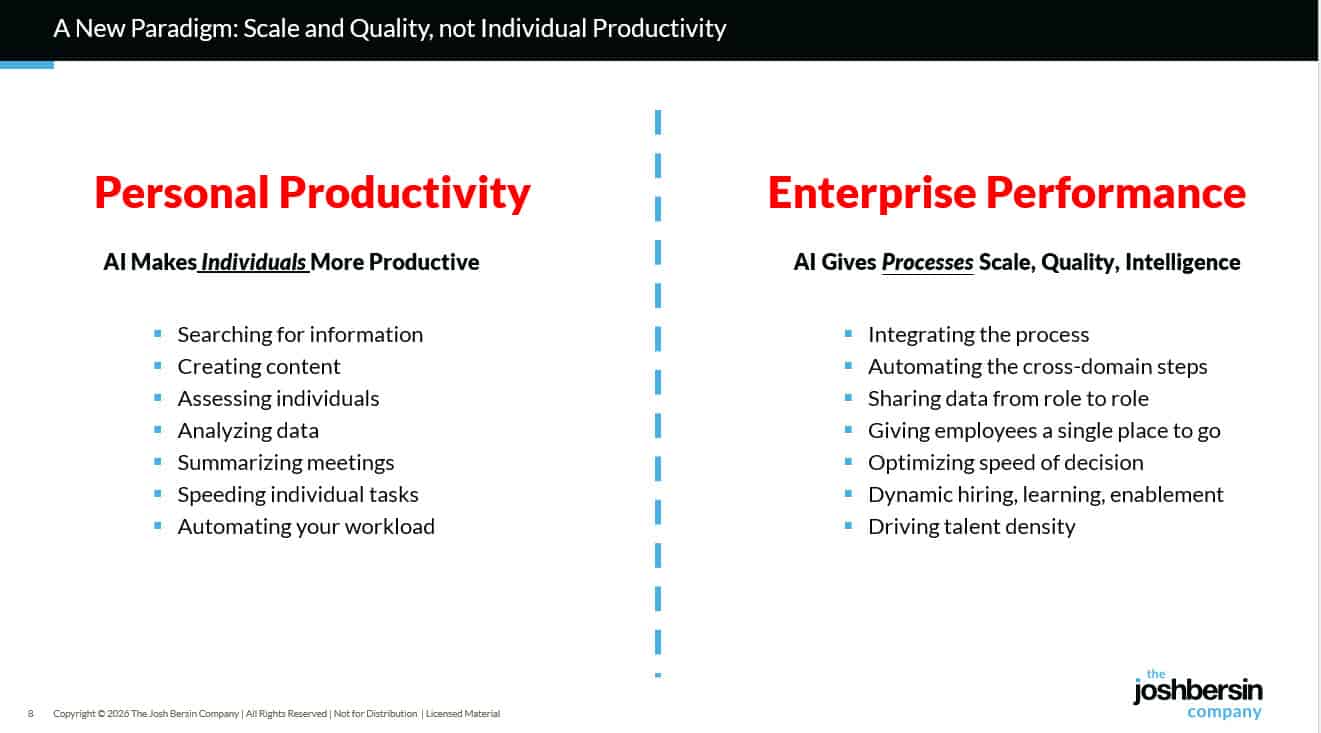
For HR professionals, this transformation frees them to concentrate on what is now termed "Full-Stack HR." This involves engaging in strategic initiatives that directly contribute to the company’s bottom line. The shift will foster closer collaboration between HR teams and the business units they serve. Instead of being bogged down by data entry or policy enforcement, HR professionals will be able to dedicate their efforts to higher-value activities, including:
- Strategic Workforce Planning: Aligning talent strategies with long-term business objectives.
- Organizational Design and Development: Shaping agile and effective organizational structures.
- Talent Management and Development: Cultivating high-potential employees and fostering career growth.
- Employee Experience and Engagement: Creating a positive and productive work environment.
- Culture and Leadership Development: Building a strong organizational culture and nurturing effective leaders.
- Change Management: Guiding organizations through periods of transformation.
Redefining HR Benchmarks: The Employee-to-HR Ratio
A traditional metric for evaluating HR efficiency has been the ratio of employees to HR staff, historically hovering around 100:1. As AI assumes responsibility for tactical and administrative tasks, this ratio is expected to shift dramatically, potentially reaching 200:1, 300:1, or even 400:1. While this suggests a need for fewer personnel in administrative roles, it does not necessarily equate to a substantial overall reduction in HR department size. The emergence of new AI-related roles will counterbalance the decline in administrative positions.
This evolving landscape also points towards an increase in HR professional salaries, driven by the demand for specialized skills and the demonstrable value delivered. Consider the tangible business impacts: a retail or food service company that leverages AI to expedite hiring and scheduling can directly increase revenue by more efficiently meeting customer demand, a strategy exemplified by companies like Chipotle. Similarly, manufacturing giants such as Boeing can boost production by enhancing training programs, fostering a robust safety culture, and facilitating more agile talent mobility—a concept actively being explored with such industry leaders.
The Critical Challenge of Data Quality and Trust
As HR operations accelerate to the pace of AI, the imperatives of accuracy, explainability, and trust become paramount. In manual systems, occasional human errors in recruitment or payroll are manageable. However, in highly automated systems operating at scale, a single error in an algorithm or a payroll rule could instantaneously impact thousands of employees.
A significant portion of new HR roles will therefore revolve around the meticulous management of data quality and system integrity. HR professionals will be responsible for ensuring that the AI agents deployed are powered by accurate, up-to-date, and comprehensive data. Furthermore, HR now shoulders the responsibility of addressing AI bias and fostering trust in these systems. Recent legal challenges against HR technology vendors, such as those involving Workday and Eightfold, underscore the critical importance of developing explainable and high-trust AI systems. The burden of ensuring AI fairness and transparency now squarely rests on the shoulders of HR departments.
The transformation of the HR profession is not a future hypothetical; it is a present reality. For HR professionals and leaders, embracing this evolution through continuous learning and strategic adaptation is essential. Resources such as specialized AI-driven training programs and expert consultations are available to guide organizations through this profound HR transformation, ushering in an era where HR is unequivocally a strategic powerhouse driving organizational success.