
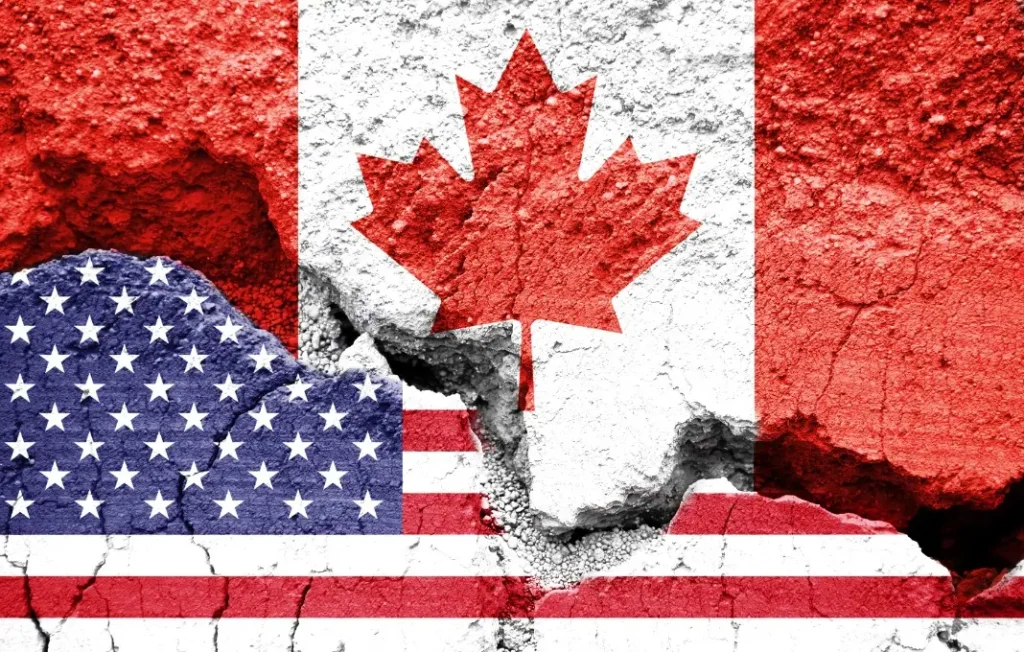
The recent imposition of 50 percent tariffs by the United States on a range of Canadian goods, effective August 22, has sent ripples through the North American economic landscape. While the immediate impact is felt on approximately $20 billion annually in Canadian exports, representing about 5% of the total trade volume between the two nations, the true concern lies in the escalating retaliatory measures and the potential for sustained economic disruption. This analysis, drawing insights from pricing strategist Adam Echter of Simon-Kucher, offers a framework for businesses to understand their position, capitalize on emerging opportunities, and prepare for a potentially altered economic future.
The Escalation of Tariffs: A Chronology of Trade Tensions
The initial wave of U.S. tariffs targeted a specific list of Canadian imports, including cement, furniture, plywood, textiles and apparel, seeds, refrigeration equipment, cosmetics, jewelry, hockey sticks, fishing rods, swimming pools, and wigs. These measures, while significant for the affected sectors, represent a relatively small fraction of the overall bilateral trade, which reached an estimated $674 billion in goods in 2022 according to U.S. Census Bureau data.
However, the situation is far from static. The anticipated response from Canada, slated for September 8, involves counter-tariffs on approximately C$27.6 billion of American goods. This retaliatory list includes key sectors such as steel, dairy, appliances, agricultural equipment, pulp and paper, and electronics. The United States has, in turn, threatened further escalation, with a potential 50 percent duty on Canadian cars and car parts slated for January. This looming threat poses a significant challenge to integrated automotive manufacturing operations, such as those of Ford Motor Company, which maintains extensive cross-border production facilities.
Analyzing the Landscape: Identifying Winners and Losers
Adam Echter of Simon-Kucher emphasizes a critical perspective: the headlines often overstate the universal negative impact of such tariffs. "You’ll find that a lot of people are not as exposed to this stuff as the headlines are going to read," Echter notes. "They splash these big numbers on the headlines, but then they take all this stuff out. Exceptions, exceptions, exceptions, exceptions."
Echter’s analysis suggests a bifurcated impact, with large multinational corporations potentially bearing the brunt of the financial strain, while many mid-sized and regional businesses could emerge as beneficiaries. "For every loser, there’s a winner," he states. "And in a lot of these cases, there are mid-market U.S. winners. The losers are the big multinationals. But the small Texas-based manufacturer, the regional player in Michigan, those could be the winners."
Businesses are advised to conduct a thorough internal assessment to determine their exposure. This involves examining supply chains, identifying competitors’ vulnerabilities, and understanding how large international players within their industry might be impacted. Companies that find themselves in a favorable position can leverage this analysis to their advantage.
Capitalizing on Opportunity: Strategic Pricing for "Winners"
For U.S. producers who find themselves on the advantageous side of these trade shifts, Echter advocates for a proactive and assertive pricing strategy. The imposition of significant tariffs on imported goods effectively creates a void in the market, driving demand towards domestic alternatives.
"Recognize your position of power," Echter advises. "Be aware that they’re calling because they can’t get your products anywhere else. And the people on the phone are going to be very nice when they say, ‘I have so much volume. What a great deal for you. I need it for 75 cents.’ You need to be prepared to say, ‘Thank you. I have this widget and you need this widget. It’s $1.50.’"
This strategic pricing adjustment is not merely about capitalizing on a temporary windfall but about signaling the new market reality. The goal is to shift the sourcing paradigm, encouraging buyers who previously relied on Canadian suppliers to re-evaluate their procurement strategies.
Navigating Volatility: Hedging Against Uncertainty
While the immediate opportunity is clear, Echter cautions against long-term, irreversible commitments based on the current tariff environment. The political landscape surrounding trade policy is inherently volatile, and the duration of these tariffs remains uncertain. "Don’t go and get a bank loan and triple your capacity," Echter warns. "There’s a high likelihood that this will resolve itself within, call it six years, if you want to put a political cycle in it, but maybe six days, who knows?"
The recommended approach involves maximizing current capacity utilization. Businesses should focus on increasing production volumes through measures like adding shifts and weekend work. Once existing facilities are operating at full capacity, price increases can be implemented to capture the enhanced profitability. This strategy allows companies to benefit from the current situation without making substantial, potentially ill-advised, capital investments.
Furthermore, it is crucial to recognize that once the tariffs are lifted, customer loyalty may not be a significant factor. Procurement departments are often driven by cost-efficiency, and former suppliers will likely revert to competitive pricing. Therefore, any capacity expansion decisions should be rigorously evaluated based on the return on investment (ROI) being achievable before the potential expiration of the tariffs.
Pricing Discipline: The Power of Surcharges
A key pricing tactic recommended by Echter is the use of surcharges rather than permanent list price adjustments. Attempting to constantly update list prices to reflect fluctuating tariff rates can lead to confusion and protracted negotiations with customers. A surcharge, directly tied to a specific cost driver like a tariff, can be adjusted or removed as the underlying cost changes. This approach offers greater flexibility and simplifies communication with clients. "If you’re trying to constantly update your list prices with all the different tariffs and changes that are happening and moving, it’s going to be incredibly difficult and confuse everybody," Echter explains. "A surcharge tied to a named cost driver moves when the driver moves, and it disappears when the driver does."
For the "Losers": Reassessing and Re-evaluating
Companies on the receiving end of these tariffs face a more challenging scenario, but one that also necessitates strategic action. Echter suggests dusting off existing tariff playbooks developed during previous trade policy shifts. "So you’re not starting from scratch, hopefully. Don’t forget that you already freaked out a year ago."
A May 2025 survey conducted by AlixPartners revealed that a significant majority of U.S. CEOs (68%) had either raised prices or were considering doing so in response to trade tensions, while 67% reported their vendors had increased prices. This indicates that many businesses have already begun to adapt. Past scouting of alternative suppliers should be revisited, as they may now represent viable options.
The critical step for affected businesses is rigorous financial modeling. The impact of a tariff on a component that represents a small portion of overall costs might be absorbed to avoid significant price increases that could alienate customers. However, if a tariffed item constitutes a core input and a substantial part of the cost of goods sold, the situation becomes existential.
"You can no longer assume these little pass-through tariffs that you can get away with," Echter states. "You have to ask yourself, ‘If I have to take it on the chin and double my price, what does that do to my plant from a volume perspective? And then am I in business? Am I laying off people?’"
Companies must model the impact of sudden cost increases, a scenario rarely encountered in natural market conditions. Understanding how demand elasticity shifts at significantly higher price points is crucial for determining whether the business strategy should focus on survival, reformulation of products, or resourcing of supply chains.
Beyond Tariffs: The Enduring Shift Towards Higher Costs and Fragmented Markets
While the immediate focus is on the U.S.-Canada trade dynamic, Echter emphasizes a broader, more systemic economic shift that transcends specific tariff policies. The combination of soaring national debt, persistent borrowing costs, and entrenched inflation is creating a durable change in market behavior, characterized by persistently higher prices and potentially lower volumetric growth. This represents a fundamental departure from the low-inflation, volume-driven growth model of the 2010s.
The automotive industry serves as a stark example. Industry-wide sales volumes have declined significantly, and the trend towards producing higher-end vehicles to cater to affluent customer segments is reshaping the market. This upward migration by established players creates opportunities at the entry-level for new entrants.
A cautionary tale can be observed in the beverage industry. A large brewery, once dominant in its regional market, may find itself too big for its current scale of demand, producing a high volume of a single product that no longer aligns with fragmented consumer preferences. This mirrors a broader industrial challenge: the need for flexibility and diversification in production.
Preparing for the Future: Embracing Agility and Value-Based Pricing
The enduring lesson from the current trade environment, according to Echter, is the necessity for adaptability and a departure from traditional mass-production models. Instead of producing one product in massive quantities, businesses must cultivate the capacity to manufacture multiple products at varying price points to meet a fragmented demand.
"Instead of having one plant making one product and selling a thousand units, you need to start preparing now for a new world of flexibility," Echter advises. "You have to get that plant making 10 products at 10 different price points if you want to still sell a thousand, because everything is fragmenting."
The strategic imperative is not solely about reacting to immediate tariff-related challenges but about building an inherent organizational capability for dynamic adaptation. This involves cultivating a disciplined approach to product portfolio management and pricing. Companies should continuously assess where they add value, how that value is shifting, and how to price their offerings accordingly. This continuous process of deconstruction and re-evaluation is a critical muscle that businesses must develop to thrive in the evolving economic landscape. The ability to pivot, adapt, and consistently re-evaluate value will be the defining characteristic of successful enterprises in the years to come, irrespective of specific trade policies.








