
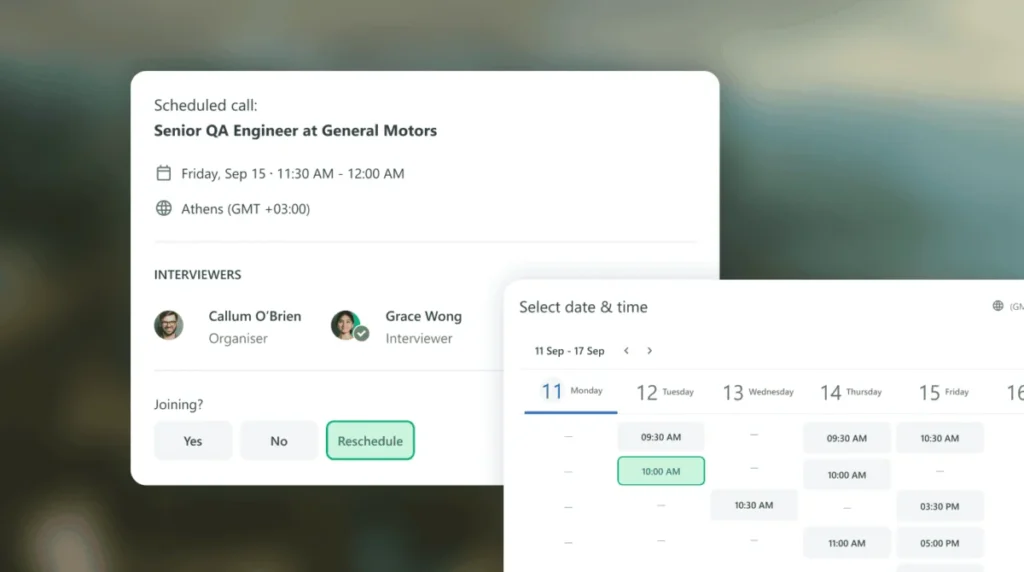
The modern talent acquisition landscape demands agility, efficiency, and a profound respect for candidates’ time. In response to long-standing frustrations within the hiring process, a significant advancement in recruitment technology has been unveiled: a robust candidate self-rescheduling feature designed to eliminate friction and elevate the interview experience. This development directly addresses a critical pain point for both job seekers and hiring teams, promising to reshape how organizations manage interview logistics and perceive candidate engagement.
For years, a common scenario has plagued hiring managers and recruiters alike: a meticulously planned interview invitation is dispatched to a promising candidate, aligning perfectly with internal schedules. However, hours or even moments before the scheduled time, an email arrives – often apologetic, citing an unforeseen conflict, and requesting a reschedule. What typically ensues is a laborious "dance" of multiple email exchanges, diligent calendar checks, intricate coordination with various interviewers, and often, days later, a new time is finally confirmed. This administrative burden not only consumes valuable recruiter time but also risks alienating strong candidates who might begin to question the efficiency and candidate-centric ethos of the prospective employer. The latest scheduling improvements aim to eradicate this pervasive friction entirely, ushering in an era of enhanced autonomy and efficiency.
The Persistent Challenge of Interview Scheduling Inefficiency
The scale of the problem is more significant than many realize. Industry data reveals a startling statistic: on average, only 50% of initial interview requests successfully translate into booked meetings. To put this into perspective, if a company receives 200 applications and extends interview invitations to 40 qualified candidates, approximately half of those opportunities – around 20 potential hires – are lost before the conversation even commences. This high attrition rate at the very initial stages of engagement represents a substantial loss of investment in sourcing and screening, directly impacting an organization’s ability to attract and secure top talent.
Delving deeper into the root causes, research involving over 10,000 candidates highlighted a crucial systemic issue. A significant number of candidates received multiple scheduling requests while at the same stage of the hiring process. This wasn’t merely due to recruiter oversight but was often the direct consequence of rigid, outdated scheduling workflows. When a candidate inevitably needed to reschedule an interview, the prevailing system offered only one option: generating a brand-new scheduling link, effectively restarting the entire coordination process. This cumbersome approach forces candidates to navigate a bureaucratic loop, creating unnecessary delays and increasing the likelihood of disengagement.
The cumulative impact of these inefficiencies quickly becomes substantial. Candidates experience palpable friction at a critical juncture of their job search, potentially forming a negative impression of the company. Recruiters are forced to allocate precious time to mundane logistical coordination, diverting resources from more strategic activities such as talent sourcing, candidate nurturing, and stakeholder engagement. Crucially, a significant number of promising interviews never get finalized, leading to extended time-to-fill metrics and, ultimately, lost talent. Industry reports frequently underscore that administrative tasks consume up to 40% of a recruiter’s day, with scheduling being a major component of this overhead. Addressing this inefficiency is not just about convenience; it’s about optimizing the entire talent acquisition funnel.
The True Meaning of a Positive Candidate Experience
In an increasingly competitive talent market, where candidates often have multiple options, the quality of the candidate experience has become a primary differentiator for employers. Extensive research across diverse industries consistently points to one overarching theme: the most compelling candidate experiences are built upon foundational principles of respect and autonomy.
When job seekers are empowered to manage their own schedules, much like they would for any other professional meeting or personal appointment, they feel trusted, valued, and respected. This self-service capability aligns with broader consumer expectations in the digital age, where individuals expect seamless, on-demand control over their interactions with services and brands. Conversely, when candidates are funneled into rigid, one-way communication flows that offer little flexibility, the experience can feel impersonal and transactional, akin to being "processed" rather than "partnered with." This perception can severely undermine an employer’s brand, especially for companies striving to project an image of innovation, flexibility, and employee-centric culture.
A positive candidate experience extends beyond the interview itself; it encompasses every touchpoint, from initial application to onboarding. Providing candidates with control over their scheduling communicates a company’s commitment to modern work practices and a deep respect for individual circumstances. It signifies that the organization understands the demands on a candidate’s time and values their professional input from the very first interaction.
How Candidate Self-Rescheduling Transforms the Process
The newly introduced self-rescheduling feature marks a significant leap forward in candidate experience and operational efficiency. Here’s a breakdown of its core functionality and immediate benefits:
Candidates can now reschedule their interviews with a single click. This eliminates the arduous back-and-forth email threads, the anxious waiting for a response, and any lingering concerns about inconveniencing the hiring team. Upon needing to adjust their interview time, candidates are presented with the same pool of available slots originally offered, allowing them to independently select a new time that suits their updated schedule. This intuitive process mirrors the convenience of rescheduling flights or doctor’s appointments, bringing recruitment into alignment with modern digital expectations.
Crucially, this feature incorporates intelligent guardrails designed to protect both the candidate experience and the efficiency of the hiring team. While the exact parameters can be customized, typical safeguards include:
- Time-bound Rescheduling: Candidates might only be able to reschedule within a specified window (e.g., up to 24 or 48 hours before the original interview time) to prevent last-minute disruptions.
- Limited Reschedule Attempts: A cap on the number of times a candidate can reschedule an interview (e.g., one or two times) ensures commitment and prevents endless adjustments.
- Automated Notifications: All relevant parties – the recruiter, hiring manager, and other interviewers – receive immediate, automated updates when a candidate reschedules, ensuring everyone is informed without manual intervention.
- Maintaining Original Interview Parameters: The new slot must adhere to the original interview type, duration, and participant requirements, ensuring the integrity of the process.
These intelligent controls ensure that while candidates gain unprecedented autonomy, the hiring process remains structured, fair, and efficient for all stakeholders.
A Holistic Approach: Beyond Self-Rescheduling
While candidate self-rescheduling is undoubtedly the headline feature, this comprehensive update reflects a broader commitment to optimizing the entire interview lifecycle. Based on extensive feedback from hiring teams and candidates, several other critical pain points have been addressed, resulting in a suite of enhancements designed to create a smoother, more transparent experience. Although specific details of these "eight additional improvements" were not fully enumerated, they typically encompass areas that bolster the overall scheduling ecosystem:
- Enhanced Calendar Synchronization: More robust and real-time integration with leading calendar platforms (Google, Microsoft Outlook) to minimize double-bookings and ensure accurate availability display.
- Configurable Buffer Times: Allowing hiring teams to automatically incorporate buffer periods between interviews or before/after meetings, preventing back-to-back scheduling burnout.
- Streamlined Interviewer Assignment: Easier management and assignment of multiple interviewers for panel interviews, ensuring all participants are correctly notified and their availability is considered.
- Customizable Notification Templates: Greater flexibility in crafting automated email and calendar invitation templates, allowing for personalized messaging and branding.
- Automated Reminders: More intelligent and customizable reminder systems for both candidates and interviewers, reducing no-shows and ensuring punctuality.
- Improved Video Conferencing Integration: Seamless linking with various video conferencing platforms, embedding meeting links directly into calendar invites and candidate communications.
- Consolidated Feedback Loops: Enhancements that integrate interview feedback collection directly within the scheduling workflow, prompting interviewers to submit their evaluations promptly.
- Advanced Analytics and Reporting: New dashboards and reports offering insights into scheduling efficiency, candidate drop-off rates at the scheduling stage, and overall interview conversion rates, enabling continuous process improvement.
These enhancements collectively contribute to a more resilient, user-friendly, and data-driven scheduling environment, underscoring a commitment to continuous improvement in recruitment technology.
The Far-Reaching Implications for Recruitment
These multifaceted improvements transcend mere convenience; they fundamentally recalibrate the power dynamic in recruiting, moving towards a more equitable and efficient model.
For Candidates: This means being treated with the professionalism and respect they deserve. They gain the ability to manage their schedules autonomously, communicate changes clearly, and experience prospective companies as flexible, modern, and respectful from their very first interaction. This positive initial impression can significantly influence their perception of the company’s culture and ultimately, their decision to accept an offer. In a talent market where candidates are increasingly selective, a seamless and respectful hiring process can be a decisive factor.
For Hiring Teams: The benefits are profound, translating into dramatically reduced administrative overhead. No more endless email ping-pong, no more manual calendar updates, and no more frantic investigations into why a promising candidate suddenly "ghosted" an interview. Recruiters are liberated from tedious logistical tasks, freeing up valuable time to focus on strategic activities such as proactive sourcing, cultivating strong candidate relationships, and engaging deeply with hiring managers. This shift allows recruiters to become true talent advisors rather than administrative coordinators.
For Organizational Hiring Metrics: The impact is quantifiable and significant. Companies can anticipate faster time-to-fill rates, as delays associated with scheduling friction are minimized. Higher interview show rates will directly translate to more completed interviews and a more efficient use of interviewer time. Furthermore, improved candidate satisfaction scores will bolster employer branding, making it easier to attract future talent and convert prospects into loyal employees. These are all measurable improvements that directly contribute to a stronger talent pipeline and a healthier bottom line. Industry analysis suggests that a positive candidate experience can reduce cost-per-hire by up to 20% and improve quality-of-hire by 10%.
Why This Shift Matters: A Modern Talent Market Imperative
The traditional recruiting model, for too long, concentrated nearly all the power on one side of the table. Companies dictated when and how interviews would occur, and candidates were largely expected to conform their personal and professional schedules to fit these rigid parameters. This antiquated approach, however, is fundamentally incompatible with the dynamics of the modern talent market.
Today’s most sought-after candidates are not passively waiting for opportunities; they are actively evaluating companies as much as companies are evaluating them. They are discerning, informed, and often juggling multiple opportunities. Every single interaction during the hiring process – from the initial job description to the final offer – serves as a critical data point, shaping their perception of the company culture, values, and operational efficiency.
When candidates are granted the autonomy to manage their interview schedules, it sends an unequivocal and powerful message: their time is genuinely respected, they are trusted to act professionally, and the organization is committed to treating people well from the very first interaction. This aligns with the broader societal shift towards flexibility, work-life integration, and employee empowerment. Companies that embrace these principles early in the recruitment process are better positioned to attract, engage, and retain the best talent. This isn’t just a matter of good recruiting practice; it is, unequivocally, good business strategy.
Seamless Implementation and Continuous Evolution
The new self-rescheduling feature is now readily available to all customers utilizing Google or Microsoft Calendar integrations. A key aspect of this rollout strategy is its non-disruptive nature: existing scheduling workflows and links remain active, allowing teams to adopt the new functionality at their own pace. This ensures a smooth transition, enabling organizations to integrate the feature without halting ongoing recruitment efforts or requiring immediate, system-wide changes. The technical backbone relies on robust API integrations with leading calendar services, ensuring data accuracy and real-time updates across platforms.
These comprehensive updates are a direct reflection of continuous feedback from thousands of hiring teams and candidates. They are meticulously designed to alleviate friction, enhance transparency, and inject a much-needed dose of respect and autonomy into the interview process. While these advancements represent a significant stride, the landscape of recruitment technology is ever-evolving. Scheduling, in particular, remains an area where even seemingly small, incremental changes can yield profoundly meaningful differences in candidate satisfaction and operational efficiency.
Ultimately, the philosophy underpinning these innovations is clear: thoughtful hiring technology should serve to remove obstacles, not create them. When the scheduling process operates with seamless efficiency, hiring teams can redirect their focus away from cumbersome coordination and towards what truly matters – engaging in meaningful conversations with the right candidates, thereby making more informed and impactful hiring decisions. This strategic shift empowers organizations to build stronger teams, faster, and with a significantly enhanced candidate experience.
Ready to empower your candidates and streamline your interview process? Explore the new scheduling features or reach out to learn how they can seamlessly integrate into and elevate your existing hiring workflow.






