

While leading AI development firms like Anthropic and OpenAI command substantial market valuations, the true return on investment for enterprise artificial intelligence is increasingly being realized not from the foundational models themselves, but from the innovative applications and the unique data that power them. This phenomenon mirrors a significant market evolution observed in the relational database sector during the 1990s, where the underlying technology became commoditized, and value shifted to the applications built upon it.
The current landscape of AI is marked by the availability of powerful "frontier models" from major players such as OpenAI, Anthropic, Google, and Microsoft (often referred to as MAI). Simultaneously, a robust ecosystem of free and open-source models, including those from GLM, Deepseek, Kimi, Mistral, and IBM’s Granite, has emerged. This proliferation of advanced AI capabilities prompts a critical question: are businesses ready to transition from viewing AI as a novel, "cool" technology to adopting it as a standard, indispensable tool for building practical solutions?
This transition appears to be well underway. Satya Nadella, CEO of Microsoft, articulated a similar perspective in a recent Wall Street Journal article titled "We Can’t Let AI Giants Eat the Economy." His viewpoint suggests a growing recognition that the long-term success of AI in the enterprise hinges on its integration into core business processes and applications, rather than on the allure of the models alone.
Research conducted for an upcoming report, "Enterprise AI Playbook," which surveyed over 200 companies, indicates that a significant portion of businesses are still in the early stages of AI adoption. Approximately only 8% of these organizations are actively developing and deploying substantial enterprise-grade AI applications. A common approach observed is the procurement of AI tools with the implicit hope that individual employees will organically discover valuable use cases. This often resembles an employee perk rather than a strategic business initiative. For instance, utilizing platforms like Galileo, which can leverage various models including Anthropic’s Claude, has demonstrated that without a clear focus on specific domains and problems, there is a considerable risk of time and resources being spent on aimless experimentation.

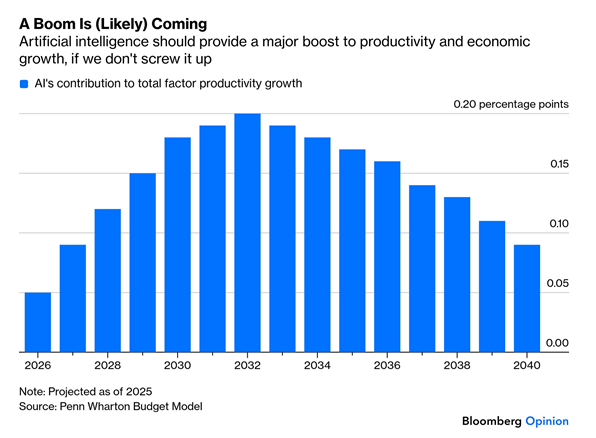
This shift in focus is also reflected in the recalibration of expectations among economic analysts. Initial optimistic projections regarding the immediate transformative impact of AI on productivity and economic growth are being tempered by a more pragmatic assessment of implementation challenges and the actual value generated.
The Normalization of Enterprise Technology Adoption
In a typical enterprise technology procurement cycle, the process is characterized by a structured approach. A business need is identified, a compelling business case is developed, and extensive collaboration with IT departments ensures security, data integration, and robust support. The system is then purchased with clearly defined objectives and measurable return on investment (ROI). This disciplined methodology is evident when companies acquire AI-powered applications like Paradox, Eightfold, or Radancy, which are designed to solve specific business problems. However, this level of strategic planning is often absent when companies simply acquire access to foundational models like Claude and allow employees to explore their capabilities without defined objectives.
The inherent capabilities of generative AI—its proficiency in coding, image generation, data analysis, and information retrieval—are undoubtedly impressive. However, the sheer novelty and "fun" factor of these abilities do not automatically translate into tangible business value, particularly when consumption comes at a significant cost. The true payoff from AI is unlocked when it is integrated with an organization’s proprietary data, tailored to specific applications, and contextualized within the unique operational environment of the business.
The extensive investments in AI development, estimated to be in the trillions of dollars from forward-looking investors, have subsidized a period of broad experimentation. This capital has funded the engineers, data centers, advanced hardware like NVIDIA processors, and the substantial energy infrastructure required for AI operations. As these pragmatic investors seek returns, the era of freely accessible AI experimentation is likely drawing to a close. Businesses will increasingly face direct costs for AI usage, a trend exacerbated by recent price adjustments from major technology providers, such as Apple’s reported 20% increase on some services.
The Dawn of a Commodity Market for AI Models
The recent emergence of "price wars" among leading AI vendors, as reported by The Wall Street Journal, signals a maturing market. When major AI providers begin to engage in competitive pricing strategies, it often indicates a shift towards commoditization, where the underlying technology becomes more standardized and switching costs for customers decrease. This scenario is characteristic of mature commodity markets.
Microsoft’s strategy, as articulated by Satya Nadella, exemplifies this trend. Microsoft’s own AI models (MAI) are reportedly being developed to offer a significantly lower cost compared to the premium frontier offerings, potentially at one-tenth the price. This competitive positioning suggests that the foundational AI models are becoming a more accessible and cost-effective utility, much like other established enterprise technologies. This development heralds the arrival of a "normal technology market," where pricing and cost are directly commensurate with the value and specific problems that the technology addresses.
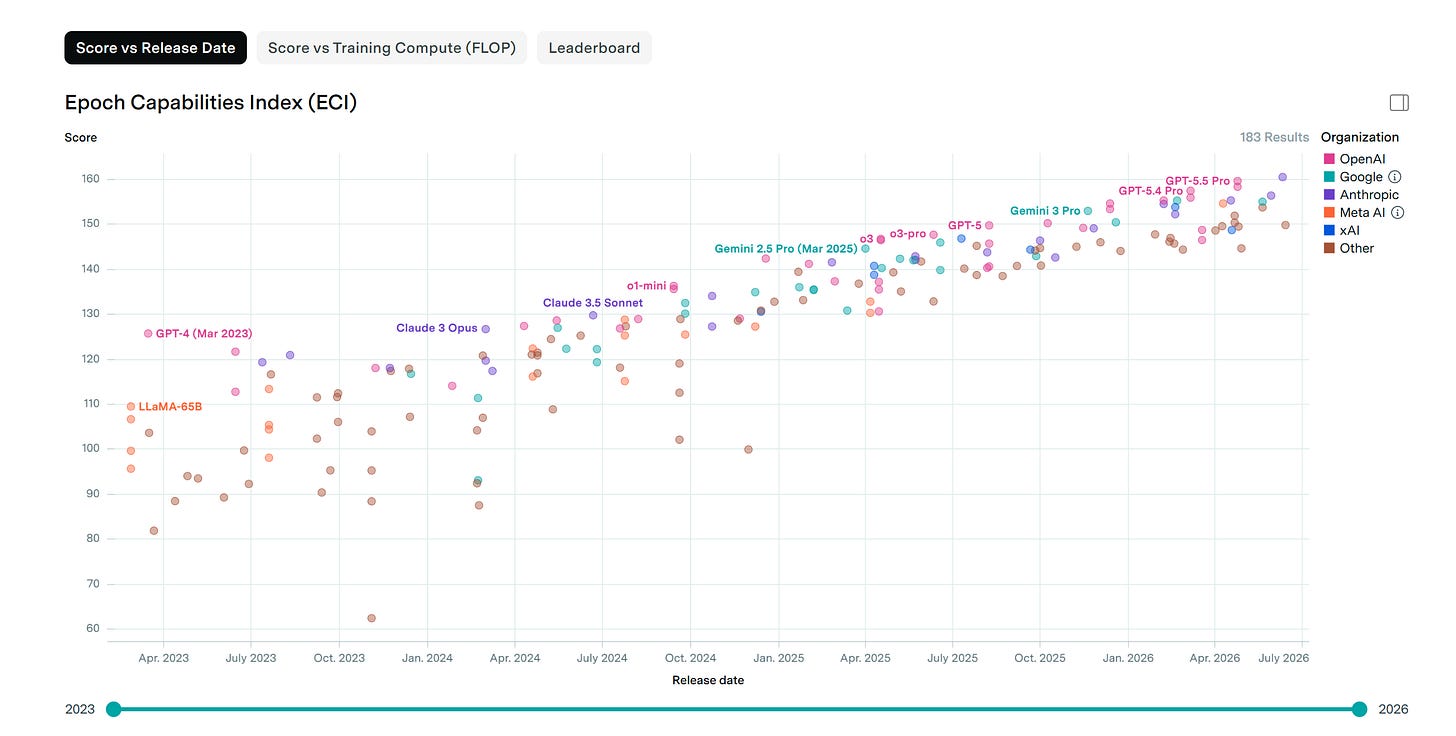
The pace of innovation in foundational AI model improvement also appears to be moderating. While still rapid, the rate of advancement in core model capabilities has begun to slow, as illustrated by capability evolution charts tracking AI development. This deceleration is a positive development for enterprise adoption, as it allows organizations to focus on developing concrete solutions rather than chasing the latest, rapidly evolving model. Companies are now more inclined to invest in problem-solving rather than simply acquiring technology with the expectation of serendipitous value creation. In the corporate sphere, the emphasis is shifting from "implementing AI" to "applying AI" to address specific, high-value challenges.
The Enterprise AI Re-engineering Imperative
The trajectory of enterprise AI adoption underscores that significant ROI is achieved through a comprehensive re-engineering process, not merely through the deployment of a foundational large language model (LLM). This realization is evident in models like the HR 2030 blueprint, which outlines high-value AI use cases within human resources. It highlights that transforming critical functions, such as accelerating hiring processes, requires more than just acquiring AI agents or superagents. It necessitates strategic partnerships with IT departments, a thorough redesign of existing talent acquisition workflows, and the integration of AI into a broader operational framework. Leading vendors in this space, including Paradox, Maki, Radancy, and Smartrecruiters, are emphasizing their application-specific solutions that often involve significant process redesign and workforce role adjustments.
Similarly, enhancing employee service centers through AI necessitates a strategic project approach. While platforms like Microsoft Copilot, Workday Sana Core, and ServiceNow offer powerful capabilities, their effective implementation involves consolidating policies, establishing robust governance frameworks, managing data effectively, and fostering cross-functional collaboration. This often leads to the reorganization of learning and development functions to support new skill requirements.
Building a high-performance onboarding program, as demonstrated by companies like Rolls Royce and Lockheed Martin, requires extensive consensus-building on program elements, the development of globally applicable and role-specific use cases, and the creation of a governance model to ensure tactical and strategic content remains current and integrated. In these instances, the LLM itself is a component, but a small fraction of the overall solution.

The development of a comprehensive AI strategy often involves identifying numerous potential "agents" or AI-powered functionalities. For instance, the HR 2030 blueprint identifies approximately 130 such agents, some of which can be purchased, while others require in-house development. To achieve meaningful returns from AI, organizations must prioritize these opportunities, collaborate closely with IT, and prepare their workforce for evolving roles, new skill sets, and more efficient workflows.
A Parallel to the Relational Database Revolution
The current evolution of the LLM market bears a striking resemblance to the relational database market in the late 1990s. At that time, companies like Oracle, Sybase, Informix, and Ingres offered powerful database management systems (RDBMS) with increasingly sophisticated features. However, as these technologies matured, the distinctions between them became less critical for most applications. The focus of value creation shifted from the RDBMS itself to the business applications that leveraged these databases.
A similar paradigm shift is now unfolding in the enterprise AI landscape. While organizations like Josh Bersin’s are leveraging AI platforms like Galileo to model entire organizations and solve complex problems in areas such as reorganization, compensation structures, and skills analytics—tasks that previously required months of consulting work—this capability was not an inherent feature of the LLM. It required nearly four years of dedicated effort to train the system, integrate workflows, and harness the advanced features of the LLM.
The implication for HR and IT professionals is clear: the future of enterprise AI lies in identifying high-value business problems and strategically applying AI to build, acquire, or customize solutions. The "magic" within the LLM, while foundational, is becoming less of a differentiator as the focus shifts to practical application and problem-solving.
The substantial $1.5 trillion investment in AI is now poised to demand tangible returns. This necessitates a transition from broad experimentation to disciplined architectural and engineering efforts. By embracing this approach, organizations can unlock enormous payoffs. This strategic shift is supported by the slowing velocity of core LLM improvement, which encourages a deeper focus on domain-specific application development.
This ongoing transformation is a positive development, signaling a move towards more mature and value-driven adoption of artificial intelligence within the enterprise. The focus will increasingly be on how AI can be engineered into existing business processes to drive measurable improvements and strategic advantages.







