Candidate expectations in the talent acquisition landscape have undergone a significant transformation, driven by advancements in technology and a growing desire for more engaging and authentic recruitment experiences. What was once considered cutting-edge, namely recorded, one-way video interviews, is increasingly being perceived by candidates as a retrograde step, a passive performance rather than an active dialogue. This shift marks a pivotal moment for AI-driven recruitment tools, moving the benchmark from the feasibility of asynchronous assessment to the imperative of real-time, responsive conversations available anytime and in any language.
For over a decade, one-way video interviews were the hallmark of AI-native recruitment. This model, pioneered by companies like HireVue, involved candidates recording their answers to a predetermined set of questions, with recruiters reviewing these submissions at a later stage. While this approach represented a considerable improvement over traditional phone screenings in terms of scalability, its static nature is now struggling to align with the dynamic expectations of today’s job seekers. This is precisely the gap that innovative solutions like Eightfold AI Interviewer aim to bridge.
From Asynchronous Recording to Adaptive Dialogue: A Technological Leap
The fundamental difference between legacy systems and newer AI interview platforms lies in their approach to candidate interaction. Older models, exemplified by HireVue’s initial offerings, typically combined a pre-recorded video interview with a separate, validated assessment to gauge skills. The candidate’s performance was then reviewed by a human recruiter after the recording was complete. This process, while efficient for large-scale screening, lacked the nuance of a genuine human interaction.
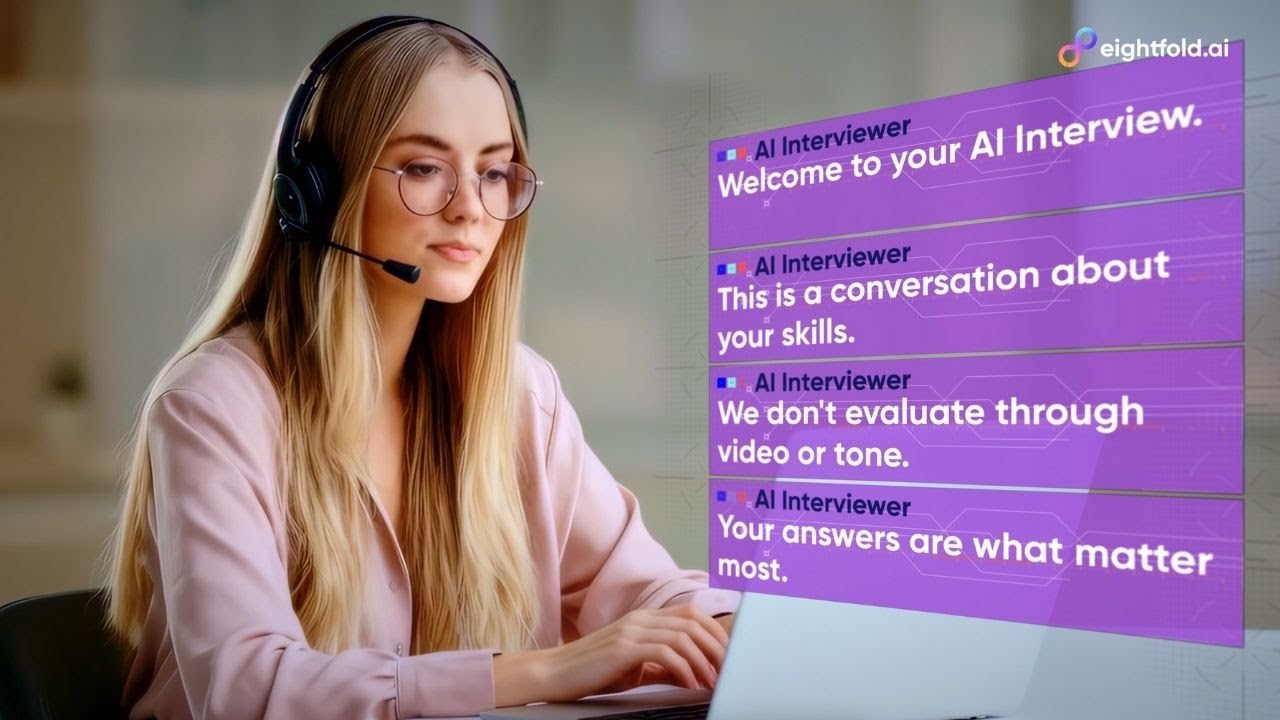
In stark contrast, Eightfold AI Interviewer facilitates a more dynamic and realistic interview experience by engaging candidates in real-time, conversational exchanges. When a candidate provides an incomplete answer or one that doesn’t meet the expected level of detail, the AI agent is designed to pose intelligent, adaptive follow-up questions. This aims to elicit a more comprehensive response, rather than simply moving on to the next fixed prompt. This capability allows the AI interviewer to seamlessly transition between technical assessments, functional knowledge probes, and reasoning questions within a single, fluid conversation. The underlying intelligence powering this interactive experience is the same sophisticated engine that drives matching and internal mobility across the broader Eightfold platform, leveraging insights from over one billion career profiles.
Strategic Implications Across Diverse Hiring Needs
The impact of this conversational AI approach is particularly pronounced across various hiring scenarios:
-
High-Volume and Hourly Hiring: For roles requiring rapid onboarding, such as in retail or hospitality, the ability for candidates to interview the moment they apply is crucial. AI Interviewer offers 24/7 availability and supports over 22 languages, with built-in CEFR-based language proficiency assessments. This stands in contrast to one-way video interviews, where candidates might forget to complete the recording, leading to lower completion rates and extended time-to-fill metrics. The immediate availability of a conversational interview can significantly accelerate the hiring process for these time-sensitive roles.
-
Early Career and Campus Hiring: Students navigating demanding academic schedules, exams, and multiple job applications often find it challenging to commit to rigid interview slots. AI Interviewer offers them the flexibility to interview on their own terms, without being constrained by recruiter availability or campus event timelines. Furthermore, the adaptive nature of the conversation provides entry-level candidates, who may have less extensive resumes, a valuable opportunity to elaborate on their skills and potential, allowing the AI to better assess their fit against role requirements. This can level the playing field for promising candidates who might otherwise be overlooked due to a less experienced CV.

-
Technical Hiring: For technical roles, the ability to assess coding proficiency, problem-solving skills, and functional knowledge within a single, adaptive conversation is a significant advantage. Instead of treating these assessments as separate, potentially disconnected tests, AI Interviewer integrates them into the natural flow of an interview, providing a more holistic evaluation of a candidate’s technical acumen and their ability to articulate complex concepts.
The Oracle Recruiting Cloud Integration: Streamlining Enterprise Adoption
For organizations already leveraging Oracle Recruiting Cloud, the integration of Eightfold AI Interviewer offers a streamlined path to modernizing their interview processes. Unlike standalone add-ons, AI Interviewer is embedded directly within Oracle Recruiting Cloud workflows. This native integration facilitates a more cohesive user experience and allows for procurement through the Oracle Cloud Marketplace, often utilizing existing Oracle Universal Credits. This can eliminate the need for new budget approvals, accelerating adoption and deployment.
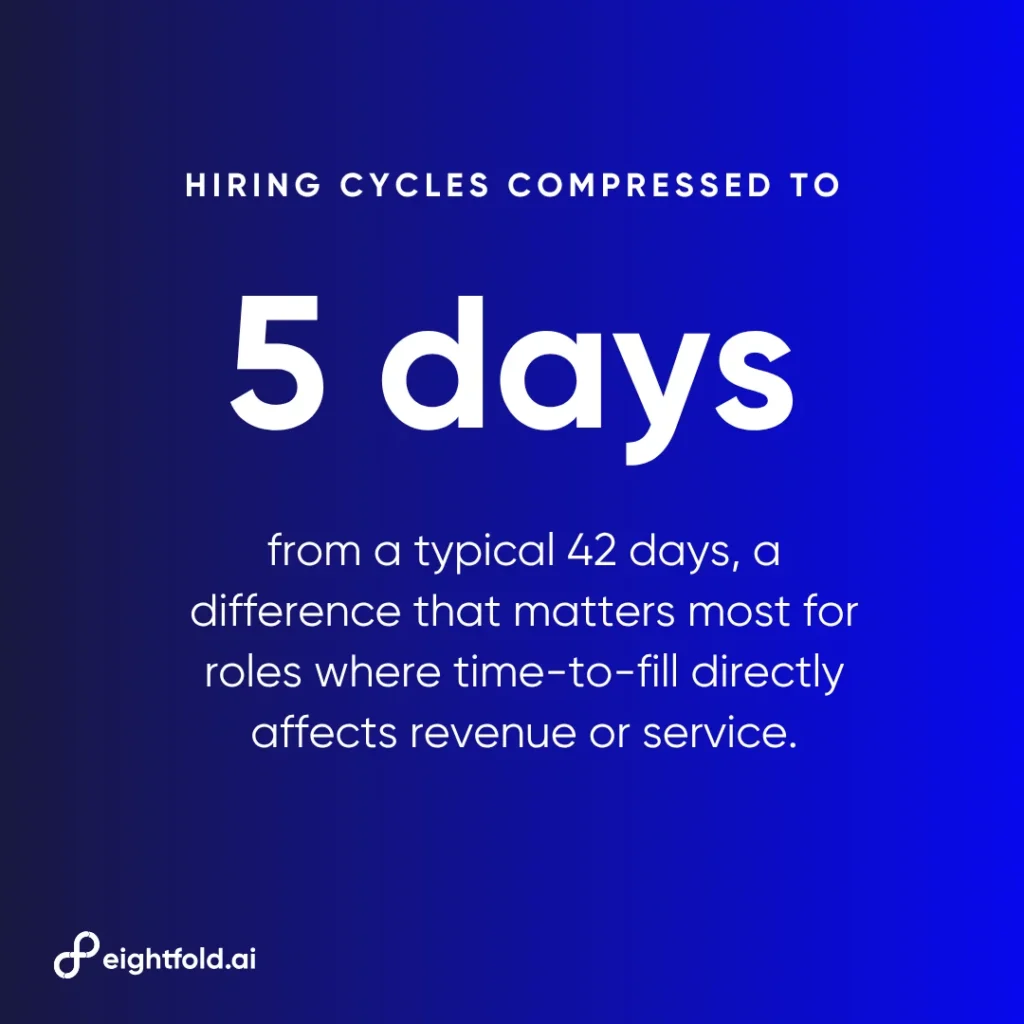
Early enterprise deployments have demonstrated a dramatic impact on hiring cycle times. Organizations that historically experienced hiring cycles averaging around 42 days have reported compressing these timelines to as few as five days. This acceleration is particularly critical for roles where time-to-fill directly impacts revenue generation or the maintenance of service levels, providing a tangible competitive advantage.
Addressing the Competitive Landscape: Evolving AI Capabilities
The recruitment technology market is dynamic, with established players continuously innovating. HireVue, for instance, has recently introduced its own voice AI interviewing capabilities, following its acquisition of Hireguide in March 2026. HireVue positions its new voice interviewer as a tool for early-stage candidate qualification, designed to precede the initial recruiter call.
In this evolving landscape, Eightfold emphasizes that AI Interviewer has been developed as a comprehensive, multimodal interviewer integrated with matching and assessment functionalities across the entire hiring lifecycle. The company advises organizations evaluating these solutions to look beyond the mere existence of a feature and to scrutinize the depth of integration and proven performance of the underlying AI agent. The true measure of an AI interviewing tool lies in its ability to deliver a robust, integrated, and validated experience, not just a singular feature.
Eightfold’s Differentiators: Depth, Engagement, and Governance
While validated, static assessments remain valuable for measuring specific skills, Eightfold distinguishes itself by adding a crucial layer: a live, adaptive conversation powered by a continuously learning engine. This engine is trained on an extensive dataset of over one billion career profiles, enabling it to provide a more nuanced and comprehensive understanding of a candidate’s potential than static tests or recorded videos alone.
The breadth of language support is an important consideration, but Eightfold highlights that the depth of engagement within those languages is paramount. A truly adaptive, two-way conversation offers significantly more insights into a candidate’s suitability and communication skills than a one-way recorded monologue, regardless of the number of languages the monologue is available in. This focus on qualitative interaction over quantitative reach underscores a commitment to genuinely understanding candidate potential.
Governance is another area where Eightfold asserts a clear advantage. The company holds ISO 42001 certification for AI management systems, signifying a commitment to responsible AI practices. Customers can integrate interviews with identity verification through partners like CLEAR and implement measures to detect potential interview malpractice, such as tab-switching. These robust controls are designed to meet the stringent requirements of enterprise-scale hiring and the increasing scrutiny of AI applications in recruitment.
The Data Speaks: Quantifying the Impact
While specific numerical data points were not provided in the original content for this section, the implications of the described technological advancements are clear. For instance, the reported compression of hiring cycles from an average of 42 days to as few as five days for enterprise deployments utilizing the Oracle Recruiting Cloud integration represents a quantifiable reduction in time-to-fill. This has direct financial implications, reducing lost productivity and accelerating the onboarding of critical talent.
Further, the ability to conduct interviews 24/7 and in multiple languages for high-volume hiring directly impacts throughput. If a one-way video interview has a completion rate of, for example, 60%, and an AI-driven conversational interview achieves an 85% completion rate due to its accessibility and engagement, this translates to a significant increase in the pool of qualified candidates processed within a given timeframe. For early-career hiring, the opportunity for candidates to articulate their potential more fully, even with limited experience, can lead to a more diverse and potentially higher-performing talent pipeline, the long-term impact of which is measured in employee retention and productivity.
The Bottom Line: A New Era of Candidate-Centric Recruitment
Recorded video interviews served a vital purpose in an earlier phase of hiring evolution, addressing the need for scalable screening. However, the current landscape demands a paradigm shift. Candidates now expect and value authentic, real-time conversations, and talent acquisition teams require systems that can reliably deliver this experience.
This fundamental shift in expectations is prompting enterprises to re-evaluate their existing recruitment technology stacks. Organizations reliant on legacy systems are increasingly exploring the capabilities of real-time, conversational interviewers to meet these evolving demands. The move towards more interactive and responsive AI in recruitment is not merely a technological upgrade; it represents a more candidate-centric approach to talent acquisition, aiming to foster stronger relationships from the initial touchpoint and ultimately leading to more effective and efficient hiring outcomes.
For talent acquisition leaders seeking to optimize their hiring volume and accelerate timelines, exploring solutions like Eightfold AI Interviewer offers a pathway to align their processes with contemporary candidate expectations and achieve measurable improvements in recruitment efficiency. The future of AI in hiring is conversational, adaptive, and deeply integrated into the candidate journey.