

The contemporary business environment presents an unprecedented challenge for leaders, marked by the accelerating integration of artificial intelligence and a dynamic global political climate. These transformative forces necessitate a fundamental re-evaluation of what it means to lead effectively. For decades, leadership theory has evolved, offering a diverse pantheon of role models, from the foundational strategic insights of Peter Drucker to the command-and-control methodologies championed by Jack Welch. More recently, the empathetic approach of servant leadership, as exemplified by figures like Howard Schultz, and the disruptive, first-principles thinking of Elon Musk have captured attention. However, the question remains: what leadership paradigm is best suited for today’s complex realities? While core leadership functions—setting direction, defining mission, and aligning people—remain constant, the underlying behavioral expectations and operational dynamics are undergoing a profound metamorphosis. This evolution is critically informed by recent research, particularly the emerging insights into the "Supermanager" role, which highlights a significant shift in how organizations must engage their workforce.
The Decoupling of Employee and Organization: Leading a "Voluntary Army"
Perhaps the most significant transformation in the leadership landscape over the past half-century is what industry analysts term the "decoupling" of the employee from the traditional organizational structure. Historically, particularly throughout the industrial age, leadership operated on a more straightforward "boss-subordinate" model. Leaders could issue directives, and employees, often bound by a more rigid employment contract and fewer external opportunities, would largely comply. This deeply ingrained hierarchical dynamic has shaped corporate cultures and human resource practices for generations. However, this paradigm is demonstrably waning.
Today, organizations are increasingly managing what can be described as "voluntary armies." This new operational reality encompasses not only full-time employees but also a growing contingent of freelance workers, gig economy participants, and, critically, AI-powered "Superworkers." These individuals possess distinct needs, aspirations, and concerns that extend beyond the traditional employer-employee relationship. Their engagement is no longer a passive acceptance of a job offer; rather, it is an active, daily "opt-in" decision. This fundamental shift renders traditional levers of power—pure authority and hierarchical position—less effective. Instead, leadership must now rely on a more nuanced and often more fragile foundation: trust.
Building and sustaining trust in this new environment requires a deliberate and multi-faceted approach. Key strategies include the transparent articulation of organizational mission, empowering individuals with autonomy and opportunities for growth, and actively soliciting and valuing novel ideas. In an era characterized by highly specialized skill sets, it is increasingly common for individuals within an organization to possess expertise or innovative perspectives that surpass those of their superiors. To ignore or suppress such talent would be a strategic misstep. Instead, leaders must cultivate environments where these individuals are encouraged to contribute, challenge assumptions, and even guide strategic decisions. This phenomenon, ongoing for fifty years, has been significantly amplified by the advent of AI. A single, highly skilled engineer or a perceptive professional with a deep understanding of emerging technologies could potentially revolutionize an entire business model. Consequently, leaders are compelled to adopt a posture of active listening, deep engagement, and widespread empowerment across all levels of their workforce.

The Imperative of Iteration: Shifting from Perfection to Agility
Another critical evolution in leadership is the transition from an emphasis on "doing it perfectly" to a mandate for "doing it now." This shift is particularly pronounced in the context of rapidly developing and often unpredictable technologies like artificial intelligence. Organizations are under immense pressure to adopt AI, with the underlying message that failing to do so risks obsolescence. This pressure naturally leads to a desire to thoroughly understand the technology and implement it flawlessly before any widespread deployment.
However, as observed in recent engagements with leading global corporations such as IBM, Standard Chartered, and Mastercard, the pursuit of a perfect AI solution is often a recipe for stagnation and failure. Waiting for others to perfect a solution or for internal understanding to reach a state of absolute certainty introduces significant risks. In the industrial age, it was common to wait for a 1.0 version to be fully refined before launching a product. In the current AI-driven era, leaders must cultivate a tolerance for imperfection. Companies like IBM, for instance, successfully transitioned from Workday to SuccessFactors in an ambitious 18-month timeframe, acknowledging that the new system would not be flawless from the outset. Microsoft’s global deployment of Copilot agents within its HR functions continues even as new use cases and potential challenges are continuously being identified. The notion of waiting until a process or technology is "completely done" is no longer a viable strategy in today’s fast-paced environment.
Effective leaders in the AI age understand that progress is rarely linear. The journey from an initial concept (Point A) to a desired outcome (Point B) is characterized by a series of iterations, inevitable mistakes, and continuous improvements. The leader’s role is to maintain organizational focus on the overarching problem or customer need, while simultaneously providing the space and support for teams to experiment, learn from failures, and adapt. This iterative approach fosters resilience and accelerates innovation in a landscape where the only constant is change.
A Renewed Focus on Trust, Ethics, and Inclusion
The third significant shift in leadership is a re-emphasis on foundational values, ethical conduct, and moral integrity. In an era where public discourse is increasingly fragmented and often amplified by AI-generated content, distinguishing truth from misinformation can be challenging. High-profile incidents, such as the fallout from the Epstein files and pervasive political polarization, have contributed to a climate where deceptive narratives, often termed "alternative facts," have become alarmingly common. Leaders are now tasked with actively countering this trend.
The imperative to uphold strong ethical standards stems from a fundamental human need for trust. Most individuals possess an inherent ethical compass and seek to align themselves with organizations that reflect these values. When a leader circumvents rules, engages in dishonest practices, or treats individuals unfairly, the consequences extend far beyond legal liabilities. Such actions can profoundly damage morale, stifle creativity, and extinguish the intrinsic motivation that drives organizational success. The "unquenchable power of the human spirit," as articulated in extensive research on organizational success, is arguably the most potent business asset, and it thrives only in environments characterized by integrity and respect.
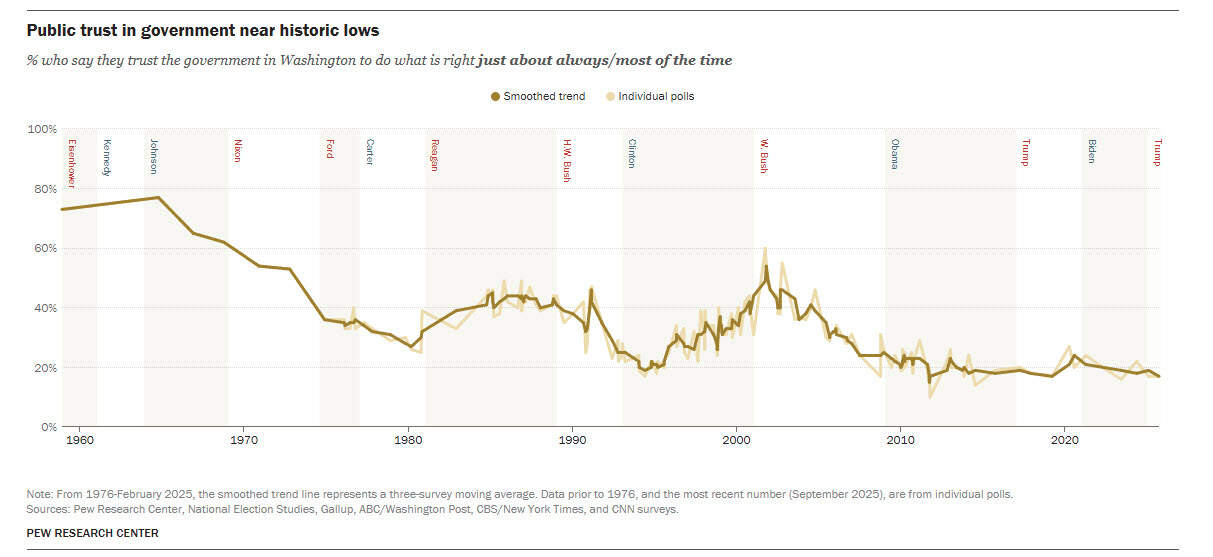
The Plummeting Trust in Institutions and the Leader’s Role
The erosion of public trust in institutions is a critical backdrop against which modern leadership must operate. In the United States, for example, data from the past several decades reveals a dramatic decline in confidence in governmental bodies. While approximately 80% of Americans expressed trust in their government in the 1960s, this figure has fallen to a stark 17% in recent surveys. This precipitous drop is not confined to government; similar trends are observable across many traditional institutions.
This deficit in trust creates a significant vacuum that organizational leaders are uniquely positioned to fill. The question then becomes: how can leaders effectively bridge this gap? The answer lies in a recommitment to core principles. This involves actively listening to employees, steadfastly adhering to organizational values, and exercising sound judgment. It also means demonstrating courage by speaking truth to power, taking principled stances on important societal issues, and fostering an environment where diverse perspectives are genuinely heard and respected. Despite the often contentious debates surrounding Diversity, Equity, and Inclusion (DEI) initiatives, the underlying values of fairness, respect, and equal opportunity remain paramount for building enduring trust. Leaders must embrace these values not as optional add-ons but as fundamental components of effective governance.
Developing Leaders for the Age of AI and Uncertainty
In conclusion, the fundamental requirement for organizations to adapt and thrive in the current climate hinges directly on the quality of their leadership. Leaders who can effectively navigate change, generate enthusiasm, and consistently uphold organizational values are not merely managers; they are indispensable assets. The concept of the "Supermanager," as detailed in recent research, offers a framework for developing leaders capable of excelling in this complex environment. These individuals are adept at fostering collaboration, empowering teams, and leveraging technology to drive performance, all while maintaining a strong ethical compass.
The development of such leaders is therefore more critical than ever. Organizations must proactively invest in leadership training and development programs that equip individuals with the skills and mindset necessary to thrive in this evolving landscape. This includes fostering a capacity for strategic foresight, developing strong interpersonal and communication skills, and cultivating resilience in the face of constant change. Furthermore, the integration of AI into leadership development itself offers new avenues for personalized coaching and skill enhancement. AI-powered platforms, trained on extensive datasets of research and real-world case studies, can provide tailored guidance and learning experiences, helping leaders navigate their unique challenges and accelerate their professional growth.
The upcoming Irresistible 2026 annual research conference, scheduled for June 8-10 at USC, is set to launch significant new offerings in leadership development, signaling a continued commitment to addressing these pressing needs. The future of leadership is not about replicating past models but about embracing a new set of principles—one that prioritizes trust, agility, ethical conduct, and the empowerment of every individual within the organization. As the pace of technological and societal change accelerates, the ability of leaders to foster an engaged, resilient, and value-driven workforce will determine their organization’s ultimate success.







