
The urgent need for reskilling, upskilling, and the accelerated adoption of Artificial Intelligence (AI) is a pervasive theme in today’s corporate landscape. This sentiment was starkly evident during a recent series of high-level discussions involving over 200 Chief Human Resources Officers (CHROs) in India and Singapore. The paramount concern dominating these conversations was "AI readiness," specifically how organizations can rapidly enhance AI fluency and capability across all company functions. This pressing demand highlights a significant disconnect: the current infrastructure and methodologies for corporate learning appear to be fundamentally outmoded.
The Growing Skills Gap: A Staggering Statistic
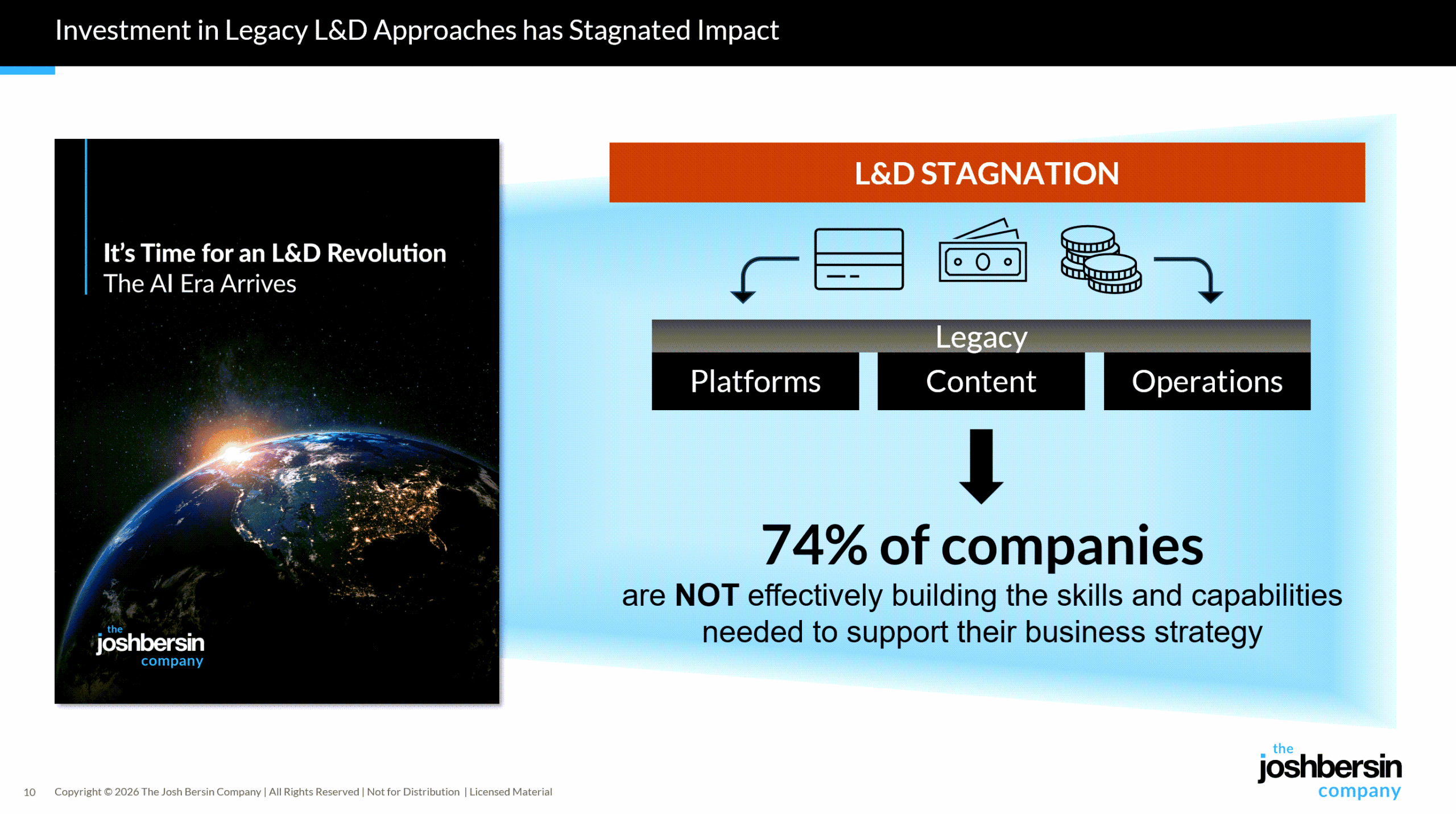
New research, marking the fifth major study of corporate Learning and Development (L&D) conducted by industry analyst Josh Bersin, reveals a critical shortfall. A staggering 74% of companies report that they are failing to keep pace with their organization’s evolving skill requirements. This statistic is particularly alarming given the substantial global investment in corporate training, estimated to be in the hundreds of billions of dollars annually. This expenditure encompasses content libraries, L&D technology, trainers, and learning consultants. The fact that three-quarters of these initiatives are reportedly falling short suggests a significant inefficiency, potentially amounting to billions of dollars in wasted effort.

Redefining the Challenge: From Learning to Dynamic Enablement
The prevailing challenge in the corporate world is not merely about "learning" or "training" in the traditional sense. Instead, it is a more dynamic problem centered on the efficient sharing of information, empowering individuals to explore, question, and actively apply new concepts. The traditional pedagogical paradigm, rooted in structured "training" modules, is increasingly proving to be a bottleneck. The future of corporate development lies in fostering an environment of continuous, dynamic enablement.
The Dawn of AI-Native Learning
The groundbreaking research underscores a paradigm shift driven by AI. Generative AI, with its inherent ability to dynamically create and disseminate content, is perfectly positioned to revolutionize how organizations approach skill development. Unlike traditional methods that involve manual design, building, and updating of static courseware, AI platforms can generate content on demand, adapting to various formats and specific needs. This capability promises to drastically reduce the time required to develop new learning modules, transforming months into mere days.
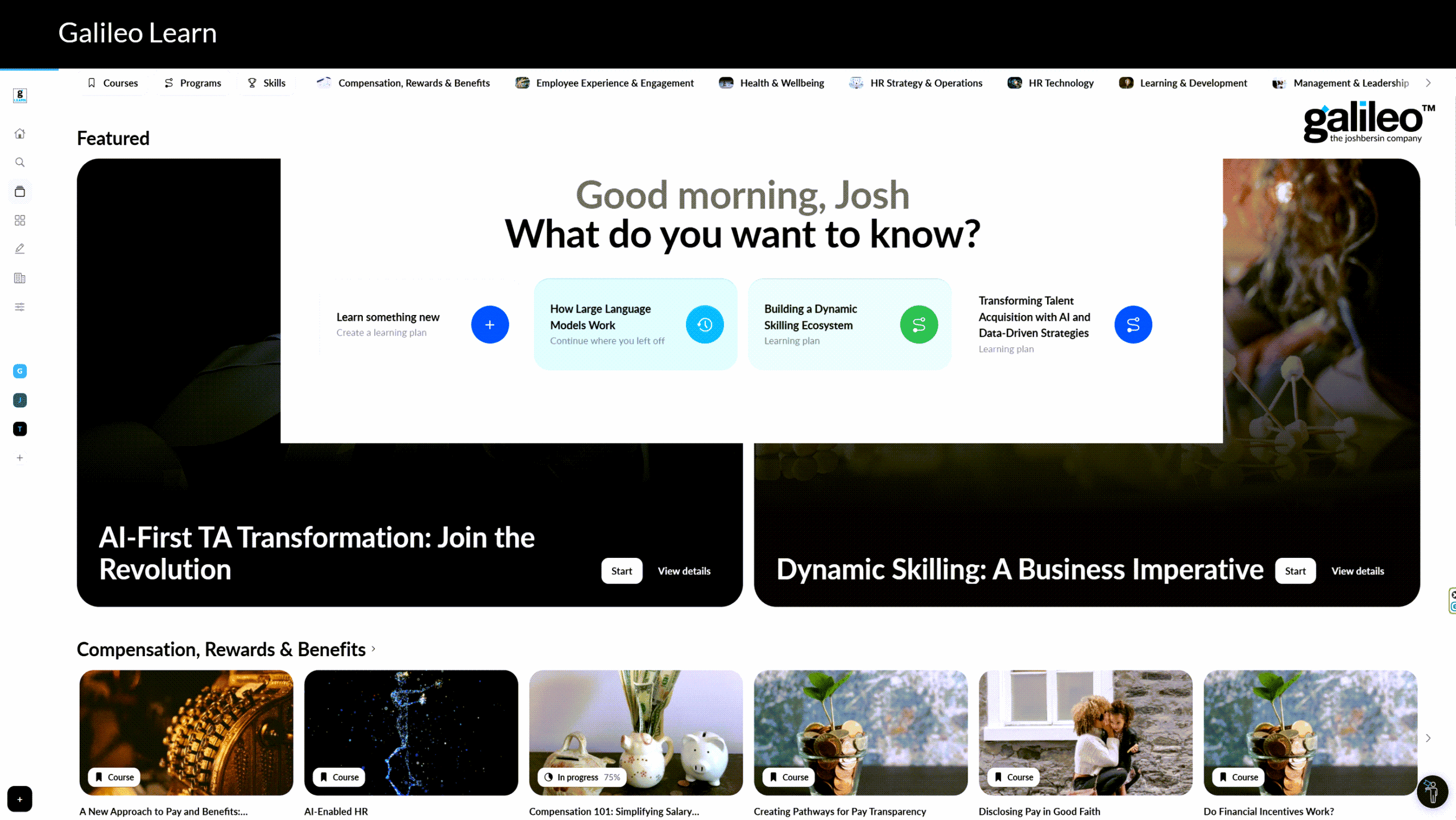
For instance, platforms built on AI principles, such as Galileo, can ingest and process vast amounts of internal knowledge, including documents, policies, expert interviews, and even call recordings from high-performing employees. This creates a dynamic and interconnected "intelligence system" for the organization. Employees can then access this information not just through formal courses but through integrated AI agents, chatbots, or internal communication platforms. When a new piece of information or a best practice emerges, the entire knowledge base is updated instantaneously, ensuring that all employees have access to the most current insights.

The effectiveness of this approach is exemplified by the widespread adoption of tools like ChatGPT, where a significant portion of users reportedly engage with it for learning purposes. This mirrors the potential for AI-driven platforms to achieve unprecedented levels of employee engagement with learning content, surpassing the reach of traditional course catalogs.
The Four Levels of Learning Maturity: A Framework for Transformation
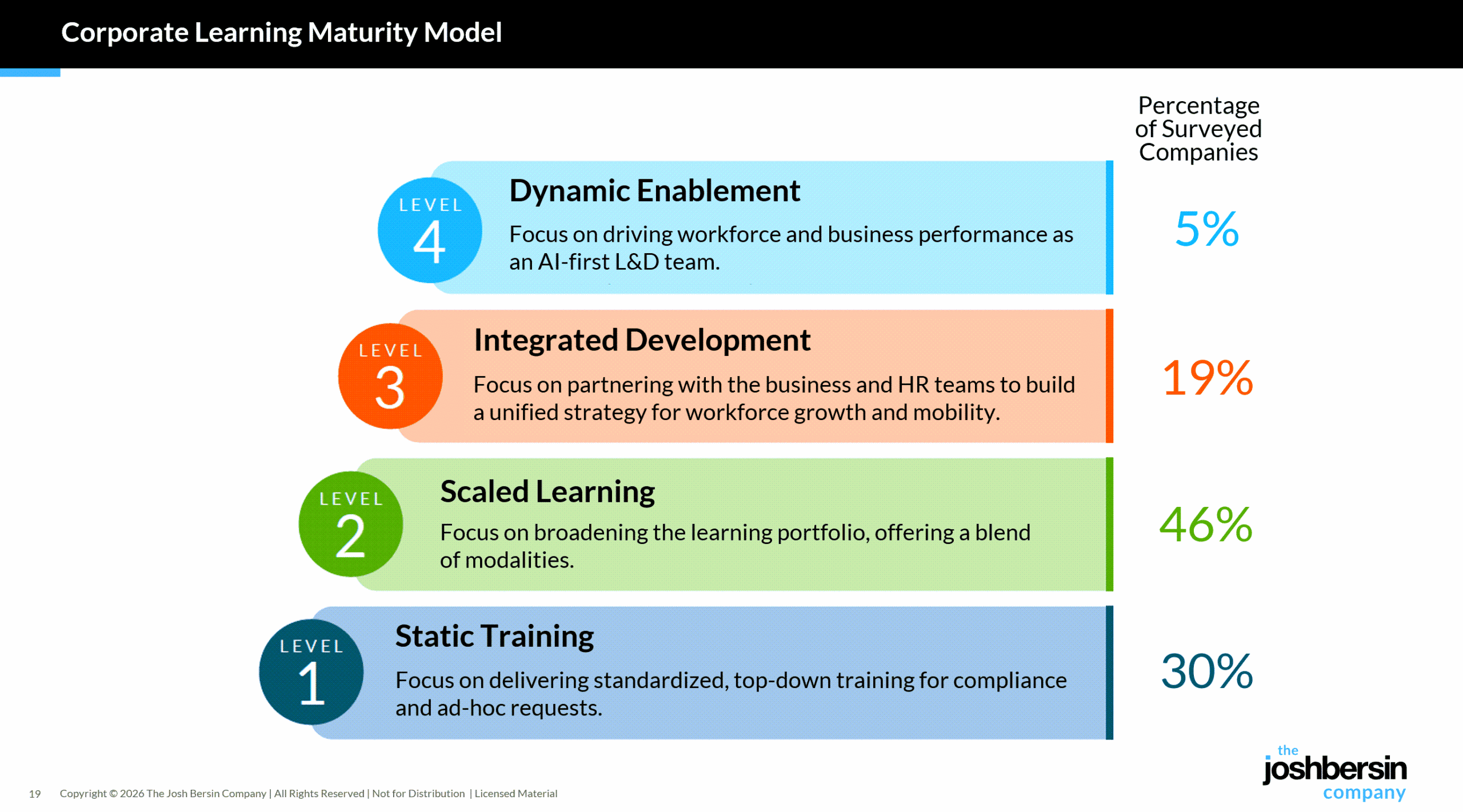
To navigate this evolving landscape, a new framework for understanding organizational learning maturity has been developed. This model categorizes companies into four distinct levels, charting their progression from traditional training to AI-driven enablement:
Level 1: Static Training Programs
At the foundational level, companies focus on static training programs. These are typically compliance-driven or mandatory, top-down courses designed to address specific needs such as regulatory adherence, new product launches, or other episodic requirements. While cost-effective to acquire or develop, these programs offer limited opportunities for deep skill-based learning. Approximately one-third of the market currently operates at this level, prioritizing the dissemination of essential, up-to-date information.
Level 2: Scaled Learning Initiatives
As organizations mature, they move to Level 2, incorporating a broader array of learning formats to achieve "Scaled Learning." This involves the creation and deployment of videos, audio materials, job aids, and other supplementary learning tools. The aim is to expand the learning portfolio, offering employees greater choice and flexibility. Many offerings from major online learning providers, such as LinkedIn Learning, Coursera, and Skillsoft, fall into this category. However, the onus remains on the individual learner to navigate this extensive content and identify what is most relevant to their needs.
Level 3: Integrated Development and the Complexity Challenge
Level 3 signifies a move towards "Integrated Development," where learning programs are meticulously tailored around specific job roles, skills, and career paths. Companies at this stage focus on building comprehensive "development programs" rather than just isolated training modules. This approach introduces significant complexity, requiring the management of multi-dimensional skill taxonomies, professional competencies, and detailed career trajectories.
However, the dynamic nature of the modern workplace presents a formidable challenge. With industry reports indicating that up to 70% of job-related skills can become obsolete annually, maintaining these intricate development pathways becomes an arduous and costly endeavor. Companies like Cisco and Ericsson, known for their extensive internal training infrastructures, often find themselves managing a vast and complex array of programs, curricula, and content objects. This complexity can lead to operational challenges, particularly concerning content maintenance and governance.
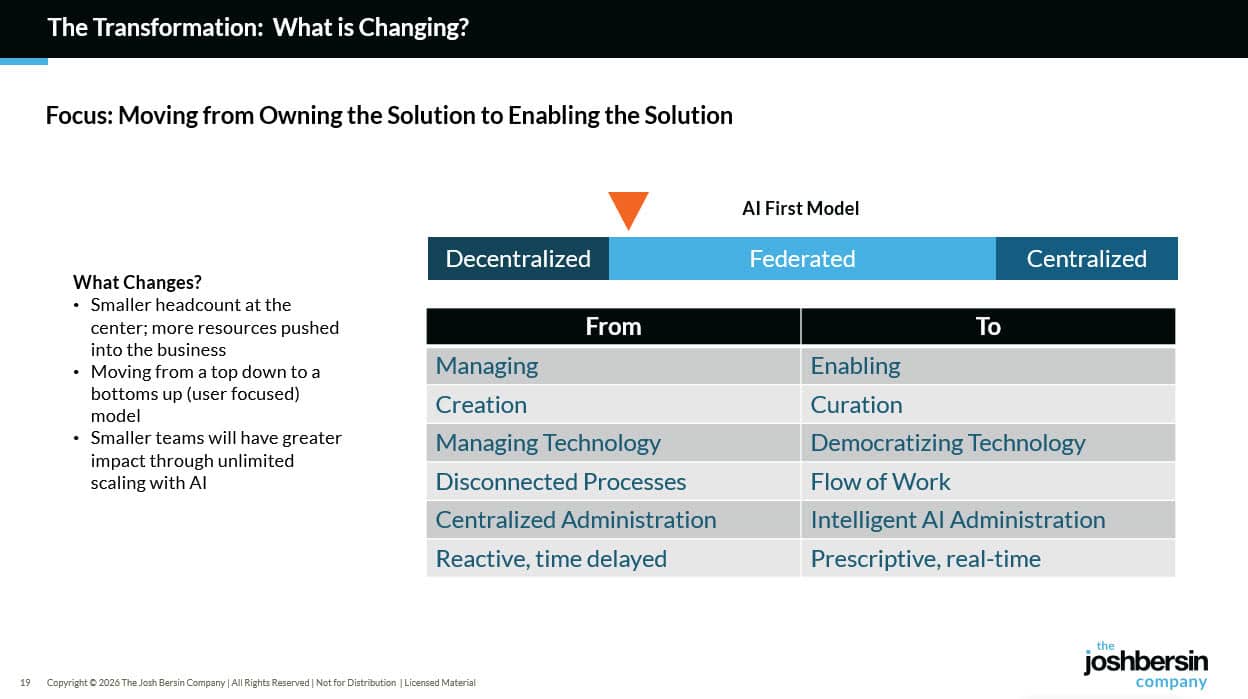
Furthermore, L&D, unlike many other HR functions, often operates in a decentralized manner. While corporate L&D teams manage strategic initiatives, a substantial portion of training is localized within specific business units such as sales, manufacturing, and customer service. This necessitates locally updated content and specialized infrastructure, diverting resources from core L&D needs at the frontline. Consequently, many Level 3 organizations adopt a "federated" model, delegating line-of-business training to specialized domains to manage complexity and enhance scalability.
Level 4: AI Transforms Everything – Dynamic Enablement
The apex of this maturity model is Level 4, where AI fundamentally transforms the learning landscape, ushering in an era of "Dynamic Enablement." This stage envisions a unified platform housing all organizational knowledge, encompassing formal courses, documents, policies, and expert insights captured in audio or video formats. This goes beyond a traditional "learning platform," evolving into a comprehensive knowledge and enablement ecosystem.
AI-Native learning platforms, like Galileo, enable organizations to publish new information and learning content in days, not months. This allows employees to engage with learning in ways that best suit their individual preferences and immediate needs. The traditional Learning Management System (LMS) may be retained for legacy compliance programs, while new AI platforms supersede LXPs, learning portals, and most content development tools. Early adopters of this model have reported significant reductions in internal L&D spend, often in the range of 40-50%.
The Implications of Dynamic Enablement
The transition to Dynamic Enablement promises substantial benefits:
- Unprecedented Efficiency: The ability to generate and disseminate learning content rapidly significantly reduces the time and cost associated with traditional training development and deployment.
- Enhanced Employee Experience: Employees gain access to personalized, on-demand learning resources integrated into their daily workflows, fostering a culture of continuous growth and performance improvement.
- Strategic Alignment: Learning becomes intrinsically linked to business objectives. For example, an employee using a CRM system might be prompted with relevant sales coaching tips, or a nurse accessing patient records could receive immediate updates on new protocols.
- Cost Savings: By streamlining content creation and management, and enabling a more distributed operating model, companies can achieve considerable savings in L&D budgets.
- Innovation and Agility: Organizations at Level 4 are demonstrably more innovative, better equipped to exceed financial targets, and significantly more adaptable to change.
The Path Forward: Embracing AI-Native Learning
Achieving AI-Native Learning is not simply about using AI to accelerate course creation. It necessitates a fundamental shift away from traditional SCORM-based LMS architectures towards dynamic content systems. Companies must embark on a strategic roadmap that includes:
- Content Rationalization: Auditing existing content to identify what is valuable and can be transformed into AI-native formats.
- Platform Modernization: Adopting new AI-driven platforms that can manage dynamic content and provide intelligent access to knowledge.
- New Governance Models: Establishing clear frameworks for content creation, curation, and maintenance within the AI-native ecosystem.
The future of L&D lies in a hybrid or federated operating model. Corporate HR can concentrate on global strategic topics such as leadership development, compliance, culture, and overarching business strategy. Simultaneously, individual business units can establish "Enablement Academies," fostering specialized learning ecosystems for sales, manufacturing, customer service, and other critical functions.
Proven Returns and the Future of Work
The research clearly indicates that companies embracing AI-Native Learning are poised for significant competitive advantages. They are more likely to be innovation leaders, exceed financial targets, and demonstrate superior adaptability in the face of disruption. This shift from a focus on "learning" to "enablement" aligns directly with the core business need: empowering individuals to perform at higher levels and drive organizational success. The ultimate goal is not simply knowledge acquisition, but the practical application of that knowledge to achieve tangible business outcomes. The journey to Dynamic Enablement is an imperative for organizations seeking to thrive in the rapidly evolving global economy.