A high-stakes budget meeting, fraught with tension, was underway. At its head sat a Vice President, tasked with allocating scarce resources between two critical strategic initiatives, each vying for the same limited funding. The room was a crucible of entrenched arguments and data-driven assertions, with no easy resolution in sight. In a moment that defied the conventional approach to such critical junctures, the VP paused, took a deliberate breath, and made a choice that would subtly, yet profoundly, alter the trajectory of leadership development within the organization. Instead of signaling the closure of the discussion, the VP beckoned a protégé, inviting them to witness the unfolding deliberation. The protégé’s initial hesitation was palpable, a ripple of surprise evident in the reactions of other senior leaders present. Yet, the door remained open.
This seemingly small act of inclusion offered the protégé an invaluable, real-time education. They observed not just the VP’s decision-making process, but more importantly, how the VP navigated the inherent ambiguity. The VP was depicted as performing complex financial calculations in real-time, consistently probing the underlying rationale with frequent "why" questions, and meticulously managing their own emotions to balance competing priorities while maintaining a commitment to the overarching organizational direction. The subsequent debrief, a focused ten minutes on the data and a significant fifty minutes dedicated to analyzing the VP’s deliberate pause, the repeated inquiry, and the patient wait, underscored the true learning objective: the transfer of leadership wisdom. This was not a lesson found in a standard job description or a meticulously crafted succession plan, but a profound, experiential teaching moment. Without such opportunities, the next generation of leaders risks losing not just a meeting, but the very possibility of comprehending the nuanced development required for true leadership, rendering them unable to envision, request, or impart it themselves. This principle, as revealed by recent research, suggests that organizational wisdom, much like financial capital, depreciates when hoarded and compounds exponentially when shared.
The Imperative for Proactive Leadership Development: Beyond Reactive Scrambles
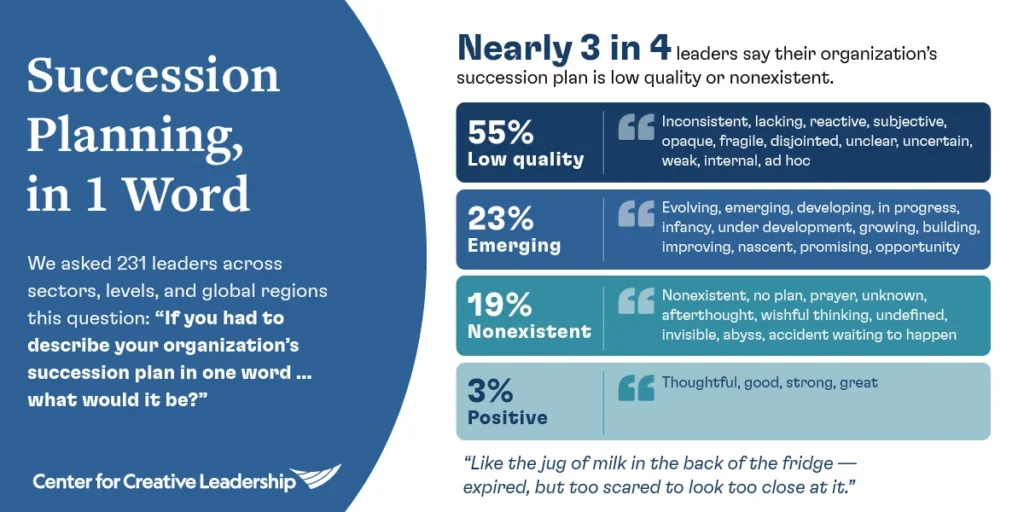
Recent succession research corroborates this fundamental principle. Organizations that approach succession planning as a reactive scramble, often triggered by an unexpected departure, significantly impair their capacity to balance immediate needs with long-term strategic objectives. The absence of proactive preparation leaves them ill-equipped to identify roles that, when vacant, cause the most significant disruption, or to implement the high-leverage actions necessary to mitigate such risks. The imperative is clear: organizations must reframe succession planning not as a contingency measure, but as a dynamic, living system of continuous leadership development. This necessitates building a robust "wisdom infrastructure" designed to identify and cultivate the right leaders well in advance of their anticipated need. This proactive approach moves beyond simply filling a seat to ensuring continuity of leadership capability and strategic foresight.
The implications of this shift are far-reaching. In an era characterized by rapid market shifts, technological disruption, and geopolitical uncertainty, the ability of an organization to adapt and thrive hinges directly on the caliber of its leadership. A reactive approach to succession planning, often characterized by a last-minute search for qualified individuals, frequently results in the appointment of leaders who possess the requisite technical skills but lack the deeper wisdom and experience to navigate complex, unprecedented challenges. This can lead to suboptimal decision-making, missed opportunities, and a general erosion of organizational resilience. Conversely, an organization that cultivates its leadership pipeline through deliberate wisdom transfer is better positioned to weather storms, seize emerging opportunities, and maintain a consistent, forward-looking strategic vision.
Knowledge Transfer vs. Wisdom Transfer: The Crucial Shift from Replacement to Readiness
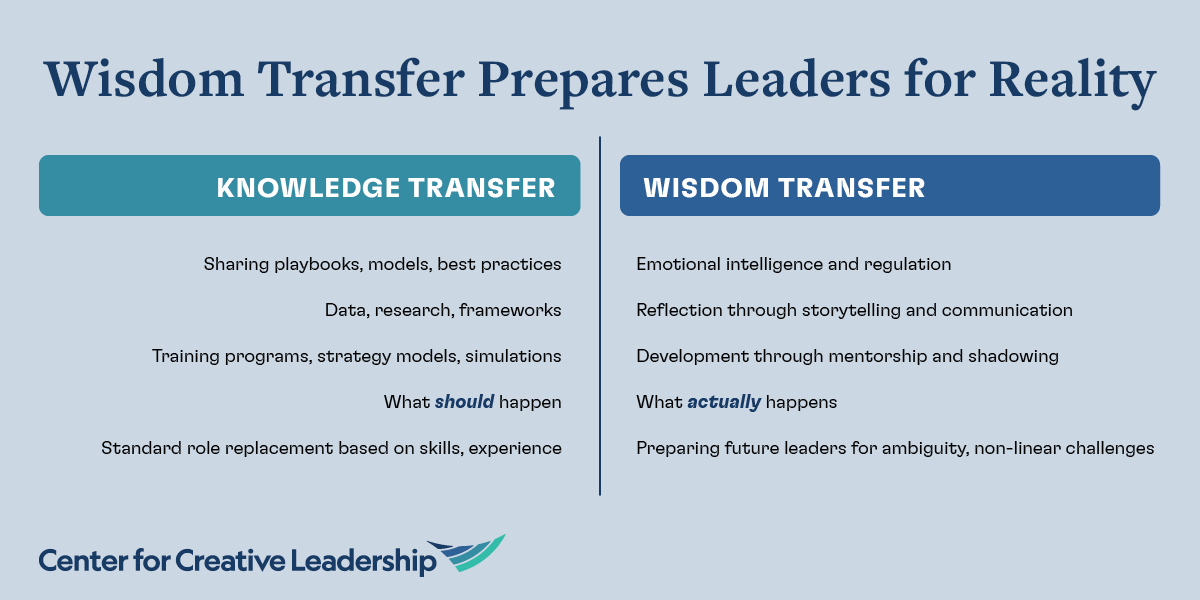
Extensive research into leadership succession reveals a common organizational tendency to view succession planning primarily through the lens of knowledge transfer. This perspective encompasses the transactional elements: completing forms, deploying standardized frameworks, leveraging data for decision-making, disseminating best practices, and facilitating role-based skill replacement. Knowledge transfer, in essence, answers the procedural questions: Who is leaving? What are the essential skills for this role? What is the timeline for transition? What are the key performance indicators? This focus on the mechanics of replacement, while necessary, is fundamentally insufficient for fostering the high-performing succession systems demanded by today’s volatile environment. Knowledge transfer, by its nature, prepares leaders for an idealized scenario, not the often messy and unpredictable reality.
The most critical leadership moments, as reported by C-suite executives, invariably occur outside of these ideal scenarios. Consider the unpredictable departure of a top-level executive, the unforeseen impact of external market shocks, or the inevitable instances where a leader’s established playbook proves inadequate for a novel situation. It is in these crucibles that leadership wisdom becomes not just advantageous, but indispensable.

Leadership wisdom is defined as the nuanced ability to interpret complex contexts, anticipate multifaceted consequences, and consistently exercise sound judgment amidst pervasive uncertainty. Wisdom transfer, therefore, represents the intentional and systematic sharing of this accumulated judgment, experience, and discernment from one generation of leaders to the next. It is the mechanism by which future leaders are equipped to navigate ambiguity and complexity with a depth of understanding that transcends mere technical proficiency.
Effective leadership transitions, according to this research, are a hallmark of organizations that embed the transfer of wisdom at the core of their succession infrastructure. This involves actively seeking answers to questions such as: How can we equip future leaders to make decisions with incomplete information? What are the implicit assumptions and unwritten rules that guide critical leadership actions? How can we cultivate the ability to assess risk and opportunity in dynamic, evolving landscapes? How do we foster resilience in the face of setbacks and uncertainty?
Wisdom transfer fundamentally reframes succession from a static, procedural process into a dynamic, strategic mindset. When leaders recognize its paramount importance, succession planning evolves from a mere checklist to one of their most significant developmental opportunities. As the opening narrative illustrated, this profound transfer often begins with a simple, yet powerful, invitation: "Come with me so I can show you how this really works." This personal engagement fosters an environment where tacit knowledge and practical judgment are explicitly shared, bridging the gap between theoretical understanding and applied leadership.
Building the Wisdom Infrastructure: Creating Avenues for Intentional Transfer
If wisdom transfer is the crucial element, the subsequent challenge lies in its practical integration into an organization’s succession processes. This journey requires a deliberate, systemic examination of leadership development across multiple time horizons. Four core elements form the structural pillars of a modern, wisdom-infused succession system:
1. Witnessing Decisions in Real-Time: The Power of Observational Learning
Effective succession planning, at its zenith, is a meticulously designed journey of leadership development. No phase of this journey is more formative than providing emerging leaders with direct exposure to consequential decision-making processes. These opportunities allow junior leaders to observe how critical choices are actually made at senior levels, fostering a deeper understanding of the unspoken dynamics at play. The primary objective of such exposure is to cultivate the capacity to perceive subtle cues, recognize shifting organizational currents, and respond with discerning judgment rather than rigid adherence to procedure.
Organizational systems that excel in this area create developmental pathways that encourage interpretation and integration of these observations into the emerging leaders’ own cognitive frameworks. These experiences provide invaluable insights into the essential, often unwritten, capabilities required for advancement, regardless of formal job descriptions. Witnessing judgment in action is one of the most potent forms of wisdom transfer, offering a practical, embodied understanding of leadership.
Your Move: Identify the highest-stakes decision-making moments within your organization. Critically assess who is currently present in these discussions and, more importantly, who should be invited to gain crucial developmental exposure. This proactive inclusion ensures that the next generation is not merely informed about decisions but is actively learning the art of making them.
2. Communicating Continuity Through Strategic Leadership Transitions
Critical succession moments often arrive unannounced, occurring in environments where organizational morale may be wavering or during periods of significant cultural transformation. Navigating these junctures demands leaders capable of providing consistent orientation and guidance amidst shifting landscapes. A proven practice, highlighted by research, is the deliberate assembly of a "wisdom council." This council comprises individuals who hold significant real influence and deep institutional memory, with representation from every major organizational function, ideally through their leaders or most trusted direct reports.
This creates a dynamic, interconnected network capable of collectively addressing pivotal questions: Who are we as an organization? Who are we becoming? And what fundamental values and capabilities must we carry forward? Organizations unable to answer these questions during leadership transitions face a profound strategic risk: the potential loss of the ability to distinguish between what must be preserved and what must be released. This can result in either calcification around outdated strengths or the abandonment of critical elements that underpinned past success. The answers to these complex questions reside within individuals, surfacing most effectively when wise leaders can accurately read the room and articulate sentiments that may be widely felt but not yet expressed.
Your Move: Prior to your next significant leadership transition, identify the individuals who possess a deep understanding of your organization’s history, purpose, and core values. Ensure their voices are actively included in strategic discussions to preserve institutional memory and guide the organization forward with informed continuity.
3. Fostering Developmental Relationships: The Bedrock of Wisdom Exchange
Wisdom flourishes most rapidly between individuals who share a foundation of trust, enabling candid and honest exchange. Developmental relationships serve as the primary conduit for wisdom transfer within organizations, providing emerging leaders with their most impactful guidance as they prepare for and assume new roles. Judgment, a quintessential aspect of leadership wisdom, is particularly challenging to teach explicitly yet is absolutely critical to impart.
Developmental relationships create the optimal conditions for enhancing judgment. Seasoned leaders can walk through hypothetical scenarios, articulate their reasoning processes, compare different thought processes, and discuss the multifaceted factors they weigh in consequential moments. Research has documented instances of collaborative and mentoring relationships that have endured for decades, extending far beyond the confines of formal employment. This enduring nature suggests that wisdom transferred through genuine relationships does not diminish with a change in roles; rather, it compounds over time.
Your Move: Actively identify and nurture the developmental relationships that already exist within your organization. Consider how these vital connections can be sustained and supported, even as individuals transition into new roles or depart the organization.
4. Mapping Influence Networks: Uncovering Hidden Leadership Capital
Organizational wisdom transfer does not adhere to the hierarchical structure of the traditional organizational chart. Instead, it resides at the critical nodes where leaders are most deeply connected to diverse stakeholders and perspectives. Network science consistently demonstrates, and bibliometric research supports, that the most influential carriers of wisdom and institutional memory are often found at the periphery and connective points of an organization.
Three key network properties are paramount for effective succession planning:
- Status: This reflects the depth and breadth of a leader’s established connections within the organization. Wisdom-rich leaders are those deeply embedded across multiple influence circles simultaneously, and their value to succession planning is often underestimated until their departure.
- Boundary Spanning: This refers to the ability to effectively carry perspectives across different functions, generations, and organizational lines. Boundary spanners often set agendas and influence the flow of information, leading without formal authority. Because their influence is relational rather than positional, they may be overlooked in traditional succession plans, leading organizations to struggle in understanding why certain initiatives stall while others gain momentum.
- Coalition Capacity: This is the ability to cultivate trust across diverse viewpoints and to hold competing perspectives in productive tension. Organizations that lose this capacity during leadership transitions risk their ability to attract and develop the next generation of leaders, as the environment may become less conducive to diverse thought and innovation.
Research consistently confirms that tomorrow’s workforce operates as a planetary network. Organizational resilience is built by individuals who have already demonstrated an ability to adapt and innovate in varied contexts. The next breakthrough leader may well be operating in a domain whose language is not yet fully understood. Influence network mapping is the strategic tool to identify these vital individuals before they are critically needed.
Your Move: Map your organization’s influence network to understand where wisdom is concentrated, how it is flowing, and who possesses it in ways that are not reflected on the formal organizational chart. This exercise can reveal hidden pockets of expertise and leadership potential.
Making Wisdom Transfer a Paramount Leadership Development Priority
The knowledge that has propelled an organization to its current state may prove insufficient for the challenges of the future. We are currently witnessing a paradigm shift where the superficial symbols of leadership development can be generated almost instantaneously, thanks to advancements in artificial intelligence. Competency frameworks, feedback templates, and even preliminary succession documents can be produced in seconds.
However, what cannot be automated is the profound labor of wisdom. This includes the VP who intentionally opens the door to a protégé, the mentor who maintains a connection for decades, or the carefully assembled council that guides an organization through a tumultuous transition. These efforts demand significant investment in time, presence, and energy – precisely the investments that imbue wisdom transfer with its immense value.
Years of studying organizations that successfully navigate leadership transitions have led to a critical conclusion: succession plans falter when the transfer of wisdom is interrupted. The nuanced judgment, the hard-won instincts, and the profound perspective forged through years of leading through complex realities are precisely what wisdom transfer is designed to preserve and perpetuate.
As leaders responsible for development decisions, you are at the nexus of this crucial shift. You influence the systems, programs, and expectations that shape leadership behavior. You possess the insight into where organizational wisdom resides, how it flows, and where it is being constrained. By championing this work, succession planning transforms from a risk-mitigation strategy into a regenerative leadership system that grows progressively wiser with each transition. You possess the agency to construct such a system, and you do not have to embark on this journey alone.
The Future of Succession is Wisdom-Powered
Organizations poised for enduring success in the coming years, decades, and indeed, centuries, will be those that recognize leadership wisdom as their most invaluable asset. They will understand that this asset retains its worth only through deliberate, systematic transference. This essential work, though not automatable, is undeniably buildable.
Wisdom transfer is the bridge from identifying potential successors to cultivating truly prepared leaders. It is the mechanism by which an organization learns not only how to maintain its current operations but also where to strategically direct its future focus. And it all commences with a simple, yet profoundly impactful, act: an open door. Organizations that commit to this principle will discover the leaders they seek, and those leaders will be fully prepared to meet the challenges ahead.