
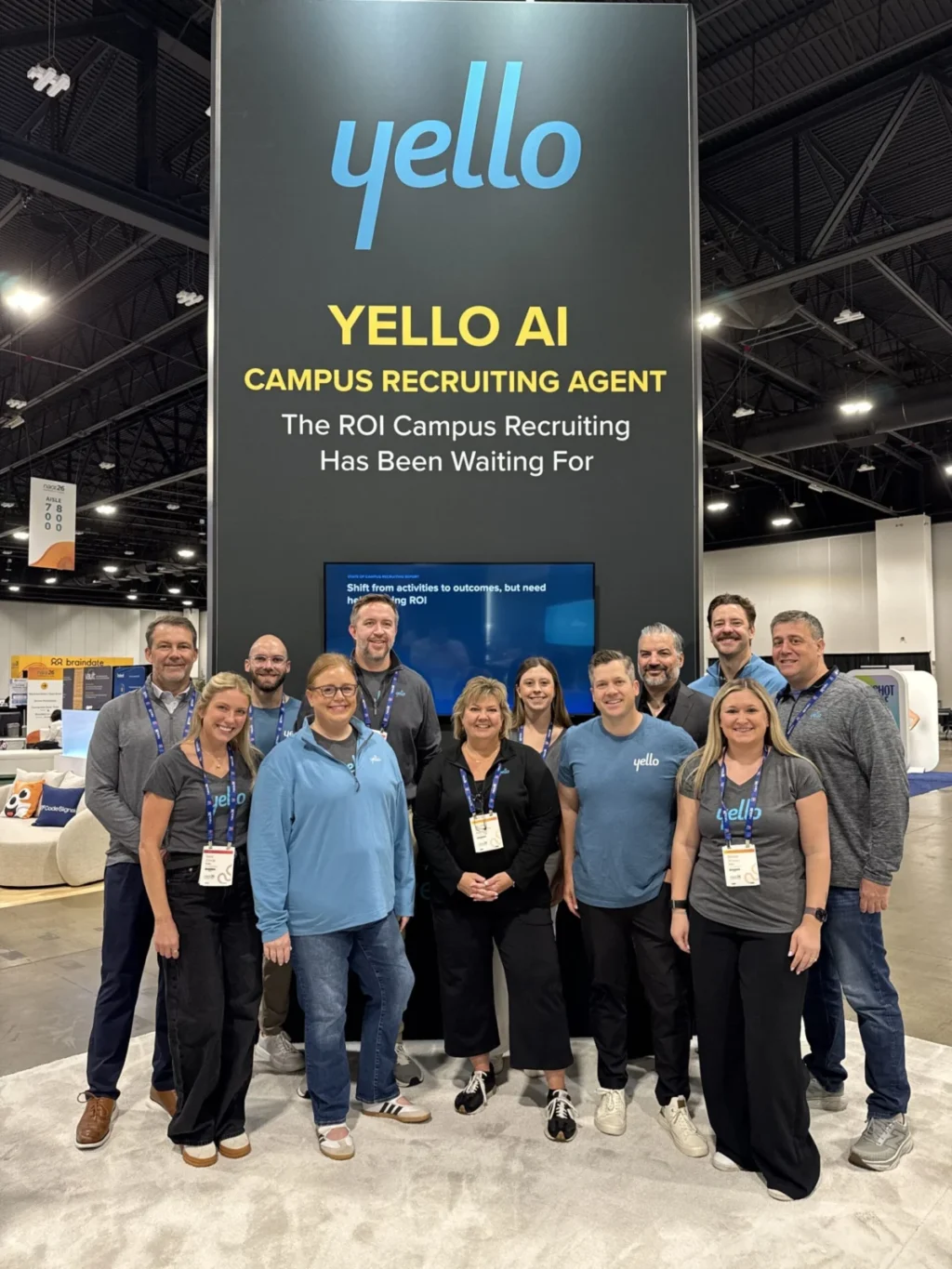
Denver, Colorado, recently hosted NACE26, the premier annual conference for early talent acquisition professionals, drawing together campus recruiters, career services experts, and industry innovators to discuss the evolving landscape of university hiring. Amidst a dynamic agenda focused on emerging trends and strategic solutions, Yello, a leading platform in early talent recruitment, made a significant impact as a platinum sponsor. The company leveraged its prominent presence to debut its groundbreaking AI Campus Recruiting Agent and announce a strategic partnership with Symplicity, a global leader in student employability and engagement. These announcements were central to broader discussions at the conference concerning the transformative role of artificial intelligence, the imperative for refined event strategies, and the persistent challenge of offer reneges in the competitive early talent market.
The National Association of Colleges and Employers (NACE) serves as a vital bridge between college career services and employers, providing research, best practices, and professional development that shape the future of early talent acquisition. NACE26, its flagship conference, is a pivotal gathering where industry leaders converge to share insights, explore innovative technologies, and collectively address the complexities of recruiting the next generation of professionals. This year’s event in Denver underscored a period of profound change within the sector, driven by technological advancements, shifts in candidate expectations, and an increasingly competitive global talent pool. Yello’s robust participation, which included multiple speaking sessions, a well-attended rooftop happy hour, and constant engagement at its exhibition booth, positioned the company at the forefront of these critical conversations.
Pivotal Announcements: Yello’s AI Campus Recruiting Agent and Symplicity Partnership
A highlight of Yello’s presence at NACE26 was the official launch of its AI Campus Recruiting Agent. This innovative solution represents a significant leap forward in automating the often laborious and time-consuming administrative tasks associated with campus recruitment. Designed to streamline event management, candidate sourcing, targeted campaigning, and interview scheduling, the AI agent aims to liberate recruiting teams from manual processes, allowing them to redirect their focus towards meaningful candidate engagement—a critical differentiator in today’s talent landscape.
The core premise behind the AI Campus Recruiting Agent is a paradigm shift in how employers approach campus events. Traditionally, recruiters attend career fairs hoping to encounter suitable candidates. Yello’s new agent inverts this model by proactively identifying best-fit candidates and pre-scheduling interviews even before an event commences. This strategic pre-planning significantly enhances the efficiency and effectiveness of campus visits, ensuring recruiters arrive with a curated schedule of qualified prospects rather than relying on chance encounters. The agent’s capabilities extend to managing event logistics, prioritizing candidates based on predefined criteria, automating outreach communications, and orchestrating complex interview schedules, thereby delivering a more strategic and measurable return on investment for early talent programs.
Complementing this technological advancement, Yello also unveiled a strategic partnership with Symplicity. This collaboration is set to dramatically expand the reach and effectiveness of Yello’s recruitment ecosystem by integrating Symplicity’s extensive network of over 600,000 early talent candidates. Through this partnership, employers utilizing the Yello Campus Recruiting Agent gain unparalleled access to active candidates within the Symplicity database, alongside existing pools from their Applicant Tracking Systems (ATS), Yello’s proprietary database, WayUp, and more than 35 other diverse online sources. This comprehensive access to talent pools promises to enrich candidate pipelines, enhance diversity initiatives, and provide recruiters with a more holistic view of the early talent market. The synergy between Yello’s advanced AI capabilities and Symplicity’s vast university network creates a powerful tool for employers seeking to identify, engage, and secure top-tier talent efficiently and strategically.
Navigating the AI Revolution in Recruiting: Beyond Automation
One of the most intensely debated topics at NACE26 was the accelerating integration of artificial intelligence into recruitment processes. While a growing number of campus teams are deploying AI tools, the conference highlighted a critical disparity in their application. Yello’s own State of Campus Recruiting report revealed that a significant portion of current AI usage, approximately 26%, is concentrated in sourcing, and another 25% in candidate communications—primarily top-of-funnel activities. Paradoxically, the area where AI could yield the most substantial impact, namely data analysis and demonstrating recruitment ROI, remains largely underserved.
This gap was a recurring theme in Denver. Recruiters expressed a clear preference for AI that serves as an administrative assistant rather than a decision-maker. The consensus was that AI should automate repetitive, time-consuming tasks, thereby freeing human recruiters to focus on high-value interactions, such as building relationships and engaging deeply with candidates. This sentiment was robustly explored during the session titled "Can Campus Recruiting Be Autonomous? The Answer Is Complicated." Panelists Tamara Welch from LPL Financial, Matthew Brink of NACE, and Dan Bartfield from Yello delved into whether the ultimate goal should be fully autonomous recruiting or simply empowering recruiters to perform more strategic work.
The audience unequivocally favored the latter, emphasizing that for AI to be truly effective, it must be purpose-built to address the unique challenges and nuances of campus recruiting. Bartfield articulated that by leveraging AI to automate manual tasks, recruiters gain invaluable time to concentrate on the most critical facets of their hiring process, particularly fostering genuine connections with prospective hires. Matthew Brink further underscored the importance of ethical AI deployment, noting that students often express wariness towards employers who rely excessively on AI in their hiring processes, especially when its use is not transparently disclosed. A recruitment process perceived as impersonal or overly automated can deter qualified candidates and subtly erode an employer’s brand reputation, highlighting the delicate balance required in integrating AI.
Redefining Event Strategies for Enhanced ROI
The evolving nature of recruitment events emerged as another pivotal discussion point, particularly in light of shifting candidate behaviors and technological influences. The panel session, "Purpose Over Presence: Rethinking Your Event Strategy for Better ROI," featured industry leaders Vincent Bond from Synchrony, Kristin Leek from Boeing, and Christopher Cantu from Marathon Petroleum. They collectively illuminated a pervasive challenge: while application volumes continue to surge, identifying truly qualified candidates has become increasingly difficult. This phenomenon is partly attributed to the widespread use of AI-assisted resume tools by candidates, creating a scenario where, as Bond succinctly put it, "every resume looks the same now. AI is fighting AI."
In response to this "AI-on-AI" dynamic, these leaders advocated for a more intentional and earlier investment in relationship building, primarily through targeted in-person events. The fundamental purpose of these events has transformed. The traditional approach of attending numerous career fairs, engaging a high volume of candidates, and hoping to stumble upon a few good fits (while measuring success by sheer activity) is giving way to an outcomes-based methodology. Employers are now meticulously evaluating which events yield the best return on investment and consistently result in quality hires.
Cantu vividly described career fairs not as the starting line, but as the "end zone"—the point where offers are closed and commitments are solidified, rather than where initial connections are forged. The crucial groundwork, he explained, is laid months, even years, in advance through carefully curated events and consistent, meaningful touchpoints. This concept of "relationship equity" is rapidly becoming the competitive differentiator in campus recruiting. It empowers teams to navigate rising application volumes, combat candidate fraud, and secure top talent by fostering genuine connections long before an offer is on the table. The emphasis has shifted from broad exposure to deep, strategic engagement.
Addressing the Persistent Challenge of Candidate Reneges
In tandem with relationship building at events, the issue of candidate reneges—when accepted offers are later rescinded by candidates—was a significant concern among attendees at NACE26. The consensus was clear: an offer acceptance no longer guarantees a closed deal. In today’s highly competitive early talent market, candidates often receive multiple offers, making the post-offer period a critical, active recruiting phase. Employers who successfully manage this phase are those who prioritize consistent, personalized communication between the offer acceptance and the candidate’s start date. This proactive engagement is deemed essential for retaining top talent and minimizing costly reneges. Panelists shared anecdotes and strategies, noting that their sustained efforts in building relationships during earlier stages of the recruitment process often contributed to lower renege rates.
During the virtual session "Designing the Complete Journey: From Pre-Boarding to Off-Boarding," Ahva Sadeghi from Yello introduced the KEEP framework, a structured approach designed to help employers maintain candidate engagement throughout the entire journey. KEEP stands for Kick Off, Engage, Enable, and Perform—four pillars that guide a candidate from the moment an offer is accepted through to their first day on the job and beyond. Sadeghi provided insightful analysis into the various reasons candidates renege, highlighting the significant financial and operational costs employers incur when offers fall through. She also presented compelling evidence of success, noting how Symba customers have achieved a remarkable reduction in renege rates by more than 55% through dedicated post-offer engagement strategies facilitated by the platform. This data underscored the tangible benefits of a structured and empathetic approach to candidate nurturing in the crucial period leading up to onboarding.
Broader Implications and the Future of Early Talent Acquisition
The discussions and innovations showcased at NACE26, particularly those led by Yello, collectively paint a picture of a campus recruiting landscape undergoing fundamental transformation. The industry is moving decisively towards a model that is more strategic, data-driven, and human-centric, even as it embraces advanced technological tools. The introduction of the AI Campus Recruiting Agent signifies a future where technology handles the operational complexities, freeing recruiters to concentrate on the invaluable human elements of talent acquisition—building rapport, mentorship, and fostering a sense of belonging. This shift is not about replacing human judgment but augmenting it, allowing recruiters to be more effective and empathetic.
The partnership with Symplicity further underscores the industry’s commitment to expanding access to diverse talent pools and streamlining the initial stages of candidate discovery. By integrating vast networks of early talent, Yello and Symplicity are collectively addressing the challenges of scale and reach, ensuring that employers can connect with the right candidates more efficiently than ever before. This collaborative approach highlights the growing interdependence between technology providers and educational institutions in shaping the career trajectories of future generations.
Ultimately, NACE26 reinforced that success in early talent acquisition hinges on a nuanced understanding of both technological capabilities and human psychology. As application volumes continue to rise and the competition for top talent intensifies, employers must adopt sophisticated strategies that leverage AI for efficiency while simultaneously prioritizing genuine relationship building and a compelling candidate experience. Yello’s announcements and the prevailing themes from the conference suggest a future where early talent acquisition is less about transactional hiring and more about cultivating lasting relationships, supported by intelligent automation and expansive networks, thereby ensuring a robust and engaged workforce for the challenges of tomorrow.






