
Workable, a leading provider of HR software, has announced a significant enhancement to its platform with the introduction of HRIS Scoped Roles, a feature designed to empower multi-entity, global organizations with unprecedented control over data access and administrative responsibilities. This new capability directly addresses a long-standing challenge for companies operating across diverse legal entities, brands, or countries, where HR functions are often decentralized, yet centralized systems previously mandated broad administrative access. The update allows organizations to assign HRIS roles with precisely defined scopes, ensuring that HR professionals only access the data and settings relevant to their specific operational remit, thereby bolstering data security, compliance, and operational efficiency.
The Evolving Landscape of Global HR and Data Management
The modern corporate landscape is increasingly characterized by complexity. Companies frequently expand internationally, operate multiple subsidiaries, or manage distinct brands under a single corporate umbrella. This globalization, coupled with the rise of remote and hybrid workforces, has profoundly impacted human resources management. HR responsibilities are rarely confined to a single central team; instead, they are distributed across various geographical locations, legal entities, or departments. For instance, an HR manager in Athens would typically oversee Greek employees, while a people operations lead in Boston would manage the US entity. Similarly, a UK payroll manager requires access to specific financial details and pay rates solely for the London team.
Prior to this innovation, giving these localized HR professionals administrative access within platforms like Workable often meant granting them unrestricted access to the entire account. This included every employee profile, every sensitive document, and all HR settings across the entire organization. This ‘all or nothing’ approach presented a critical dilemma for growing organizations: either over-provision access, thereby accepting significant privacy and compliance risks, or funnel all HR administration through a small, often overburdened central team, leading to bottlenecks and inefficiencies. Neither option was sustainable or ideal in an era demanding both robust data security and agile operational execution.
The risks associated with over-provisioning access are substantial. Employees could potentially view salary data, confidential documents, and personal details that are irrelevant to their roles, leading to privacy breaches, internal distrust, and potential legal repercussions. Conversely, centralizing control transforms the central HR team into a bottleneck, drowning them in routine administrative requests that local teams are perfectly capable of handling. This not only slows down critical HR processes, such as onboarding and payroll adjustments, but also detracts from HR’s strategic potential, forcing them to focus on tactical tasks rather than higher-level initiatives that drive business value.
Workable’s Targeted Solution: Granular Access Control
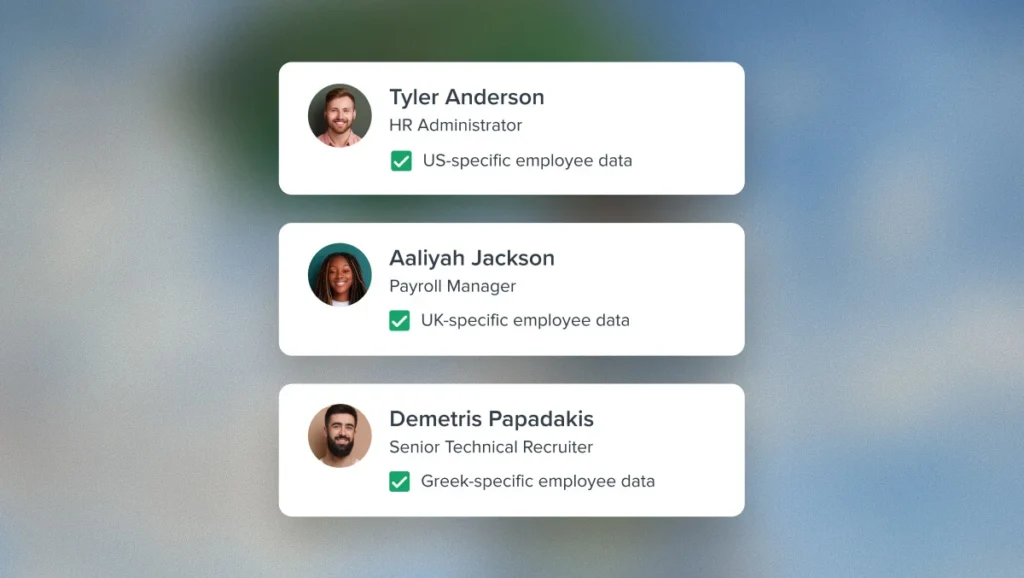
Workable’s new HRIS Scoped Roles feature is a direct response to these intricate challenges. It fundamentally alters how access is managed by enabling organizations to assign HRIS roles with a meticulously defined scope. When inviting a new account member or modifying an existing one, administrators can now select their role and precisely delineate the boundaries of their access. For example, an HR administrator whose role is scoped to the US entity will only be able to manage US employees and the HR settings pertinent to them, with no visibility or control over other entities.
This innovative functionality is built upon the existing segmentation capabilities within Workable accounts, ensuring that there are no complex, cumbersome permission sets to design or maintain. The scope can be set in mere seconds within the account members management interface. Consider an organization operating three distinct legal entities across three different countries. With HRIS Scoped Roles, each local HR lead can be assigned an HR Admin role specifically scoped to their respective entity. This empowers them to independently manage onboarding processes, maintain employee profiles, handle localized documents, and adjust relevant HR settings for their specific employee population. Concurrently, the central HR team retains an overarching, account-wide view, while employee data remains strictly separated between entities—a critical aspect for adhering to varying international data privacy and compliance requirements, such as GDPR in Europe or CCPA in California.
The Imperative of Access Control: Security, Efficiency, and Compliance
Access control transcends a mere IT or compliance checkbox; it is the bedrock of confident delegation within any organization. When access privileges are precisely aligned with responsibilities, local HR teams are empowered to operate with greater agility, HR functions cease to be operational bottlenecks, and sensitive employee data is exclusively visible to those who possess a legitimate need for it. For multinational organizations contending with country-specific regulations, data sovereignty mandates, or stringent internal data separation policies, HRIS Scoped Roles represent a crucial component in their overall IT, administrative, and compliance architecture.
Key Benefits and Strategic Implications
-
Enhanced Data Security and Privacy: The feature significantly mitigates the risk of unauthorized access to sensitive employee information. By enforcing the principle of "least privilege"—granting users only the minimum access necessary to perform their job functions—it reduces the potential impact of internal errors or malicious activities. This is particularly vital in an era where data breaches are increasingly common and costly, with reports from IBM indicating the average cost of a data breach exceeding $4 million globally. Protecting employee PII (Personally Identifiable Information) is not only a legal requirement but also a fundamental aspect of maintaining trust and reputation.
-
Streamlined Compliance: Global organizations face a labyrinth of varying data protection laws. GDPR, for instance, imposes strict rules on how personal data of EU citizens is collected, stored, and processed. Similarly, regulations like CCPA, LGPD (Brazil), and Australia’s Privacy Act dictate specific compliance frameworks. HRIS Scoped Roles provide a practical mechanism to segment data access geographically or by legal entity, making it significantly easier to demonstrate adherence to these diverse regulatory frameworks. This capability is essential for mitigating legal risks and avoiding hefty fines.
-
Improved Operational Efficiency and Decentralization: By enabling local HR teams to manage their specific employee populations autonomously, the feature eliminates the need for constant reliance on a central HR team for routine tasks. This decentralization accelerates processes like onboarding, offboarding, leave management, and local policy implementation. For a company with thousands of employees across dozens of countries, the cumulative time savings and increased responsiveness can be immense, directly translating into a more positive employee experience and a more efficient HR function overall.
-
Scalability for Growth: As companies expand through new market entries, mergers, or acquisitions, integrating new teams and entities into existing HR systems can be a complex and risky endeavor. HRIS Scoped Roles simplify this process by allowing new entities to be onboarded with their own specific HR administration, without compromising the security or integrity of data belonging to other parts of the organization. This fosters seamless growth and ensures that HR infrastructure can scale effectively with business expansion.
Industry Context and Supporting Data
The demand for granular access control in HR technology is not new but has intensified dramatically in recent years. A 2023 report by Deloitte on HR Technology Trends highlighted "Trust and Transparency" as a critical area, emphasizing the need for robust data governance and privacy controls in HR systems. Similarly, Gartner’s research on HRIS platforms consistently points to security and compliance capabilities as top purchasing criteria for enterprise clients. The global HR software market, projected to reach over $30 billion by 2026, is driven by the need for solutions that can handle increasingly complex organizational structures and regulatory environments.
Statistics underscore the importance of such features. According to a 2023 survey by Statista, data security concerns remain a top challenge for IT and HR leaders, with nearly 60% of organizations reporting a data breach or cyberattack in the past year. HR data, specifically, is a prime target due to its richness in Personally Identifiable Information (PII), including social security numbers, bank details, and health information. Implementing "least privilege" access, as facilitated by Workable’s new feature, is a foundational cybersecurity best practice recommended by organizations like NIST (National Institute of Standards and Technology).
Timeline and Workable’s Product Evolution
Workable has consistently evolved its platform from its origins as a robust Applicant Tracking System (ATS) to a more comprehensive HR Information System (HRIS). This evolution reflects a broader industry trend where HR software is moving beyond recruitment to encompass the entire employee lifecycle. The introduction of HRIS Scoped Roles is a logical next step in Workable’s commitment to providing an all-encompassing, yet secure, HR management platform. This feature likely stems from extensive customer feedback and market analysis, identifying a critical pain point for growing, global enterprises. It signifies Workable’s responsiveness to the evolving needs of its user base and its dedication to enhancing both usability and security.
Inferred Statements and Industry Reactions
While specific quotes were not provided in the original announcement, the strategic importance of this feature suggests strong internal and external reception.
A hypothetical statement from Workable’s CEO or Head of Product might emphasize: "We understand the delicate balance organizations face between empowering their local teams and maintaining stringent data security and compliance. HRIS Scoped Roles are a testament to our commitment to solving these complex challenges, offering our clients unparalleled flexibility and peace of mind. This feature empowers businesses to scale their HR operations confidently, knowing their sensitive employee data is protected by granular access controls."
Industry analysts are likely to view this as a significant differentiator, especially for Workable’s enterprise offerings. An inferred analyst comment could be: "In a market saturated with HRIS solutions, features that directly address global compliance and data sovereignty are paramount. Workable’s HRIS Scoped Roles position them strongly for multi-entity clients, demonstrating a sophisticated understanding of modern HR operational demands and regulatory landscapes."
HR professionals, particularly those in multinational corporations, would likely welcome this development with enthusiasm. A hypothetical quote from a Global HR Director could state: "Finally, a solution that allows us to truly decentralize our HR operations without compromising security. This will be a game-changer for our local HR teams, empowering them to act swiftly and autonomously while ensuring we meet our global data privacy obligations." Similarly, a local HR Manager might express: "This feature will significantly reduce administrative overhead for my team. We can now manage our specific employee population efficiently, without needing to constantly escalate routine tasks to central HR, which was a huge bottleneck."
Availability and Implementation
The HRIS Scoped Roles feature is immediately available to Workable’s Premier and Enterprise plan subscribers, underscoring its strategic value for larger, more complex organizations. Workable has streamlined the implementation process, allowing administrators to configure entity or department-scoped roles directly within their account members settings. For detailed, step-by-step guidance, users are directed to Workable’s comprehensive help center, ensuring a smooth transition and adoption of the new functionality. This ease of setup is crucial for rapid deployment and maximum benefit realization for clients.
Broader Impact and Future Outlook
The introduction of HRIS Scoped Roles solidifies Workable’s position as a robust and sophisticated HRIS provider capable of meeting the stringent demands of global enterprises. It sets a new benchmark for data security and operational flexibility within the HR technology sector. This move also highlights a broader industry trend towards increasingly specialized, secure, and integrated HR solutions that empower HR professionals to transition from purely administrative roles to more strategic business partners.
Looking ahead, this foundation could pave the way for even more granular permission settings, further integrations with advanced security protocols, and potentially AI-driven insights into access management. As the global workforce continues to evolve and regulatory landscapes become even more complex, platforms like Workable, which prioritize security, compliance, and operational agility through features like HRIS Scoped Roles, will be indispensable for organizations striving for both efficiency and ethical data stewardship. This development is not just an update; it is a strategic enhancement that redefines how global HR operations can be managed securely and effectively in the digital age.






