
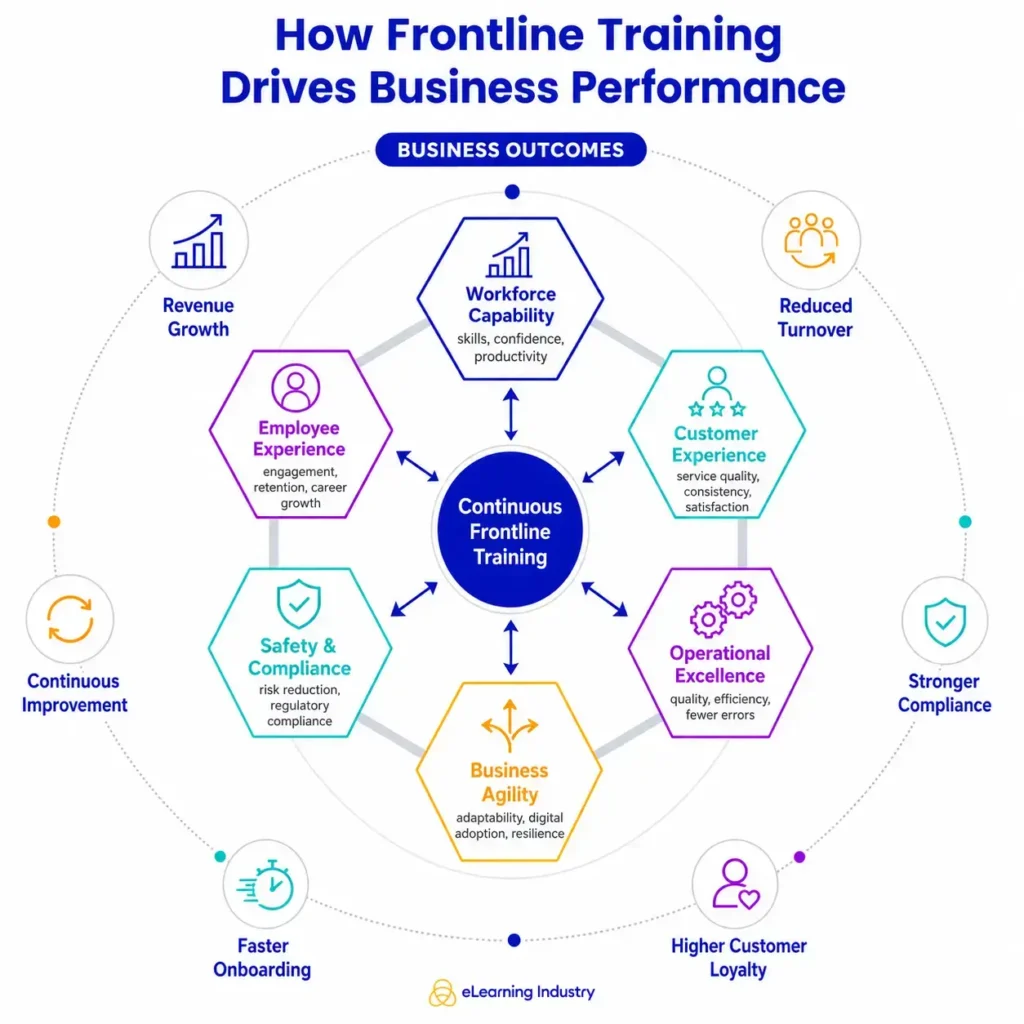
The global business landscape is currently witnessing a fundamental shift in how organizations perceive and invest in their most visible asset: the frontline workforce. Once relegated to the periphery of corporate development budgets, frontline training has emerged as a cornerstone of strategic operations. This transformation is driven by a convergence of labor shortages, rapid technological integration, and a heightened consumer demand for seamless service. Frontline employees—comprising roughly 80% of the global workforce—are the primary drivers of customer satisfaction, operational safety, and brand integrity. As companies transition from viewing training as a one-time onboarding necessity to an ongoing developmental engine, the implications for long-term corporate resilience and profitability have never been clearer.
Frontline training is defined as a systematic approach to equipping customer-facing and operational staff with the specific knowledge, technical competencies, and behavioral habits required to execute their roles with precision. This demographic includes a diverse array of professionals: retail associates, registered nurses, warehouse technicians, manufacturing operators, hospitality staff, and field engineers. These individuals represent the "face" of the brand, serving as the critical link between corporate strategy and consumer experience. Despite their importance, historical data suggests that deskless workers have frequently received significantly less investment in professional development compared to their office-based counterparts. However, recent economic pressures are forcing a massive redistribution of training resources toward the front lines.
The Economic and Operational Necessity of Frontline Development
The urgency surrounding frontline training is rooted in several critical business pressures. Foremost among these is the widening skills gap. As industries undergo digital transformation, the requirements for frontline roles are becoming increasingly complex. A warehouse picker, for instance, must now navigate sophisticated automated retrieval systems, while a retail associate must manage omnichannel inventory platforms. Without robust, continuous training, these technological investments fail to yield their intended ROI due to user error or underutilization.
Furthermore, the "Great Resignation" and subsequent labor market fluctuations have highlighted the role of training in employee retention. According to data from the Bureau of Labor Statistics and various human capital research firms, the cost of replacing a single frontline worker can range from 50% to 200% of their annual salary when accounting for recruitment, lost productivity, and training time. Investment in career development serves as a powerful retention tool; Gallup research consistently indicates that employees who see a clear path for growth and skill acquisition are significantly more likely to remain with an employer. In an era of chronic labor shortages in sectors like healthcare and logistics, training is no longer just about performance—it is about workforce stability.
Operational consistency also remains a primary driver for standardized training protocols. For multinational corporations or franchised businesses, maintaining a uniform brand experience across thousands of locations is an immense logistical challenge. Training ensures that a customer receives the same quality of service and safety standards in London as they do in Tokyo. This consistency is the bedrock of brand trust, and any deviation can result in catastrophic reputational damage in the age of viral social media feedback.
A Chronology of Training Methodology: From Manuals to Microlearning
The evolution of frontline training can be traced through several distinct phases, reflecting broader shifts in technology and educational psychology.
-
The Era of Manuals and Shadowing (Pre-1990s): For decades, frontline training was largely informal. New hires were often given a physical handbook and paired with a "veteran" employee for shadowing. While this provided some practical exposure, it lacked scalability and often resulted in the transmission of "bad habits" or outdated practices.
-
The Classroom and Video Phase (1990s–2010): As organizations grew, they attempted to formalize training through centralized classroom sessions and instructional videos. However, this required pulling workers away from the "floor," leading to significant downtime and logistical hurdles for shift-based industries.
-
The Digital Transition and E-Learning (2010–2020): The rise of Learning Management Systems (LMS) allowed for digitized content. While more accessible, much of this early e-learning was designed for desktop computers—a tool many frontline workers do not use in their daily routines.
-
The Mobile-First and AI Era (2020–Present): The current phase is defined by "learning in the flow of work." Prompted by the COVID-19 pandemic, which necessitated rapid updates to safety protocols, companies pivoted to mobile-first delivery. Training is now delivered in "micro-bursts" directly to smartphones or tablets, often utilizing Augmented Reality (AR) or AI-driven simulations to provide hands-on experience without the risks of real-world failure.
Core Competencies and Strategic Skill Sets
Modern frontline training programs are designed around a multi-dimensional skill matrix. While technical skills remain industry-specific, several "universal" competencies have become essential across all sectors.

Technical and Operational Proficiency: Beyond basic equipment operation, this now includes digital literacy. Workers must be adept at using proprietary software, data entry tools, and automated systems. Ongoing technical training is essential to prevent "skill decay," where employees lose proficiency in rarely used but critical procedures, such as emergency shut-off protocols.
Soft Skills and Emotional Intelligence: In customer-facing roles, empathy, active listening, and conflict de-escalation are as vital as product knowledge. Training in these areas directly correlates with Customer Satisfaction (CSAT) scores. For healthcare workers, this involves bedside manner and patient communication; for retail staff, it involves identifying and solving customer "pain points" in real-time.
Safety and Regulatory Compliance: In highly regulated sectors like food service, manufacturing, and healthcare, compliance training is a legal and financial safeguard. Effective programs move beyond "check-the-box" compliance to foster a "culture of safety," where employees understand the why behind the rules, significantly reducing workplace accidents and associated insurance costs.
Empowered Decision-Making: A significant trend in modern management is the decentralization of authority. Frontline workers are increasingly trained to make autonomous decisions—such as issuing a refund or troubleshooting a mechanical glitch—without immediate managerial intervention. This agility improves operational speed and enhances the employee’s sense of agency.
Overcoming the Structural Barriers to Training
Implementing effective frontline training is fraught with unique challenges that do not exist in traditional corporate environments. The primary obstacle is time. Frontline workers are often "on the clock" in high-pressure environments where every minute away from a customer or a machine represents a potential loss.
To address this, organizations are adopting the "Microlearning" model. By breaking down complex topics into five-minute modules that can be completed during natural lulls in a shift, companies can maintain a continuous learning cycle without disrupting operations. Additionally, the use of QR codes placed directly on equipment allows workers to access "just-in-time" training videos at the exact moment they need to perform a specific task.
Language and accessibility also present hurdles. Many frontline workforces are linguistically diverse. Leading global firms are now utilizing AI-driven translation tools to ensure that training materials are available in multiple languages and are culturally relevant to the local context. This ensures that safety and quality standards are understood universally across a global supply chain.
The Broader Impact: Social and Macroeconomic Implications
The enrichment of frontline training has implications that extend beyond individual corporate balance sheets. At a macroeconomic level, the upskilling of the "deskless" workforce contributes to greater economic mobility. By providing workers with transferable digital and interpersonal skills, companies are essentially future-proofing a segment of the population that is most at risk of displacement by automation.
From a social perspective, well-trained frontline staff contribute to safer communities and more resilient infrastructure. In healthcare, better-trained nursing assistants lead to lower mortality rates. In logistics, better-trained drivers lead to safer roads. In this sense, frontline training is a public good as much as it is a corporate strategy.
Industry analysts suggest that the next frontier of frontline training will involve the integration of "Predictive Analytics." By analyzing performance data, companies will be able to identify which specific employees are struggling with certain tasks and automatically deploy targeted training modules to them before an error occurs. This proactive approach marks the final transition from reactive "onboarding" to a sophisticated, data-driven developmental ecosystem.
Conclusion: The Future-Ready Frontline
In conclusion, frontline training has transitioned from an operational expense to a strategic imperative. The modern frontline worker is no longer a mere cog in a machine but a sophisticated representative of the brand who must navigate a complex landscape of technology, regulation, and human emotion. Organizations that recognize this shift and invest in flexible, mobile-first, and continuous learning programs are positioning themselves to lead in an increasingly volatile market.
As the global economy continues to evolve, the gap between companies that empower their frontline and those that neglect them will only widen. Those that prioritize the development of their deskless workforce will see the dividends in the form of higher retention, superior customer loyalty, and a more agile, resilient operational structure. The future of business is being built on the front lines, and training is the foundation upon which that future rests.






